

The California Constitution provides that the University of California constitutes a public trust, and requires the university to be administered by the Regents of the University of California, a corporation in the form of a board, with full powers of organization and government, subject to legislative control only for specified purposes. These provisions grant the regents all the powers necessary or convenient for the effective administration of its trust. This measure would require employees of the Regents of the University of California to have the right to, and be covered by, certain basic state labor standards, as provided. The measure would require individuals who perform certain work for the regents to have the right to the payment of a prevailing wage. The measure would authorize the Legislature to enact laws that further these rights, establish, define, or specify the basic state labor standards applicable to the regents, or establish other health, safety, and labor protections for individuals performing work for the regents.
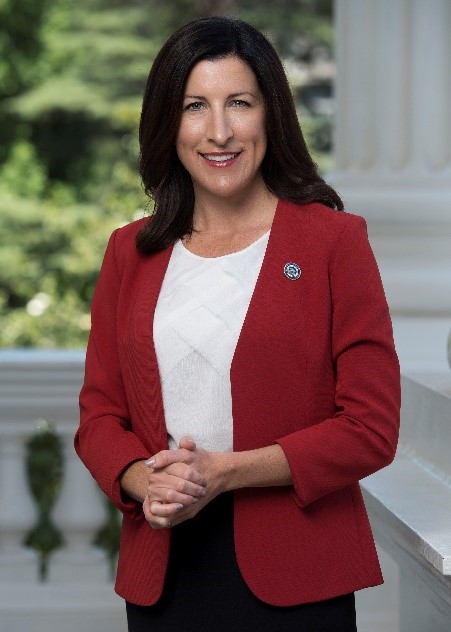
Asm. Cottie Petrie-Norris
Sponsored bills
Maddy summaryThis bill designates the week of September 22 to September 29, 2024, as Frontotemporal Degeneration Awareness Week. It directly affects the state by officially recognizing this specific time period to highlight awareness for the condition. The primary mechanism is a formal proclamation that establishes these dates for public and governmental acknowledgment. This measure does not create new laws or funding but serves to bring attention to the disease during a designated week.
This measure would resolve that the Legislature recognizes Girl Scouts of the United States of America on their 112th anniversary and its 107th anniversary of their beloved cookies.
This measure would encourage all Californians to make themselves and their families aware of the risk of food allergies and preventative measures, and to educate themselves regarding emergency responses. The measure would declare May as Food Allergy Awareness Month.
Existing law requires that, except as specified, not less than the general prevailing rate of per diem wages be paid to workers employed on public works and imposes misdemeanor penalties for a willful violation of this requirement. Existing law defines "public works," for the purposes of regulating public works contracts, as, among other things, construction, alteration, demolition, installation, or repair work done under contract and paid for, in whole or in part, out of public funds. Existing law requires the Labor Commissioner to investigate allegations that a contractor or subcontractor violated the law regulating public works projects, including the payment of prevailing wages. Existing law requires each contractor and subcontractor on a public works project to keep accurate payroll records, showing the name, address, social security number, work classification, straight time and overtime hours worked each day and week, and the actual per diem wages paid to each journeyman, apprentice, worker, or other employee employed by the contractor or subcontractor in connection with the public work. Existing law requires any copy of records made available for inspection as copies and furnished upon request to the public or any public agency to be marked or obliterated to prevent disclosure of an individual's name, address, and social security number but specifies that any copy of records made available to a Taft-Hartley trust fund for the purposes of allocating contributions to participants be marked or obliterated only to prevent disclosure of an individual's full social security number, as specified. This bill would require an owner or developer, as defined, undertaking any public works project to make specified records available upon request to the Division of Labor Standards Enforcement, to multiemployer Taft-Hartley trust funds, and to joint labor-management committees, as specified. The bill would also apply this requirement to an owner or developer that undertakes a development project that includes work subject to the requirements of public works. The bill would subject an owner or developer, for failing to comply with the provisions of this act, to a penalty by the commissioner, as specified, and would deposit the penalties into a specified fund. This bill would require the Director of Industrial Relations to adopt rules to govern the release of those records, as specified.
Maddy summaryHouse Resolution 101 is a procedural measure that officially designates June as Lesbian, Gay, Bisexual, Transgender, and Queer (LGBTQ+) Pride Month in California. The resolution does not create new laws or change any policies; instead, it serves to acknowledge the historical significance of the June 1969 Stonewall Uprising and the ongoing contributions of the LGBTQ+ community. By recognizing this month, the legislature aims to promote awareness of the civil rights movement and encourage continued efforts toward equality and non-discrimination.
Maddy summaryThis bill officially designates the week of May 6 to May 10, 2024, as Student Mental Health Awareness Week in California. It directly affects schools, students, educators, and community organizations by encouraging them to focus on mental well-being during that specific period. The measure includes no funding or new programs; it serves solely as a symbolic recognition to highlight the importance of student mental health and reduce stigma. By establishing this awareness week, the legislation aims to promote discussions about mental health without altering existing laws or budgets.
This measure would designate May 11, 2024, as Vietnam Human Rights Day in support of efforts to achieve freedom and human rights for the people of Vietnam. The measure would encourage Californians to commemorate the day with appropriate activities, including, but not limited to, rallies, ceremonies, and discussions.
This measure would proclaim May 6, 2024, as California Holocaust Memorial Day and would urge all Californians to observe this day of remembrance for the victims of the Holocaust in an appropriate manner.
Maddy summaryThis bill is a ceremonial resolution that officially recognizes May 2024 as Older Americans Month in California. It highlights the state's commitment to supporting its aging population, which is projected to include one in four residents by 2030. The measure adopts the theme "Powered by Connection" to emphasize the importance of social relationships for health and well-being. It does not create new laws or funding but serves to acknowledge the demographic shift and encourage community engagement.