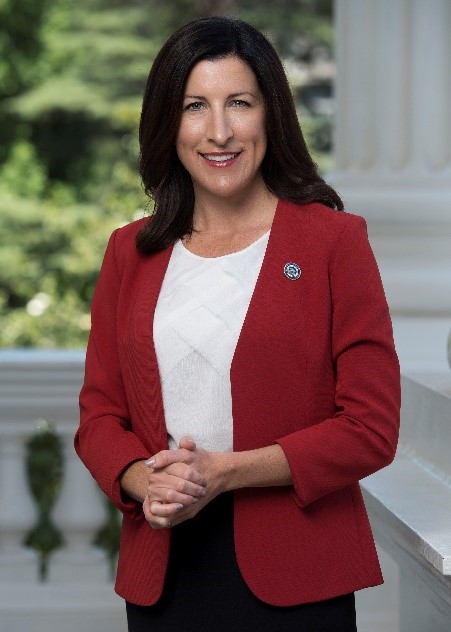
Photo of Cottie Petrie-Norris
D California Assembly · District 73 On the 2026 ballot

Asm. Cottie Petrie-Norris

Compare
Total votes
17,959
all sessions
Attendance
94%
885 missed
Near the chamber average
With party
98%
of cast votes
Near the chamber average
Bipartisan score
1%
crosses aisle rarely
Near the chamber average
Sponsored
1,605
bills & resolutions
Near the chamber average
Committees
10
assignments
1,605 bills and resolutions

Sponsored bills

Total
1,605
Primary
169
Co-sponsor
1,436
This page
1,605
matching current filters
Co-sponsor HR 121
Passed · California Assembly · Co-sponsor
Relative to boat people awareness.

Maddy summaryThis bill designates specific periods in 2024 as Boat People Awareness Week and Month to honor Vietnamese refugees who fled their country by sea after the Vietnam War. The resolution highlights the historical hardships these individuals faced, including dangerous voyages and high mortality rates, while acknowledging their significant contributions to communities across California. It does not create new laws or funding but serves as a commemorative measure to recognize the resilience and spirit of the Vietnamese refugee community. The text is intended to be shared with the bill's author for public distribution to raise awareness about this historical event.

Passed Aug 19, 2024 1 co-sponsor
Co-sponsor SB 905
Signed into law · California Senate · Co-sponsor
Crimes: theft from a vehicle.

Existing law defines the crime of burglary to include entering a vehicle when the doors are locked with the intent to commit grand or petit larceny or a felony. Existing law makes the burglary of a vehicle punishable as a misdemeanor or a felony. This bill would make forcibly entering a vehicle, as defined, with the intent to commit a theft or a felony therein a crime punishable by imprisonment in a county jail for a period not to exceed one year or imprisonment in a county jail for 16 months, or 2 or 3 years. By creating a new crime, this bill would impose a state-mandated local program. Existing law prohibits the taking of the personal property of another, as specified, prohibits removing any part of a vehicle without the consent of the owner, and prohibits the possession or receipt of stolen property, as specified. A violation of these prohibitions is punishable as either a misdemeanor or a felony. This bill would make it a crime for a person to unlawfully possess property that was acquired through one or more acts of theft from a vehicle, unlawful entry of a vehicle, burglary of a locked vehicle, or vehicle tampering, if the property is not possessed for personal use and the person has the intent to sell or exchange the property, or the intent to act with another person to sell or exchange the property, and the value of the possessed property exceeds $950. The bill would, for the purpose of determining the value, allow the aggregation of the value of other illegally obtained property possessed by the person within the past 2 years. The bill would make this crime punishable as a misdemeanor or a felony. By creating a new crime, this bill would impose a state-mandated local program. The California Constitution requires the state to reimburse local agencies and school districts for certain costs mandated by the state. Statutory provisions establish procedures for making that reimbursement. This bill would provide that no reimbursement is required by this act for a specified reason.

Signed into law Aug 16, 2024 1 co-sponsor
Co-sponsor AB 2943
Signed into law · California Assembly · Co-sponsor
Crimes: shoplifting.

(1) Existing law divides theft into grand theft and petty theft. Existing law punishes petty theft as a misdemeanor while grand theft is punished as either a misdemeanor or a felony. Existing law lists specific types of theft which are grand theft and all other cases of theft as petty theft. Existing law authorizes a person to be charged with grand theft if the property taken exceeds $950 over the course of distinct but related acts. This bill would clarify that those related acts include acts committed against multiple victims or in counties other than the county of the current offense. The bill would also clarify that evidence that distinct acts are motivated by one intention, one general impulse, and one plan may include, but is not limited to, evidence that the acts involve the same defendant or defendants, are substantially similar in nature, or occur within a 90-day period. (2) Existing law prohibits the possession or receipt of stolen property, as specified. A violation of this prohibition is punishable as either a misdemeanor or a felony, depending on the value of the property and whether the offender has certain prior convictions. This bill would make it a crime for any person to possess property unlawfully that was acquired through one or more acts of shoplifting, theft, or burglary from a retail business, if the property is not possessed for personal use and the person has intent to sell, exchange, or return the merchandise for value, or the intent to act in concert with one or more persons to sell, exchange, or return the merchandise for value, and the value of the possessed property exceeds $950. The bill would, for the purpose of determining the value of the property, aggregate the property with any other property possessed by the person with that intent within the prior 2 years and with any property possessed by another person acting in concert with the first person to sell, exchange, or return the merchandise for value, if that property was also acquired unlawfully. The bill would make this crime punishable as a misdemeanor or a felony. By creating a new crime, this bill would impose a state-mandated local program. (3) Existing law prohibits shoplifting, defined as entering a commercial establishment with intent to commit theft while that establishment is open during regular business hours, where the value of the property that is taken or intended to be taken does not exceed $950. Existing law requires an act that falls within this definition to be charged as shoplifting and not as burglary or theft. Under existing law, shoplifting is punishable as a misdemeanor, except when the defendant has prior convictions, as specified. Existing law authorizes a peace officer to make a warrantless arrest for a misdemeanor when the officer has probable cause to believe the person to be arrested has committed the misdemeanor in the officer's presence. Existing law also authorizes a private person to make an arrest for a misdemeanor committed in their presence, and requires the person to deliver the arrested person to a peace officer or magistrate. Existing law additionally authorizes a merchant to detain a person for a reasonable time and in a reasonable manner to determine if a person has unlawfully taken merchandise. Existing law authorizes a peace officer to make a warrantless arrest for specified misdemeanors relating to domestic violence, violation of a restraining order, and carrying a concealed firearm at an airport that did not occur in the officer's presence. This bill would authorize a peace officer to make a warrantless arrest for a misdemeanor shoplifting offense not committed in the officer's presence if the officer has probable cause to believe that person has committed shoplifting, as specified. The bill would clarify that local law enforcement or a local jurisdiction is prohibited from bringing a nuisance action against a business solely for the act of reporting retail crime, unless the report is knowingly false. (4) Existing law requires a peace officer to release upon a signed promise to appear any person arrested for a misdemeanor, unless the person demands to be taken before a magistrate. Existing law provides certain reasons a person arrested for a misdemeanor shall not be released including that the person is intoxicated or in need of medical attention, the person is unable to provide satisfactory proof of identification, or there are outstanding arrest warrants for the person. Additionally, existing law exempts from this provision persons arrested for specified crimes including domestic violence, stalking, threatening a witness, and, until January 1, 2026, organized retail theft. This bill would extend that exemption for organized retail theft until January 1, 2031. (5) Existing law, until January 1, 2026, authorizes a city or county prosecuting authority or county probation department to create a diversion or deferred entry of judgment program for persons who commit a theft offense or repeat theft offenses, as specified. This bill would extend that authorization until January 1, 2031. (6) Existing law authorizes the court to suspend a criminal sentence and make and enforce terms of probation for a period not to exceed 2 years, and in misdemeanor cases, for a period not to exceed one year. Existing law authorizes the court to make and enforce the terms of probation for specified theft cases for a period not to exceed 3 years. This bill would, for an offense of shoplifting or petty theft, authorize the court to make and enforce the terms of probation for a period not to exceed 2 years. The bill would require a court that imposes a term longer than one year to consider referring the defendant to a collaborative court or rehabilitation program that is relevant to the underlying factor or factors that led to the commission of the offense, as specified. For a defendant under 25 years of age, the bill would require the court, to the extent such a program is available, to refer the defendant to a program modeled on healing-centered, restorative, trauma-informed, and positive youth development approaches that is provided in collaboration with community-based organizations. By increasing the period of probation, this bill would impose a state-mandated local program. (7) The California Constitution requires the state to reimburse local agencies and school districts for certain costs mandated by the state. Statutory provisions establish procedures for making that reimbursement. This bill would provide that, if the Commission on State Mandates determines that the bill contains costs mandated by the state, reimbursement for those costs shall be made pursuant to the statutory provisions noted above.


Signed into law Aug 16, 2024 1 co-sponsor
Co-sponsor AB 1972
Signed into law · California Assembly · Co-sponsor
Regional property crimes task force.

Existing law authorizes the Governor to appoint and commission individuals designated by a railroad company to serve as police officers. Existing law, until January 1, 2026, requires the Department of the California Highway Patrol to coordinate with the Department of Justice to convene a regional property crimes task force to identify geographic areas experiencing increased levels of property crimes and assist local law enforcement with resources, such as personnel and equipment. This bill would require the task force to assist railroad police and would specify cargo theft as a property crime for consideration by the regional property crimes task force. This bill would declare that it is to take effect immediately as an urgency statute.

Signed into law Aug 16, 2024 1 co-sponsor
Co-sponsor AB 2309
Passed · California Assembly · Co-sponsor
City attorney: state law: misdemeanor.

Existing law authorizes the city attorney of any general law city or chartered city to, with the consent of the district attorney of that county, prosecute any misdemeanor committed within the city arising out of violation of state law, as specified. This bill would, notwithstanding the above-described authorization for city attorneys, authorize the city attorney of any general law city to prosecute any misdemeanor committed within the city arising out of violation of state law, provided that specified conditions are met, including that the legislative body of a city passes an ordinance granting that prosecutorial authority to the city attorney.

Passed Aug 15, 2024 1 co-sponsor
Primary AB 2815
Passed · California Assembly · Lead sponsor
Clean Transportation Program: electric vehicle chargers.

Existing law establishes the Clean Transportation Program, administered by the State Energy Resources Conservation and Development Commission, to provide funding to certain entities to develop and deploy innovative technologies that transform California's fuel and vehicle types to help attain the state's climate change policies. Existing law limits funding under the program to specified categories of programs and projects. Existing law creates the Alternative and Renewable Fuel and Vehicle Technology Fund, to be administered by the commission, and requires the moneys in the fund, upon appropriation by the Legislature, to be expended by the commission to implement the program. This bill would add to the categories of programs and projects eligible for funding under the Clean Transportation Program a program to repair or replace nonoperational electric vehicle chargers that are at least 5 years old and that are located in a publicly available parking space, as provided. The bill would require the commission to allocate at least 50% of the funding allocated for the repair or replacement program to low-income communities and disadvantaged communities. The bill would prohibit the commission from expending more than 20% of the amount appropriated for purposes of the Clean Transportation Program in any particular fiscal year on the repair or replacement program.

Passed Aug 15, 2024 0 co-sponsors
Co-sponsor AB 1846
Passed · California Assembly · Co-sponsor
Judicial officers: training: sexual abuse and assault.

Existing law requires the Judicial Council to establish judicial training programs for individuals who perform duties in domestic violence matters. Existing law requires the training programs to include a domestic violence session in any orientation session for newly appointed or elected judges and an annual training session in domestic violence. Existing law requires the training programs to include instruction in all aspects of domestic violence, including, but not limited to, the detriment to children of residing with a person who perpetrates domestic violence. This bill would require the Judicial Council to establish, on or before July 1, 2026, judicial training programs for judges related to best practices related to treatment of sexual abuse and assault victims in courtroom cases. This bill would require the development of the training programs to be informed by research and evidence on the impact of sexual abuse and assault on victims. The bill would require, commencing January 1, 2027, that the training programs be provided to all newly appointed or elected judges as part of any orientation session or initial training, and all judicial officers upon assignment to a family court, juvenile court, criminal court, and any others deemed appropriate by the Judicial Council. The bill would also require the training to be made available to all judicial officers on an annual basis. The bill would authorize the Judicial Council to conduct the above-described training either in person or through remote technology.

Passed Aug 15, 2024 1 co-sponsor
Co-sponsor AB 1912
Passed · California Assembly · Co-sponsor
Electricity and natural gas: legislation imposing mandated programs and requirements: third-party review.

Existing law regulates public utilities, including electrical and gas corporations. The Public Advocate's Office of the Public Utilities Commission is established as an independent office within the Public Utilities Commission to represent and advocate on behalf of the interests of public utility customers and subscribers within the jurisdiction of the commission. This bill would request the office to establish, by January 1, 2026, a program to, upon request of the Legislature, analyze legislation that would establish a mandated requirement or program or otherwise affect electrical or gas ratepayers, as specified. The bill would request the office to develop and implement conflict-of-interest provisions that would prohibit a person from participating in an analysis for which the person knows or has reasons to know that the person has a financial interest. The bill would require the commission, on June 15 of each year, to assess an annual fee on all large electrical and gas corporations, as defined, to fund the projected costs incurred by the office in implementing the bill, not to exceed $2,000,000 annually, divided evenly among each large electrical and gas corporation, as specified, for deposit into the Energy Programs Benefit Fund, which would be established by the bill. The bill would continuously appropriate the moneys in the fund to the office to support the work of the office in providing analyses under the bill. The bill would repeal these provisions on January 1, 2030. This bill would include a change in state statute that would result in a taxpayer paying a higher tax within the meaning of Section 3 of Article XIIIA of the California Constitution, and thus would require for passage the approval of 23 of the membership of each house of the Legislature.

Passed Aug 15, 2024 1 co-sponsor
Primary AB 2559
Passed · California Assembly · Lead sponsor
Local planning: electric vehicle service equipment: permitting delays.

Existing law creates the Governor's Office of Business and Economic Development (GO-Biz) and requires GO-Biz to serve the Governor as the lead entity for economic strategy and the marketing of California on issues relating to business development, private sector investment, and economic growth. Existing law requires every city, county, and city and county to administratively approve an application to install electric vehicle charging stations through the issuance of a building permit or similar nondiscretionary permit and requires the review of an application to install an electric vehicle charging station to be limited to the building official's review of whether it meets all health and safety requirements of local, state, and federal law. Existing law requires an electric vehicle charging station to comply with, among other things, all applicable rules of the Public Utilities Commission regarding safety and reliability, as specified. This bill would require GO-Biz to create and maintain a publicly accessible internet website that contains a landing page with functionality to collect information and report delays and denials regarding all applicable forms of permitting for zero-emission vehicle infrastructure, as specified. The bill would prohibit GO-Biz from publicly displaying any submissions received under these provisions. The bill would require GO-Biz in a new or existing working group, as specified, to evaluate the data it receives from the internet website and direct the working group to determine recommended solutions to address permitting delays. The bill would require, on or before January 1, 2026, GO-Biz to submit to the Legislature and publish on its internet website a comprehensive report regarding the challenges identified throughout the data collection process, as specified. The bill would also require GO-Biz to establish a permit streamlining specialist to assist authorities having jurisdiction with permit delays and denials related to these provisions.

Passed Aug 15, 2024 0 co-sponsors
Showing 421 to 430 of 1,605 bills
Previous 1 … 42 43 44 … 161 Next