

Existing law vests the Department of Human Resources with the jurisdiction and responsibility of establishing and maintaining personnel standards on a merit basis, and administering merit systems for local government agencies where those merit systems of employment are required by statute or regulation as a condition of a state-funded program or a federal grant-in-aid program established under federal law, including, but not limited to, the Social Security Act, as specified. Existing law requires the department, for the purposes of administering those state or federally supported programs, by regulation, to establish and maintain personnel standards on a merit basis for local agencies, as specified, as necessary for proper and efficient administration, and to ensure state conformity with applicable federal requirements. Existing law requires the department to administer the merit system for employees engaged in administering state-funded and federal grant-in-aid programs in a local agency not administering its own merit system, as specified. This bill, notwithstanding those provisions, would require the department, in any state-funded or federal grant-in-aid program, to allow those agencies to use alternate processes to screen applications and establish eligibility lists for recruitment of new staff, and advancement of existing staff. The bill would authorize those alternatives to include allowing counties to screen and establish eligibility lists directly with oversight by the department and implementing alternative examination requirements, as defined, without advance approval by the department. The bill would authorize the alternative processes to be implemented until January 1, 2029.
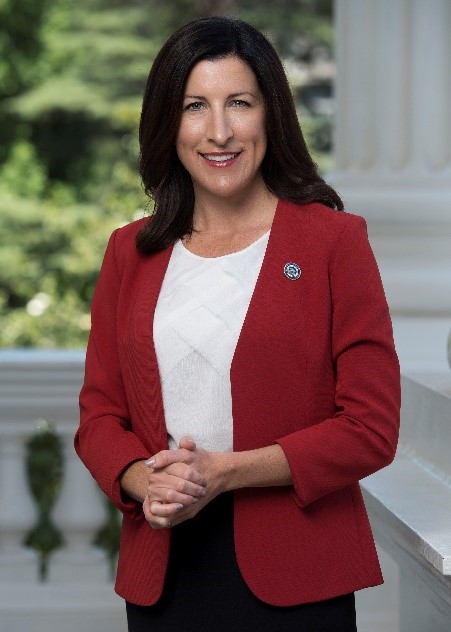
Asm. Cottie Petrie-Norris
Sponsored bills
Existing law establishes the Department of Health Care Access and Information to oversee and administer various health programs. The California Constitution prohibits the state from denying or interfering with an individual's reproductive freedom in their most intimate decisions. Existing law establishes the California Reproductive Health Equity Program within the department to ensure abortion and contraception services are affordable for and accessible to all patients and to provide financial support for safety net providers of these services. This bill would, upon appropriation by the Legislature or the availability of funds from private sources, establish the Reproductive Health Emergency Preparedness Program (RHEPP) for the purpose of expanding and improving access to reproductive and sexual health care in emergency departments across California. The bill would require the department to award the grants and administer the RHEPP in collaboration with a California-based organization to serve as the trainer and technical assistance provider. The bill would require the department to establish minimum standards, funding schedules, and procedures for awarding grants and would specify the qualifications for the collaborating organization. The bill would limit the permissible uses of grant funds under the program, as specified. The bill would repeal these provisions on January 1, 2030.
Existing law requires the court to refrain from making an order granting or modifying a child custody order on an ex parte basis unless there has been a showing of immediate harm to the child, as defined, or immediate risk that the child will be removed from the State of California. This bill would require a court to consider a parent's illegal access to firearms and ammunition when determining whether there is a showing of immediate harm to the child, as specified. Existing law governs the determination of child custody and visitation in contested proceedings. Existing law requires the court, for purposes of deciding custody or visitation, to determine the best interests of the child based on certain factors, including the health, safety, and welfare of the child, and the nature and amount of contact with both parents, except as specified. If a protective order has been issued restraining a parent, existing law requires the court to determine whether to require that visitation to be supervised, suspended, limited, or denied. This bill would also require the court to determine whether to require that visitation be supervised, suspended, limited, or denied if it has found that circumstances warrant making an order granting or modifying a custody order on an ex parte basis because there has been a showing of immediate harm to the child or immediate risk that the child will be removed from the State of California.
This measure would declare the month of September 2024 as Childhood Cancer Awareness Month and state the commitment of the Legislature to support efforts to find cures, and less toxic treatments, for childhood cancer.
This measure would, among other things, urge the United States Congress and President Joseph R. Biden to fully fund the United States Environmental Protection Agency's Comprehensive Infrastructure Solution for the Tijuana River due to the ongoing impacts to public health, the environment, and the local economy caused by cross-border pollution and would urge President Joseph R. Biden to declare a national emergency due to those ongoing impacts.
This measure would urge the Congress of the United States to repeal the state and local tax deduction limitation so that residents of California and married taxpayers are no longer penalized by the federal tax code.
Maddy summaryAssembly Concurrent Resolution 120 designates January 2024 as Positive Parenting Awareness Month in California. This measure does not change laws or allocate funding but instead encourages state agencies, communities, and organizations to focus on the importance of positive parenting strategies. The resolution highlights how supportive family environments can improve children's health and well-being while acknowledging the diverse forms families take in the state. It serves as a formal acknowledgment of existing programs and resources rather than creating new mandates or policies.
This measure would proclaim September 20, 2024, and September 20 of each year thereafter, as California Youth Climate Action Day to honor and support the efforts of young people in their pursuit of environmental sustainability, climate justice, and the preservation of biodiversity.
Existing law requires all law enforcement agencies to maintain a use of force policy, as specified, and requires the Commission on Peace Officer Standards and Training (POST) to implement courses of instruction for the training of law enforcement officers in the use of force. This bill would require the commission, on or before July 1, 2026, to study and issue recommendations to the Legislature on the use of canines by law enforcement, as specified. Existing law requires each law enforcement agency to monthly provide a report of, among other things, all instances of a peace officer involved in a use of force against a civilian that results in serious bodily injury or death to the Department of Justice, and requires the department to yearly post a summary of those reports on the department's OpenJustice Web portal. This bill would require each law enforcement agency with a canine unit to annually publish a report of the use of canines, as specified, on its internet website. Because the bill would impose additional duties on local law enforcement agencies, the bill would impose a state-mandated local program. The California Constitution requires the state to reimburse local agencies and school districts for certain costs mandated by the state. Statutory provisions establish procedures for making that reimbursement. This bill would provide that, if the Commission on State Mandates determines that the bill contains costs mandated by the state, reimbursement for those costs shall be made pursuant to the statutory provisions noted above. This bill would make the operation of its provisions contingent upon the enactment of AB 2042 of the 2023–24 Regular Session.
Existing law establishes the Multifamily Affordable Housing Solar Roofs Program. Existing law requires the Public Utilities Commission (PUC) , as part of the program, to authorize the award of monetary incentives for qualifying solar energy systems, as defined, that are installed on multifamily residential properties of at least 5 rental housing units that are operated to provide deed-restricted low-income residential housing, as defined, and that meet one or more specified requirements, as provided. Existing law requires the PUC to annually authorize the allocation of $100,000,000 or 66.67% of available funds, whichever is less, beginning with the fiscal year commencing July 1, 2016, and ending with the fiscal year ending June 30, 2020, to the program from certain greenhouse gas allowance revenues received by electrical corporations and set aside for clean energy and energy efficiency projects, as provided. Existing law requires the PUC to continue authorizing the allocation of these funds through June 30, 2026, if the PUC determines that revenues are available after 2020 and that there is adequate interest and participation in the program. Existing law requires the PUC to evaluate the program every 3 years and requires the PUC to make necessary adjustments to the program to ensure that the goals of the program are being met, as specified. Existing law authorizes the PUC to credit uncommitted funds back to ratepayers if the PUC, upon review, finds that there is insufficient participation in the program. This bill would require the PUC to credit no more than 12 of the program funds that are unencumbered as of January 1, 2025, back to the residential retail customers of electrical corporations, as specified. Existing law states the intent of the Legislature that the self-generation incentive program increase the deployment of distributed generation and energy storage systems to facilitate, among other things, the integration of those resources into the electrical grid. Existing law authorizes the PUC, in consultation with the State Energy Resources Conservation and Development Commission (Energy Commission) and until December 31, 2024, to authorize the annual collection of not more than double the amount authorized for the self-generation incentive program in 2008. Existing law requires the PUC to administer the self-generation incentive program until January 1, 2026. Existing law requires the PUC, on January 1, 2026, to provide repayment of all unallocated funds collected to reduce ratepayer costs. This bill would additionally require the PUC, on January 1, 2025, to initiate a process to provide repayment to residential customers of all unreserved funds as of January 1, 2025, that were collected to reduce ratepayer costs. Existing law requires the PUC to require those electrical corporations with 250,000 or more customer accounts in the state, and those gas corporations with 400,000 or more customer accounts in the state, to establish the joint School Energy Efficiency Stimulus Program within each of their energy efficiency portfolios and to file a joint advice letter by February 1, 2021, to fund the program as part of each of their energy efficiency portfolios. Existing law requires that the School Energy Efficiency Stimulus Program be a joint program among all the participating utilities, be consistent across the utility territories, and be designed, administered, and implemented by the Energy Commission as the program administrator. Existing law requires all allocated funds to be spent or returned to the electrical corporation or gas corporation by December 1, 2026. Existing law authorizes the Energy Commission to set application and encumbrance deadlines to ensure that the reversion of funds occurs by December 1, 2026. This bill instead would set the application deadline for program funds as July 1, 2024, and would require any funds remaining as of that date to be returned to the electrical corporation or gas corporation and distributed to residential customers as a bill credit, as determined by the PUC. The bill would require all allocated funds that are not spent by December 1, 2026, to be returned to the electrical corporation or gas corporation and distributed to residential customers as a bill credit, as determined by the PUC. Under existing law, a violation of the Public Utilities Act or an order, decision, rule, direction, demand, or requirement of the PUC is a crime. Because certain of the above-described provisions would be part of the act and a violation of a PUC action implementing this bill's requirements would be a crime, the bill would impose a state-mandated local program. This bill would incorporate additional changes to Section 2870 of the Public Utilities Code proposed by SB 1118 to be operative only if this bill and SB 1118 are enacted and this bill is enacted last. The California Constitution requires the state to reimburse local agencies and school districts for certain costs mandated by the state. Statutory provisions establish procedures for making that reimbursement. This bill would provide that no reimbursement is required by this act for a specified reason.