

Passed Feb 2, 2017
1 co-sponsor
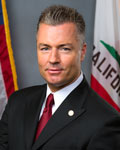
Total votes
12,207
all sessions
Attendance
90%
1,135 missed
Among the lowest in the chamber
With party
95%
of cast votes
Lower than 98% of chamber peers
Bipartisan score
3%
crosses aisle rarely
Higher than 94% of chamber peers
Sponsored
486
bills & resolutions
Lower than 84% of chamber peers
Committees
0
assignments
486 bills and resolutions
Sponsored bills
Total
486
Primary
80
Co-sponsor
406
This page
486
matching current filters
Relative to Martin Luther King, Jr. Day.
This measure would designate that January 16, 2017, be observed as the official memorial of the late Dr. Martin Luther King, Jr.'s birth and commemorate Martin Luther King, Jr. Day and the work of Dr. King and the Civil Rights Movement in changing public policy in California and in the United States of America.
Signed into law Jan 19, 2017
1 co-sponsor
Disability access: construction-related accessibility claims: demand letters.
Existing law prohibits discrimination on the basis of various specified personal characteristics, including disability. The Construction-Related Accessibility Standards Compliance Act establishes standards for making new construction and existing facilities accessible to persons with disabilities and provides for construction-related accessibility claims for violations of those standards. Existing law requires that a copy of the demand letter and the complaint be sent to the California Commission on Disability Access. This bill would, in addition, require that information about the demand letter and the complaint be submitted to the commission in a standard format specified by the commission on the commission's Internet Web site. The bill would require the commission to post a new standard format on its Internet Web site at least 30 days before requiring information be in the new standard format.
Signed into law Sep 30, 2016
1 co-sponsor
Autonomous vehicles: pilot project.
Existing law permits the operation of an autonomous vehicle on public roads for testing purposes if, among other requirements, a driver is seated in the driver's seat and is capable of taking immediate manual control of the vehicle in the event of an autonomous technology failure or other emergency. This bill would, notwithstanding the above provision, until 180 days after the operative date of regulations promulgated by the Department of Motor Vehicles to allow testing of autonomous vehicles without a driver in the vehicle, authorize the Contra Costa Transportation Authority to conduct a pilot project for the testing of autonomous vehicles that do not have a driver seated in the driver's seat and are not equipped with a steering wheel, a brake pedal, or an accelerator if the testing is conducted only at specified locations and the autonomous vehicle operates at speeds of less than 35 miles per hour. The bill would require the authority or a private entity, or a combination of the 2, to obtain an instrument of insurance, surety bond, or proof of self-insurance in an amount of $5,000,000 prior to the start of testing of any autonomous vehicle on or across a public road and would require evidence of the insurance, surety bond, or proof of self-insurance to be provided to the Department of Motor Vehicles in the form and manner required by the department. The bill would require the authority or a private entity, or a combination of the 2, to provide the department with a detailed description of the testing program, as specified. The bill would require the operator of the autonomous vehicle technology to disclose what personal information concerning a pilot project participant is collected by an autonomous vehicle. The bill would allow the department to require data collection for evaluating the safety of the vehicles, as provided.
Signed into law Sep 29, 2016
1 co-sponsor
Care facilities: civil penalties.
Existing law establishes the State Department of Social Services and sets forth its powers and duties, including, but not limited to, the licensure and regulation of community care facilities, residential care facilities for persons with chronic life-threatening illnesses, residential care facilities for the elderly, day care centers, and family day care homes. Existing law authorizes the department to impose various civil penalties for a licensing violation under those provisions, as specified, and requires moneys collected from the imposition of those penalties to be expended for certain purposes. Existing law establishes a process for the appeal of a citation under these provisions. This bill would, commencing July 1, 2017, increase the amount of civil penalties to be imposed for a licensing violation under those provisions, and would impose civil penalties for a repeat violation of those provisions, as specified. The bill would authorize the department, in its sole discretion, to reduce the civil penalty for the cited repeat violation to the level of the underlying violation, if applicable, if it determines that the cited repeat violation is not substantially similar to the original violation. The bill would delete the provisions that authorize the department to impose those civil penalties, and instead would require the imposition of civil penalties under those provisions. The bill would require the department to make a good faith effort to work with the licensee to determine the cause of the deficiency and ways to prevent any repeat violations, and to adopt regulations setting forth the appeal procedures for deficiencies. The bill would require civil penalties to be due and payable when administrative appeals have been exhausted and to be subject to late fees, except as specified. The bill would also delete obsolete provisions. This bill would incorporate additional changes in Section 1548 of the Health and Safety Code proposed by AB 1997, that would become operative only if AB 1997 and this bill are both chaptered and become effective on or before January 1, 2017, and this bill is chaptered last.
Signed into law Sep 29, 2016
1 co-sponsor
Computer science strategic implementation plan.
Existing law requires the Instructional Quality Commission, on or before July 31, 2019, to consider developing and recommending to the State Board of Education computer science content standards for kindergarten and grades 1 to 12, inclusive, pursuant to recommendations developed by a group of computer science experts convened by the Superintendent of Public Instruction in consultation with the state board. This bill would require the Superintendent to convene, on or before September 1, 2017, a computer science strategic implementation advisory panel composed of 23 members, as specified, to develop and submit recommendations for a computer science strategic implementation plan to the State Department of Education, the state board, and the Legislature on or before July 1, 2018. The bill would require the department and the state board to consider the advisory panel's recommendations; the department to develop, and the state board to adopt, a computer science strategic implementation plan on or before January 1, 2019; and the department to submit the plan adopted by the state board to the Legislature on or before January 1, 2019. The bill would require the Superintendent to appoint a statewide computer science liaison to serve the advisory panel, as provided. The bill would authorize the advisory panel, if state or federal funds are not available or sufficient for purposes of these provisions, to evaluate the process and ability to accept grants and receive donations and other financial support from public or private sources for purposes of convening the advisory panel, preparing the computer science strategic implementation plan, and ensuring that the computer science strategic implementation plan adopted by the state board is implemented. The bill's provisions would be repealed on January 1, 2021.
Signed into law Sep 27, 2016
1 co-sponsor
Financing requirements: property improvements.
(1) Existing law authorizes the legislative body of a public agency, as defined, to determine that it would be convenient, advantageous, and in the public interest to designate an area within which authorized public agency officials and property owners may enter into voluntary contractual assessments to finance certain improvements, including the installation of distributed generation renewable sources, energy or water efficiency improvements, seismic strengthening improvements, or electric vehicle charging infrastructure that are permanently fixed to real property, as specified. Existing law prohibits a public agency from permitting a property owner to participate in any program established pursuant to these provisions if the owner's participation would result in the total amount of any annual property taxes and assessments exceeding 5% of the property's market value, as determined at the time of approval of the owner's contractual assessment. This bill would also prohibit a public agency from permitting a property owner to participate in a program pursuant to these provisions unless the property owner satisfies certain conditions and the property owner is given the right to cancel the contractual assessment at any time prior to midnight on the 3rd business day after certain events occur without penalty or obligation, consistent with certain requirements. The bill would require a financing estimate document or a substantially equivalent document to be completed and delivered to a property owner before the property owner consummates a voluntary contractual assessment pursuant to one of these programs. The bill would prohibit a public agency or other party to a voluntary contractual assessment pursuant to one of these programs to make any monetary or percentage representations of increased value to a property owner regarding the effect the financed improvements will have on the market value of the property unless the public agency or other party derives its estimates of market value using specified methods. This bill would limit these provisions to a property owner who seeks to participate in a program established to finance the installation of distributed generation renewable energy sources, energy or water efficiency improvements, seismic strengthening improvements, or electric vehicle charging infrastructure that are permanently fixed to real property pursuant to these provisions for a residential property with 4 or fewer units. (2) The Mello-Roos Community Facilities Act of 1982 specifies the requirements for the establishment of a community facilities district, including, among other things, a petition, a hearing, the establishment of the boundaries of the community facilities district, and an election on the question. Existing law authorizes a community facilities district formed pursuant to an alternative procedure under which the district initially consists solely of territory proposed for annexation to the community facilities district in the future and territory is annexed and subjected to special taxes only upon unanimous approval of the owners, to finance and refinance the acquisition, installation, and improvement of energy efficiency, water conservation, and renewable energy improvements. This bill would require a legislative body to comply with the requirements described above prior to the annexation of a parcel or parcels to a community facilities district formed pursuant to the alternative procedure. The bill would prohibit a parcel or parcels from being annexed to a community facilities district formed pursuant to the alternative procedure if the parcel owner is seeking financing for improvement on a residential property with 4 or fewer units, unless the parcel satisfies specified conditions. This bill would incorporate additional changes to Section 53328.1 of the Government Code proposed by AB 2618 to be operative only if AB 2618 and this bill are chaptered and become effective on or before January 1, 2017, and this bill is chaptered last.
Signed into law Sep 25, 2016
1 co-sponsor
Insurance: electronic transmission.
Existing law generally requires, with exceptions, that specified provisions of the Civil Code apply to electronic records and electronic signatures relating to a transaction. This bill would remove various notices, including a policy change or cancellation notice by the named insured and a written notice of nonrenewal of the policy from the above exemptions, making those notices subject to the specified provisions of the Civil Code. The bill, commencing January 1, 2021, would reinstate certain exemptions of those notices from the specified provisions of the Civil Code. Existing law generally requires that any required notice related to insurance transactions be made by mail. Existing law authorizes an insurer, under specified conditions, to provide by electronic transmission the required offer of renewal for automobile insurance, the required notice of conditional renewal for commercial insurance, the required offer of coverage or renewal or any disclosure required regarding earthquake insurance, and the offer of renewal for a workers' compensation policy. The bill would, for the above-specified records, authorize additional persons licensed by the Department of Insurance to send those records electronically, as specified. The bill, as of January 1, 2021, would no longer authorize the notice of conditional renewal for commercial insurance to be sent electronically. As of January 1, 2021, the bill would permit a notice of lapse, nonrenewal, cancellation, or termination, as specified, to be transmitted electronically if it is also transmitted by mail, as prescribed by statute.
Signed into law Sep 25, 2016
1 co-sponsor
Revised Uniform Fiduciary Access to Digital Assets Act.
Existing law provides for the disposition of a testator's property by will. Existing law also provides for the disposition of that portion of a decedent's estate not disposed of by will. Existing law provides that the decedent's property, including property devised by a will, is generally subject to probate administration, except as specified. This bill would enact the Revised Uniform Fiduciary Access to Digital Assets Act, which would authorize a decedent's personal representative or trustee to access and manage digital assets and electronic communications, as specified. The bill would authorize a person to use an online tool to give directions to the custodian of his or her digital assets regarding the disclosure of those assets. The bill would specify that, if a person has not used an online tool to give that direction, he or she may give direction regarding the disclosure of digital assets in a will, trust, power of attorney, or other record. The bill would require a custodian of the digital assets to comply with a fiduciary's request for disclosure of digital assets or to terminate an account, except under certain circumstances, including when the decedent has prohibited this disclosure using the online tool. The bill would make custodians immune from liability for an act or omission done in good faith in compliance with these provisions.
Signed into law Sep 24, 2016
1 co-sponsor
Public contracts: discrimination.
Existing law governs the procurement process for contracts of specified public entities. Existing law, the Unruh Civil Rights Act, states that all persons within this state are free and equal and, no matter what their sex, race, color, religion, ancestry, national origin, disability, medical condition, genetic information, marital status, sexual orientation, citizenship, primary language, or immigration status, are entitled to full and equal accommodations, advantages, facilities, privileges, or services in all business establishments. Existing law, the California Fair Employment and Housing Act, protects and safeguards the right and opportunity of all persons to seek, obtain, and hold employment without discrimination, abridgment, or harassment on account of race, religious creed, color, national origin, ancestry, physical disability, mental disability, medical condition, genetic information, marital status, sex, gender, gender identity, gender expression, age, sexual orientation, or military and veteran status. This bill would, with certain exceptions, require a person that submits a bid or proposal to, or otherwise proposes to enter into or renew a contract with, a state agency with respect to any contract in the amount of $100,000 or more to certify, under penalty of perjury, at the time the bid or proposal is submitted or the contract is renewed that they are in compliance with the Unruh Civil Rights Act and the California Fair Employment and Housing Act, and that any policy that they have adopted against any sovereign nation or peoples recognized by the government of the United States, including, but not limited to, the nation and people of Israel, is not used to discriminate in violation of the Unruh Civil Rights Act or the California Fair Employment and Housing Act. By requiring a person to certify under penalty of perjury, this bill would expand the definition of a crime, thereby imposing a state-mandated local program. The California Constitution requires the state to reimburse local agencies and school districts for certain costs mandated by the state. Statutory provisions establish procedures for making that reimbursement. This bill would provide that no reimbursement is required by this act for a specified reason.
Signed into law Sep 24, 2016
1 co-sponsor
Ask Maddy
·
AI policy assistant
Ask Maddy about Travis Allen
Scope: california
Hi! I can help you understand Travis Allen's legislative record. What would you like to know?
Try one of these
i
Maddy answers using official bill text and legislative records. Always verify before sharing.
Sources cited inline