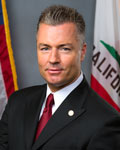
This measure would recognize May 10, 2017, and each May 10 thereafter, as Asian and Pacific Islander American Mental Health Day, and would acknowledge the importance of raising awareness about mental health in the Asian and Pacific Islander American community.
Sponsored bills
This measure would designate the month of May 2017 as California Fairgrounds Appreciation Month and would extend the Legislature's warmest regards and appreciation to the thousands of volunteers, fair directors, staff, business supporters, and sponsors who keep the California fairgrounds' network strong, vibrant, relevant, and successful.
This measure would proclaim the week of May 1, 2017, to May 7, 2017, inclusive, as California Physical Education Week and would encourage physical education teachers, school administrators responsible for the planning and supervision of physical education, and governing boards of school districts setting policy for physical education to promote the highest quality physical education year round and in future years.
This measure would declare the support of the Legislature for the expansion of sensory-friendly movie screenings and similar programs for people with autism, and would encourage families to attend a sensory-friendly movie screening during April 2017, National Autism Awareness Month.
This measure would proclaim the month of May 2017 as Hepatitis Awareness Month and May 19, 2017, as Hepatitis Testing Day.
This measure would recognize the month of May 2017 as Small Business Month to raise awareness of the contributions made by outstanding entrepreneurs and small business owners.
This measure would proclaim the month of May 2017 as American Stroke Month in California.
This measure would proclaim April 2017 as Distracted Driving Awareness Month and call for awareness of the distracted driving problem and support for programs and policies to reduce the incidence of distracted driving.
Existing law requires that the identification envelope that for returning a vote by mail ballot contain specified information, including the signature of the voter. Existing law requires the elections official, upon receipt of a vote by mail ballot, to compare the signature on the identification envelope with specified voter records. If the elections official determines that the signatures do not compare, existing law prohibits the ballot from being counted. This bill would additionally require that the identification envelope include the last 4 digits of the voter's California driver's license or identification card number or, if unavailable, the last 4 digits of the voter's social security number. The bill would also require the identification envelope to contain a security flap to conceal the voter's information during mailing. The bill would require the elections official to verify the accuracy of the voter's numeric identifying information. If the numeric identifying information cannot be verified, the bill would prohibit counting the ballot. Existing law requires polling places to be open from 7 a.m. to 8 p.m. on election day and requires that voting commence as soon as polls are opened. Existing law requires a person desiring to vote to audibly announce his or her name and address, and requires a precinct board member to audibly repeat the voter's name and address after finding the voters name in the index of voter registration. Existing law then requires the voter to write his or her name and residence address on a roster of voters, except as specified. This bill would also require a voter to provide photographic identification at the polling place before receiving a ballot. The bill would specify the forms of photographic identification that are acceptable and would authorize the use of a photographic identification that has been expired for less than one year. The bill would require a precinct board to provide a voter who is unable to provide an acceptable form of photographic identification, and would require a voter who is provided a provisional ballot for this reason to present photographic identification to the elections official in order to have his or her provisional ballot counted. The bill would require that a voter be provided a free registered voter identification card that contains a photograph of the voter if the voter does not have an acceptable form of photographic identification. By expanding the duties of precinct board members and local elections officials, the bill would impose a state-mandated local program. The California Constitution requires the state to reimburse local agencies and school districts for certain costs mandated by the state. Statutory provisions establish procedures for making that reimbursement. This bill would provide that, if the Commission on State Mandates determines that the bill contains costs mandated by the state, reimbursement for those costs shall be made pursuant to the statutory provisions noted above.

Existing law makes it a misdemeanor for an individual to solicit, agree to engage in, or engage in, an act of prostitution with the intent to receive compensation, money, or anything of value from another person, as specified, or an act of prostitution with an adult or a minor in exchange for the individual providing compensation, money, or anything of value to the other person, as specified. Existing law makes it unlawful for a person to loiter in a public place with the intent to commit prostitution, as specified. Existing law exempts a child under 18 years of age who is alleged to have engaged in prostitution or related offenses from being prosecuted for those offenses. Existing law authorizes a commercially exploited child under those circumstances to be adjudged a dependent child of the court and to be taken into temporary custody if the conditions allowing temporary custody without warrant are met. This bill would instead make the prohibitions on prostitution and related offenses applicable to a person under 18 years of age. By expanding the application of those crimes to those persons, this bill would impose a state-mandated local program. The bill would also make a technical nonsubstantive change to one of those provisions. The California Constitution requires the state to reimburse local agencies and school districts for certain costs mandated by the state. Statutory provisions establish procedures for making that reimbursement. This bill would provide that no reimbursement is required by this act for a specified reason.