

Passed Feb 8, 2021
1 co-sponsor
Total votes
12,001
all sessions
Attendance
88%
1,256 missed
Lower than 84% of chamber peers
With party
98%
of cast votes
Lower than 80% of chamber peers
Bipartisan score
1%
crosses aisle rarely
Higher than 87% of chamber peers
Sponsored
1,099
bills & resolutions
Near the chamber average
Committees
0
assignments
1,099 bills and resolutions
Sponsored bills
Total
1,099
Primary
108
Co-sponsor
991
This page
1,099
matching current filters
Passed Feb 1, 2021
1 co-sponsor
Relative to Reverend Dr. Martin Luther King, Jr.
This measure would, among other things, honor the late civil rights pioneer and icon Reverend Dr. Martin Luther King, Jr. and commemorate Dr. Martin Luther King, Jr. Day.
Passed Jan 19, 2021
1 co-sponsor
Passed Jan 15, 2021
1 co-sponsor
Funding accountability: state funding for homelessness.
Existing law provides for various public social services programs, including, among others, the California Work Opportunity and Responsibility to Kids (CalWORKs) program, under which each county provides cash assistance and other benefits to qualified low-income families and individuals. Existing law also provides for various funding programs under which state agencies allocate or grant funding to specified entities for purposes of addressing various issues relating to homelessness. This bill would require a recipient, as defined, that receives state funds for specified CalWORKs programs related to homeless assistance, the Housing and Disability Income Advocacy Program, or state funds appropriated in the Budget Act of 2019 for a Whole Person Care pilot program, to submit a report containing specified information regarding the use of state funds to the appropriate agency. The bill would require the recipient to submit that report on a form and method provided by the agency annually. This bill would require every agency to post all reports received on its internet website within 30 days of receipt and provide notice of the posting to specified offices and committees of the Legislature. The bill would also require every agency to aggregate all reports received by October 1 of every year into one report and send the report to the Department of Finance by December 1 of every year, commencing with the year 2021. The bill would also require the Department of Finance to post the aggregated report on its internet website by December 31 of every year, commencing with the year 2021, in a manner that is easily accessible by the public and provide notice of the posting to the Legislature, as provided. By requiring counties to provide reports relating to CalWORKs, this bill would impose a state-mandated local program. The California Constitution requires the state to reimburse local agencies and school districts for certain costs mandated by the state. Statutory provisions establish procedures for making that reimbursement. This bill would provide that, if the Commission on State Mandates determines that the bill contains costs mandated by the state, reimbursement for those costs shall be made pursuant to the statutory provisions noted above.
Vetoed Sep 29, 2020
1 co-sponsor
Family law: child support.
(1) Existing law provides procedures to enforce the payment of arrearages owed pursuant to a court order to pay child support, including, among others, authorizing a local child support agency to directly serve on an employer an order/notice to withhold income that specifies an updated arrearage amount and directs the employer to withhold an additional amount to be applied towards liquidation of the arrearage not to exceed the maximum amount permitted by federal law. Existing law provides that if the person who is required to pay child support is disabled, meets certain federal eligibility requirements, and is receiving, or would be eligible for, certain state and federal disability payments, and the person has supplied the local child support agency with proof of eligibility or receipt of these benefits, then the order/notice to withhold income issued for the liquidation of the arrearage shall not exceed 5% of that person's total monthly disability payments, as specified. This bill would similarly prohibit the order/notice to withhold income for the liquidation of the arrearage from exceeding 5% of a person's total monthly disability compensation if the person who is required to pay child support is a disabled veteran receiving disability compensation from the United States Department of Veterans Affairs who meets specified income requirements and has supplied the local child support agency with proof of receipt of disability compensation and other income and assets. By imposing new administrative duties on local child support agencies, this bill would create a state-mandated local program. This bill would also make technical, nonsubstantive changes to these provisions. (2) The California Constitution requires the state to reimburse local agencies and school districts for certain costs mandated by the state. Statutory provisions establish procedures for making that reimbursement. This bill would provide that, if the Commission on State Mandates determines that the bill contains costs mandated by the state, reimbursement for those costs shall be made pursuant to the statutory provisions noted above.
Vetoed Sep 28, 2020
0 co-sponsors
Foster Youth Services Coordinating Program: postsecondary education financial aid applications.
Existing law establishes the Foster Youth Services Coordinating Program, under the administration of the Superintendent of Public Instruction, to provide supplemental funding to county offices of education, or a consortium of county offices of education, to coordinate and ensure that local educational agencies within its jurisdiction are providing services to foster youth pupils pursuant to a foster youth services coordinating plan with the purpose of ensuring positive educational outcomes. As part of the program, existing law authorizes a county office of education, or a consortium of county offices of education, to apply to the Superintendent for grant funding to operate an education-based foster youth services coordinating program. As a condition of receiving funds, existing law requires a program to develop and implement a foster youth services plan that includes, among other things, a description of how the local program will facilitate coordination with local postsecondary educational institutions to ensure foster youth pupils meet admission requirements and access programs that support their matriculation needs. This bill would require the plan to also describe how the program will coordinate efforts to ensure, to the extent possible, the completion of the Free Application for Federal Student Aid or the California Dream Act Application for foster youth pupils who are in grade 12. Existing law requires the Superintendent, by July 1 of each even-numbered year, to report to the appropriate policy and fiscal committees of the Legislature and the Governor on the Foster Youth Services Coordinating Program. Existing law requires the report to include aggregate educational outcome data for each county in which there were at least 15 pupils in foster care who attended school in the county with information on, among other things, the number of participating foster youth pupils who successfully transition to postsecondary education. This bill would require the report to also include the number and percentage of pupils in foster care who successfully complete a Free Application for Federal Student Aid or California Dream Act Application while in grade 12.
Signed into law Sep 28, 2020
1 co-sponsor
Community colleges: California College Promise: members of the Armed Forces of the United States.
(1) Existing law establishes the California College Promise, under the administration of the Chancellor of the California Community Colleges, to provide funding, upon appropriation by the Legislature, to each community college meeting prescribed requirements. Existing law authorizes a community college to use that funding to accomplish specified policy goals and to waive some or all of the fees for 2 academic years for certain first-time students at the college who are enrolled in 12 or more semester units or the equivalent, or less for students certified as "full time," as specified, and who complete and submit either a Free Application for Federal Student Aid (FAFSA) or a California Dream Act application. This bill would require that a student who is a member of the Armed Forces of the United States, as defined, and is called to duty as specified, may withdraw from participation in the California College Promise and resume participation in the program upon the student's return from duty without losing eligibility for the fee waiver or any other benefit of the program. The bill would also provide that the time during which the student was obliged to withdraw because of active duty shall not count toward the limit of the period of that student's eligibility for participation in the California College Promise. To the extent that this bill would create new duties for community colleges that participate in the California College Promise, it would constitute a state-mandated local program. (2) The California Constitution requires the state to reimburse local agencies and school districts for certain costs mandated by the state. Statutory provisions establish procedures for making that reimbursement. This bill would provide that, if the Commission on State Mandates determines that the bill contains costs mandated by the state, reimbursement for those costs shall be made pursuant to the statutory provisions noted above.
Signed into law Sep 28, 2020
0 co-sponsors
Local government: assessments, fees, and charges: water: hydrants.
The California Constitution specifies various requirements with respect to the levying of assessments and property-related fees and charges by a local agency, including requiring that the local agency provide public notice and a majority protest procedure in the case of assessments and submit property-related fees and charges for approval by property owners subject to the fee or charge or the electorate residing in the affected area following a public hearing. Existing law, known as the Proposition 218 Omnibus Implementation Act, prescribes specific procedures and parameters for local jurisdictions to comply with these requirements and, among other things, authorizes an agency providing water, wastewater, sewer, or refuse collection services to adopt a schedule of fees or charges authorizing automatic adjustments that pass through increases in wholesale charges for water, sewage treatment, or wastewater treatment or adjustments for inflation under certain circumstances. Existing law defines, among other terms, the term "water" for these purposes to mean any system of public improvements intended to provide for the production, storage, supply, treatment, or distribution of water from any source. This bill would specify that hydrants, as defined, are part of the system of public improvements included in the definition of "water" for purposes of the Proposition 218 Omnibus Implementation Act. The bill would specify that the fees or charges for property-related water service imposed or increased, as specified, may include the costs to construct, maintain, repair, or replace hydrants as needed or consistent with fire codes and industry standards, and may include the cost of water distributed through hydrants. The bill would also authorize the fees or charges for the aspects of water service related to hydrants and the water distributed through them to be fixed and collected as a separate fee or charge, or included in the other water rates and charges fixed and collected by a public agency, as specified.
Signed into law Sep 28, 2020
1 co-sponsor
Personal information: social security numbers: state agencies.
Existing law prohibits a state agency from sending any outgoing United States mail to an individual that contains personal information about that individual, including, but not limited to, the individual's social security number, telephone number, driver's license number, or credit card account number, unless that personal information is contained within sealed correspondence and cannot be viewed from the outside of that sealed correspondence. This bill would prohibit a state agency from sending any outgoing United States mail that contains an individual's social security number unless the number is truncated to its last 4 digits or in specified circumstances, including when federal law requires inclusion of the social security number or when documents are mailed to a current or prospective state employee. The bill would require each state agency that mails an individual's full or truncated part of a social security number to that individual to report to the Legislature, on or before September 1, 2021, regarding when and why it does so. The bill would require a state agency that, in its own estimation, is unable to comply with the restrictions on mailing social security numbers that have not been truncated to submit an annual corrective action plan to the Legislature until it is in compliance. The bill would make the reports, action plans, and related correspondence confidential and would prohibit their public disclosure. Existing constitutional provisions require that a statute that limits the right of access to the meetings of public bodies or the writings of public officials and agencies be adopted with findings demonstrating the interest protected by the limitation and the need for protecting that interest. This bill would make legislative findings to that effect.
Signed into law Sep 25, 2020
1 co-sponsor
Ask Maddy
·
AI policy assistant
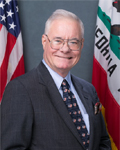
Ask Maddy about Randy Voepel
Scope: CA
Hi! I can help you understand Randy Voepel's legislative record. What would you like to know?
Try one of these
i
Maddy answers using official bill text and legislative records. Always verify before sharing.
Sources cited inline