

Passed May 10, 2022
1 co-sponsor
Total votes
12,001
all sessions
Attendance
88%
1,256 missed
Lower than 84% of chamber peers
With party
98%
of cast votes
Lower than 80% of chamber peers
Bipartisan score
1%
crosses aisle rarely
Higher than 87% of chamber peers
Sponsored
1,099
bills & resolutions
Near the chamber average
Committees
0
assignments
1,099 bills and resolutions
Sponsored bills
Total
1,099
Primary
108
Co-sponsor
991
This page
1,099
matching current filters
Passed May 5, 2022
1 co-sponsor
Passed May 5, 2022
1 co-sponsor
Passed May 3, 2022
1 co-sponsor
Passed May 2, 2022
1 co-sponsor
Violent felonies: serious felonies: human trafficking.
Existing law defines the terms "serious felony" and "violent felony" for various purposes, including, among others, enhancing the punishment for felonies pursuant to existing sentencing provisions commonly known as the Three Strikes Law. This bill would include human trafficking within the definition of a violent felony and the definition of a serious felony for all purposes, including for purposes of the Three Strikes Law. By expanding the scope of an enhancement, this bill would impose a state-mandated local program. The California Constitution requires the state to reimburse local agencies and school districts for certain costs mandated by the state. Statutory provisions establish procedures for making that reimbursement. This bill would provide that no reimbursement is required by this act for a specified reason.
died Apr 26, 2022
1 co-sponsor
Sexually violent predators.
Existing law provides for the civil commitment of a person who is determined to be a sexually violent predator. Existing law establishes a procedure by which a person committed as a sexually violent predator may petition for conditional release and requires the court, if it makes a specified determination, to place the person on conditional release. Existing law requires that a person released on conditional release pursuant to these provisions be placed in the county of domicile unless certain conditions are satisfied. This bill would also require, as a condition to placing a person in a county other than their county of domicile, the proposed designated county of placement to be provided specified evidence prior to the court ordering the person to be placed in a county other than the county of domicile. Existing law permits the court to order the department to provide a copy of the written terms and conditions of conditional release to the sheriff or chief of police, or both, who have jurisdiction over the proposed or actual placement community. The bill would require, if the department or its designee requests that the county of placement petition the court to revoke a person's conditional release, the department or its designee to provide the county of placement any information or records relating to the person's treatment or performance on conditional release that the department or its designee believes serves as the basis for a revocation of community outpatient treatment.
died Apr 26, 2022
1 co-sponsor
Theft and burglary.
(1) The existing Safe Neighborhoods and Schools Act, enacted as an initiative statute by Proposition 47, as approved by the electors at the November 4, 2014, statewide general election, makes the theft of property that does not exceed $950 in value petty theft, and makes that crime punishable as a misdemeanor, with certain exceptions. The initiative statute defines shoplifting as entering a commercial establishment with the intent to commit larceny while that establishment is open during regular hours, where the value of the property that is taken or intended to be taken does not exceed $950. The initiative statute requires that shoplifting be punished as a misdemeanor. Proposition 47 authorizes amendment of its provisions by a 23 vote of the Members of each house of the Legislature so long as the amendments are consistent with and further the intent of the act. This bill would amend Proposition 47 by authorizing acts of shoplifting that occur on 2 or more separate occasions within a 12-month period, and the aggregated value of the merchandise taken exceeds $950, to be punished either by imprisonment in a county jail for not more than one year or by 16 months or 2 or 3 years in a county jail. By increasing the penalty for a crime, this bill would impose a state-mandated local program. (2) Existing law defines the crime of burglary to include entering a railroad car or cargo container with the intent to commit grand larceny or petit larceny or any felony within. Exiting law divides burglary into first and 2nd degrees, with first degree burglary defined as burglary of an inhabited dwelling house, a vessel that is inhabited and designed for habitation, a floating home, a trailer coach, or the inhabited portion or any other building. Existing law defines 2nd degree burglary as all other types of burglary. First degree burglary is punishable by imprisonment in the state prison for 2, 4, or 6 years and 2nd degree burglary being punishable in a county jail for not more than one year or by 16 months or 2 or 3 years in a county jail. This bill would make burglary with regard to a railroad car or a cargo container punishable by imprisonment in a county jail for 2, 4, or 6 years. By increasing the penalty for a crime, this bill would impose a state-mandated local program. (3) The California Constitution requires the state to reimburse local agencies and school districts for certain costs mandated by the state. Statutory provisions establish procedures for making that reimbursement. This bill would provide that no reimbursement is required by this act for a specified reason.
In committee Apr 26, 2022
1 co-sponsor
Passed Apr 25, 2022
1 co-sponsor
Relative to Sudden Unexplained Death in Childhood Awareness Month.
This measure would recognize March 2022 as Sudden Unexplained Death in Childhood Awareness Month.
Signed into law Apr 22, 2022
1 co-sponsor
Ask Maddy
·
AI policy assistant
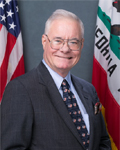
Ask Maddy about Randy Voepel
Scope: california
Hi! I can help you understand Randy Voepel's legislative record. What would you like to know?
Try one of these
i
Maddy answers using official bill text and legislative records. Always verify before sharing.
Sources cited inline