

Existing law establishes the California Assessment of Student Performance and Progress (CAASPP) as the statewide system of pupil assessments under which certain assessments are required or authorized to be administered in public schools, as specified, including a consortium summative assessment in English language arts and mathematics for grades 3 to 8, inclusive, and grade 11 that measures content standards adopted by the State Board of Education. Existing law requires the state board to adopt regulations that outline a calendar for delivery and receipt of summative CAASPP results at the pupil, school, grade, district, county, and state levels, and requires the calendar to, among other things, include delivery dates to the State Department of Education and to local educational agencies, provide for the timely return of assessment results, and ensure that individual assessment results are reported to local educational agencies within 8 weeks of receipt by the contractor for scoring. This bill would require the department to make statewide summative CAASPP results publicly available on or before October 15 each year and would require the state board's calendar for delivering results to the department to be consistent with that deadline.
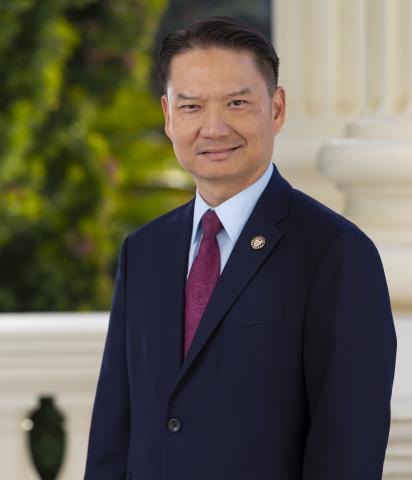
Asm. Tri Ta
Sponsored bills
This measure would declare August 2023 as Valley Fever Awareness Month.
This measure would designate the month of June 2023 as Healthy Homes Awareness Month.
This measure would recognize July 28 as World Hepatitis Day and would urge all California institutions, nonprofit organizations, health care organizations, businesses, community leaders, and residents to ensure screenings for hepatitis B and C, vaccinations for hepatitis B, and treatment become the standard of care.
This measure would designate October 23, 2023, as Aromatic L-Amino Acid Decarboxylase (AADC) Deficiency Awareness Day in the state.
This measure would recognize August 15, 2023, as India's Independence Day and urge all Californians to join in celebrating India's independence.
This measure would proclaim August 2023 as Breastfeeding Awareness Month of 2023 in California. The measure would recognize the unique benefits that breastfeeding provides, as specified, and would affirm that Californians should work to ensure that barriers to initiation and continuation of breastfeeding are removed. The measure would encourage Californians to work together to explore ways to, among other things, improve women's access to breastfeeding support services in medical, social, and employment settings.
This measure would recognize the 50th anniversary of hip hop on August 11, 2023, as a time of celebration, pride, and nostalgia for the citizens of California.
Existing law establishes the California Community Colleges Economic and Workforce Development Program to, among other things, advance California's economic growth and global competitiveness through education, training, and services that contribute to continuous workforce improvement. Existing law authorizes the Board of Governors of the California Community Colleges to award grants and project funds for the program, as specified. Existing law establishes the Job Development Incentive Training Program as a component of the California Community Colleges Economic and Workforce Development Program. Existing law states the intent of the Legislature that the Job Development Incentive Training Program provide training on a no-cost or low-cost basis to participating employers who create employment opportunities at an acceptable wage level for the attainment of self-sufficiency by specified groups. Existing law requires the California Community Colleges Economic and Workforce Development Program to be implemented only during those fiscal years for which funds are appropriated for its purposes. Existing law repeals the California Community Colleges Economic and Workforce Development Program on January 1, 2025. This bill would revise and recast several provisions of the California Community Colleges Economic and Workforce Development Program. The bill would extend operation of the program indefinitely and would repeal the Job Development Incentive Training Program. The bill would revise and recast the principles governing the Economic and Workforce Development Program, provisions on the duties and membership of the program's advisory committee, the decision criteria for allocating program funds to colleges, and the definitions that apply to the program's provisions.