

Relative to Korean American Day.
This measure would proclaim January 13, 2018, as Korean American Day.
Signed into law Feb 7, 2018
1 co-sponsor
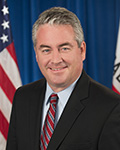
This measure would proclaim January 13, 2018, as Korean American Day.
This measure would honor the late Reverend Dr. Martin Luther King, Jr. and commemorate Dr. Martin Luther King, Jr. Day.
This measure would designate the month of January 2018 as Gang Awareness and Prevention Month in the State of California and would encourage cities and constituents across the state to observe the month with appropriate programs, ceremonies, and activities to prevent future gang activity and honor those who lost their lives due to gang activity.
Existing law authorizes the Superintendent of Public Instruction to authorize the California School for the Deaf to establish and maintain a testing center for the deaf and hard-of-hearing minors. This bill would state that it is the intent of the Legislature to enact legislation that would improve the education of pupils who are deaf and hard-of-hearing.
Existing law requires the Department of Corrections and Rehabilitation to give notice of any hearing to review or consider the parole suitability of an inmate to any victim of a crime committed by the inmate at least 90 days before his or her hearing before the Board of Parole Hearings. Existing law requires the victim to make a request and keep the board apprised of his or her current contact information in order to receive the notice. Existing law also requires the department to provide a form to enable victims of crime to request and receive notification from the department of the release, escape, scheduled execution, or death of a violent offender. This bill would require the department to create a victim outreach program to conduct outreach to victims, witnesses, or next of kin of victims that have not yet requested notification and to make the right to notification services public, as provided.
(1) Existing law establishes the California Career Technical Education Incentive Grant Program as a state education, economic, and workforce development initiative with the goal of providing pupils in kindergarten and grades 1 to 12, inclusive, with the knowledge and skills necessary to transition to employment and postsecondary education. Existing law appropriates $200,000,000 from the General Fund to the State Department of Education for purposes of this grant program for the 2017–18 fiscal year. Existing law requires applicants for grants under the program to demonstrate that they have local matching funds, as specified. Existing law specifies that no applicant may receive a renewal grant under the program for the 2018–19 fiscal year. This bill would change the name of the program to the California Career Technical Education Grant Program. The bill would increase to $300,000,000 the General Fund appropriation to the State Department of Education for this program for the 2017–18 fiscal year, and would further provide for an appropriation to the department in this amount for the 2018–19, 2019–20, and 2020–21 fiscal years. The bill would lower the amount of local matching funds required of an applicant from $1.50 for every dollar received to $1 for every dollar received, for the 2017–18, 2018–19, 2019–20, and 2020–21 fiscal years. The bill would also provide that an applicant receiving a grant from this program in the 2017–18, 2018–19, or 2019–20 fiscal year would be eligible for a renewal grant in the next fiscal year if that applicant demonstrates continued compliance with program requirements. (2) The funds appropriated by this bill would be applied toward the minimum funding requirements for school districts and community college districts imposed by Section 8 of Article XVI of the California Constitution.
Existing sales and use tax laws impose a tax on retailers measured by the gross receipts from the sale of tangible personal property sold at retail in this state, or on the storage, use, or other consumption in this state of tangible personal property purchased from a retailer for storage, use, or other consumption in this state. Those laws provide various exemptions from those taxes. This bill, on and after January 1, 2018, would exempt from those taxes the gross receipts from the sale in this state of, and the storage, use, or other consumption in this state of, tampons, sanitary napkins, menstrual sponges, and menstrual cups. The Bradley-Burns Uniform Local Sales and Use Tax Law authorizes counties and cities to impose local sales and use taxes in conformity with the Sales and Use Tax Law, and existing laws authorize districts, as specified, to impose transactions and use taxes in accordance with the Transactions and Use Tax Law, which generally conforms to the Sales and Use Tax Law. Amendments to the Sales and Use Tax Law are automatically incorporated into the local tax laws. Existing law requires the state to reimburse counties and cities for revenue losses caused by the enactment of sales and use tax exemptions. This bill would provide that, notwithstanding Section 2230 of the Revenue and Taxation Code, no appropriation is made and the state shall not reimburse any local agencies for sales and use tax revenues lost by them pursuant to this bill. This bill would take effect immediately as a tax levy.
Existing law establishes the California Assessment of Student Performance and Progress (CAASPP) for the assessment of certain elementary and secondary pupils, as provided. Existing law provides that the CAASPP includes, among other things, a consortium summative assessment in English language arts and mathematics for grades 3 to 8, inclusive, and grade 11. Existing law makes these provisions inoperative on July 1, 2020, and repeals the provisions on January 1, 2021. This bill would establish the Alternative Grade 11 Assessment Pilot Program, which would authorize school districts, that are selected by the Superintendent of Public Instruction to participate in the pilot program, to administer an assessment other than the CAASPP to grade 11 pupils if certain requirements are satisfied. The bill would require participating school districts to report results of the assessment to the Superintendent and report, on or before January 1, 2023, on the effectiveness of the assessment in accomplishing specified objectives. The bill would make the pilot program inoperative on July 1, 2023, and would repeal the pilot program on January 1, 2024.