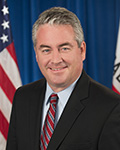
Photo of Patrick O'Donnell
D California Assembly · District 70

Asm. Patrick O'Donnell

Compare
Total votes
16,504
all sessions
Attendance
91%
1,281 missed
Lower than 94% of chamber peers
With party
99%
of cast votes
Near the chamber average
Bipartisan score
0%
crosses aisle rarely
Near the chamber average
Sponsored
1,313
bills & resolutions
Near the chamber average
Committees
0
assignments
1,313 bills and resolutions

Sponsored bills

Total
1,313
Primary
205
Co-sponsor
1,108
This page
1,313
matching current filters
Co-sponsor ACR 136
Signed into law · California Assembly · Co-sponsor
Relative to Red Ribbon Week.

This measure would proclaim October 23 to October 29, 2016, inclusive, as Red Ribbon Week, and would encourage all Californians to help build drug-free communities and participate in drug prevention activities.

Signed into law Sep 7, 2016 1 co-sponsor
Co-sponsor SB 1190
Failed · California Senate · Co-sponsor
California Coastal Commission: ex parte communications: staff communications.

The California Coastal Act of 1976, establishes the California Coastal Commission, and prescribes the membership and functions and duties of the commission. The act requires the commission to meet at least 11 times annually at a place convenient to the public. This bill would require the commission, commencing on or before July 1, 2017, to also provide for public participation at all commission meetings via telephone and the Internet, as prescribed. The bill would require the commission to include in the executive summary section of a staff report a list of references to any materials submitted for the public record that are determined not to relate to a matter within the commission's jurisdiction. For purposes of the act, an "ex parte communication" is defined as any oral or written communication between a member of the commission and an interested person, as defined, about a matter within the commission's jurisdiction, as defined, that does not occur in a public hearing, workshop, or other official proceeding or on the official record of the proceeding on the matter, but excludes from that definition certain communications, including communications between a staff member acting in his or her official capacity and any commission member or interested person, as prescribed. The act prohibits a commission member and an interested person from conducting an ex parte communication unless the member fully discloses and makes public the ex parte communication, as specified, and prohibits a commission member or alternate from making, participating in making, or in any other way attempting to use his or her official position to influence a commission decision about which the member or alternate has knowingly had an ex parte communication that has not been reported. This bill would prohibit a commission member or an interested person from intentionally conducting any ex parte communication on a matter within the commission's jurisdiction, as defined, or any oral or written communication regarding a pending enforcement investigation that does not occur in a public hearing, workshop, or other official proceeding, or on the official record of the proceeding on the matter. The bill would require a commission member to report these communications in writing, would require the report to be placed in the public record, and would prohibit a commission member from voting on or otherwise participating in any commission proceeding to which one of these communications applies, even if the communication is reported. The bill would exclude from the above provisions a project site visit by commission members and staff that meets certain requirements and communications conducted by a commission member while acting in his or her capacity as a local government official, as specified. This bill would also require the commission to adopt, at a duly noticed public hearing, a policy that prohibits a commission member from using or attempting to use his or her official position to place undue influence, as defined, on commission staff. The bill would forever disqualify a commission member or alternate who willfully violates that provision from holding any position at the commission.

Failed Sep 1, 2016 1 co-sponsor
Co-sponsor AJR 28
Signed into law · California Assembly · Co-sponsor
Relative to daylight saving time.

This measure would memorialize the Congress and the President to enact legislation that would allow a state to adopt daylight saving time year round.

Signed into law Sep 1, 2016 1 co-sponsor
Co-sponsor ACR 106
Signed into law · California Assembly · Co-sponsor
Relative to Diaper Need Awareness Week.

This measure would proclaim the week of September 26, 2016, to October 2, 2016, as Diaper Need Awareness Week and encourage California citizens to donate generously to organizations that distribute diapers to families in need.

Signed into law Sep 1, 2016 1 co-sponsor
Co-sponsor AJR 3
Signed into law · California Assembly · Co-sponsor
Relative to the Cuban embargo.

This measure would urge the Congress of the United States to support President Obama's initiative to normalize diplomatic relations with Cuba and to move forward with legislation to help increase trade with Cuba.

Signed into law Sep 1, 2016 1 co-sponsor
Primary AB 2350
Passed · California Assembly · Lead sponsor
English learners: participation in standard instructional program.

Existing law requires each school district that has one or more pupils who are English learners, and, to the extent required by federal law, each county office of education and each charter school, to assess the English language development of each pupil in order to determine the pupil's level of proficiency, as specified, and requires the Superintendent of Public Instruction to review existing assessments that assess the English language development of pupils whose primary language is a language other than English. This bill would specify that, except as provided, a middle or high school pupil who is classified as an English learner and scores at any proficiency level on the assessment of English language development shall not be denied participation in a school's standard instructional program, as defined, by being denied enrollment in specified courses, including, among others, courses required for graduation and college admission. By imposing additional duties on local educational agencies, the bill would impose a state-mandated local program. The California Constitution requires the state to reimburse local agencies and school districts for certain costs mandated by the state. Statutory provisions establish procedures for making that reimbursement. This bill would provide that, if the Commission on State Mandates determines that the bill contains costs mandated by the state, reimbursement for those costs shall be made pursuant to these statutory provisions.

Passed Aug 31, 2016 0 co-sponsors
Co-sponsor AB 2002
Failed · California Assembly · Co-sponsor
Political Reform Act of 1974: California Coastal Commission: communications.

Existing law establishes the California Coastal Commission in the Natural Resources Agency and designates the commission as the state coastal zone planning and management agency for all purposes. Existing law prohibits a commission member or an interested person, as defined, from conducting an ex parte communication unless the commission member fully discloses and makes public that communication within 7 days after the communication or, if the communication occurs within 7 days of the next commission hearing, to the commission on the record of the proceeding at that hearing. This bill would require a commission member to fully disclose in writing 24 hours before a commission hearing any ex parte communication conducted within 7 days of the commission hearing relating to a matter that will be discussed at the hearing, and would prohibit a commission member or an interested person from conducting such an ex parte communication within 24 hours before the commission hearing. The Political Reform Act of 1974 provides for the regulation of the lobbying industry, including defining the term "lobbyist" and regulating the conduct of lobbyists. Among its provisions, the act prohibits lobbyists from engaging in certain activities, including accepting or agreeing to accept any payment in any way contingent upon the defeat, enactment, or outcome of any proposed legislative or administrative action. Under the act, a lobbyist is, among others, an individual whose principal duties as an employee are to communicate with, among others, any agency official for the purpose of influencing legislative or administrative action. For these purposes, "administrative action" is defined as the proposal, drafting, development, consideration, amendment, enactment, or defeat by a state agency of any rule, regulation, or other action in any ratemaking or quasi-legislative proceeding and "agency official" is defined as any member, officer, employee, or consultant of any state agency who participates in any administrative action in other than a ministerial capacity. This bill would revise the definition of "administrative action" to include, with regard to proceedings before the California Coastal Commission, specified actions relating to the review, approval, and appeal of certain permit actions and coastal plans and programs. The bill would, however, exclude from these provisions relating to lobbyists an employee of a local government agency seeking, within the scope of his or her employment, to influence quasi-judicial decisions of the commission. The bill would also, for purposes of those matters before the California Coastal Commission, limit the definition of "agency official" to a member of the commission. Existing law makes a knowing and willful violation of the Political Reform Act of 1974 a misdemeanor and subjects offenders to criminal penalties. This bill would impose a state-mandated local program by expanding those crimes. The Political Reform Act of 1974, an initiative measure, provides that the Legislature may amend the act to further the act's purposes with a 23 vote of each house and compliance with specified procedural requirements. This bill would declare that it furthers the purposes of the act. The California Constitution requires the state to reimburse local agencies and school districts for certain costs mandated by the state. Statutory provisions establish procedures for making that reimbursement. This bill would provide that no reimbursement is required by this act for a specified reason.


Failed Aug 31, 2016 1 co-sponsor
Showing 1,071 to 1,080 of 1,313 bills