This measure would designate the month of June 2023 as Healthy Homes Awareness Month.
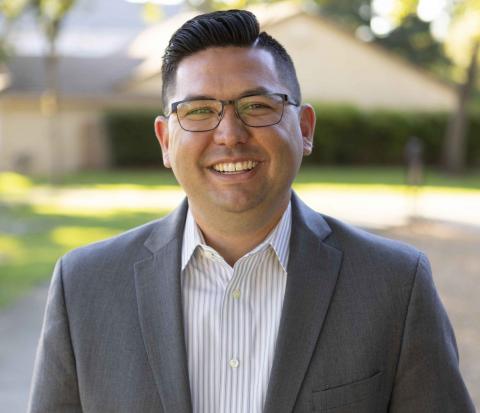
Asm. Joshua Hoover
Sponsored bills
This measure would recognize July 28 as World Hepatitis Day and would urge all California institutions, nonprofit organizations, health care organizations, businesses, community leaders, and residents to ensure screenings for hepatitis B and C, vaccinations for hepatitis B, and treatment become the standard of care.
This measure would designate October 23, 2023, as Aromatic L-Amino Acid Decarboxylase (AADC) Deficiency Awareness Day in the state.
This measure would recognize August 15, 2023, as India's Independence Day and urge all Californians to join in celebrating India's independence.
This measure would proclaim August 2023 as Breastfeeding Awareness Month of 2023 in California. The measure would recognize the unique benefits that breastfeeding provides, as specified, and would affirm that Californians should work to ensure that barriers to initiation and continuation of breastfeeding are removed. The measure would encourage Californians to work together to explore ways to, among other things, improve women's access to breastfeeding support services in medical, social, and employment settings.
The California Environmental Quality Act (CEQA) requires a lead agency, as defined, to prepare, or cause to be prepared, and certify the completion of an environmental impact report (EIR) on a project that it proposes to carry out or approve that may have a significant effect on the environment or to adopt a negative declaration if it finds that the project will not have that effect. CEQA also requires a lead agency to prepare a mitigated negative declaration for a project that may have a significant effect on the environment if revisions in the project would avoid or mitigate that effect and there is no substantial evidence that the project, as revised, would have a significant effect on the environment. This bill would specify that the effects of noise generated by project occupants and their guests on human beings is not a significant effect on the environment for residential projects for purposes of CEQA. This bill would specify that institutions of public higher education, in an EIR for a residential or mixed-use housing project, are not required to consider alternatives to the location of the proposed project if certain requirements are met. This bill would declare that it is to take effect immediately as an urgency statute.
This measure would recognize the 50th anniversary of hip hop on August 11, 2023, as a time of celebration, pride, and nostalgia for the citizens of California.
Existing law requires the governing board of a school district, superintendent of schools, or the principal of a public or private school in the state to equip the school with a first aid kit whenever a pupil of the school is conducted or taken on a field trip, as specified. Existing law exempts from civil liability any person who, in good faith and not for compensation, renders emergency medical or nonmedical care or assistance at the scene of an emergency other than an act or omission constituting gross negligence or willful or wanton misconduct. This bill, commencing with the 2024–25 school year and contingent upon an appropriation for its purposes, would require each school district, county office of education, and charter school to (1) equip each classroom at each of its schoolsites with a trauma kit, as defined, (2) inspect and replace or replenish each trauma kit, as necessary, upon each use and at least once every three years, and (3) notify, at least once each school year, its employees of the location of the trauma kits and provide them with contact information for training in the use of the trauma kit, as provided. By imposing additional duties on local educational agencies, the bill would impose a state-mandated local program. The bill would exempt from civil liability a person who renders emergency care or treatment by the use of a trauma kit at the scene of an emergency, as specified. The California Constitution requires the state to reimburse local agencies and school districts for certain costs mandated by the state. Statutory provisions establish procedures for making that reimbursement. This bill would provide that, if the Commission on State Mandates determines that the bill contains costs mandated by the state, reimbursement for those costs shall be made pursuant to the statutory provisions noted above.

The California Environmental Quality Act (CEQA) requires a lead agency, as defined, to prepare, or cause to be prepared, and certify the completion of an environmental impact report on a project that it proposes to carry out or approve that may have a significant effect on the environment or to adopt a negative declaration if it finds that the project will not have that effect. CEQA also requires a lead agency to prepare a mitigated negative declaration for a project that may have a significant effect on the environment if revisions in the project would avoid or mitigate that effect and there is no substantial evidence that the project, as revised, would have a significant effect on the environment. CEQA requires each state agency to establish, by resolution or order, time limits for completing the environmental review of a project where the state agency is the lead agency for the project, as specified. This bill, until January 1, 2031, would require a state agency, acting as the lead agency, to complete its environmental review for an electrical infrastructure project and to approve or deny the project within 2 years of the submission and acceptance of a complete application for the issuance of a lease, permit, license, certificate, or other entitlement for use for electrical infrastructure to the state agency. If the state agency fails to meet this deadline, the bill would require the state agency to submit to the Legislature a report setting forth the reasons that the review could not be completed within the time period and identifying potential impacts to the electrical system that could result from the delay.