Maddy summaryThis bill designates the week of October 6 through October 12, 2024, as National 4-H Week throughout California. It directly affects the nearly 6 million young people participating in the 4-H youth development program and the volunteers who support them. The resolution formally recognizes the organization's role in fostering leadership skills and encourages the celebration of 4-H's contributions to health, science, and civic engagement during that specific week.
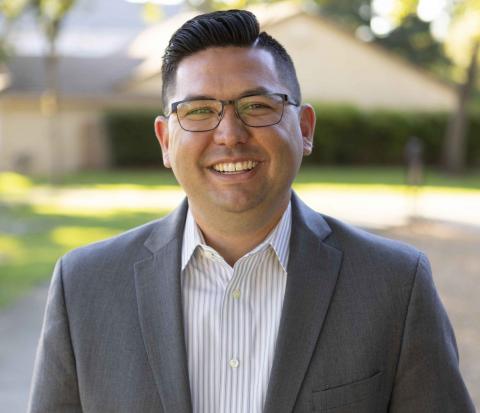
Asm. Joshua Hoover
Sponsored bills
Maddy summaryThis bill designates September 2024 as Sickle Cell Disease Awareness Month in California to highlight the disease's impact, particularly on African American communities. It encourages the state to allocate funds for outreach, education, research, and treatment while also calling for the development of chronic kidney disease screening programs with genetic testing referrals. The resolution aims to raise public knowledge about the condition and support better care outcomes for those affected.
Maddy summaryThis bill designates specific periods in 2024 as Boat People Awareness Week and Month to honor Vietnamese refugees who fled their country by sea after the Vietnam War. The resolution highlights the historical hardships these individuals faced, including dangerous voyages and high mortality rates, while acknowledging their significant contributions to communities across California. It does not create new laws or funding but serves as a commemorative measure to recognize the resilience and spirit of the Vietnamese refugee community. The text is intended to be shared with the bill's author for public distribution to raise awareness about this historical event.
Maddy summaryThis bill recognizes August 15, 2024, as India's Independence Day and encourages all Californians to participate in celebrations honoring the occasion. It directly affects the residents of California, particularly the state's large Indian American community, by formally acknowledging the historical significance of the date when India gained independence from British rule. The measure does not create new laws or change government operations; instead, it serves as a symbolic gesture to highlight the cultural contributions of Indian Americans and the shared values of democracy and nonviolence between the two nations.
This measure would declare the month of June 2024 to be Portuguese Heritage Month and would recognize June 10 as the Day of Portugal and May 20 as the Day of the Azores.
Maddy summaryThis bill officially recognizes June 21, 2024, as the 2024 International Day of Yoga within the state of California. It does not create new laws or change existing regulations but serves as a formal acknowledgment of the global event. The measure is intended to highlight the history and benefits of yoga as a wellness practice.
This measure would designate the week of June 23, 2024, to June 29, 2024, inclusive, and every third week of June thereafter, as Roadside Assistance Worker Appreciation Week.
Existing law authorizes the Governor to appoint and commission individuals designated by a railroad company to serve as police officers. Existing law, until January 1, 2026, requires the Department of the California Highway Patrol to coordinate with the Department of Justice to convene a regional property crimes task force to identify geographic areas experiencing increased levels of property crimes and assist local law enforcement with resources, such as personnel and equipment. This bill would require the task force to assist railroad police and would specify cargo theft as a property crime for consideration by the regional property crimes task force. This bill would declare that it is to take effect immediately as an urgency statute.
Existing law establishes the University of California, administered by the Regents of the University of California, the California State University administered by the Trustees of the California State University, and the California Community Colleges, administered by the Board of Governors of the California Community Colleges, as the 3 segments of public postsecondary education in the state. The Donahoe Higher Education Act prohibits the campuses of those segments from charging mandatory systemwide tuition or fees to specified students who apply for a waiver, including a child of any veteran of the United States military who has a service-connected disability, has been killed in service, or has died of a service-connected disability, an undergraduate student who is a recipient of a Medal of Honor, or an undergraduate student who is a child of a recipient of a Medal of Honor and who is no more than 27 years of age, if certain requirements are satisfied. This bill would additionally prohibit the campuses of the University of California and California State University from charging tuition or fees for specified students who enroll in an extended education course if certain requirements are satisfied and the extended education course is being used to meet the requirements of an undergraduate degree program. The bill would apply to the campuses of the University of California only to the extent that the Regents of the University of California, by appropriate resolution, make it apply.
Existing law, the Parent's Accountability and Child Protection Act, requires a person or business that conducts business in California and that seeks to sell specified products or services to take reasonable steps to ensure that the purchaser is of legal age at the time of purchase or delivery, including verifying the age of the purchaser. The act provides that reasonable steps include, but are not limited to, any of specified options, including requiring the user to input, scan, provide, or display a government-issued identification, as specified. The act prohibits any person or business required to comply with the provisions of the act from retaining, using, or disclosing any information it receives from a purchaser or recipient in an effort to verify age under the provisions of the act. In an action brought by a public prosecutor, existing law subjects a business or person that violates these provisions to a civil penalty not to exceed $7,500 for each violation. This bill would expand the above-described provisions to require a person or business that conducts business in California and seeks to sell or make available products or services that are illegal to make available to minors, as specified, to take reasonable steps to ensure that the purchaser or user, as defined, is of legal age at the time of access, purchase, or delivery, as applicable. The bill would provide that reasonable steps include, but are not limited to, any of specified options, including requiring the user or purchaser to input, scan, provide, or display a government-issued identification, as specified, and would also require the Attorney General to issue regulations further defining reasonable steps pursuant to these provisions, as provided. The bill would expand the above-described prohibition against retention, use, or disclosure to apply to a person or business that conducts business in California and that seeks to make available products that are illegal to make available to minors and would require the business or person to ensure that the reasonable step is designed to anonymize a user's identity and is incapable of being used to create a record of the user's online activity. This bill would provide that the penalty described above for a violation of the bill's provisions with regard to certain products or services that are illegal to make available to minors may be assessed and recovered only in a civil action brought by the Attorney General. The bill would also delete an obsolete provision. The bill would make the bill's provisions operative on January 1, 2027.