

Existing law provides for the licensure and regulation of health facilities, including hospitals, by the State Department of Public Health. Existing law requires the Department of Health Care Access and Information to administer various programs related to health facilities with regard to, among other things, health data, financing, and design review and construction. This bill would require the 2 departments to coordinate and act concurrently, to the extent practicable and consistent with applicable law, in the review and processing of any hospital application requiring approval from both departments, as specified. The bill would require each department to commence review of a hospital application upon receipt of a complete application and payment of any applicable fee. The bill would prohibit the automatic imposition of a waiting period, but the bill would authorize imposition of a reasonable waiting period if the applicant has demonstrated a documented pattern of failure to honor a payment obligation for prior submissions.
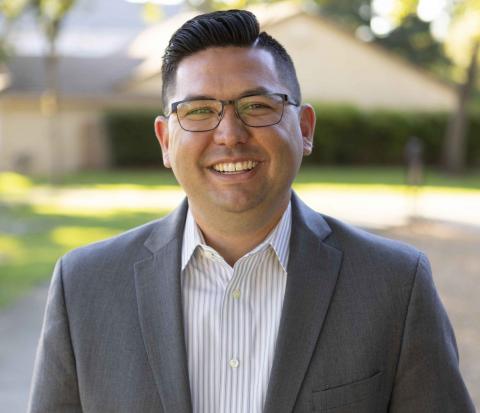
Asm. Joshua Hoover
Sponsored bills
Existing law establishes the Office of Small Business Advocate within the Governor's Office of Business and Economic Development and prescribes the duties and functions of the Small Business Advocate. Existing law requires the advocate to, among other duties, serve as the principal advocate in the state on behalf of small businesses and to represent the views and interests of small businesses before other state agencies policies and activities of which may affect small businesses. This bill would enact the AI for Main Street Act, which would require the Small Business Advocate to provide assistance to small businesses in evaluating artificial intelligence concerning operations, including by providing information, guidance, and training, developing training materials, and conducting outreach, as specified.
Existing law designates the State Air Resources Board as the state agency responsible for the preparation of the state implementation plan required by the federal Clean Air Act, and requires the state board to adopt standards, rules, and regulations that are consistent with the state goal of providing a decent home and suitable living environment for every Californian. Existing law, the Administrative Procedure Act, governs, among other things, the procedures for the adoption, amendment, or repeal of regulations by state agencies. Existing law requires a state agency proposing to adopt, amend, or repeal a regulation that is not a major regulation, as defined, to prepare an economic impact assessment, as provided. Existing law requires a state agency that is proposing to adopt, amend, or repeal a major regulation to prepare a standardized regulatory impact analysis, as provided. This bill would require the State Air Resources Board proposing to adopt, amend, or repeal a regulation to include in either the economic impact assessment, or the standardized regulatory impact assessment, a distributional analysis of the costs, benefits, and net impacts on personal income across income levels and an informative digest, as provided.
The Personal Income Tax Law, in modified conformity with federal income tax laws, allows various deductions in calculating taxable income. Existing federal income tax law, for taxable years beginning before January 1, 2029, allows deductions in determining taxable income, as defined, for amounts equal to the qualified tips, as defined. This bill, for taxable years beginning on or after January 1, 2026, and before January 1, 2029, would conform to federal income tax law with regard to qualified tips, except as provided. Existing law requires any bill authorizing a new tax expenditure to contain, among other things, specific goals that the tax expenditure will achieve, detailed performance indicators, and data collection requirements. This bill also would include additional information required for any bill authorizing a new tax expenditure. This bill would take effect immediately as a tax levy.
Existing law defines a sexually violent predator to mean a person who has been convicted of a sexually violent offense against one or more victims and who has a diagnosed mental disorder that makes the person a danger to the health and safety of others in that it is likely that the person will engage in sexually violent criminal behavior. For purposes of this definition, a conviction for a sexually violent offense includes convictions that resulted in either a determinate or an indeterminate prison sentence, as specified. Existing law requires the Secretary of the Department of Corrections and Rehabilitation to refer a person who is in custody under that department's jurisdiction, and who is serving a determinate sentence or whose parole has been revoked, for evaluation by the State Department of State Hospitals at least 6 months prior to that individual's scheduled date for release from prison if the secretary determines that the person may be a sexually violent predator. Existing law requires a petition for commitment as a sexually violent predator to be filed in the county in which the person was convicted of the sexual offense for which the person was committed to the jurisdiction of the Department of Corrections and Rehabilitation. This bill would also require the Executive Officer of the Board of Parole Hearings to make that referral and revise the criteria for referral to additionally apply to a person who is serving an indeterminate prison sentence. The bill would also authorize the secretary, or the Executive Officer of the Board of Parole Hearings, to refer the person for evaluation if the person will be scheduled for a parole hearing within the next 6 months. By imposing additional duties on counties regarding commitment of persons as sexually violent predators, this bill would impose a state-mandated local program. The bill would also make conforming changes. The California Constitution requires the state to reimburse local agencies and school districts for certain costs mandated by the state. Statutory provisions establish procedures for making that reimbursement. This bill would provide that, if the Commission on State Mandates determines that the bill contains costs mandated by the state, reimbursement for those costs shall be made pursuant to the statutory provisions noted above.
Maddy summaryThis bill designates the month of April as California Rodeo Appreciation Month to recognize the state's rodeo culture. It directly affects rodeo enthusiasts, participants, and organizations by officially acknowledging their contributions through a state resolution. The measure does not change laws or allocate funding; instead, it serves as a commemorative gesture to highlight the importance of rodeos in California. Once passed, the designation appears in the state statutes as a formal recognition of the event.
This measure would proclaim the week of April 20, 2026, to April 24, 2026, inclusive, as California Home Visiting Week, and would encourage all Californians to recognize and celebrate the contributions of home visiting programs and professionals and the families they serve.
Maddy summaryThis bill designates the week of April 19 to April 25, 2026, as Mosquito Awareness Week. The measure is a commemorative resolution that officially recognizes this specific time period to highlight mosquito-related issues. It does not create new laws, impose regulations, or allocate funding, but rather serves to raise public awareness through official designation.
Maddy summaryThis bill designates April 2026 as Parkinson's Disease Awareness Month in California. It requires state officials to issue a formal proclamation highlighting the importance of raising public awareness about the condition. The measure does not change laws or allocate funding but serves to recognize the month dedicated to this health issue.
This measure would proclaim March 2026 as American Red Cross Month, dedicate it to all those who continue to advance the noble legacy of the organization's founder, and encourage all Californians to reach out, support the organization's humanitarian mission, and join in their commitment to care for people in need.