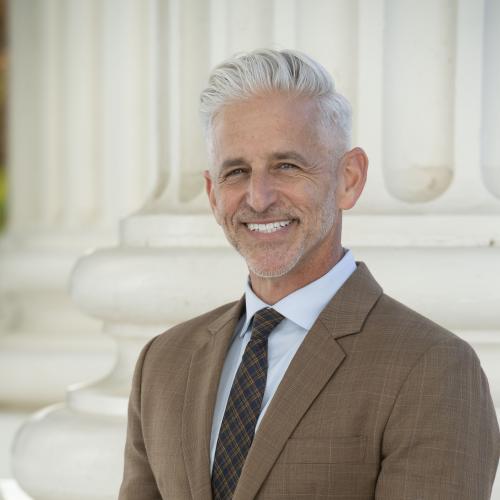
Photo of Josh Lowenthal
D California Assembly · District 69 On the 2026 ballot

Asm. Josh Lowenthal

Compare
Total votes
10,647
all sessions
Attendance
98%
155 missed
Near the chamber average
With party
99%
of cast votes
Near the chamber average
Bipartisan score
0%
crosses aisle rarely
Near the chamber average
Sponsored
853
bills & resolutions
Near the chamber average
Committees
10
assignments
853 bills and resolutions

Sponsored bills

Total
853
Primary
80
Co-sponsor
773
This page
853
matching current filters
Co-sponsor ACR 126
Signed into law · California Assembly · Co-sponsor
Relative to the Sergeant Nicole Gee, United States Marine Corps Memorial Highway.

This measure would designate the portion of Interstate 80 in the County of Placer, from the Douglas Boulevard Overcrossing, 19-0079 at postmile 1.975, to the junction of State Route 65 at postmile 4.160, as the Sergeant Nicole Gee, United States Marine Corps Memorial Highway. The measure would also request that the Department of Transportation determine the cost of appropriate signs showing this special designation and, upon receiving donations from nonstate sources sufficient to cover the cost, to erect those signs.

Signed into law Jul 18, 2024 1 co-sponsor
Co-sponsor ACR 196
Signed into law · California Assembly · Co-sponsor
Relative to lung cancer awareness.

Maddy summaryThis bill designates November 2024 as Lung Cancer Awareness Month and the second Saturday of that month as Lung Cancer Screening Day in California. It aims to raise public awareness about the importance of early detection and encourage eligible individuals to discuss screening options with their healthcare providers. The resolution also calls for increased education regarding lung cancer risk factors, health disparities, and available screening methods to improve survival rates.

Signed into law Jul 18, 2024 1 co-sponsor
Co-sponsor ACR 166
Signed into law · California Assembly · Co-sponsor
Relative to the federal Indian Citizenship Act of 1924.

Maddy summaryThis legislative resolution commemorates the 100th anniversary of the federal Indian Citizenship Act of 1924, which granted U.S. citizenship to Native Americans born within the country's borders. The measure specifically highlights the historical significance of the 1924 Piper v. Big Pine School District case, where a California court ruled in favor of a Paiute student's right to attend public school based on her new citizenship status. By formally recognizing this centennial, the bill honors the progress made in Native American education and integration while acknowledging the state's ongoing efforts toward truth and healing.

Signed into law Jul 18, 2024 1 co-sponsor
Primary AB 295
Signed into law · California Assembly · Lead sponsor
Residential real property: foreclosure.

Existing law prescribes various requirements to be satisfied before the exercise of a power of sale under a mortgage or deed of trust and prescribes a procedure for the exercise of that power. This bill would prohibit a person from contacting, soliciting, or initiating communication with an owner to claim the surplus funds from a foreclosure sale of the owner's residence before 90 days after the trustee's deed has been required. In performing acts required by the provisions pertaining to the exercise of a power of sale under a mortgage or deed of trust, existing law provides that the trustee does not incur liability for specified errors and that the trustee is not subject to specified law. This bill would add that a trustee does not incur liability and is not subject to that specified law when responding to requests for payoff or reinstatement information. When some or all of the principal sum of an obligation secured by real property has become due prior to the maturity date by reason of default or other specified failure to pay and a power of sale is to be exercised, existing law authorizes a trustor or mortgagor, at any time prior to foreclosure, to pay to the beneficiary or mortgagee specified amounts, including specified amounts shown in the notice of default and reasonable costs and expenses that are actually incurred in enforcing the terms of the obligation, deed of trust, or mortgage, as specified. If the trustor or mortgagor cures the default pursuant to these provisions, existing law requires the beneficiary or mortgagee to execute and deliver to the trustee a notice of rescission, as specified. Existing law limits costs and expenses that may be charged pursuant to specified mortgage law to $50. This bill would include reasonable costs and expenses that will be incurred as a direct result of the cure payment being tendered as part of the cure payment described above. This bill would include recording a notice of rescission as part of the costs and expenses that may be charged pursuant to specified mortgage law and raise the limit to $100. Existing law specifies when a trustee's sale is deemed final and perfected, and provides that, if an eligible bidder submits a written notice of intent to bid pursuant to (1) , as described below, the trustee's sale is deemed perfected as of 8 a.m. on the actual date of sale if a specified requirement is met. This bill would recast that provision to provide that the trustee's sale is deemed perfected as of 8 a.m. on the actual date of sale if a specified requirement is met if an eligible bidder submits a written notice of intent to bid under any of the provisions granting eligible bidders the rights and priorities to make bids on the property after the initial trustee sale described above. Existing law, until January 1, 2031, grants eligible tenant buyers, as defined, and other eligible bidders, as defined, certain rights and priorities to make bids on the property after the initial trustee sale. Existing law provides that a trustee's sale of property under a power of sale contained in a deed of trust or mortgage on specified real property until the earliest of, among other things, (1) the date upon which a representative of all of the eligible tenant buyers submits to the trustee a bid that meets specified requirements, including that the bid be limited to a single bid amount and not contain instructions for successive bid amounts; and (2) 45 days after the trustee's sale, except if an eligible bidder submits to the trustee a bid meeting specified requirements. Existing law requires prospective owner-occupants, as defined, eligible tenant buyers, and eligible bidders to submit specified affidavits or declarations regarding bidder eligibility under certain circumstances. Existing law authorizes the trustee to reasonably rely on these affidavits and declarations regarding bidder eligibility, and requires these affidavits or declarations of the winning bidder to be attached as an exhibit to the trustee's deed and recorded. This bill would remove the requirement that the bid be limited to a single bid amount and not contain instructions for successive bid amounts from (1) , as described above, and would add that requirement to (2) , as described above. If the winning bidder is not required to submit an affidavit or declaration pursuant to the provisions described above, the bill would require the trustee to attach as an exhibit to the trustee's deed a statement that no affidavit or declaration is required by these provisions, and would provide that the lack of an affidavit or declaration shall not prevent the deed from being recorded and shall not invalidate the transfer of title pursuant to the trustee's deed. Existing law requires, for trustee's sales where the winning bidder is an eligible bidder under the provisions described above, the trustee or an authorized agent to electronically send specified information to the Attorney General within 15 days of the sale being deemed final, including a copy of the trustee's deed, as recorded, as specified. This bill would recast that provision to require the trustee to provide a copy of the trustee's deed as executed instead of as recorded. Existing law, the COVID-19 Small Landlord and Homeowner Relief Act of 2020, requires a mortgage servicer to provide a specified written notice to a borrower if the mortgage servicer denies forbearance during the effective time period that states the reasons for that denial if the borrower was both current on payments as of February 1, 2020, and is experiencing a financial hardship that prevents the borrower from making timely payments on the mortgage obligation due, directly or indirectly, to the COVID-19 emergency. The act defines various terms for these purposes. If a mortgage servicer denies a forbearance request, the act requires a specified declaration to include the written notice together with a statement as to whether forbearance was or was not subsequently provided. This bill would clarify that the act requires that specified declaration to include that written notice if the mortgage servicer denied the forbearance request during the effective time period. This bill would declare that it is to take effect immediately as an urgency statute.


Signed into law Jul 18, 2024 0 co-sponsors
Co-sponsor ACR 208
Signed into law · California Assembly · Co-sponsor
Relative to California State Parks Week.

This measure would proclaim the Legislature's support for California State Parks Week, observed the days of June 12, 2024, to June 16, 2024, inclusive, and provide that the Legislature encourages all Californians and visitors to the state to cherish, protect, enjoy, and find inspiration in the diverse holdings within the state park system.

Signed into law Jul 18, 2024 1 co-sponsor
Co-sponsor ACR 192
Signed into law · California Assembly · Co-sponsor
Relative to Juneteenth.

This measure would recognize June 19, 2024, as Juneteenth and would urge the people of California to join in celebrating Juneteenth as a day to honor and reflect on the significant role that African Americans have played in the history of the United States and how they have enriched society through their steadfast commitment to promoting unity and equality.

Signed into law Jul 18, 2024 1 co-sponsor
Co-sponsor AJR 13
Signed into law · California Assembly · Co-sponsor
Relative to postsecondary education.

This measure would request the Congress of the United States to pass, and the President of the United States to sign, the Upskilling and Retraining Assistance Act and the Upward Mobility Enhancement Act.

Signed into law Jul 18, 2024 1 co-sponsor
Primary AB 1463
Failed · California Assembly · Lead sponsor
Automated license plate recognition systems: retention and use of information.

Existing law authorizes the Department of the California Highway Patrol to retain license plate data captured by license plate reader technology, also referred to as an automated license plate recognition (ALPR) system, for not more than 60 days unless the data is being used as evidence or for the investigation of felonies. Existing law authorizes the department to share that data with law enforcement agencies for specified purposes. Existing law requires ALPR operators and ALPR end-users, as those terms are defined, to implement usage and privacy policies and to maintain reasonable security procedures and practices regarding ALPR information, as specified. Existing law requires the usage and privacy policy implemented by an ALPR operator or an ALPR end-user to include the length of time ALPR information will be retained and the process the ALPR operator or ALPR end-user will utilize to determine if and when to destroy retained ALPR information. This bill would require an ALPR operator or ALPR end-user that is a public agency, excluding an airport authority, to include in those policies, procedures, and practices a requirement that ALPR information that does not match information on a hot list, as defined, be purged in 30 days, as specified. The bill would also prohibit those ALPR operators and end-users from accessing ALPR information that is older than 60 days, except as specified. The bill would impose annual audit requirements to review and assess ALPR end-user searches during the previous year to determine compliance with the usage and privacy policy, as specified. Existing law prohibits a public agency from selling, sharing, or transferring ALPR information, except to another public agency, and only as otherwise permitted by law. This bill would prohibit ALPR information from being sold, shared, or transferred to an out-of-state or federal agency without a court order or warrant issued by a California court. The bill would make related findings and declarations.

Failed Jul 2, 2024 0 co-sponsors
Co-sponsor ACR 147
Signed into law · California Assembly · Co-sponsor
Relative to California's First-Generation College Celebration Day.

This measure would designate November 8, 2024, as "California's First-Generation College Celebration Day." The measure would urge all higher education institutions in the state to celebrate California's First-Generation College Celebration Day, recognize the significant role of first-generation college students in developing the state's future workforce, celebrate the federal Higher Education Act of 1965, and support first-generation college students with opportunities and equity in completing their desired degree programs.

Signed into law Jul 2, 2024 1 co-sponsor
Co-sponsor ACR 206
Signed into law · California Assembly · Co-sponsor
Relative to Immigrant Heritage Month.

Maddy summaryThis bill officially designates June 2024 as Immigrant Heritage Month in California to recognize the contributions of immigrants to the state's economy and society. The measure does not change laws or create new programs but serves as a symbolic proclamation to highlight the cultural and economic impact of immigrant communities. It is a non-binding resolution that affects the public by encouraging acknowledgment of immigrant heritage rather than imposing specific obligations on individuals or businesses.

Signed into law Jul 2, 2024 1 co-sponsor
Showing 461 to 470 of 853 bills
Previous 1 … 46 47 48 … 86 Next