

Existing law regulates automatic renewal offers and continuous service offers that businesses make to California consumers. Existing law defines "automatic renewal" for these purposes to mean a plan or arrangement in which a paid subscription or purchasing agreement is automatically renewed at the end of a definite term for a subsequent term. Existing law also defines "continuous service" to mean a plan or arrangement in which a subscription or purchasing agreement continues until the consumer cancels the service. This bill would revise those definitions to include a provision of a contract containing those subscriptions or purchasing agreements and to include a plan, arrangement, or provision of a contract that contains a free-to-pay conversion. The bill would further define "free-to-pay conversion" to mean, in an offer or agreement to sell or provide any goods or services, a provision under which a customer receives a product or service for free for an initial period and will incur an obligation to pay for the product or service if they do not take affirmative action to cancel before the end of that period. Existing law makes it unlawful for a business that makes an automatic renewal offer or continuous service offer to a consumer in this state to take or fail to take certain actions relating to the communication of, and consent to, the terms of the offer. In this regard, existing law requires, among other things, the business to present the terms in a clear and conspicuous manner before the subscription or purchasing agreement is fulfilled and in visual or temporal proximity to the request for consent to the offer, as specified. Existing law also requires the business to provide an acknowledgment that includes the automatic renewal offer terms or continuous service offer terms, cancellation policy, and information regarding how to cancel in a specified manner. This bill would require the business to obtain the consumer's express affirmative consent to the automatic renewal or continuous service offer terms, as defined. The bill would prohibit the business from including any information in the contract that undermines the ability of consumers to provide their affirmative consent, as specified. The bill would require the business to maintain verification of the consumer's affirmative consent for at least 3 years, or one year after the contract is terminated, whichever period is longer. The bill would prohibit the misrepresentation of material facts or terms related to the transaction, as provided. The bill would also require the business to send the consumer an annual reminder that discloses, as specified, the product or service to which the automatic renewal or continuous service applies, the frequency and amount of the associated charges, and the means to cancel the service. Existing law requires a business that makes an automatic renewal offer or continuous service offer to provide various methods for cancellation or termination, including by toll-free telephone number, email address, a postal address, another cost-effective, timely, and easy-to-use mechanism for cancellation, or online if specified requirements are met. This bill would require the ability to cancel or terminate to be available in the same medium that the consumer used in the transaction that resulted in the activation of the automatic renewal or continuous service, or the same medium in which the consumer is accustomed to interacting with the business, as specified. The bill would require a mechanism for cancellation by toll-free telephone number to, among other things, be answered promptly during normal business hours and not obstruct or delay the consumer's ability to cancel the service or feature, as specified. In this regard, the bill would also specify that it is not an obstruction or delay to provide a discount offer or other consumer benefit or to inform a consumer of the effect of the cancellation if the consumer remains able to cancel or terminate the automatic renewal or continuous service, as specified. Existing law requires, in the case of a material change in the terms of the automatic renewal or continuous service that has been accepted by a consumer in this state, the business to provide the consumer with a clear and conspicuous notice of the material change and information regarding how to cancel in a specified manner. This bill would additionally require, in the case of the business changing the fee, including changes the consumer affirmatively consented to in an existing plan or arrangement, the business to provide a clear and conspicuous notice of the fee change and information regarding how to cancel in a specified manner no less than 7 days and no more than 30 days before the fee change takes effect. Existing law requires a business that made an automatic renewal or continuous service offer that includes a free gift or trial, a promotional or discounted price, or an initial term of one year or longer, as specified, to provide the consumer with a certain notice a certain number of days before the promotional period expires or the offer automatically renews, as prescribed. Existing law requires the notice to clearly and conspicuously state specified information, including that the service will automatically renew unless the consumer cancels and the method by which the consumer can cancel the service. This bill would also require the business to provide the notice to the consumer before confirming the consumer's billing information. The bill would also require the notice to include the amount or range of costs the consumer will be charged and, if applicable, the frequency of those charges a consumer will incur unless the consumer takes timely steps to prevent or stop those charges. This bill would apply its provisions to contracts entered into, amended, or extended on or after July 1, 2025.
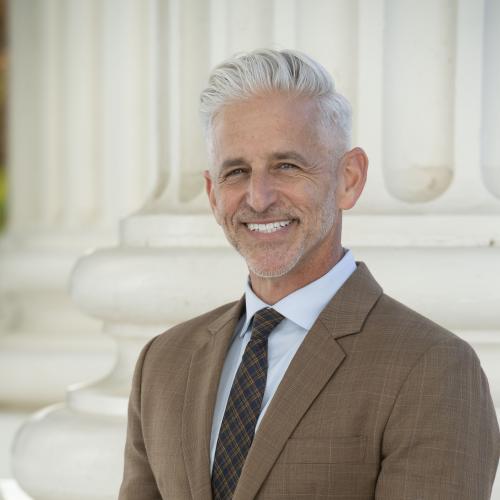
Asm. Josh Lowenthal
Sponsored bills
Existing law authorizes the governing body of a school district, a county office of education, or a charter school to adopt a policy to limit or prohibit the use by its pupils of smartphones while the pupils are at a schoolsite or while the pupils are under the supervision and control of an employee or employees of that school district, county office of education, or charter school. Existing law, however, specifies circumstances in which a pupil may not be prohibited from possessing or using a smartphone. This bill would instead require the governing body of a school district, a county office of education, or a charter school to, by July 1, 2026, develop and adopt, and to update every 5 years, a policy to limit or prohibit the use by its pupils of smartphones while the pupils are at a schoolsite or while the pupils are under the supervision and control of an employee or employees of that school district, county office of education, or charter school, as provided. By imposing additional duties on local educational agencies, the bill would constitute a state-mandated local program. The California Constitution requires the state to reimburse local agencies and school districts for certain costs mandated by the state. Statutory provisions establish procedures for making that reimbursement. This bill would provide that, if the Commission on State Mandates determines that the bill contains costs mandated by the state, reimbursement for those costs shall be made pursuant to the statutory provisions noted above.
Existing law, the Alcoholic Beverage Control Act, administered by the Department of Alcoholic Beverage Control, regulates the application for, the issuance of, the suspension of, and the conditions imposed upon various alcoholic beverage licenses. Existing law generally makes a violation of the act a misdemeanor and grounds for suspension or revocation of a license, except as specified. Existing law, beginning July 1, 2024, requires an applicant for a new permanent on-sale general public premises (Type 48) license or the holder of an existing Type 48 license to offer for sale to their customers drug testing devices at a cost not to exceed a reasonable amount based on the wholesale cost of those devices and requires the licensee to post a related notice containing specified language in a prominent and conspicuous location. Existing law prohibits a Type 48 licensee from being held liable for a defective test or inaccurate test result. Existing law repeals the above-described provisions on January 1, 2027. This bill would require an applicant for a new permanent Type 48 license or the holder of an existing Type 48 license to contact and provide specified information to law enforcement or emergency medical services when they are notified by a customer that the customer or another customer believes they have been a victim of drink spiking, as defined. The bill would also require the licensee or a member of the staff to, upon contacting law enforcement or emergency medical services, follow any instructions provided and monitor the customer until law enforcement or emergency medical services arrive at the premises, as specified. The bill would specify that a violation of its provisions is not a crime.
Existing law, the California Age-Appropriate Design Code Act, requires, beginning July 1, 2024, a business that provides an online service, product, or feature likely to be accessed by children to comply with certain requirements. The act requires the business to complete a data protection impact assessment addressing, among other things, whether the design could harm children and whether and how the online product, service, or feature uses system design features to increase, sustain, or extend use of the online product, service, or feature by children, including the automatic playing of media, rewards for time spent, and notifications. Existing law prohibits the business from using the personal information of any child in a way that the business knows, or has reason to know, is materially detrimental to the physical health, mental health, or well-being of a child. Existing law, the Privacy Rights for California Minors in the Digital World, prohibits an operator of an internet website, online service, online application, or mobile application from specified conduct when minors are involved, including the marketing or advertising of alcoholic beverages, firearms, or certain other products or services. Existing law sets forth other related protections for minors, including under the California Consumer Privacy Act of 2018 and the California Privacy Rights Act of 2020. This bill, the Protecting Our Kids from Social Media Addiction Act, would make it unlawful for the operator of an addictive internet-based service or application, as defined, to provide an addictive feed to a user, unless the operator does not have actual knowledge that the user is a minor; commencing January 1, 2027, has reasonably determined that the user is not a minor; or has obtained verifiable parental consent to provide an addictive feed to the user who is a minor. The bill would define "addictive feed" as an internet website, online service, online application, or mobile application, in which multiple pieces of media generated or shared by users are recommended, selected, or prioritized for display to a user based on information provided by the user, or otherwise associated with the user or the user's device, as specified, unless any of certain conditions are met. The bill would make it unlawful for the operator of an addictive internet-based service or application, between the hours of 12 a.m. and 6 a.m., in the user's local time zone, and between the hours of 8 a.m. and 3 p.m., Monday through Friday from September through May in the user's local time zone, to send notifications to a user if the operator has actual knowledge that the user is a minor or, commencing January 1, 2027, has not reasonably determined that the user is not a minor, unless the operator has obtained verifiable parental consent to send those notifications, as specified. The bill would set forth related provisions for certain access controls determined by the verified parent through a mechanism provided by the operator. Under the bill, a parent's provision of consent or use of a mechanism, as described above, would not waive, release, otherwise limit, or serve as a defense to, any claim that the parent, or that the user who is a minor or was a minor at the time of using the internet-based service or application, might have against the operator regarding any harm to the mental health or well-being of the user. The bill would require an operator to annually disclose the number of minor users of its addictive internet-based service or application, and of that total the number for whom the operator has received verifiable parental consent to provide an addictive feed, and the number of minor users as to whom the access controls are or are not enabled. Under the bill, these provisions would only be enforced in a civil action brought in the name of the people of the State of California by the Attorney General. The bill would require the Attorney General to adopt regulations to further the purposes of these provisions, including regulations regarding age assurance and parental consent by January 1, 2027. The bill would authorize the Attorney General to adopt regulations that provide for exceptions to these provisions, but only if those exceptions further the purpose of protecting minors. The bill would require the Attorney General, in promulgating regulations, to solicit public comment regarding the impact that any regulation might have based on certain nondiscrimination characteristics set forth in existing law. The bill would make these provisions severable.
The California Consumer Privacy Act of 2018 (CCPA) grants a consumer various rights with respect to personal information that is collected or sold by a business, as defined, including the right to direct a business that sells or shares personal information about the consumer to third parties not to sell or share the consumer's personal information, as specified. The California Privacy Rights Act of 2020, approved by the voters as Proposition 24 at the November 3, 2020, statewide general election, amended, added to, and reenacted the CCPA and establishes the California Privacy Protection Agency (agency) and vests the agency with full administrative power, authority, and jurisdiction to enforce the CCPA. This bill would prohibit a business from developing or maintaining a browser that does not include a setting that enables a consumer to send an opt-out preference signal, as defined, to businesses with which the consumer interacts through the browser and would, 6 months after the adoption of certain regulations by the agency, prohibit a business from developing or maintaining a mobile operating system, as defined, that does not include a setting that enables a consumer to send an opt-out preference signal to businesses with which the consumer interacts through the mobile operating system. The bill would authorize the agency to adopt regulations as necessary to implement and administer those provisions, including to update the definitions of "browser" and "mobile operating system" to address changes in technology, data collection, obstacles to implementation, or privacy concerns. The bill would make these provisions operative on January 1, 2026. This bill would declare that its provisions further the purposes and intent of the California Privacy Rights Act of 2020.
This measure would, among other things, urge the United States Congress and President Joseph R. Biden to fully fund the United States Environmental Protection Agency's Comprehensive Infrastructure Solution for the Tijuana River due to the ongoing impacts to public health, the environment, and the local economy caused by cross-border pollution and would urge President Joseph R. Biden to declare a national emergency due to those ongoing impacts.
Existing law provides that everyone is responsible not only for the result of their willful acts, but also for an injury occasioned to another by their want of ordinary care or skill in the management of their property or person. This bill would make a social media platform, as defined, liable for specified civil penalties in addition to any other remedy provided by law, if the platform knowingly and willfully fails to exercise ordinary care or skill toward a child. Under the bill, the civil penalties would only be available in an action brought by the Attorney General, a district attorney, or a city attorney. The bill would require no less than 51% of any civil penalties recovered pursuant to the bill to be deposited into the Safe Social Media Fund, which the bill would create. The bill would allow money deposited into the fund, upon appropriation by the Legislature, to be used by the Office of the Surgeon General to raise awareness about safe social media use. The bill would apply to causes of action arising from conduct occurring on or after January 1, 2026. The bill would declare that its provisions are severable.
This measure would urge the Congress of the United States to repeal the state and local tax deduction limitation so that residents of California and married taxpayers are no longer penalized by the federal tax code.
Maddy summaryAssembly Concurrent Resolution 120 designates January 2024 as Positive Parenting Awareness Month in California. This measure does not change laws or allocate funding but instead encourages state agencies, communities, and organizations to focus on the importance of positive parenting strategies. The resolution highlights how supportive family environments can improve children's health and well-being while acknowledging the diverse forms families take in the state. It serves as a formal acknowledgment of existing programs and resources rather than creating new mandates or policies.
This measure would proclaim September 20, 2024, and September 20 of each year thereafter, as California Youth Climate Action Day to honor and support the efforts of young people in their pursuit of environmental sustainability, climate justice, and the preservation of biodiversity.