

Passed Feb 20, 2024
1 co-sponsor
D
California Assembly
·
District 68
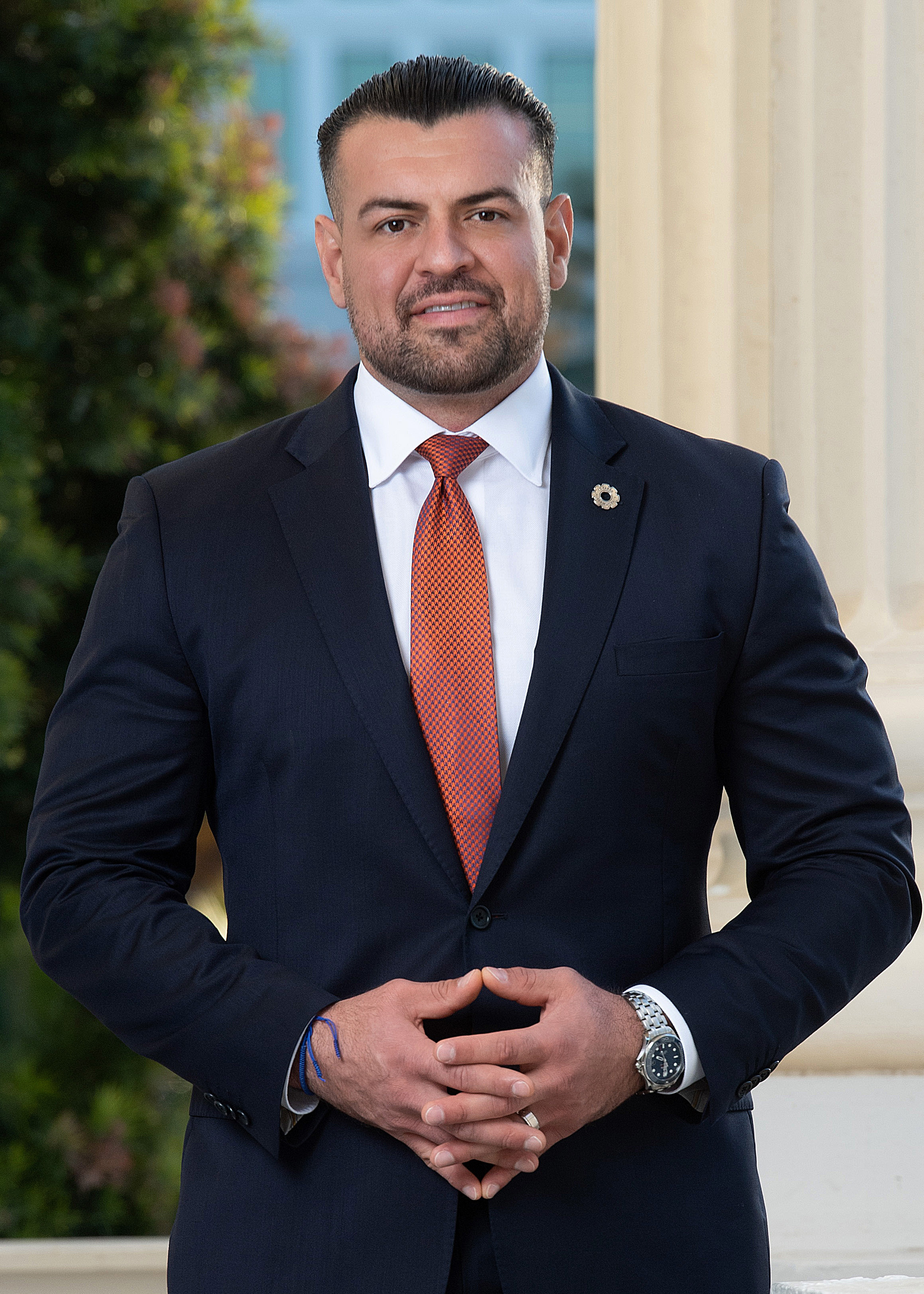
Asm. Avelino Valencia
Total votes
9,016
all sessions
Attendance
93%
604 missed
Near the chamber average
With party
99%
of cast votes
Near the chamber average
Bipartisan score
0%
crosses aisle rarely
Near the chamber average
Sponsored
751
bills & resolutions
Near the chamber average
Committees
11
assignments
751 bills and resolutions
Sponsored bills
Total
751
Primary
58
Co-sponsor
693
This page
751
matching current filters
Office of Management and Budget: Uniform Guidance.
This measure would urge the federal Office of Management and Budget to update its Uniform Guidance in order to improve job creation, quality, and equity.
Signed into law Feb 15, 2024
1 co-sponsor
Relative to National Human Trafficking Awareness Month.
This measure would recognize the month of January 2024 as National Human Trafficking Awareness Month.
Signed into law Feb 15, 2024
1 co-sponsor
Relative to Data Privacy Week.
This measure would designate, in perpetuity, the 4th week of January as Data Privacy Week and the last Sunday of January as Data Privacy Day.
Signed into law Feb 13, 2024
1 co-sponsor
Passed Feb 12, 2024
1 co-sponsor
Passed Feb 8, 2024
1 co-sponsor
Medi-Cal and Medicare: dual eligible beneficiaries: special needs plans.
Existing law establishes the Medi-Cal program, which is administered by the State Department of Health Care Services and under which qualified low-income individuals receive health care services. The Medi-Cal program is, in part, governed and funded by federal Medicaid program provisions. Existing federal law establishes the Medicare Program, which is a public health insurance program for persons who are 65 years of age or older and specified persons with disabilities who are under 65 years of age. Existing law sets forth various provisions, including within the Coordinated Care Initiative (CCI) and the California Advancing and Innovating Medi-Cal (CalAIM) initiative, relating to beneficiaries who are dually eligible for the Medicare Program and the Medi-Cal program, for purposes of promoting more integrated care through those beneficiaries' aligned enrollment in a Medicare Advantage Dual Eligible Special Needs Plan (D-SNP) , as defined. This bill would require the department, commencing no later than January 1, 2025, to offer contracts to health care service plans for Highly Integrated Dual Eligible Special Needs Plans (HIDE-SNPs) and Fully Integrated Dual Eligible Special Needs Plans (FIDE-SNPs) , as defined, to provide care to dual eligible beneficiaries. The bill would require that a HIDE-SNP or FIDE-SNP contract authorize a beneficiary to select from a number of available options and to maintain their established or selected health care providers. The bill would also require a contracting plan to perform all applicable required care coordination and data-sharing functions, and to provide documentation demonstrating the care integration that dual eligible beneficiaries receive through a HIDE-SNP or FIDE-SNP contract.
Failed Feb 1, 2024
0 co-sponsors
Horse racing: unlicensed penalty.
The Horse Racing Law authorizes the California Horse Racing Board to issue to any person who makes an application in writing, complies with specified provisions of this law, and who makes the deposit to secure payment of the license fee, a license to conduct a horse racing meeting at the track specified in the application, provided that the board determines that the issuance of the license will be in the public interest and will subserve the purposes of the Horse Racing Law. The Horse Racing Law makes it a misdemeanor for a person to directly or indirectly hold or conduct a meeting where there is horse racing and betting on the results, as specified, without first having procured a license. This bill would make it a misdemeanor and subject to a civil fine of up to $25,000 per day, per violation, for a person to directly or indirectly hold, conduct, or facilitate any horse racing in which horses compete against each other without first having procured a license. By creating a crime, this bill would impose a state-mandated local program. The California Constitution requires the state to reimburse local agencies and school districts for certain costs mandated by the state. Statutory provisions establish procedures for making that reimbursement. This bill would provide that no reimbursement is required by this act for a specified reason.
Failed Feb 1, 2024
0 co-sponsors
California Legacy License Plate Program.
Existing law requires the Department of Motor Vehicles to establish the California Legacy License Plate Program, and to create and issue a series of specialized license plates, consisting of one or more of 3 specified designs that replicate license plates from the state's past. Existing law requires the department to collect and hold paid applications for the plates, as specified, and prohibits the department from issuing a specialized license plate until it has received not less than 7,500 paid applications for any one of the particular plates on or before January 1, 2015. This bill would extend the deadline for receipt of the required number of paid applications to January 1, 2025, for plate designs that did not receive the required number of applications by January 1, 2015.
Failed Feb 1, 2024
1 co-sponsor
Passed Jan 25, 2024
1 co-sponsor
Ask Maddy
·
AI policy assistant
Ask Maddy about Avelino Valencia
Scope: california
Hi! I can help you understand Avelino Valencia's legislative record. What would you like to know?
Try one of these
i
Maddy answers using official bill text and legislative records. Always verify before sharing.
Sources cited inline