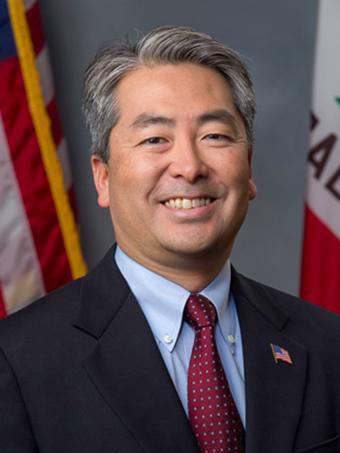
Photo of Al Muratsuchi
D California Assembly · District 66

Asm. Al Muratsuchi

Compare
Total votes
25,954
all sessions
Attendance
94%
1,387 missed
Near the chamber average
With party
98%
of cast votes
Near the chamber average
Bipartisan score
1%
crosses aisle rarely
Near the chamber average
Sponsored
2,045
bills & resolutions
Near the chamber average
Committees
4
assignments
2,045 bills and resolutions

Sponsored bills

Total
2,045
Primary
262
Co-sponsor
1,783
This page
2,045
matching current filters
Primary ACR 85
Signed into law · California Assembly · Lead sponsor
Relative to a Day of Remembrance.

This measure would declare February 19, 2014, as a Day of Remembrance in order to increase public awareness of the events surrounding the internment of Americans of Japanese ancestry during World War II.

Signed into law Mar 17, 2014 0 co-sponsors
Co-sponsor AB 375
Vetoed · California Assembly · Co-sponsor
School employees: dismissal or suspension: hearing.

(1) Existing law prohibits a permanent employee from being dismissed except for one or more of specified causes, including, among other causes, immoral or unprofessional conduct. Existing law requires the governing board of a school district to give notice to a permanent employee of its intention to dismiss or suspend the employee, together with a written statement of charges, for unprofessional conduct or unsatisfactory performance, at the expiration of 30 days from the date of service of the notice, unless the employee demands a hearing. This bill would require that a notice of the governing board of the school district to an employee of its intention to dismiss or suspend the employee, together with written charges filed or formulated pursuant to those procedures, be sufficient to initiate a hearing, as prescribed, and would prohibit the governing board of the school district from being required to file or serve a separate accusation. The bill would revise various procedures for providing notice of dismissal or suspension and would authorize a notice of dismissal or suspension to be given at any time of year, except a notice for a proceeding involving only charges of unsatisfactory performance, which would only be given during the instructional year of the schoolsite where the employee is physically employed. The bill would impose various requirements for the filing of a demand for a hearing and the conduct of hearings by the Office of Administrative Hearings. The bill would prohibit a motion for immediate reversal of suspension from having a bearing on the authority of a governing board of a school district to determine the physical placement and assignment of an employee who is suspended or placed on administrative leave during the review of the motion or while dismissal charges are pending. The bill would delete obsolete provisions relating to the suspension of a permanent employee based on knowing membership by the employee in the Communist Party. (2) Existing law provides that upon being charged, as specified, with certain sex or controlled substance offenses, a certificated employee be placed on either a compulsory leave of absence or an optional leave of absence for certain enumerated violations. This bill would revise the definitions of "charged with a mandatory leave of absence offense" and "charged with an optional leave of absence offense" for purposes of those provisions governing when a certificated employee is required to be placed on either a compulsory leave of absence or an optional leave of absence. Because these revisions would increase the number of employees subject to immediate placement on compulsory leave of absence, thereby increasing the duties of school districts, the bill would impose a state-mandated local program. (3) Existing law requires in a dismissal or suspension proceeding against a permanent employee for unprofessional conduct or unsatisfactory performance, if a hearing is requested by the employee, that the hearing be commenced within 60 days from the date of the employee's demand for a hearing. This bill would require that the hearing be commenced within 6 months from the date of the employee's demand for a hearing, and be completed by a closing of the record within 7 months from the date of the employee's demand for a hearing. The bill would revise various procedures for the conduct of those hearings, as prescribed. The bill would require that, in a dismissal or suspension proceeding carried out under the above provisions, the parties make specified disclosures in lieu of certain written discovery, as prescribed, and would authorize the parties to obtain discovery by oral deposition. The bill would require the governing board of the school district and the state to share equally the expenses of the hearing if the Commission on Professional Competence determines that the employee should be dismissed or suspended. (4) The California Constitution requires the state to reimburse local agencies and school districts for certain costs mandated by the state. Statutory provisions establish procedures for making that reimbursement. This bill would provide that, if the Commission on State Mandates determines that the bill contains costs mandated by the state, reimbursement for those costs shall be made pursuant to these statutory provisions.


Vetoed Mar 6, 2014 1 co-sponsor
Co-sponsor AB 566
Vetoed · California Assembly · Co-sponsor
Courts: personal services contracting.

The Trial Court Employment Protection and Governance Act establishes a trial court employee personnel system that provides authority to hire trial court personnel, regulates the classification and compensation of trial court employees, labor relations, and personnel files, and requires each trial court to establish a system of employment selection and advancement and an employment protection system. Existing law authorizes state agencies to use personal services contracts to achieve cost savings if specified standards are satisfied, including, among other things, the contract does not cause the displacement of civil service employees and the contract is awarded through a publicized, competitive bidding process. The State Personnel Board is required to review a proposed contract upon the request of an employee organization for compliance with those standards. This bill, until January 1, 2020, would establish specified standards if a trial court intends to enter into a new contract, or renew or extend an existing contract, for any services that are currently or customarily performed by that trial court's employees. Among other things, the bill would require the trial court to clearly demonstrate that the contract will result in actual overall cost savings to the trial court for the duration of the entire contract as compared with the trial court's actual costs of providing the same services. The bill would require a contract for services in excess of $100,000 annually to include specific, measurable performance standards and provisions for audits on performance and cost savings, as specified. This bill would provide that these standards apply to any contract entered into, renewed, or extended after the effective date of this measure. The bill would provide that its provisions do not apply to a contract under specified circumstances, including when services are incidental to a contract for the purchase or lease of real or personal property. This bill would require each trial court to provide a report by February 1, 2014, to the Chairperson of the Joint Legislative Budget Committee and the chairpersons of the Senate Judiciary Committee and the Assembly Judiciary Committee if the trial court entered into a contract between July 1, 2013, and the effective date of this measure for services that were provided or are customarily provided by its trial court employees if the contract has a term extending beyond March 31, 2014. This report would be required to include specified information relating to these contracts, including an analysis of whether the contract resulted in the displacement of trial court employees. The bill would provide that its provisions are severable.

Vetoed Mar 6, 2014 1 co-sponsor
Co-sponsor AB 1338
Failed · California Assembly · Co-sponsor
School employees: child abuse: reporting.

Existing law requires the State Office of Abuse Prevention to develop and disseminate information to all school districts and district school personnel regarding the detection of child abuse. Existing law, the Child Abuse and Neglect Reporting Act, requires mandated reporters, which includes teachers, to make a report if the person has knowledge of or observes a child whom the person knows or reasonably suspects has been the victim of child abuse or neglect. This bill would require the governing board of each school district and county office of education, and the governing body of each charter school, to adopt a policy on the reporting of child abuse and the responsibilities of mandated reporters. The bill would require each school district, charter school, and county office of education to review the mandated reporting requirements of school employees with all school personnel within the first 6 weeks of each school year. By expanding the duty of school districts, charter schools, and county offices of education, the bill would impose a state-mandated local program. The California Constitution requires the state to reimburse local agencies and school districts for certain costs mandated by the state. Statutory provisions establish procedures for making that reimbursement. This bill would provide that, if the Commission on State Mandates determines that the bill contains costs mandated by the state, reimbursement for those costs shall be made pursuant to these statutory provisions.
Failed Feb 3, 2014 1 co-sponsor
Primary AB 927
Failed · California Assembly · Lead sponsor
Income taxes: credits: hiring.

The Personal Income Tax Law and the Corporation Tax Law allow various credits against the taxes imposed by those laws. This bill would, under both laws, for taxable years beginning on or after January 1, 2014, allow a credit to a qualified employer, as defined, in an amount equal to $3,000 for each net increase in qualified full-time employee hired during the taxable year by a qualified employer, and an additional $1,000 per qualified full-time employee hired during the taxable year by a qualified employer if the qualified full-time employee is a veteran or an additional $2,000 per qualified full-time employee hired during the taxable year by a qualified employer if the qualified full-time employee is a service-connected disabled veteran, as provided. This bill would limit the total amount of credit allowed to a qualified employer to an amount not to exceed $5,000,000 for all taxable years. This bill would cap the total amount of credit which may be allowed under those provisions for any calendar year to $35,000,000. This bill would take effect immediately as a tax levy.

Failed Feb 3, 2014 0 co-sponsors
Primary AB 728
Failed · California Assembly · Lead sponsor
Land use: school advertising displays.

Existing law authorizes the governing board of a school district, by a 23 vote of its members, to render a city or county zoning ordinance inapplicable to a proposed use of school district property, except when the proposed use is for nonclassroom facilities. This bill would authorize the governing board of a school district, by a 23 vote of its members, to render a city or county zoning ordinance that applies to an advertising display inapplicable to nonclassroom facilities when specified conditions are met. Because the bill would impose additional duties on local planning officials, this bill would create a state-mandated local program. The California Constitution requires the state to reimburse local agencies and school districts for certain costs mandated by the state. Statutory provisions establish procedures for making that reimbursement. This bill would provide that, if the Commission on State Mandates determines that the bill contains costs mandated by the state, reimbursement for those costs shall be made pursuant to these statutory provisions.

Failed Feb 3, 2014 0 co-sponsors
Showing 1,911 to 1,920 of 2,045 bills