

Existing law, until January 1, 2015, provides for the voluntary certification of massage practitioners and massage therapists by the California Massage Therapy Council. Existing law specifies the requirements for the council to issue to an applicant a certificate as a massage practitioner or massage therapist. Existing law authorizes a city, county, or city and county to impose certain requirements on massage establishments or businesses that are the sole proprietorship of an individual certified pursuant to existing state law or that employ or use only persons who are so certified. Existing law authorizes a city, county, or city and county to, among other things, adopt reasonable health and safety requirements, as specified, pertaining to those massage establishments or businesses, and to require an applicant for a business license to operate a massage business or establishment to fill out an application that requests relevant information, as specified. This bill would reenact, revise, and recast these provisions to, among other things, establish an interim board of directors to govern the council until September 15, 2015, and provide for the appointment of a new board of directors consisting of 13 members, as specified, whose 4-year terms would begin on that date. The bill would authorize the board to establish fees reasonably related to the costs of providing services and performing its duties, not to exceed $300. The bill would require the board to provide at least 90 days' advance notice prior to holding a meeting to vote upon a proposal to increase the certification fees, as specified, except as provided. The bill would also require the board to notify certificate holders of a board action that increases those fees. The bill would discontinue the issuance of new massage practitioner certificates after January 1, 2015, except as provided, but would authorize the renewal of massage practitioner certificates issued prior to January 1, 2015. The bill would require that all certificates issued pursuant to these provisions be subject to renewal every 2 years, except as provided. The bill would require the council to develop policies, procedures, rules, or bylaws governing the approval and unapproval of schools that provide education required for certification, as specified. The bill would authorize the council to deny an application for a certificate, or to discipline a certificate holder for a violation of these provisions, as specified. The bill would require the board to exercise its denial or discipline authority by means of fair and reasonable procedures that, among other things, provide the applicant or certificate holder with notice and an opportunity to be heard, as specified. The bill would provide that unprofessional conduct in violation of these provisions includes, among other things, engaging in sexually suggestive advertising related to massage services and engaging in sexual activity while providing massage services for compensation. The bill would, notwithstanding any other law, prohibit a city, county, or city and county from enacting or enforcing an ordinance that conflicts with these provisions or other corresponding specified provisions. However, the bill would authorize a city, county, or city and county to adopt or enforce local ordinances that govern zoning, business licensing, or reasonable health and safety requirements for establishments or businesses of a licensed or certified healing arts professional, including a certified massage therapist. The bill would also make clarifying and conforming changes regarding local regulation of massage establishments or businesses. The bill would authorize a court to issue an injunction or to provide any other relief it deems appropriate for violations of these provisions, as specified. The bill would provide that the powers and duties of the council are subject to review by the appropriate committees of the Legislature and would require the council to provide a specified report to these committees on or before June 1, 2016. The bill would provide that these provisions are issues of statewide concern, and therefore applicable statewide. The bill would also provide that its provisions are severable. The bill would repeal these provisions on January 1, 2017.
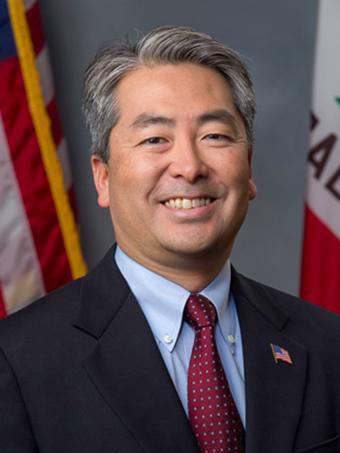
Sponsored bills
Existing law allows a credit against the taxes imposed under the Corporation Tax Law and the Personal Income Tax Law for each taxable year beginning on or after January 1, 2014, and before January 1, 2025, in an amount as provided in a written agreement between the Governor's Office of Business and Economic Development and the taxpayer, agreed upon by the California Competes Tax Credit Committee, and based on specified factors, including the number of jobs the taxpayer will create or retain in the state and the amount of investment in the state by the taxpayer. Existing law limits the aggregate amount of credits allocated to taxpayers to a specified sum per fiscal year. This bill would authorize the Director of Finance to increase the aggregate amount of the economic development credits that may be allocated to taxpayers each fiscal year by $25 million per fiscal year through the 2017–18 fiscal year. This bill would declare that it is to take effect immediately as an urgency statute.
Existing law authorizes the Department of Motor Vehicles (DMV) to issue specialty license plates, including environmental license plates and specified special environmental design license plates. Under existing law, a state agency is authorized to apply to the DMV to sponsor a specialized license plate program, and the DMV is required to issue those license plates if the agency meets certain requirements. The DMV is required to charge specified fees for certain services related to the issuance of those plates. Existing law establishes the Breast Cancer Control Account in the Breast Cancer Fund, and requires that funds in that account, upon appropriation by the Legislature, be allocated for the provision of early breast cancer detection services for uninsured and underinsured women. This bill would require the State Department of Health Care Services to apply to sponsor a breast cancer awareness license plate program, and would require the DMV to issue the license plates if the State Department of Health Care Services meets certain requirements. The bill would authorize the State Department of Health Care Services to accept and use donated artwork from California artists for the license plate. The bill would require the revenue generated from the license plates, as specified, to be deposited in the Breast Cancer Control Account in the Breast Cancer Fund. This bill would declare that it is to take effect immediately as an urgency statute.
This measure would declare November 8, 2014, as California Solar Professionals Day.
This measure would urge the National Football League (NFL) to join with the Legislature and numerous organizations in calling for a name change for the Washington, D.C. NFL team, and calls upon the owners of NFL teams based in California to urge the owner of the Washington, D.C. NFL team and the NFL Commissioner to change the team mascot.
This measure would recognize the month of October 2014 as Filipino American History Month and the 427th anniversary of the first presence of Filipinos in the continental United States.
This measure would proclaim October 23 to October 31, 2014, as Red Ribbon Week, and would encourage all Californians to help build drug-free communities and participate in drug prevention activities.
This measure would request that the President of the United States encourage, and that the Secretary of the United States Department of Health and Human Services adopt, policies that repeal the current donor suitability policies of the federal Food and Drug Administration regarding the donation of blood by men who have had sex with another man.
This measure would declare September 2014 as Charcot-Marie-Tooth Disease Awareness Month.
This measure would urge the Department of Defense, Congress, and the President to create a more efficient process of upgrading the status of those who were "dishonorably" or other than honorably discharged from the Armed Forces of the United States, and to provide benefits, including applicable spousal benefits, to those veterans discharged solely on the basis of their sexual orientation.