

Existing sales and use tax laws impose taxes on retailers measured by gross receipts from the sale of tangible personal property sold at retail in this state, or on the storage, use, or other consumption in this state of tangible personal property purchased from a retailer for storage, use, or other consumption in this state, measured by sales price. Those laws partially exempt from those taxes, until July 1, 2018, the gross receipts from the sale of, and the storage, use, or other consumption of, specified tangible personal property purchased for use by a qualified person, as defined, to be used primarily in manufacturing or other processes, and in research and development. Consumables with a useful life of less than one year do not qualify for exemption, and useful life is defined by reference to state income or franchise taxes. This bill, on and after January 1, 2018, and before July 1, 2028, would additionally define useful life by reference to manufacturer or other warranties, maintenance contracts, and normal replacement as established by industry or business practices, would additionally exempt from those taxes special purpose buildings and foundations used for the generation, production, storage, or distribution, as defined, of electric power, and would expand the definition of qualified person to include, among others, a person primarily engaged in the business of electric power generation. The bill would declare the intent of the Legislature to enact legislation that would improve the state's sales and use tax incentives to promote a stronger California economy by securing a greater share of the high-paying, high-skilled jobs in manufacturing and research and development. This bill would take effect immediately as a tax levy.
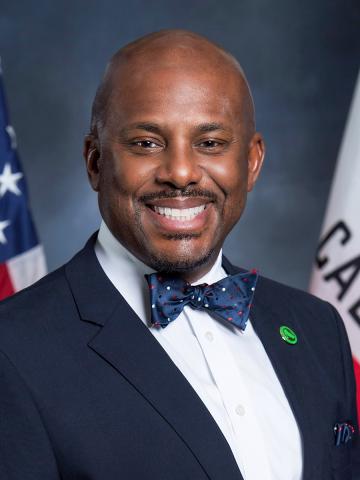
Sponsored bills
Existing law authorizes a county board of education to establish and maintain one or more county community schools and authorizes a county board of education to enroll certain pupils in county community schools. This bill would establish the California Community Schools Act, which would require the State Department of Education to make grants available to qualified schools to plan and operate community schools. The bill would require the department to establish an Office of Community Schools to oversee the implementation of the community schools program. The bill would require the department to provide technical assistance to applicants and would allocate $5,000,000 to the department for that purpose, subject to appropriation of those funds by the Legislature in the annual Budget Act or another statute. The bill would require the department to award community school planning grants of $300,000 to all successful applicants for planning purposes and to award community school operational grants of $750,000 per year for 5 years to applicants following the approval of a community school plan, as specified, and have demonstrated readiness to begin operation of a community school. The bill would require a grantee to establish a community school leadership team and hire a community school coordinator, and would require the community school coordinator, in collaboration with the community school leadership team and others to conduct a baseline analysis of assets and needs at the schoolsite. The bill would require a local educational agency to approve a school's grant application before the application is submitted to the department. To the extent the bill imposes additional duties on local educational agencies, the bill would impose a state-mandated local program. The bill would require grant recipients to submit a report to the department including specified information relating to the implementation and effectiveness of the community school plan, and would require the department to evaluate the grant recipient's report in accordance with specified criteria. The bill would require the department, no later than August 30 after the first year of operation and each year thereafter, to report to the Governor and the Legislature on the impact of the program. The bill would provide that the act shall be implemented only if funds are appropriated for its purposes by the Legislature in the annual Budget Act or another statute. The California Constitution requires the state to reimburse local agencies and school districts for certain costs mandated by the state. Statutory provisions establish procedures for making that reimbursement. This bill would provide that, if the Commission on State Mandates determines that the bill contains costs mandated by the state, reimbursement for those costs shall be made pursuant to the statutory provisions noted above.
The Personal Income Tax Law, in modified conformity with federal income tax laws, allows various deductions from gross income in computing adjusted gross income under that law, including deductions for payments to individual retirement accounts, alimony payments, and interest on educational loans. This bill, for taxable years beginning on or after January 1, 2017, and before January 1, 2022, would allow a deduction in computing adjusted gross income for those amounts paid or incurred by a qualified first-time home buyer, as defined, during the taxable year for qualified home-buying expenses, as provided. This bill would take effect immediately as a tax levy.
Existing law requires the governing board of each school district and each county board of education to adopt a local control and accountability plan using a template adopted by the State Board of Education. Existing law requires the local control and accountability plan to include a description of the annual goals to be achieved for each of certain state priorities, which include pupil engagement as measured by, among others things, high school graduation rates, and the specific actions that will be taken to achieve the annual goals. This bill would require the governing board of each school district and each county board of education to measure high school graduation rates for pupils who graduate from continuation schools, for pupils who are late arrival English learners, and for all other pupils as 3 distinct categories for inclusion in the annual measurement of pupil engagement. The bill would specify that pupils with exceptional needs who receive certificates of completion from high school are high school graduates for these purposes. By imposing new duties upon school districts and county boards of education, this bill would impose a state-mandated local program. The California Constitution requires the state to reimburse local agencies and school districts for certain costs mandated by the state. Statutory provisions establish procedures for making that reimbursement. This bill would provide that, if the Commission on State Mandates determines that the bill contains costs mandated by the state, reimbursement for those costs shall be made pursuant to the statutory provisions noted above.
Existing law establishes the California Community Colleges, under the administration of the Board of Governors of the California Community Colleges, as one of the segments of public postsecondary education in this state. Existing law authorizes the establishment of community college districts under the administration of community college governing boards, and authorizes these districts to provide instruction at community college campuses throughout the state. Existing law requires community college district governing boards to charge students an enrollment fee of $46 per unit per semester. Existing law requires the board of governors to waive this fee for students meeting prescribed requirements, which include meeting specified minimum academic and progress standards adopted by the board of governors. This bill would waive the fee for a California resident who meets those standards and, at the time of enrollment, is a ward or former ward of the juvenile court, is or was placed in, or committed to, out-of-home care in connection with that status as a ward or former ward after reaching 16 years of age, and is no older than 25 years of age. The bill would also waive the fee for a foster youth or former foster youth, defined as a person in California whose dependency was established or continued by the court on or after the youth's 16th birthday and who is no older than 25 years of age at the commencement of the academic year. To the extent the bill would impose new duties on community college districts, it would constitute a state-mandated local program. The California Constitution requires the state to reimburse local agencies and school districts for certain costs mandated by the state. Statutory provisions establish procedures for making that reimbursement. This bill would provide that, if the Commission on State Mandates determines that the bill contains costs mandated by the state, reimbursement for those costs shall be made pursuant to the statutory provisions noted above.
Existing law requires taxes to be paid to the state, including sales and use taxes, payroll taxes, and income and franchise taxes. Under existing law the Legislature finds and declares that taxes are the most sensitive point of contact between citizens and their government and establishes the Taxpayers' Rights Advocate in specified agencies and makes the advocate or his or her designee responsible for coordinating the resolution of taxpayer complaints and problems, including any taxpayer complaints regarding unsatisfactory treatment of taxpayers, as specified. This bill would require the Franchise Tax Board, the State Board of Equalization, and the Employment Development Department, to, among other things, develop tutorials and a joint Internet Web site designed to educate California taxpayers on how to self-file their income, sales and use, and payroll taxes and how to comply with basic tax laws. The bill would require the Internet Web site to include, among other information, the contact information for the Taxpayers' Rights Advocate of each agency. The bill would also make specified findings and declarations.
Existing law, the Control, Regulate and Tax Adult Use of Marijuana Act (AUMA) , added by Proposition 64 at the November 8, 2016, statewide general election, authorizes a person 21 years of age or older to possess and use specified amounts of marijuana. AUMA provides for the licensing and regulation of cultivation, manufacture, distribution, testing, and retail sale of nonmedical marijuana and nonmedical marijuana products. Until December 31, 2019, AUMA requires a person to demonstrate continuous California residency from or before January 1, 2015, in order to be issued a license for commercial nonmedical marijuana activity. AUMA authorizes legislative amendment of its provisions with a 23 vote of both houses, without submission to the voters, to further its purposes and intent. Existing law, the Medical Cannabis Regulation and Safety Act (MCRSA) , authorizes a person who obtains both a state license under the MCRSA and the relevant local license to engage in commercial medical cannabis activity pursuant to those licenses, as specified. Existing law prescribes requirements for a licensing authority to issue a license, including submission of an application and payment of a fee. This bill would require a person to demonstrate 3 years of continuous California residency prior to the date of application before being issued a license under either AUMA or MCRSA. This bill would declare that its provisions further the purposes and intent of the Control, Regulate and Tax Adult Use of Marijuana Act.
The Gambling Control Act, among other things, provides the qualifications and procedures for a corporation to be licensed as the owner of a gambling enterprise and requires shareholders, lenders, and holders of evidence of indebtedness, among other types of individuals doing business on behalf of or with the corporation to be licensed individually. An individual who owns any security issued by a licensed corporation and who has been denied a license or had a license revoked is required to sell the security for an amount not greater than fair market value within 60 calendar days of the license denial or revocation, unless that 60-day time period is extended, as specified. This bill would extend certain time periods relating to the licensing of individuals doing business on behalf of or with a corporation that is licensed as the owner of a gambling enterprise. The bill would extend the time period that an individual is required to sell a security in the corporation from 60 to 75 calendar days upon the individual's license denial or revocation. The bill would modify the time period for a corporation to notify the Department of Justice of a change in a corporate officer, director, or key employee from 10 business days to 20 calendar days and extend the time period for when that individual is required to apply for his or her license from 30 to 40 calendar days after he or she becomes an officer, director, or key employee.
Existing law imposes various limitations on emissions of air contaminants for the control of air pollution from vehicular and nonvehicular sources. Existing law generally designates the State Air Resources Board as the state agency with the primary responsibility for the control of vehicular air pollution. Existing law defines a heavy-duty vehicle as having a manufacturer's maximum gross vehicle weight rating of 6,001 or more pounds, a light-duty vehicle as having a manufacturer's gross vehicle weight rating of under 6,001 pounds, and a medium duty vehicle as a heavy-duty vehicle having a manufacturer's gross vehicle weight rating under a limit established by the state board. This bill instead would define a heavy-duty vehicle as having a manufacturer's maximum gross vehicle weight rating of 26,001 or more pounds.
The Public Utilities Act vests the Public Utilities Commission with regulatory authority over public utilities, including electrical and gas corporations. Existing law authorizes the commission to fix the rates and charges for every public utility and requires those rates to be just and reasonable. Existing law authorizes the commission, after a hearing, to make and serve an order directing additions, extensions, repairs, improvements, or other changes be made to existing plant, equipment, apparatus, facilities, or other physical property of a public utility, if it makes certain findings. This bill would require the commission to require an electrical or gas corporation to give preference to the modernization of its facilities serving disadvantaged communities if the corporation is authorized to collect ratepayer funds for the modernization of its facilities. Under existing law, a violation of the Public Utilities Act or any order, decision, rule, direction, demand, or requirement of the commission is a crime. Because the provisions of this bill are within the act, a violation of these provisions would impose a state-mandated local program by creating a new crime. The California Constitution requires the state to reimburse local agencies and school districts for certain costs mandated by the state. Statutory provisions establish procedures for making that reimbursement. This bill would provide that no reimbursement is required by this act for a specified reason.