

The State Bar Act provides for the licensure and regulation of attorneys by the State Bar of California (State Bar) , a public corporation governed by a board of trustees. The act sets forth the requirements for a license to practice law in California, including passing the general bar examination. The act requires the board of trustees to contract with the California State Auditor every 2 years to conduct a performance audit of the State Bar's operations. This bill would require the California State Auditor to conduct an audit of the February 2025 bar exam, as specified, and to submit the audit as soon as possible to the board of trustees, the Chief Justice of the Supreme Court, and to the Assembly and Senate Committees on Judiciary. The bill would require the State Bar to provide the California State Auditor with the funding necessary to cover the costs of the audit. This bill would declare that it is to take effect immediately as an urgency statute.
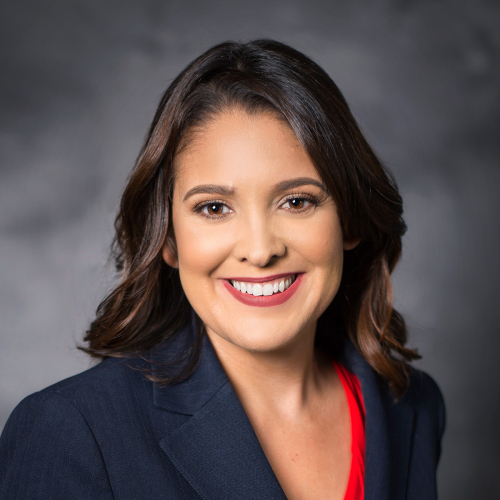
Asm. Blanca Pacheco
Sponsored bills
Existing law defines a battery as any willful and unlawful use of force or violence upon the person of another. Existing law provides that when a battery is committed against the person of an operator, driver, or passenger on a bus, taxicab, streetcar, cable car, trackless trolley, or other motor vehicle, as specified, and the person who commits the offense knows or reasonably should know that the victim is engaged in the performance of their duties, the penalty is imprisonment in a county jail not exceeding one year, a fine not exceeding $10,000, or both the fine and imprisonment. Existing law also provides that if the victim is injured, the offense would be punished by a fine not exceeding $10,000, by imprisonment in a county jail not exceeding one year or in the state prison for 16 months, 2, or 3 years, or by both that fine and imprisonment. This bill would expand this crime to apply to an employee, public transportation provider, or contractor of a public transportation provider. By expanding the scope of an existing crime, the bill would impose a state-mandated local program. Existing law authorizes any employer or collective bargaining representative whose employee has suffered harassment, unlawful violence, or a credible threat of violence from any individual, which can reasonably be construed to be carried out or to have been carried out at the workplace, to seek a temporary restraining order and an injunction on behalf of the employee and other employees of the employer. This bill would clarify that "unlawful violence" includes battery committed against the person of an operator, driver, or passenger on a bus, taxicab, streetcar, cable car, trackless trolley, or other motor vehicle, as specified, or against an employee, public transportation provider, or contractor of a public transportation provider. The bill would also clarify that the definition of "employer" for the above-described provision includes a joint powers authority or a public transit operator. The California Constitution requires the state to reimburse local agencies and school districts for certain costs mandated by the state. Statutory provisions establish procedures for making that reimbursement. This bill would provide that no reimbursement is required by this act for a specified reason.
Existing law establishes the Tribal Nation Grant Fund, administered by the California Gambling Control Commission, for the receipt and deposit of moneys received by the state from Indian tribes pursuant to the terms of tribal-state gaming compacts. Under existing law, moneys in the Tribal Nation Grant Fund are available, upon appropriation by the Legislature, for the discretionary distribution of funds to nongaming and limited-gaming tribes, as specified. Existing law establishes the Tribal Nation Grant Fund Program and authorizes Tribal Nation Grant Fund Panel to award grants from available moneys within the fund and make other distributions from the fund to eligible tribes, as specified. Existing law requires an eligible tribe requesting a grant to submit an application on a form approved by the panel and provided by the commission. Existing law authorizes the panel to distribute of the available moneys in the fund to all eligible tribes that submitted a completed grant application, as specified. Existing law authorizes the panel, in its discretion and based upon the purpose or project set forth in the application, to require an eligible tribe to encumber or expend any or all of a grant within a specified period of time, as described. Existing law requires each eligible tribe and each individual applying on behalf of each eligible tribe to agree to return to the fund any amount of a grant not encumbered or expended, as specified. This bill would additionally establish the fund for the receipt and deposit of moneys received by the state from Indian tribes pursuant to the terms of class III gaming secretarial procedures. The bill would revise the grant distribution provisions described above to authorize the panel to award grants as specific distribution grants to fund a specifically described purpose or project, or as equal shares grants for distribution to eligible tribes in equal amounts, as specified. The bill would require the panel to develop application forms for the specific distribution grants and the equal shares grants, as described, and would require the equal shares grants application form to include, among other things, a certification from the eligible tribe that the funds will be used for specified purposes. The bill would require the panel to distribute as equal shares grants $600,000 per eligible tribe, or at least 85% of the available moneys in the fund, whichever is greater, as specified. The bill would authorize the panel to distribute as specific distribution grants the remaining available moneys in the fund, as specified. The bill would no longer authorize the panel to require an eligible tribe to encumber or expend any or all of a grant within a specified period of time and would make a related conforming change. The bill would no longer require each eligible tribe and each individual applying on behalf of each eligible tribe to return to the fund any amount of a grant not encumbered or expended, as specified. The bill would make a related statement of legislative intent.
This measure would designate November 1, 2025, as Fernando Valenzuela Day, to highlight the positive impact his legacy created in the Latino and Hispanic community.
This measure would recognize the importance of California Native American Day, celebrated this year on September 26, 2025, and the annual California Indian Cultural Awareness Conference, to the enhancement of awareness of California Indian culture.
This measure would declare October 2025 as Women's Small Business Month and encourage all citizens to recognize the economic importance of women's small business in California.
This measure would proclaim the month of October 2025 as California Firefighter Appreciation Month and October 4, 2025, as California Firefighters Memorial Day.
This measure would declare the Legislature's opposition to the unlawful Executive Order No. 14160, entitled "Protecting the Meaning and Value of American Citizenship," ending birthright citizenship as enshrined in the United States Constitution and would affirm the Legislature's commitment to birthright citizenship, as specified.
This measure would declare the month of March to be March4Water Month in California and would encourage all Californians to participate in activities and programs during March4Water Month to promote awareness, education, and actions that prioritize water as a vital resource for the state's future.
Maddy summaryACR 95 designates June 21, 2025, as the International Day of Yoga in California. This ceremonial resolution formally recognizes the day for public awareness but has no legal effect or policy changes. It directly affects California residents by encouraging community observances of the international event. The measure is purely symbolic, with no funding, regulations, or new obligations for state agencies or individuals.