

Passed Sep 2, 2015
1 co-sponsor
Total votes
24,179
all sessions
Attendance
97%
740 missed
Lower than 99% of chamber peers
With party
99%
of cast votes
Bipartisan score
0%
crosses aisle rarely
Sponsored
1,862
bills & resolutions
Near the chamber average
Committees
0
assignments
1,862 bills and resolutions
Sponsored bills
Total
1,862
Primary
84
Co-sponsor
1,778
This page
1,862
matching current filters
Electricity: California Renewables Portfolio Standard.
(1) Under existing law, the Public Utilities Commission (PUC) has regulatory authority over public utilities, including electrical corporations, as defined, while local publicly owned electric utilities, as defined, are under the direction of their governing boards. Existing law establishes the California Renewables Portfolio Standard (RPS) program, which expresses the intent of the Legislature that the amount of electricity generated per year from eligible renewable energy resources be increased to an amount that equals at least 33% of the total electricity sold to retail customers in California per year by December 31, 2020. Existing law requires the PUC, by January 1, 2012, to establish the quantity of electricity products from eligible renewable energy resources to be procured by each retail seller for specified compliance periods, sufficient to ensure that the procurement of electricity products from eligible renewable energy resources achieves 25% of retail sales by December 31, 2016, and 33% of retail sales by December 31, 2020, and that retail sellers procure not less than 33% of retail sales in all subsequent years. Existing law makes the requirements of the RPS program applicable to local publicly owned electric utilities, except that the utility's governing board is responsible for implementation of those requirements, instead of the PUC, and certain enforcement authority with respect to local publicly owned electric utilities is given to the State Energy Resources Conservation and Development Commission and State Air Resources Board, instead of the PUC. This bill would additionally express the intent of the Legislature for the purposes of the RPS program that the amount of electricity generated per year from eligible renewable energy resources be increased to an amount equal to at least 50% by December 31, 2030, and would require the PUC, by January 1, 2017, to establish the quantity of electricity products from eligible renewable energy resources to be procured by each retail seller for specified compliance periods sufficient to ensure that the procurement of electricity products from eligible renewable energy resources achieves 50% of retail sales by December 31, 2030, and that retail sellers procure not less than 50% of retail sales in all subsequent years. The bill would require the governing boards of local publicly owned electric utilities to ensure that specified quantities of electricity products from eligible renewable energy resources to be procured for specified compliance periods to ensure that the procurement of electricity products from eligible renewable energy resources achieve 50% of retail sales by December 31, 2030, and that the local publicly owned electric utilities procure not less than 50% of retail sales in all subsequent years. (2) Under existing law, a violation of the RPS program is a crime. Because the provisions of this bill would expand the RPS program, a violation of these provisions would impose a state-mandated local program by expanding the definition of a crime. (3) By placing additional requirements upon local publicly owned electric utilities, this bill would impose a state-mandated local program. (4) The California Constitution requires the state to reimburse local agencies and school districts for certain costs mandated by the state. Statutory provisions establish procedures for making that reimbursement. This bill would provide that no reimbursement is required by this act for a specified reasons.
Passed Aug 27, 2015
1 co-sponsor
Personal income taxes: credit: earned income.
 The Personal Income Tax Law allows various credits against the taxes imposed by that law, including certain credits that are allowed in modified conformity to credits allowed by federal income tax laws. Federal income tax laws allow a refundable earned income tax credit for certain low-income individuals who have earned income and who meet certain other requirements. This bill, for taxable years beginning on or after January 1, 2016, and before January 1, 2021, in modified conformity with federal income tax laws, would provide for an earned income credit to an eligible individual that is equal to unspecified percentages of the earned income tax credit allowed by federal law that would only be allowed in those taxable years in which an appropriation is made by the Legislature. The bill and would provide that in those years in which an appropriation is made by the Legislature, the credit would be refundable, as provided. The bill would also make findings and declarations.
Passed Aug 27, 2015
1 co-sponsor
School facilities: heating, ventilation, and air conditioning: inspection reports.
Existing law establishes a system of public elementary and secondary schools in this state, and authorizes local educational agencies throughout the state to operate schools and provide instruction to pupils in kindergarten and grades 1 to 12, inclusive. Existing regulations require schools to have their heating, ventilation, and air conditioning systems inspected at least annually. This bill would require the most recent date of a heating, ventilation, and air conditioning system inspection report and information on how the report may be obtained to be posted on the Internet Web site of certain local educational agencies. The bill would also state related findings and declarations of the Legislature. By imposing additional duties on local educational agencies, this bill would impose a state-mandated local program. The California Constitution requires the state to reimburse local agencies and school districts for certain costs mandated by the state. Statutory provisions establish procedures for making that reimbursement. This bill would provide that, if the Commission on State Mandates determines that the bill contains costs mandated by the state, reimbursement for those costs shall be made pursuant to these statutory provisions.
Passed Aug 27, 2015
0 co-sponsors
Relative to 2015 California Invasive Species Action Week.
This measure would declare June 6, 2015, to June 14, 2015, inclusive, as the 2015 California Invasive Species Action Week and would urge all Californians to participate in activities that raise awareness of invasive species issues and to take action to prevent their spread.
Signed into law Aug 26, 2015
1 co-sponsor
Relative to the centennial of the founding of Locke, California.
This measure would commemorate the centennial of the founding of Locke, California, would recognize and honor Locke, California, as the last remaining Chinatown in North America, and would urge all Californians to learn about the important history of Locke, California, and its inhabitants.
Signed into law Aug 26, 2015
1 co-sponsor
The California Commission on the Status of Women and Girls: 50th anniversary.
This measure would congratulate the California Commission on the Status of Women and Girls on the celebration of its 50th anniversary, and recognize and commend the commission for its various contributions and accomplishments.
Signed into law Aug 25, 2015
1 co-sponsor
Relative to military service.
This measure would urge the Congress of the United States to enact legislation allowing immigrants to serve in the military if they are eligible under the President's Executive Order for Deferred Action for Childhood Arrivals or Executive Order for Deferred Action for Parents of Americans and Lawful Permanent Residents.
Signed into law Aug 25, 2015
1 co-sponsor
California Renewables Portfolio Standard Program: renewable energy credits.
Under existing law, the Public Utilities Commission has regulatory authority over public utilities, including electrical corporations. The existing definition of an electrical corporation excludes from that definition a corporation or person employing landfill gas technology or digester gas technology for the generation of electricity for (1) its own use or the use of not more than 2 of its tenants located on the real property on which the electricity is generated, (2) the use of or sale to not more than 2 other corporations or persons solely for use on the real property on which the electricity is generated, or (3) the sale or transmission to an electrical corporation or state or local public agency, if the sale or transmission of the electricity service to a retail customer is provided through the transmission system of the existing local publicly owned electric utility or electrical corporation of that retail customer. The California Renewables Portfolio Standard Program requires the Public Utilities Commission to establish a renewables portfolio standard requiring all retail sellers, as defined, to procure a minimum quantity of electricity products from eligible renewable energy resources, as defined, at specified percentages of the total kilowatthours sold to their retail end-customers during specified compliance periods. The program additionally requires each local publicly owned electric utility, as defined, to procure a minimum quantity of electricity products from eligible renewable energy resources to achieve the targets established by the program. The program, consistent with the goals of procuring the least-cost and best-fit eligible renewable energy resources that meet project viability principles, requires that all retail sellers procure a balanced portfolio of electricity products from eligible renewable energy resources, as specified, referred to as the portfolio content requirements. Existing law requires every electrical corporation to file with the commission a standard tariff for electricity generated by an electric generation facility, as defined, that qualifies for the tariff, is owned and operated by a retail customer of the electrical corporation, and is located within the service territory of, and developed to sell electricity to, the electrical corporation. This tariff requirement is known as the renewable feed-in tariff program. The program additionally requires the commission, by June 1, 2013, to direct the electrical corporations to collectively procure at least 250 megawatts of cumulative rated generating capacity from developers of bioenergy projects that commence operation on or after June 1, 2013. Pursuant to this requirement, the commission has established the small-scale bioenergy feed-in tariff program. This bill would provide that renewable energy credits may be used to meet the first category of the portfolio content requirements if (1) the credits are earned by electricity that is generated by an entity that, if it were a person or corporation, would be excluded from the definition of an electrical corporation by operation of the exclusions for a corporation or person employing landfill gas technology or digester gas technology, (2) the entity employing the landfill gas technology or digester gas technology has a first point of interconnection with a California balancing authority, a first point of interconnection with distribution facilities used to serve end users within a California balancing authority area, or is scheduled from the eligible renewable energy resource into a California balancing authority without substituting electricity from another source, (3) where the electricity generated that earned the credit is used at a wastewater treatment facility that is owned by a public entity, (4) the generating capability, as specified, of the wastewater treatment facility that earned the renewable energy credit is first put into service on or after January 1, 2016, and (5) the wastewater treatment facility does not participate in the small-scale bioenergy feed-in tariff program. The bill would prohibit a public entity, selling renewable energy that is eligible to meet the first category of the portfolio content requirements pursuant to the bill's provisions, from making any marketing or advertising claims regarding the renewable attributes of the electricity that earned the renewable energy credit. The bill would require that the electricity generated that earned the renewable energy credit that is sold by the public entity be added to the total retail sales of the retail seller or local publicly owned electric utility purchasing the renewable energy credit for purposes of determining their renewables portfolio standard procurement requirements.
Passed Aug 17, 2015
0 co-sponsors
Grocery workers.
Existing law regulates various aspects of the workplace and employee safety and health. This bill, upon a change in control of a grocery establishment, would require an incumbent grocery employer to prepare a list of specified eligible grocery workers for a successor grocery employer, and would require the successor grocery employer to hire from this list during a 90-day transition period. The bill would require the successor grocery employer to retain eligible grocery workers for a 90-day period, prohibit the successor grocery employer from discharging those workers without cause during that period, and, upon the close of that period, require the successor grocery employer to consider offering continued employment to those workers. The bill would exempt a grocery establishment located in a food desert from the bill's requirements, as provided. The bill would provide that a collective bargaining agreement may supersede these requirements and that these provisions do not preempt any local ordinances that provide equal or greater protection to eligible grocery workers. This bill would provide that its provisions are severable.
Signed into law Aug 17, 2015
1 co-sponsor
Ask Maddy
·
AI policy assistant
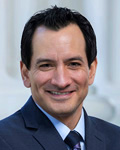
Ask Maddy about Anthony Rendon
Scope: california
Hi! I can help you understand Anthony Rendon's legislative record. What would you like to know?
Try one of these
i
Maddy answers using official bill text and legislative records. Always verify before sharing.
Sources cited inline