

Existing law generally authorizes a court to, in the furtherance of justice, dismiss an enhancement. Existing law makes a person who personally uses a firearm in the commission of a felony punishable by an additional and consecutive term of imprisonment in the state prison for 3, 4, or 10 years. Existing law makes a person who personally uses a firearm in the commission of specified felonies punishable by imprisonment in the state prison for an additional and consecutive term of 10 years, and makes them punishable by an additional and consecutive term of imprisonment of 20 years if they discharge the firearm. Existing law makes a person who discharges a firearm and causes great bodily injury in the commission of specified felonies punishable by an additional and consecutive term of imprisonment of 25 years to life. Existing law, until January 1, 2018, prohibited courts from striking those firearm enhancements. Existing law on and after January 1, 2022, requires a court to dismiss an enhancement if it is in furtherance of justice to do so, except as specified. This bill would require the Secretary of the Department of Corrections and Rehabilitation to identify persons in custody, who, on or before January 1, 2018, suffered a conviction of those firearm enhancements. Upon determining the person qualifies for resentencing, the bill would require the trial court to appoint counsel and authorize the court to strike or dismiss an enhancement, as specified. By imposing additional duties on county public defenders, this bill would impose a state-mandated local program. The California Constitution requires the state to reimburse local agencies and school districts for certain costs mandated by the state. Statutory provisions establish procedures for making that reimbursement. This bill would provide that, if the Commission on State Mandates determines that the bill contains costs mandated by the state, reimbursement for those costs shall be made pursuant to the statutory provisions noted above.
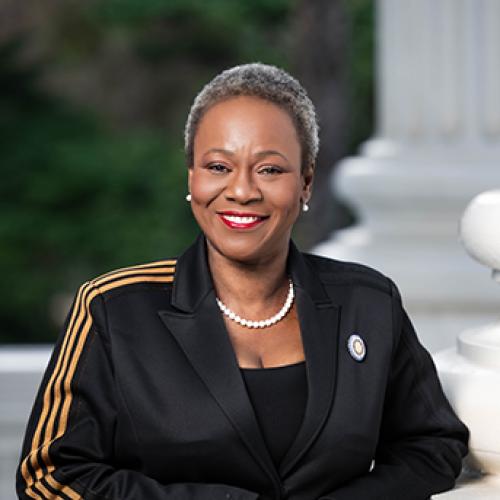
Asm. Tina McKinnor
Sponsored bills
Existing law requires a health practitioner, as defined, to make a report to law enforcement when they suspect a patient has suffered physical injury that is inflicted by the person's own act or inflicted by another where the injury is by means of a firearm, or caused by assaultive or abusive conduct, including elder abuse, sexual assault, or torture. A violation of these provisions is punishable as a misdemeanor. This bill would, on and after January 1, 2025, remove the requirement that a health practitioner make a report to law enforcement when they suspect a patient has suffered physical injury caused by assaultive or abusive conduct, and instead only require that report if the health practitioner suspects a patient has suffered a wound or physical injury inflicted by the person's own act or inflicted by another where the injury is by means of a firearm, a wound or physical injury resulting from child abuse, or a wound or physical injury resulting from elder abuse. The bill would, on and after January 1, 2025, instead require a health practitioner who suspects that a patient has suffered physical injury that is caused by domestic violence, as defined, to, among other things, provide brief counseling, education, or other support, and a warm handoff, as defined, or referral to local and national domestic violence or sexual violence advocacy services, as specified. The bill would, on and after January 1, 2025, specify that a health practitioner is not civilly or criminally liable for any report that is made in good faith and in compliance with these provisions. This bill would make other conforming changes. Because a violation of these requirements would be a crime, this bill would impose a state-mandated local program. The California Constitution requires the state to reimburse local agencies and school districts for certain costs mandated by the state. Statutory provisions establish procedures for making that reimbursement. This bill would provide that no reimbursement is required by this act for a specified reason.
This measure would recognize July 17, 2023, to July 23, 2023, as Outdoor Worker Appreciation Week.
This measure would declare the month of October 2023 as Sudden Infant Death Syndrome (SIDS) Awareness Month.
This measure would designate the month of November 2023 to be California's Sikh American Awareness and Appreciation Month. The measure would recognize and acknowledge the significant contributions made by Californians of Sikh heritage to our state and would seek to afford all Californians the opportunity to better understand, recognize, and appreciate the rich history and shared principles of Sikh Americans. The measure would condemn all hate crimes and bias incidents against Sikh Americans and would encourage all Sikhs to practice their faith freely and fearlessly.
This measure would designate the month of October 2023 as California Hindu American Awareness and Appreciation Month. The measure would also recognize and acknowledge the significant contributions made by Californians of Hindu heritage to the state and seek to increase awareness and understanding of the Hindu American community.
This measure would celebrate the history and culture of lowriding and cruising, encourage local officials and law enforcement to work with local car clubs to conduct safe cruising events, and declare the first Sunday of summer to be observed as California Lowrider Day.
This measure would declare August 7, 2023, as Purple Heart Day in California.
This measure would recognize June 19, 2023, as Juneteenth and would urge the people of California to join in celebrating Juneteenth as a day to honor and reflect on the significant role that African Americans have played in the history of the United States and how they have enriched society through their steadfast commitment to promoting unity and equality.