

Existing law, the Medical Practice Act, establishes the Medical Board of California and the Osteopathic Medical Board of California to license and regulate the practice of medicine, and establishes examination, training, and other requirements for licensure as a physician and surgeon. A violation of the act is a misdemeanor. This bill, through November 30, 2024, would authorize a physician licensed to practice medicine in Arizona who meets certain requirements to practice medicine in California for the purpose of providing abortions and abortion-related care to patients who are Arizona residents traveling from Arizona, upon application for registration with the Medical Board of California or the Osteopathic Medical Board of California, as applicable. The bill would prohibit the physician from providing care or consultation for other purposes or to other patients, except under specified circumstances. The bill would require an Arizona physician, before practicing in California, to submit specified information to the Medical Board of California or the Osteopathic Medical Board of California, as applicable, including, among other information, written verification from the Arizona Medical Board or the Arizona Board of Osteopathic Examiners in Medicine and Surgery, or documentation printed from an online licensing system, that the physician's Arizona license to practice medicine is in good standing and confers on the physician the authority to practice abortions and abortion-related care. The bill would require the applicant to provide an affidavit attesting that, among other things, the applicant meets all of the requirements for registration, as specified, and would make it a misdemeanor for a person to provide false information. The bill would limit the information the California boards are required to disclose about a registrant. The bill would deem a physician registered pursuant to the bill's provisions a licensee of the applicable board, would authorize the applicable board to take enforcement against a person registered pursuant to the bill's provisions, and would prohibit the applicable boards from collecting any fees for registration. By creating a new crime, the bill would impose a state-mandated local program. The bill would repeal the bill's provisions on January 1, 2025. The California Constitution requires the state to reimburse local agencies and school districts for certain costs mandated by the state. Statutory provisions establish procedures for making that reimbursement. This bill would provide that no reimbursement is required by this act for a specified reason. This bill would declare that it is to take effect immediately as an urgency statute. Existing constitutional provisions require that a statute that limits the right of access to the meetings of public bodies or the writings of public officials and agencies be adopted with findings demonstrating the interest protected by the limitation and the need for protecting that interest. This bill would make legislative findings to that effect.
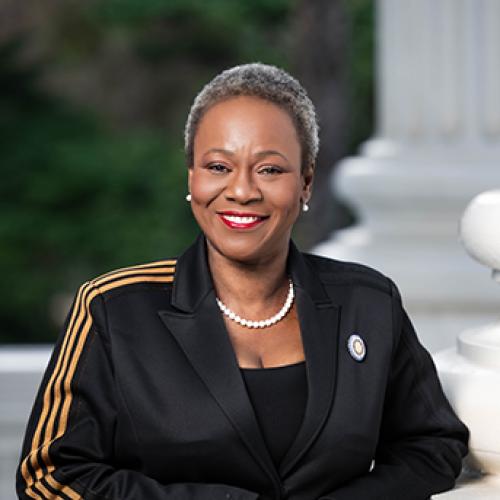
Asm. Tina McKinnor
Sponsored bills
Maddy summaryThis bill designates May 17, 2024, as Bike to School Day in California to encourage students to ride bicycles or electric bikes to their schools. The resolution highlights the environmental, health, and recreational benefits of cycling while acknowledging the state's existing bike-friendly infrastructure and recent cycling events. It serves as a commemorative measure rather than a law that changes regulations or funding, and it directs the Assembly's Chief Clerk to distribute copies of the text for public awareness.
Maddy summaryThis bill establishes April 27 as Harvey Milk Day to honor the first openly gay man elected to public office in a major U.S. city. The resolution recognizes Milk's legacy as a civil rights leader who fought against discrimination and advocated for LGBTQ+ visibility and unity among minority communities. It recounts key events in his life, including his assassination in 1978 and the subsequent legal proceedings against his killer. The measure serves as a commemorative acknowledgment of Milk's impact on California and national history rather than creating new laws or policies.
Existing law gives a judge discretion when deciding various matters in a criminal proceeding, including, among other things, issuing bail or releasing a defendant on their own recognizance, accepting a diversion or deferred entry of judgment agreement, and imposing sentences and granting probation. This bill would, when a court is exercising its discretion with regard to these matters, make a rebuttable presumption against detention and incarceration of a pregnant or postpartum defendant, as defined, if the defendant provides the court and district attorney with notice of the defendant's status as a pregnant or postpartum defendant at each applicable stage of the proceedings. The bill would require a court that decides to detain or incarcerate a defendant after this consideration to make specific findings on the record that the risk to public safety or any other factor the court is required to consider is substantial enough to outweigh the risk of incarceration, as specified. The bill would authorize any pregnant or postpartum defendant to request a stay of execution of their sentence by filing a written request to the court if the pregnant or postpartum defendant is detained or incarcerated in a county jail or state prison for any period of time through the end of the pregnancy or the postpartum period, except as specified. The bill would require the court to apply the rebuttable presumption above when considering whether to grant that stay of execution. The bill would authorize a court to order a stay of execution of the sentence for any period of time through the end of the pregnancy or the postpartum period. The bill would authorize a person who may be pregnant or postpartum and who is arrested or in custody in a county jail or state prison to request a pregnancy test upon or following admission to the county jail or state prison, and would require the county jail or state prison to provide a pregnancy test upon request and allow the person to take the pregnancy test within 24 hours after the request. By imposing additional duties on county jails, this bill would impose a state-mandated local program. The California Constitution requires the state to reimburse local agencies and school districts for certain costs mandated by the state. Statutory provisions establish procedures for making that reimbursement. This bill would provide that, if the Commission on State Mandates determines that the bill contains costs mandated by the state, reimbursement for those costs shall be made pursuant to the statutory provisions noted above.
Existing law, the Alcoholic Beverage Control Act, is administered by the Department of Alcoholic Beverage Control and regulates application, issuance, and suspension of alcoholic beverage licenses within the state. Existing law, until July 1, 2026, authorizes the department to permit licensees to exercise license privileges in an expanded license area authorized pursuant to a COVID-19 Temporary Catering Authorization, as specified. Existing law includes duplicative provisions relating to COVID-19 Temporary Catering Authorizations. This bill would authorize an on-sale licensee located in an airport terminal to, under a COVID-19 Temporary Catering Authorization, sell alcoholic beverages for on-sale consumption in an expanded license area that includes the airside terminal space if certain requirements are complied with. Those requirements include, among others, the licensee receiving written approval from the airport operator, serving the alcoholic beverages in distinguishable and labeled containers, selling no more than 2 containers to each customer per transaction, and posting appropriate signage regarding open container laws, as specified. The bill would make all licensees holding a COVID-19 Temporary Catering Authorization within a shared common licensed area jointly liable for compliance with laws that may subject their license to discipline in that shared common licensed area. The above-described provisions of the bill would be repealed on July 1, 2026. The bill would repeal the duplicative COVID-19 Temporary Catering Authorization provisions.
Existing law allows a person who was arrested or convicted of a nonviolent offense while they were a victim of human trafficking, intimate partner violence, or sexual violence, to petition the court, under penalty of perjury, for vacatur relief. Existing law requires, to receive that relief, that the crime for which the person was arrested or convicted was a nonviolent offense and that the person establish, by clear and convincing evidence, that the arrest or conviction was the direct result of being a victim of human trafficking, intimate partner violence, or sexual violence. Existing law authorizes the court to vacate the conviction if it concludes that the petitioner was a victim of one of those crimes at the time of the alleged commission of the offense, the arrest was a direct result of being a victim of that offense, and the vacatur is in the best interest of justice. This bill would allow that relief for a person arrested or convicted of any offense. The bill would also authorize relief for a person whose offense was related, rather than directly related, to being a victim of human trafficking, intimate partner violence, or sexual violence. The bill would remove the requirement that the court find that vacating the conviction is in the best interest of justice in order to vacate the arrest or conviction. Because this bill would authorize more petitions to be filed under penalty of perjury, by expanding the scope of the crime of perjury, this bill would impose a state-mandated local program. If a court issues an order for a person who was arrested or convicted of an offense while they were a victim of intimate partner violence or sexual violence, existing law requires the court to order the law enforcement agency having jurisdiction over the offense, the Department of Justice, and any law enforcement agency that arrested the petitioner or participated in the arrest of the petitioner to seal their records of the arrest and the court order to seal and destroy the records within 3 years from the date of the arrest, or within one year after the court order is granted, whichever occurs later, and thereafter to destroy their records of the arrest and the court order to seal and destroy those records. This bill would require the court to also order any law enforcement agency that has taken action or maintains records related to or because of the offense, including, but not limited to, departments of probation, rehabilitation, corrections, and parole, to seal and destroy their records. The bill would require those agencies to seal their records of arrest and the court order to seal and destroy the records within one year from the date of arrest, or within 90 days after the court order is granted, whichever occurs later. The bill would require the agencies to destroy these records within one year of the date of the court order. The bill would also require the Department of Justice to notify the petitioner and the petitioner's counsel that the department has complied with the order to seal the arrest records by the applicable deadline. The California Constitution requires the state to reimburse local agencies and school districts for certain costs mandated by the state. Statutory provisions establish procedures for making that reimbursement. This bill would provide that no reimbursement is required by this act for a specified reason.
Existing law establishes the Medi-Cal program, which is administered by the State Department of Health Care Services and under which qualified low-income individuals receive health care services. The Medi-Cal program is, in part, governed and funded by federal Medicaid program provisions. Existing law establishes a schedule of covered benefits under the Medi-Cal program. This bill would add menstrual products, as defined, to that schedule of covered benefits. The bill would require the department to seek any necessary federal approvals to implement this coverage. The bill would require the department to seek, and would authorize the department to use, any and all available federal funding, as specified, to implement this coverage.
Maddy summaryThis bill designates October 2024 as Menopause Awareness Month in California to highlight the health and societal impacts of menopause on women. It acknowledges that millions of women face symptoms that can affect their daily lives and work, noting that women of color are at higher risk for complications like premature menopause and heart disease. The resolution encourages the state to provide better health information and services to support women's well-being before, during, and after this transition. While the text outlines these goals, the bill itself is a formal recognition rather than a law that creates new funding or mandates specific programs.
Existing federal law, the federal Patient Protection and Affordable Care Act (PPACA) , requires each state to establish an American Health Benefit Exchange to facilitate the purchase of qualified health benefit plans by qualified individuals and qualified small employers. PPACA defines a "qualified health plan" as a plan that, among other requirements, provides an essential health benefits package. Existing state law creates the California Health Benefit Exchange, also known as Covered California, to facilitate the enrollment of qualified individuals and qualified small employers in qualified health plans as required under PPACA. Existing law, the Knox-Keene Health Care Service Plan Act of 1975 (Knox-Keene) , provides for the licensure and regulation of health care service plans by the Department of Managed Health Care. Existing law provides for the regulation of health insurers by the Department of Insurance. Existing law provides for the Medi-Cal program, which is administered by the State Department of Health Care Services, under which qualified low-income individuals receive health care services. The Medi-Cal program is, in part, governed and funded by federal Medicaid program provisions. This bill, the California Guaranteed Health Care for All Act, would create the California Guaranteed Health Care for All program, or CalCare, to provide comprehensive universal single-payer health care coverage and a health care cost control system for the benefit of all residents of the state. Under the bill, CalCare would be a health care service plan subject to Knox-Keene. The bill, among other things, would provide that CalCare cover a wide range of medical benefits and other services and would incorporate the health care benefits and standards of other existing federal and state provisions, including the federal Children's Health Insurance Program, Medi-Cal, ancillary health care or social services covered by regional centers for persons with developmental disabilities, Knox-Keene, and the federal Medicare Program. The bill would make specified persons eligible to enroll as CalCare members during the implementation period, and would provide for automatic enrollment. The bill would require the board to seek all necessary waivers, approvals, and agreements to allow various existing federal health care payments to be paid to CalCare, which would then assume responsibility for all benefits and services previously paid for with those funds. This bill would create the CalCare Board to govern CalCare, made up of 9 voting members with demonstrated and acknowledged expertise in health care, and appointed as provided, plus the Secretary of California Health and Human Services or their designee as a nonvoting, ex officio member. The bill would provide the board with all the powers and duties necessary to establish CalCare, including determining when individuals may start enrolling into CalCare, employing necessary staff, negotiating pricing for covered pharmaceuticals and medical supplies, establishing a prescription drug formulary, and negotiating and entering into necessary contracts. The bill would require the board, on or before July 1 of an unspecified year, to conduct and deliver a fiscal analysis to determine whether or not CalCare may be implemented and if revenue is more likely than not to pay for program costs, as specified. The bill would establish an Advisory Commission on Long-Term Services and Supports to advise the board on matters of policy related to long-term services and supports. The bill would require the board to convene a CalCare Public Advisory Committee to advise the board on all matters of policy for CalCare, an Advisory Committee on Public Employees' Retirement System Health Benefits to provide recommendations related to public employee retiree health benefits, and a CalCare Health Workforce Working Group to provide the board with input on issues related to health care workforce education, recruitment, and retention. The bill would establish an Office of Health Equity within CalCare and under the direction of the Director of the Department of Health Care Access and Information to ensure health equity under the program and other health programs of the California Health and Human Services Agency and to support the board through specified actions. This bill would provide for the participation of health care providers in CalCare, including the requirements of a participation agreement between a health care provider and the board, provide for payment for health care items and services, and specify program participation standards. The bill would prohibit a participating provider from discriminating against a person by, among other things, reducing or denying a person's benefits under CalCare because of a specified characteristic, status, or condition of the person. This bill would prohibit a participating provider from billing or entering into a private contract with an individual eligible for CalCare benefits regarding a covered benefit, but would authorize contracting for a health care item or service that is not a covered benefit if specified criteria are met. The bill would authorize health care providers to collectively negotiate fee-for-service rates of payment for health care items and services using a third-party representative, as provided. The bill would require the board to annually determine an institutional provider's global budget, to be used to cover operating expenses related to covered health care items and services for that fiscal year, and would authorize payments under the global budget. This bill would state the intent of the Legislature to enact legislation that would develop a revenue plan, taking into consideration anticipated federal revenue available for CalCare. The bill would create the CalCare Trust Fund in the State Treasury, as a continuously appropriated fund, consisting of any federal and state moneys received for the purposes of the act. The bill would specify uses for moneys in the CalCare budget, including special projects for which not-for-profit or governmental entities may apply. Because the bill would create a continuously appropriated fund, it would make an appropriation. This bill would prohibit specified provisions of this act from becoming operative until the Secretary of California Health and Human Services gives written notice to the Secretary of the Senate and the Chief Clerk of the Assembly that the CalCare Trust Fund has the revenues to fund the costs of implementing the act. The California Health and Human Services Agency would be required to publish a copy of the notice on its internet website. Existing constitutional provisions require that a statute that limits the right of access to the meetings of public bodies or the writings of public officials and agencies be adopted with findings demonstrating the interest protected by the limitation and the need for protecting that interest. This bill would make legislative findings to that effect.
(1) The Porter-Cologne Water Quality Control Act establishes a statewide program for the control of the quality of all the waters in the state and makes certain legislative findings and declarations. Existing law defines the term "beneficial uses" for the purposes of water quality as certain waters of the state that may be protected against quality degradation, to include, among others, domestic, municipal, agricultural, and industrial supplies. This bill would add findings and declarations related to California tribal communities and the importance of protecting tribal water use, as those terms are defined. The bill would add tribal water uses as waters of the state that may be protected against quality degradation for purposes of the defined term "beneficial uses." The bill would require any project or regulatory program subject to approval by the State Water Quality Control Board or a regional water quality control board, within a specified environmental review, and in any findings and declarations presented for state board or a regional board approval, to describe, with both quantitative and qualitative information, how the project or regulatory program will impact tribal water uses, and would require, on or before December 1, 2025, and every 2 years thereafter, the state board to publish a report on implementation of this provision on its internet website. (2) Existing law requires the state board to consult with and carefully evaluate the recommendations of concerned federal, state, and local agencies during the process of formulating or revising state policy for water quality control. This bill would additionally require the state board to consult and carefully evaluate the recommendations of concerned California tribal communities. (3) Existing law requires the state board to formulate and adopt state policy for water quality control. Existing law requires each regional board to formulate and adopt water quality control plans for all areas within the region and prohibits a water quality control plan, or a revision of the plan, adopted by a regional board from becoming effective unless it is approved by the state board. Existing law authorizes the state board to adopt certain water quality control plans. Existing law requires a regional board to establish water quality objectives in water quality control plans that in its judgment will ensure reasonable protection of beneficial uses and the prevention of nuisance and requires each regional board to consider specified factors in establishing water quality objectives. This bill would require, on or before January 1, 2026, the state board to incorporate water quality standards to achieve reasonable protection of tribal water uses into the water quality control plan for the San Francisco Bay and Sacramento-San Joaquin Delta watershed. This bill would add consultations with California tribal communities and environmental justice considerations as factors for a regional board to consider in establishing water quality control objectives. The bill would exempt adoption of tribal water uses within water quality control plans from the California Environmental Quality Act, and would require, on or before January 1, 2028, each regional board to adopt water quality standards to achieve reasonable protection of tribal water uses into water quality control plans. (4) Existing law requires the California Environmental Protection Agency and the Natural Resources Agency, on or before December 1, 2007, to enter into a memorandum of understanding for the purposes of establishing the California Water Quality Monitoring Council, which the state board is required to administer. Existing law requires the monitoring council to review existing water quality monitoring, assessment, and reporting efforts and to recommend specific actions and funding needs necessary to coordinate and enhance those efforts. Existing law requires the memorandum of understanding to describe the means by which the monitoring council shall formulate recommendations to reduce redundancies, inefficiencies, and inadequacies in existing water quality monitoring and data management programs and to ensure that water quality improvement projects financed by the state provide specific information necessary to track project effectiveness with regard to achieving clean water and healthy ecosystems. This bill would require, on or before December 1, 2025, the California Environmental Protection Agency and the Natural Resources Agency to amend the memorandum of understanding to incorporate participation from California tribal communities in the actions of the monitoring council, and would describe these potential methods of participation. The bill would require the memorandum of understating to include recommendations on how to achieve and maintain tribal water uses through state board and regional board regulatory actions and other programs, as specified. (5) Existing constitutional provisions require that a statute that limits the right of access to the meetings of public bodies or the writings of public officials and agencies be adopted with findings demonstrating the interest protected by the limitation and the need for protecting that interest. This bill would make legislative findings to that effect.