This measure would urge the Insurance Commissioner to take steps to make optional safe driver incentive programs available for insurance use in California.
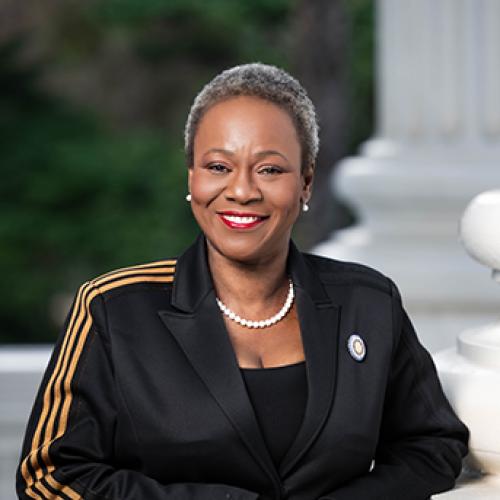
Asm. Tina McKinnor
Sponsored bills
The California Constitution, pursuant to provisions enacted by the initiative Proposition 209 in 1996, prohibits the state from discriminating against, or granting preferential treatment to, any individual or group on the basis of race, sex, color, ethnicity, or national origin in the operation of public employment, public education, or public contracting. The California Constitution defines the state for these purposes to include the state, any city, county, public university system, community college district, school district, special district, or any other political subdivision or governmental instrumentality of, or within, the state. This measure would instead prohibit the state from harmfully discriminating against, or granting preferential treatment to, any individual or group on the basis of race, sex, color, ethnicity, or national origin in the operation of public employment or public education, except as provided. The measure would provide that, except as specified, a state agency or a local agency may use state moneys to fund research-based or research-informed and culturally specific programs in any industry if certain conditions are satisfied, including that those programs are established or otherwise implemented by the state for purposes of eliminating legal barriers to the creation of equality and equitable outcomes for all residents of the state in a specified manner. The measure would define various terms for these purposes.
This measure would recognize June 19, 2024, as Juneteenth and would urge the people of California to join in celebrating Juneteenth as a day to honor and reflect on the significant role that African Americans have played in the history of the United States and how they have enriched society through their steadfast commitment to promoting unity and equality.
Existing law, until January 1, 2028, requires the Department of Corrections and Rehabilitation to maintain canteens at its facilities, and limits the sale price of items to 35% markup above the amount paid to the vendor. Commencing January 1, 2028, existing law requires the sale prices in the canteen to be set by the Secretary of the Department of Corrections and Rehabilitation so the canteen will be self-supporting. Existing law requires the department to sell, among other things, toilet articles, candy, notions, and other sundries at the canteens. Existing law authorizes the sheriff of each county to establish, maintain, and operate a store within a jail where inmates may purchase certain goods, articles, and supplies. This bill, the Culturally Competent Hair Care Act, would, commencing January 1, 2028, require the department, and local jail and detention facilities if they have a store, to additionally provide sulfate-free shampoos and conditioners, curl creams, and gel. This bill would also make related findings and declarations.

Existing law, the Alcoholic Beverage Control Act, which is administered by the Department of Alcoholic Beverage Control, regulates the application, issuance, and suspension of alcoholic beverage licenses. Existing law provides for the licensure and regulation of winegrowers and establishes the privileges that a winegrower may exercise. Existing law authorizes a winegrower, among other things, to produce spirits of wine and blend those spirits of wine into wine produced by the winegrower or sell those spirits of wine to an industrial alcohol dealer or a distilled spirits manufacturer. This bill would additionally authorize a winegrower to sell the spirits of wine that the winegrower produces to any person holding a license authorizing the manufacture or rectification of distilled spirits. Existing law provides for the licensure and regulation of craft distillers and authorizes a craft distiller to, among other things, manufacture and produce distilled spirits. Existing law defines "produce" for this purpose to mean "to mix, color, flavor, or blend distilled spirits, whether manufactured by the licensee or by another manufacturer of distilled spirits." This bill would expand this definition to include spirits of wine produced by a winegrower, as described above.
This measure would designate November 8, 2024, as "California's First-Generation College Celebration Day." The measure would urge all higher education institutions in the state to celebrate California's First-Generation College Celebration Day, recognize the significant role of first-generation college students in developing the state's future workforce, celebrate the federal Higher Education Act of 1965, and support first-generation college students with opportunities and equity in completing their desired degree programs.
The Political Reform Act of 1974 prohibits an officer of an agency from accepting, soliciting, or directing a contribution of more than $250 from any party, participant, or a party or participant's agent, while a proceeding involving a license, permit, or other entitlement for use is pending before the agency and for 12 months following the date a final decision is rendered in the proceeding, if the officer knows or has reason to know that the participant has a financial interest, as defined. Existing law permits an officer who violates this prohibition to cure the violation by returning the contribution, or portion of the contribution in excess of $250, within 14 days of accepting, soliciting, or directing the contribution, as specified. Existing law also prohibits a party or party's agent from making a contribution of more than $250 to any officer of an agency while a proceeding involving a license, permit, or other entitlement for use is pending before the agency and for 12 months following the date a final decision is rendered by the agency in that proceeding. This bill would raise the threshold for contributions regulated by these provisions to $1,500, as specified. The Political Reform Act of 1974, an initiative measure, provides that the Legislature may amend the act to further the act's purposes upon a 23 vote of each house of the Legislature and compliance with specified procedural requirements. This bill would declare that it furthers the purposes of the act.
Maddy summaryThis bill declares May 2024 as Foster Care Awareness Month in California to highlight the needs of the state's approximately 45,000 children in the foster care system. The measure does not change laws or allocate funding but serves as a symbolic recognition of the efforts made by families, caregivers, and organizations to support vulnerable youth. By designating this specific month, the resolution aims to increase public awareness about the challenges foster youth face, such as homelessness after exiting care, and to celebrate the contributions of those working within the child welfare system.
This measure would recognize the Vietnamese Heritage and Freedom Flag as the cultural and heritage flag of the Vietnamese American community and as a symbol of the community's continued struggle for freedom and liberty for the people of Vietnam, commemorate the anniversary of the Fall of Saigon on April 30, 1975, and acknowledge and recognize the Vietnamese American community's commitment to the principles of democracy, justice, and the protection and advancement of human rights.
Maddy summaryThis bill designates June 3, 2024, as Family Justice Center Day in California to recognize the work of organizations supporting survivors of domestic and sexual violence. It directly affects the California Family Justice Network and its 27 affiliated centers, which provide coordinated services such as legal aid, mental health support, and police assistance under one roof. The measure highlights the importance of these centers by noting they serve over 70,000 trauma victims annually, including more than 20 percent who are children. By officially acknowledging this date, the legislation aims to raise awareness about the critical role these centers play in helping survivors access necessary resources.