

Existing law authorizes an unmarried person who is under 18 years of age to marry upon obtaining a court order granting permission and the written consent of at least one of the parents or the guardian of each underage party to the marriage, as specified. Existing law requires the court, if it considers it necessary, as part of the court order granting permission to marry, to require the parties to the prospective marriage of a minor to participate in premarital counseling, as specified. Existing law provides that 2 unmarried, unrelated adults who have chosen to share one another's lives in an intimate and committed relationship of mutual caring may establish a domestic partnership by filing a declaration with the Secretary of State, if certain requirements are met. Existing law provides that a person under 18 years of age who, together with the person with whom the person proposes to establish a domestic partnership, meets the requirements for a domestic partnership other than the requirement of being at least 18 years of age, is capable of consenting to and establishing a domestic partnership upon obtaining a court order granting permission to the underage person or persons to establish a domestic partnership. Under existing law, registered domestic partners have the same rights, protections, and benefits as spouses. This bill would repeal the authorization for a person under 18 years of age to be issued a marriage license or to establish a domestic partnership, thereby prohibiting a person under 18 years of age from being issued a marriage license or from establishing a domestic partnership. The bill would make conforming changes. Existing law requires the State Registrar to create a document, no later than March 1, 2020, concerning marriage certificates in which one or both of the parties were minors at the time of solemnization of the marriage. Existing law requires the State Registrar to update that document annually, as specified. Existing law requires the local registrar to submit specified information for the purposes of that report. This bill would repeal those provisions.
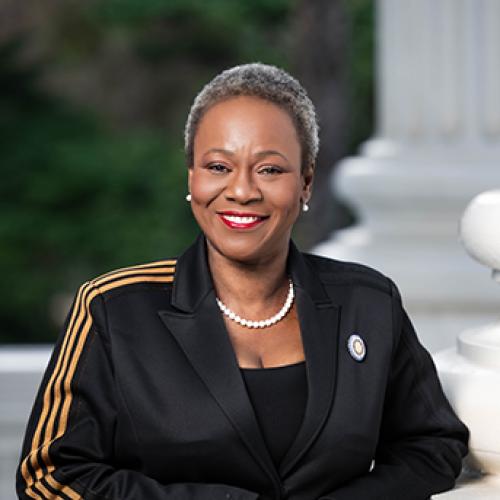
Asm. Tina McKinnor
Sponsored bills
Existing law establishes the Department of Financial Protection and Innovation under the direction of the Commissioner of Financial Protection and Innovation. Existing law makes the department responsible for administering various laws relating to financial institutions, including the Banking Law, the California Credit Union Law (CCUL) , and the California Residential Mortgage Lending Act (CRMLA) , a willful violation of which is punishable as a misdemeanor. The CRMLA requires, as often as the commissioner deems necessary and appropriate, but at least once every 48 months, the commissioner to examine the affairs of each residential mortgage lender and servicer licensee for compliance with the CRMLA. The CRMLA authorizes the commissioner to examine the licensee's officers, directors, employees, or agents under oath regarding the licensee's operations. The CRMLA requires the commissioner to provide a written statement, the disclosure of which is subject to certain restrictions, of the findings of the examination, issue a copy of that statement to each licensee's principals, officers, or directors, and take appropriate steps to ensure correction of any violations of the CRMLA. This bill, the California Fair Lending Examination Act, would require, under the Banking Law and the CCUL, the commissioner to, at least once every 4 years, examine, as prescribed, the books and records of certain entities subject to the commissioner's examination authority under those laws for compliance with any nondiscrimination law applicable to mortgage lending, as specified, and would require the commissioner to provide a written statement of the findings of that examination, issue a copy of that statement to the subject's principals, officers, or directors, and take appropriate steps to ensure correction of any violations of applicable nondiscrimination laws. The bill would prohibit disclosure of that statement to anyone other than the subject entity, law enforcement officials, or other state or federal regulatory agencies for further investigation and enforcement. This bill would, as part of the above-described examination required by the CRMLA, require the commissioner to additionally examine the licensee for compliance with any nondiscrimination law applicable to mortgage lending, as prescribed. This bill would make a violation of an applicable nondiscrimination law a violation of the Banking Law, the CCUL, or the CRMLA, as applicable, and would authorize, under the Banking Law and the CCUL, the commissioner to examine the applicable entity's officers, directors, employees, or agents under oath regarding the entity's operations. By expanding the scope of the crimes of perjury and of violating the CRMLA, this bill would impose a state-mandated local program. Existing constitutional provisions require that a statute that limits the right of access to the meetings of public bodies or the writings of public officials and agencies be adopted with findings demonstrating the interest protected by the limitation and the need for protecting that interest. This bill would make legislative findings to that effect. The California Constitution requires the state to reimburse local agencies and school districts for certain costs mandated by the state. Statutory provisions establish procedures for making that reimbursement. This bill would provide that no reimbursement is required by this act for a specified reason.
The California Constitution confers the right to vote on a United States citizen who is 18 years of age and a resident of this state, except as specified. The California Constitution requires candidates for congressional and state elective offices in California to be selected via a voter-nominated primary election at which all voters may vote for any candidate without regard to the political party preference disclosed by the candidate or the voter. The top two vote-getters at a voter-nominated primary election for a congressional or state elective office, regardless of party preference, are nominated to compete in the ensuing general election. The California Constitution requires the Legislature to provide for partisan elections for presidential candidates, and political party and party central committees, including an open presidential primary whereby the candidates on the ballot are those found by the Secretary of State to be recognized candidates throughout the nation or throughout California for the office of President of the United States. This measure would prohibit an eligible voter from being excluded from meaningful participation at any integral stage of any publicly funded election, including a primary election, on any basis, including political party preference.
Under existing law, if parties to pending litigation settle the matter, the court may enter judgment pursuant to the terms of the settlement and, upon stipulation by the settling parties, dismiss the settling parties without prejudice while retaining jurisdiction over the parties to enforce the settlement. This bill would permit the enforcement, pursuant to the above provision and under specified conditions, of a settlement agreement that resolves a tort claim against a local public entity that is eligible for payment from a victims' compensation fund or other victim-related financial assistance program, as specified. This bill would declare that it is to take effect immediately as an urgency statute.
Existing law, the Reproductive Privacy Act, declares as contrary to the public policy of this state a law of another state that authorizes a person to bring a civil action against a person or entity that engages in certain activities relating to obtaining or performing an abortion. Existing law prohibits the state from applying an out-of-state law to a case or controversy in state court or enforcing or satisfying a civil judgment under the out-of-state law. This bill would specify that the protections applicable to persons who engage in legally protected health care activity, as defined, apply to a person who previously has undertaken one or more acts or omissions while in another United States jurisdiction to aid or encourage, or attempt to aid or encourage, any person in the exercise and enjoyment, or attempted exercise and enjoyment, of rights to reproductive health care services or gender affirming health care services if the acts or omissions were permissible under the laws of the jurisdiction in which the person was located at the time of the acts or omissions. Existing law prohibits a state or local law enforcement agency or officer from knowingly arresting or knowingly participating in the arrest of any person for performing, supporting, or aiding in the performance of legally protected health care activity, if the health care activity is lawful in this state. Existing law prohibits a state or local public agency from cooperating with or providing information to an individual or agency from another state or a federal law enforcement agency, as specified, regarding a legally protected health care activity that is lawful in this state. Under existing law, the Governor may surrender, on demand of executive authority of any other state, any person in this state charged in the other state, as specified, with committing an act in this state, or in a 3rd state, intentionally resulting in a crime in the state whose executive authority is making the demand. This bill would prohibit the Governor from recognizing a request for extradition of a person subject to criminal liability based on the alleged provision or receipt of, assistance in the provision or receipt of, material support for, or in any theory of vicarious, joint, several, or conspiracy liability for any legally protected health care activity, except as specified.
Existing law establishes in the Natural Resources Agency the Department of Forestry and Fire Protection, and requires the department to be responsible for, among other things, fire protection and prevention, as provided. Existing law establishes the California Conservation Camp program for the purpose of having inmates and wards work on projects supervised by the department. Existing law requires the department to utilize inmates and wards assigned to conservation camps in performing fire prevention, fire control, and other work at the department. This bill would require, on and after July 1, 2027, the department to, in partnership with the Department of Corrections and Rehabilitation and the California Conservation Camp program, implement a standardized process to ensure that all eligible individuals who successfully complete training in a department firefighting training camp while incarcerated receive official written certification reflective of the training completed before their release, as specified. This bill would require the department, on and after January 1, 2028, if a qualified formerly incarcerated individual, as defined, applies for a Fire Fighter 1 Classification position, or any successor classifications, and has the required training and meets the minimum qualifications for the position, to award hiring preference under Category Placement 2 to the qualified formerly incarcerated individual, as specified. The bill would require the department, on and after January 1, 2028, if a qualified formerly incarcerated individual applies for a Forestry Technician Classification position, or any successor classifications, to count the duration of specified training and fieldwork as an incarcerated hand crew member towards the minimum qualifications for the classification.
This measure would urge the President of the United States and Congress of the United States to immediately restore full and consistent funding and staffing for the National Park Service.
This measure would urge President Donald J. Trump to avoid raising the cost of living for American consumers by rescinding the tariffs that he has imposed since taking office in January 2025 and refunding the American people for the costs passed on to them by his tariffs. The measure would also urge the United States Congress to enact a joint resolution to rescind President Trump's tariffs and to oppose all future unilateral and arbitrary tariff increases imposed by President Trump.
Maddy summaryCalifornia Assembly Resolution 137 formally recognizes the Diwali festival scheduled for November 8, 2026, and encourages state residents to participate in the celebration. The resolution highlights the cultural significance of the holiday for Indian Americans and South Asian communities, noting its themes of unity, joy, and the triumph of light over darkness. It also acknowledges that California previously designated Diwali as an official state holiday in 2025. This measure serves as a commemorative statement rather than a law with new regulatory or financial provisions.
This measure would declare the Legislature's opposition to any federal executive action that restricts, burdens, or interferes with California's vote by mail system and would call upon the United States Congress to reject any federal legislation that would restrict or eliminate vote by mail options and to protect the constitutional authority of states to administer their own elections.