

Relative to the Lunar New Year celebration.
This measure would recognize the Lunar New Year celebration.
Signed into law Feb 22, 2019
1 co-sponsor
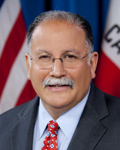
This measure would recognize the Lunar New Year celebration.
This measure would proclaim January 13, 2019, as Korean American Day.
This measure would honor the late Reverend Dr. Martin Luther King, Jr. and commemorate Dr. Martin Luther King, Jr. Day.
Existing law defines murder as the unlawful killing of a human being, or a fetus, with malice aforethought. Existing law defines malice for this purpose as either express or implied and defines those terms. This bill would require a principal in a crime to act with malice aforethought to be convicted of murder except when the person was a participant in the perpetration or attempted perpetration of a specified felony in which a death occurred and the person was the actual killer, was not the actual killer but, with the intent to kill, aided, abetted, counseled, commanded, induced, solicited, requested, or assisted the actual killer in the commission of murder in the first degree, or the person was a major participant in the underlying felony and acted with reckless indifference to human life. Existing law defines first degree murder, in part, as all murder that is committed in the perpetration of, or attempt to perpetrate, specified felonies, including arson, rape, carjacking, robbery, burglary, mayhem, and kidnapping. Existing law, as enacted by Proposition 7, approved by the voters at the November 7, 1978, statewide general election, prescribes a penalty for that crime of death, imprisonment in the state prison for life without the possibility of parole, or imprisonment in the state prison for a term of 25 years to life. Existing law defines 2nd degree murder as all murder that is not in the first degree and imposes a penalty of imprisonment in the state prison for a term of 15 years to life. This bill would prohibit a participant in the perpetration or attempted perpetration of one of the specified first degree murder felonies in which a death occurs from being liable for murder, unless the person was the actual killer or the person was not the actual killer but, with the intent to kill, aided, abetted, counseled, commanded, induced, solicited, requested, or assisted the actual killer, or the person was a major participant in the underlying felony and acted with reckless indifference to human life, unless the victim was a peace officer who was killed in the course of performing his or her duties where the defendant knew or should reasonably have known the victim was a peace officer engaged in the performance of his or her duties. This bill would provide a means of vacating the conviction and resentencing a defendant when a complaint, information, or indictment was filed against the defendant that allowed the prosecution to proceed under a theory of first degree felony murder or murder under the natural and probable consequences doctrine, the defendant was sentenced for first degree or 2nd degree murder or accepted a plea offer in lieu of a trial at which the defendant could be convicted for first degree or 2nd degree murder, and the defendant could not be charged with murder after the enactment of this bill. By requiring the participation of district attorneys and public defenders in the resentencing process, this bill would impose a state-mandated local program. The California Constitution requires the state to reimburse local agencies and school districts for certain costs mandated by the state. Statutory provisions establish procedures for making that reimbursement. This bill would provide that, if the Commission on State Mandates determines that the bill contains costs mandated by the state, reimbursement for those costs shall be made pursuant to the statutory provisions noted above.
Existing law requires a pupil to complete designated coursework while in grades 9 to 12, inclusive, in order to receive a diploma of graduation from high school. Existing law requires the Instructional Quality Commission to develop, and the State Board of Education to adopt, modify, or revise, a model curriculum in ethnic studies. Existing law also encourages each school district and charter school that maintains any of grades 9 to 12, inclusive, and that does not otherwise offer a standards-based ethnic studies curriculum to offer, beginning in the school year following the adoption of the model curriculum, a course of study in ethnic studies based on the model curriculum. This bill would authorize the governing board of a school district to, during the 2019–20 school year, apply to the State Department of Education for a grant to fund, for the 2020–21, 2021–22, and 2022–23 school years, a semester- or year-long course in ethnic studies that the governing board of the school district would require each pupil to complete, except as specified, while in any of grades 9 to 12, inclusive, in order to receive a diploma of graduation from high school. The bill would require the governing board of a school district to base any course required as part of the grant program on the model curriculum in ethnic studies adopted by the state board. The bill would require the department to award grants for these purposes, as specified, to provide professional development and technical assistance to school districts for purposes of applying for and implementing grants, and to submit a report to the Legislature that contains best practices and recommendations for including an ethnic studies course in the state's high school graduation requirements. The bill would make implementation of its provisions contingent upon funding being provided for those purposes from private or public sources. The bill would make these provisions inoperative on March 1, 2028, and would repeal them as of January 1, 2029.
Existing law authorizes a court to grant pretrial diversion, for a period no longer than 2 years, to a defendant suffering from a mental disorder, on an accusatory pleading alleging the commission of a misdemeanor or felony offense, in order to allow the defendant to undergo mental health treatment. Existing law conditions eligibility on, among other criteria, a court finding that the defendant's mental disorder played a significant role in the commission of the charged offense. Existing law requires, if the defendant has performed satisfactorily in diversion, that the court dismiss the defendant's criminal charges, with a record filed with the Department of Justice indicating the disposition of the case diverted, that the arrest is deemed never to have occurred, and requires the court to order access to the record of the arrest restricted, except as specified. This bill would make defendants ineligible for the diversion program for certain offenses, including murder, voluntary manslaughter, and rape. The bill would authorize a court to require the defendant to make a prima facie showing that the defendant will meet the minimum requirements of eligibility for diversion and that the defendant and the offense are suitable for diversion, as specified. The bill would also require the court, upon request, to conduct a hearing to determine whether restitution is owed to any victim as a result of the diverted offense and, if owed, to order its payment during the period of diversion. The bill would provide that a defendant's inability to pay restitution due to indigence or mental disorder would not be grounds for denial of diversion or a finding that the defendant has failed to comply with the terms of diversion. The bill would also make technical changes.