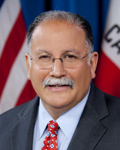
Photo of Jose Medina
D California Assembly · District 61 · Former member

Asm. Jose Medina

Compare
Total votes
20,618
all sessions
Attendance
97%
536 missed
Near the chamber average
With party
99%
of cast votes
Near the chamber average
Bipartisan score
0%
crosses aisle rarely
Near the chamber average
Sponsored
1,627
bills & resolutions
Near the chamber average
Committees
0
assignments
1,627 bills and resolutions

Sponsored bills

Total
1,627
Primary
153
Co-sponsor
1,474
This page
1,627
matching current filters
Primary AB 1186
Signed into law · California Assembly · Lead sponsor
Pawnbrokers: fees and charges.

(1) Existing law permits a pawnbroker to charge a loan setup fee of the greater of $5 or 3% of the loan amount, not to exceed $30. This bill would adjust the permitted loan setup fee to the greater of either $7.50 or 3.5% of the loan amount, not to exceed $90. (2) Existing law permits a pawnbroker to collect a handling and storage charge for pawned articles at the time property is redeemed or a replacement loan is issued. Existing law establishes the maximum amount that may be charged based on the size of pawned articles, as specified. This bill would increase the permitted handling and storage charges depending on the size of the pawned articles, as specified. (3) Existing law permits a pawnbroker to impose a processing charge in the amount of $4 for each pawned firearm. This bill would increase the processing charge to $20 for each pawned firearm. (4) Existing law permits a pawnbroker to charge a fee in the amount of up to $3 for preparing a 10-day notice when a pledged item is not redeemed during the loan period. This bill would increase that maximum noticing fee to up to $5. (5) Existing law requires pawnbrokers to provide written notice to a pledgor when a pledged item is not redeemed during the loan period and extends the pledgor's right of redemption 10 days from the date of the notice. Under existing law, the pawnbroker becomes vested with all right, title, and interest to the pledged article upon the expiration of the 10-day notice period. This bill would make nonsubstantive changes to those provisions.

Signed into law Aug 30, 2019 0 co-sponsors
Co-sponsor SB 14
Passed · California Senate · Co-sponsor
Education finance: Higher Education Facilities Bond Act of 2020.

(1) Under the Higher Education Facilities Bond Act of 1986, the Higher Education Facilities Bond Act of 1988, and the Higher Education Facilities Bond Act of June 1992, the issuance, pursuant to the State General Obligation Bond Law, of bonds in an amount not to exceed $400,000,000, $600,000,000, and $900,000,000, respectively, and the expenditure of the revenues therefrom, were authorized for the purpose of aid to the University of California and the California State University for, among other things, the construction and equipping of educational facilities, as specified. Existing law establishes the Higher Education Facilities Finance Committee to administer those acts, and to authorize the issuance and sale of bonds to the extent necessary to fund the education facilities construction apportionments expressly authorized by the Legislature in the annual Budget Act. More recently, the Class Size Reduction Kindergarten-University Public Education Facilities Bond Act of 1998, the Kindergarten-University Public Education Facilities Bond Act of 2002, the Kindergarten-University Public Education Facilities Bond Act of 2004, and the Kindergarten-University Public Education Facilities Bond Act of 2006 authorized the issuance of bonds and the expenditure of revenues therefrom for the University of California and the California State University, as well as for the California Community Colleges and public elementary and secondary schools. This bill would enact the Higher Education Facilities Bond Act of 2020, which, upon approval by the state electorate, would authorize the issuance of state general obligation bonds in an amount not to exceed $8,000,000,000, with one-half of the amount designated for the University of California and the Hastings College of the Law and the other half designated for the California State University, for purposes similar to those specified in the Higher Education Facilities Bond Act of 1986, the Higher Education Facilities Bond Act of 1988, and the Higher Education Facilities Bond Act of June 1992, to be issued and sold in a manner similar to that provided under those acts. The bill would require that any request for funds from the bonds issued pursuant to the bond act enacted by this bill be accompanied by the 5-year capital outlay plan of the particular university or college and include a schedule that prioritizes the seismic retrofitting needed to significantly reduce seismic hazards in buildings identified as high priority by the university or college, as specified. (2) This bill would provide for the submission of the Higher Education Facilities Bond Act of 2020 to the voters at the March 3, 2020, statewide primary election, as specified.


Passed Aug 30, 2019 1 co-sponsor
Co-sponsor AB 656
Passed · California Assembly · Co-sponsor
Office of Healthy and Safe Communities.

Existing establishes the State Department of Public Health, within the California Health and Human Services Agency, vested with certain duties, powers, functions, jurisdiction, and responsibilities over specified health programs, including, among others, a reporting system to collect data on violent deaths. This bill would create the Office of Healthy and Safe Communities (OHSC) under the direction of the State Department of Public Health, to provide a comprehensive violence prevention strategy. The bill would require the department to oversee the OHSC and would require the Governor to appoint the Director of the OHSC. The bill would set forth the duties of the OHSC, including the duty to develop, implement, and monitor a California vision and plan for violence prevention, safety, and healing. The bill would require the director to strengthen the professionalization of community violence intervention and prevention as a licensed occupation and facilitate the coordination and alignment of programming across statewide departments and agencies, among other duties. The bill would also require the director to assemble an advisory committee to inform and guide the execution of the duties of the OHSC. The bill would require the advisory committee to be selected by the President pro Tempore of the Senate and the Speaker of the Assembly and would specify the composition of the advisory committee. The bill would make the implementation of its provisions contingent on appropriate funding as determined by the department, upon appropriation by the Legislature or other sources.

Passed Aug 30, 2019 1 co-sponsor
Primary AB 595
Signed into law · California Assembly · Lead sponsor
Community colleges: apprenticeship programs.

Existing law establishes the California Community Colleges, under the administration of the Board of Governors of the California Community Colleges, as one of the segments of public postsecondary education in this state. Existing law authorizes the board of governors, to the extent that funds are available, to establish certain internship training programs and to actively support apprenticeship training programs, as defined, in collaboration with the Division of Apprenticeship Standards of the Department of Industrial Relations. This bill would authorize a student enrolled in a community college class or classes pursuant to an apprenticeship training program or an internship training program, as defined, who does not have a social security number to use an individual tax identification number for purposes of any background check required by the class or program.

Signed into law Aug 30, 2019 0 co-sponsors
Co-sponsor AB 163
Passed · California Assembly · Co-sponsor
Services for unaccompanied undocumented minors: facilities liaison.

Existing law, the California Community Care Facilities Act, provides for the licensure and regulation of community care facilities, including group homes and foster family agencies, by the State Department of Social Services. Existing law requires the State Department of Social Services, subject to the availability of funding, to contract with qualified nonprofit legal services organizations to provide legal services to unaccompanied undocumented minors, as defined, who are transferred to the care and custody of the federal Office of Refugee Resettlement and who are present in this state. This bill would require the department to create a facilities liaison position within its immigration services unit to, among other duties, assist state-licensed group homes, short-term residential therapeutic programs (STRTPs) , foster family agencies, and resource families that serve undocumented immigrant youth in connecting with appropriate supports and services, including, but not limited to, legal services, mental health assessments and services, and public benefits, as specified. The bill would, when appropriate, require the facilities liaison to assist in arranging a meeting for identified unaccompanied undocumented minors with a qualified organization that has received a grant to provide legal services. The bill would require the department to develop and issue guidance to counties, licensees, and other providers regarding the provision of services to undocumented immigrant youth and their caregivers.

Passed Aug 30, 2019 1 co-sponsor
Primary AB 428
Passed · California Assembly · Lead sponsor
Special education funding.

Existing law establishes a public school financing system that requires state funding for county superintendents of schools, school districts, and charter schools to be calculated pursuant to a local control funding formula. Existing law requires the Superintendent of Public Instruction to determine the amount of funding to be provided for each special education local plan area in accordance with specified calculations. Existing law requires the Superintendent, for the 2013–14 fiscal year, to compute an equalization adjustment for each special education local plan area for purposes of increasing the funding rates for special education local plan areas with funding rates below the 90th percentile, as specified. This bill would increase that percentile to the 95th percentile and would require the Superintendent to compute that equalization adjustment commencing with the first fiscal year after funds are apportioned pursuant to a specified formula and for each fiscal year thereafter in which an equalization appropriation is made, as specified. The bill would require the Superintendent to make certain computations following each year in which an equalization appropriation is made. The bill would establish the high-cost service allowance for the purpose of providing supplemental funding to a special education local plan area on the basis of the number of pupils who are severely disabled and the number pupils with both deafness and blindness, traumatic brain injury, or multiple disabilities, and would require the Superintendent to make specified computations that would determine the high-cost service allowance for each special education local plan area. The bill would require, commencing with the first fiscal year after funds are apportioned pursuant to a specified formula, a special education local plan area that reports serving children 3 or 4 years of age who meet the definition of an "individual with exceptional needs" to count 3 times all units of average daily attendance generated by children enrolled in kindergarten less those children eligible for transitional kindergarten, for purposes of calculating units of average daily attendance, except as provided. By adding to the duties of special education local plan areas, the bill would impose a state-mandated local program. Existing law defines "average daily attendance reported for the special education local plan area" for purposes of these and other provisions to mean the total number of units of average daily attendance reported in the school district or districts and in the county office of education or county offices of education, or portion of a county office of education that is a part of more than one special education local plan area, as specified. The bill would revise that definition to mean the total number of units of average daily attendance reported for the current school year or the prior school year, whichever is greater, in those same entities, as specified. The California Constitution requires the state to reimburse local agencies and school districts for certain costs mandated by the state. Statutory provisions establish procedures for making that reimbursement. This bill would provide that, if the Commission on State Mandates determines that the bill contains costs mandated by the state, reimbursement for those costs shall be made pursuant to the statutory provisions noted above.

Passed Aug 30, 2019 0 co-sponsors
Co-sponsor SCR 29
Signed into law · California Senate · Co-sponsor
Postsecondary education: University of California: University Council-American Federation of Teachers.

This measure would recognize June 27, 2019, as the anniversary of the commencement of the University Council-American Federation of Teachers' representation of librarians, and commend the librarians represented by the University Council-American Federation of Teachers for their contributions to the University of California.

Signed into law Aug 28, 2019 1 co-sponsor
Co-sponsor ACR 104
Signed into law · California Assembly · Co-sponsor
Relative to Philippine Independence Day.

This measure would recognize June 12, 2019, as the 121st Anniversary of Philippine Independence and would call upon the people of the state to observe the month of June with appropriate ceremonies, programs, and activities.

Signed into law Aug 27, 2019 1 co-sponsor
Showing 561 to 570 of 1,627 bills
Previous 1 … 56 57 58 … 163 Next