

Passed Feb 4, 2021
1 co-sponsor
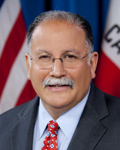
Total votes
20,618
all sessions
Attendance
97%
536 missed
Near the chamber average
With party
99%
of cast votes
Near the chamber average
Bipartisan score
0%
crosses aisle rarely
Near the chamber average
Sponsored
1,627
bills & resolutions
Near the chamber average
Committees
0
assignments
1,627 bills and resolutions
Sponsored bills
Total
1,627
Primary
153
Co-sponsor
1,474
This page
1,627
matching current filters
Passed Feb 4, 2021
1 co-sponsor
Passed Feb 4, 2021
1 co-sponsor
Passed Feb 4, 2021
1 co-sponsor
Passed Feb 1, 2021
1 co-sponsor
Passed Jan 25, 2021
1 co-sponsor
Relative to Reverend Dr. Martin Luther King, Jr.
This measure would, among other things, honor the late civil rights pioneer and icon Reverend Dr. Martin Luther King, Jr. and commemorate Dr. Martin Luther King, Jr. Day.
Passed Jan 19, 2021
1 co-sponsor
Passed Jan 15, 2021
1 co-sponsor
Pupil instruction: high school graduation requirements: ethnic studies.
(1) Existing law requires a pupil to complete designated coursework while in grades 9 to 12, inclusive, in order to receive a diploma of graduation from high school. These graduation requirements include, among others, the completion of 3 years of courses in English and 3 years of courses in social studies, including one-year courses in United States history and geography and world history, culture, and geography, a one-semester course in American government and civics, and a one-semester course in economics. Existing law requires the Instructional Quality Commission to develop, and the State Board of Education to adopt, modify, or revise, a model curriculum in ethnic studies. Existing law also encourages each school district and charter school that maintains any of grades 9 to 12, inclusive, and that does not otherwise offer a standards-based ethnic studies curriculum to offer, beginning in the school year following the adoption of the model curriculum, a course of study in ethnic studies based on the model curriculum. This bill would add the completion of a one-semester course in ethnic studies, meeting specified requirements, to the high school graduation requirements commencing with pupils graduating in the 2029–30 school year, including for pupils enrolled in a charter school. The bill would expressly authorize local educational agencies, including charter schools, to require a full-year course in ethnic studies at their discretion. The bill would require local educational agencies, including charter schools, to offer an ethnic studies course commencing with the 2025–26 school year, as specified. The bill would authorize, subject to the course offerings of a local educational agency, including a charter school, a pupil to satisfy the ethnic studies course requirement by completing either (A) a course based on the model curriculum in ethnic studies developed by the commission, (B) an existing ethnic studies course, (C) an ethnic studies course taught as part of a course that has been approved as meeting the A-G requirements of the University of California and the California State University, except as specified, or (D) a locally developed ethnic studies course approved by the governing board of the school district or the governing body of the charter school. The bill would require a pupil who completes a course described above to also accrue credit for coursework in the subject that the course is offered, including, if applicable, credit towards satisfying a course required for a diploma of graduation from high school. The amendments made by the bill, as described above, would become operative only upon an appropriation of funds by the Legislature for purposes of the amendments in the annual Budget Act or another statute. Because the bill would add new duties to local educational agencies, it would constitute a state-mandated local program. (2) The California Constitution requires the state to reimburse local agencies and school districts for certain costs mandated by the state. Statutory provisions establish procedures for making that reimbursement. This bill would provide that, if the Commission on State Mandates determines that the bill contains costs mandated by the state, reimbursement for those costs shall be made pursuant to the statutory provisions noted above.
Vetoed Sep 30, 2020
0 co-sponsors
Regional business training center network: pilot project.
Existing law establishes the Employment Training Panel within the Employment Development Department. Under existing law, the panel is charged with performing various duties, including establishing a 3-year plan based on the demand of employers for trained workers, changes in the state's economy and labor markets, and continuous reviews of the effectiveness of panel training contracts. Existing law establishes the California Community Colleges Economic and Workforce Development Program with the purpose of, among other things, using labor market information to advise the chancellor's office and regional community college bodies on the workforce needs of the state's competitive and emerging industry sectors, and collaborating and coordinating investment with other state, regional, or local agencies involved in education and workforce training in California. Existing law authorizes the governing board of any community college district to contract education programs by agreement with any public or private agency, corporation, association, or any other person or body, to provide specific educational programs or training to meet the specific needs of those bodies. This bill, upon appropriation by the Legislature, would require the Employment Training Panel to establish a pilot project to enhance the regionally focused statewide business training center network of community college contract education centers to partner with other assistance providers serving small businesses. The bill would authorize the pilot project to be guided through a partnership with the Employment Training Panel, including the California Community Colleges, the Governor's Office of Business and Economic Development, the Labor and Workforce Development Agency, and the California Workforce Development Board. This bill would state that the purpose of the pilot project is to support the enhancement of a regionally focused statewide network of at least 10 regional business training centers, and their subcontracted community college partners, to support the upskilling of the regional workforce to meet the demand for jobs in essential industry sectors during the COVID-19 pandemic and in the emerging and dominant industry sectors in the post COVID-19 economy, and to strengthen the capacity of a region's small business service providers to meet the demands being placed upon it by the COVID-19 pandemic, as specified. The bill would require community colleges participating in the pilot project to offer short-term training programs that assist displaced and incumbent workers in obtaining the skills necessary to work within essential, emerging, and dominant industry sectors, as specified. The bill would authorize the Employment Training Panel, and its partners, to establish an advisory board of businesses, workforces, and economic development stakeholders to provide advice and to review the pilot project. The bill would require the Employment Training Panel to submit 2 annual reports on the activities of the pilot project and a final report that includes an overall summary of the activities of the pilot project and an assessment of the effectiveness of the pilot project, as specified. The bill would repeal these provisions January 1, 2025.
Vetoed Sep 30, 2020
1 co-sponsor
Ask Maddy
·
AI policy assistant
Ask Maddy about Jose Medina
Scope: CA
Hi! I can help you understand Jose Medina's legislative record. What would you like to know?
Try one of these
i
Maddy answers using official bill text and legislative records. Always verify before sharing.
Sources cited inline