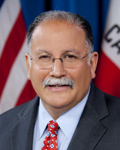
Photo of Jose Medina
D California Assembly · District 61

Asm. Jose Medina

Compare
Total votes
20,618
all sessions
Attendance
97%
536 missed
Near the chamber average
With party
99%
of cast votes
Near the chamber average
Bipartisan score
0%
crosses aisle rarely
Near the chamber average
Sponsored
1,627
bills & resolutions
Near the chamber average
Committees
0
assignments
1,627 bills and resolutions

Sponsored bills

Total
1,627
Primary
153
Co-sponsor
1,474
This page
1,627
matching current filters
Primary AB 1260
Vetoed · California Assembly · Lead sponsor
California family owned business.

Existing law provides various definitions for various purposes. This bill would define a California family owned business for purposes of any provision of the Government Code that explicitly references this definition.

Vetoed Sep 29, 2014 0 co-sponsors
Co-sponsor SB 1099
Signed into law · California Senate · Co-sponsor
Dependent children: wards of the juvenile court: sibling visitation.

(1) Under existing law, a child may come within the jurisdiction of the juvenile court and become a dependent child of the court in certain cases, including when the child is abused, a parent or guardian fails to adequately supervise or protect the child, as specified, or a parent or guardian fails to provide the child with adequate food, clothing, shelter, or medical treatment. Existing law generally subjects any person under 18 years of age who commits a crime to the jurisdiction of the juvenile court, which may adjudge that person to be a ward of the court. Existing law requires the responsible local agency to make a diligent effort in all out-of-home placements of dependent children to place siblings together in the same placement, and to develop and maintain sibling relationships. This bill would extend that requirement to all out-of-home placements of wards in foster care. By imposing additional duties on local agencies, the bill would create a state-mandated local program. (2) Existing law permits any person to petition the juvenile court to assert a sibling relationship with a dependent child or a child who is the subject of a petition for adjudication as a dependent child and make certain requests, including a request for visitation with the dependent child. This bill would also authorize a dependent child or a nonminor dependent to request visitation with a sibling who is in the physical custody of a common legal or biological parent. The bill would authorize a court to grant those requests for visitation, unless it is determined by the court that visitation is contrary to the safety and well-being of any of the siblings. This bill would authorize any person, including a ward, a transition dependent, or a nonminor dependent of the juvenile court, to petition the court to assert a relationship as a sibling and make certain requests, including a request for visitation, with a sibling who is, or is the subject of an adjudication as, a ward of the juvenile court, as specified. The bill would authorize a ward, transition dependent, or nonminor dependent to assert a relationship as a sibling and request visitation with a nondependent sibling who is in the physical custody of a common legal or biological parent. The bill would authorize a court to grant those requests for visitation, unless it is determined by the court that visitation is contrary to the safety and well-being of any of the siblings. (3) Existing law requires, in order to maintain ties between the parent or guardian and any siblings and a child placed in foster care, an order placing a child in foster care and ordering reunification services to provide for visitation between the parent or guardian and the child and for visitation between any siblings and the child. This bill would additionally require an order placing a child in foster care and ordering reunification services to provide for review of the reasons for any suspension of sibling visitation at each periodic review hearing and for a requirement that, in order for the suspension to continue, a court make a renewed finding that sibling interaction is contrary to the safety or well-being of either child. (4) Existing law requires that the status of a dependent child in foster care be reviewed periodically, but no less frequently than once every 6 months. Existing law requires a court to determine specified information at that hearing, including whether the child has any siblings under the court's jurisdiction, and, if any siblings exist and are not placed with the child, the frequency and nature of the visits between siblings. Existing law requires a social worker or child advocate appointed by the court, when preparing certain social studies or evaluations, to include specified information, including whether the child has any siblings under the court's jurisdiction, and, if any siblings exist and are not placed with the child, the frequency and nature of the visits between siblings. This bill would additionally require, if any siblings exist and are not placed with the child, the court to determine, and require a social worker or child advocate appointed by the court to include in those social studies or evaluations, whether any visits between the siblings are supervised or unsupervised, and if visits are supervised, a discussion of the reasons why the visits are supervised, and what needs to be accomplished in order for the visits to be unsupervised, a description of the location and length of any visits, and any plan to increase visitation between siblings. By requiring county social workers to include additional information in certain social studies or evaluations, the bill would impose a state-mandated local program. (5) Existing law requires, after a minor is adjudged to be a ward of the court, the court to hear evidence on the question of the proper disposition to be made of the minor. Existing law requires the probation officer to prepare a case plan if placement in foster care is recommended by the probation officer, or if the minor is already in foster care placement or pending placement. Existing law requires the probation officer to include, among other things, scheduled visits between the minor and his or her family and an explanation if no visits are made. This bill would additionally require the probation officer to include specified information relating to the child's siblings. By imposing additional duties on probation officers, the bill would create a state-mandated local program. (6) This bill would incorporate additional changes to Sections 358.1 and 366.1 of the Welfare and Institutions Code, proposed by SB 977, that would become operative only if this bill and SB 977 are chaptered and become effective on or before January 1, 2015, and this bill is chaptered last. The bill would incorporate additional changes to Section 16002 of the Welfare and Institutions Code, proposed by SB 1460, that would become operative only if this bill and SB 1460 are chaptered and become effective on or before January 1, 2015, and this bill is chaptered last. The bill would also incorporate additional changes to Section 361.2 of the Welfare and Institutions Code, proposed by SB 977 and SB 1460, that would become operative only if this bill and either or both of those bills are chaptered and become effective on or before January 1, 2015, and this bill is chaptered last. (7) The California Constitution requires the state to reimburse local agencies and school districts for certain costs mandated by the state. Statutory provisions establish procedures for making that reimbursement. This bill would provide that, if the Commission on State Mandates determines that the bill contains costs mandated by the state, reimbursement for those costs shall be made pursuant to these statutory provisions.


Signed into law Sep 29, 2014 1 co-sponsor
Primary AB 2723
Vetoed · California Assembly · Lead sponsor
Administrative procedure: small businesses.

The Administrative Procedure Act governs the procedures for the adoption, amendment, or repeal of regulations by state agencies and for the review of those regulatory actions by the Office of Administrative Law. Existing law requires the notice of proposed adoption, amendment, or repeal of a regulation to include, among other things, a description of all cost impacts, known to the agency at the time the notice of the proposed action is submitted to the Office of Administrative Law, that a representative private person or business would necessarily incur in reasonable compliance with the proposed action. Existing law defines "cost impact" as the amount of reasonable range of direct costs, or a description of the type and extent of direct costs, that a representative private person or business necessarily incurs in reasonable compliance with the proposed action. This bill would define "cost impact" to include those direct costs that a representative private person or sole proprietorship, small business, and business necessarily incurs in reasonable compliance with the proposed action. Existing law requires every state agency to prepare and submit to the Office of Administrative Law a final statement of reasons with the adopted regulation that includes, among other things, an explanation setting forth the reasons for rejecting any proposed alternatives that would lessen the adverse economic impact on small businesses, as defined. Under existing law, a "small business" does not include, among others, a landscape architect, an architect, or a building designer or an entity organized as a nonprofit institution. This bill would instead provide that a "small business" does not include a landscape architect, an architect, or a building designer with 50 or more employees or an entity organized as a nonprofit institution with more than 100 employees. Existing law requires each state agency proposing to adopt, amend, or repeal a major regulation on or after November 1, 2013, to prepare a standardized regulatory impact analysis in the manner prescribed by the Department of Finance. Existing law requires the standardized regulatory impact analysis to address, among other things, the creation of new businesses or the elimination of existing businesses within the state. This bill would require the analysis to address, the creation of new businesses or the elimination of existing businesses within the state, including the impact on sole proprietorships and small businesses, as defined. If a state agency, in proposing to adopt, amend, or repeal any administrative regulation, makes an initial determination that the action may have a significant, statewide adverse economic impact directly affecting businesses, including the ability of California businesses to compete with businesses in other states, existing law requires the state agency to include certain information in the notice of the proposed action, including, but not limited to, identification of the types of businesses that would be affected. This bill would require that information to additionally include the size of businesses that would be affected. This bill would incorporate additional changes to Section 11346.3 of the Government Code proposed by AB 1711 that would become operative if this bill and AB 1711 are both chaptered and this bill is chaptered last.

Vetoed Sep 29, 2014 0 co-sponsors
Co-sponsor AB 1444
Vetoed · California Assembly · Co-sponsor
Elementary education: kindergarten.

Under existing law, a person between the ages of 6 and 18 years who is not exempted by law is subject to compulsory full-time education. Existing law excludes a child under 6 years of age from the public schools, subject to specified exceptions. Existing law requires a school district maintaining a kindergarten to admit a child who will have his or her 5th birthday on or before certain specified dates during that school year. Existing law also requires that a child who will have his or her 6th birthday on or before specified dates be admitted to the first grade of an elementary school. This bill, beginning with the 2016–17 school year, would require a child to have completed one year of kindergarten before he or she may be admitted to the first grade, thereby imposing a state-mandated local program. The California Constitution requires the state to reimburse local agencies and school districts for certain costs mandated by the state. Statutory provisions establish procedures for making that reimbursement. This bill would provide that, if the Commission on State Mandates determines that the bill contains costs mandated by the state, reimbursement for those costs shall be made pursuant to these statutory provisions.
Vetoed Sep 28, 2014 1 co-sponsor
Co-sponsor AB 690
Signed into law · California Assembly · Co-sponsor
State government: international relations.

Existing law requires the California-Mexico Border Relations Council to, among other things, coordinate activities of state agencies that are related to cross-border programs, initiatives, projects, and partnerships that exist within state government. This bill would repeal and recast those provisions.

Signed into law Sep 28, 2014 1 co-sponsor
Co-sponsor SB 1087
Signed into law · California Senate · Co-sponsor
Farm labor contractors.

Existing law requires farm labor contractors to be licensed by the Labor Commissioner and to comply with specified employment laws applicable to farm labor contractors. Existing law requires farm labor contractors to pay license fees to the Labor Commissioner, and continuously appropriates a portion of the fee revenues for enforcement and verification purposes. Under existing law, a person who violates farm labor contractor requirements is guilty of a misdemeanor. This bill would prohibit a license to operate as a farm labor contractor from being granted to a person who, within the preceding 3 years, has been found by a court or an administrative agency to have committed sexual harassment of an employee, or who, within the preceding 3 years, employed any supervisory employee whom he or she knew or should have known has been found by a court or an administrative agency, within the preceding 3 years of his or her employment with the applicant, to have committed sexual harassment of an employee. These provisions would not apply until the Labor Commissioner makes a specified form available. Existing law authorizes the Labor Commissioner to revoke, suspend, or refuse to renew a farm labor contractor's license under specified circumstances, including that the licensee or an agent of the licensee violated or failed to comply with certain laws. This bill would additionally authorize the Labor Commissioner to revoke, suspend, or refuse to renew a farm labor contractor's license if the licensee has been found by a court or an administrative agency to have committed sexual harassment of an employee, or has employed a supervisory employee whom he or she knew or should have known has been found by a court or an administrative agency, within the preceding 3 years, to have committed sexual harassment of an employee. These provisions would not apply until the Labor Commissioner makes a specified form available. This bill would increase the license fee paid by an applicant from $500 to $600, thereby making an appropriation. The bill would require the amount attributable to the fee increase to be expended by the Labor Commissioner to fund the Farm Labor Contractor Enforcement Unit and the Farm Labor Contractor License Verification Unit. The bill would require an applicant to provide the names and addresses of all persons who performed specified services for him or her in the previous year, in order to be issued a license to act as a farm labor contractor. The bill would require each employee of an applicant for licensure as a farm labor contractor to register as a farm labor contractor employee pursuant to federal law, if that registration is required under federal law. The bill would require an applicant for licensure as a farm labor contractor to execute a written statement attesting that the person's supervisorial employees have been trained in the prevention of sexual harassment, as provided. The bill would require that the bond deposited with the Labor Commissioner in order to be issued a license to act as a farm labor contractor be conditioned upon compliance with, and payment of all damages occasioned by failure to comply with, provisions prohibiting unlawful workplace harassment, as specified. The bill would also authorize certain license fees in the Farmworker Remedial Account which are continuously appropriated, to be used to satisfy claims for damages for violations of provisions prohibiting unlawful workplace harassment, as specified. Existing law requires an applicant for licensure as a farm labor contractor to have taken a written examination that demonstrates an essential degree of knowledge of current laws and regulations concerning farm labor contractors and authorizes the Labor Commissioner to charge a fee of not more than $100 to cover the cost of administering the examination. This bill would require that examination to cover laws and regulations concerning sexual harassment in the workplace. The bill would authorize the Labor Commissioner to consult with the Department of Fair Employment and Housing in preparing the examination. The bill would also increase the maximum amount the Labor Commissioner may charge for developing and administering the examination to $200. Existing law authorizes the Labor Commissioner to renew a license without requiring the applicant to take the examination if during the previous year the applicant has not been found to be in violation of specified laws and regulations, and meets other criteria. This bill would include among those laws that the applicant must not have violated laws and regulations related to workplace harassment. Existing law requires an applicant for a license to act as a farm labor contractor to participate in at least 8 hours of educational classes each year. This bill would increase the requirement to 9 hours of classes and require that those classes include at least one hour of sexual harassment prevention training. Existing law provides that it is a crime for an employer who has made withholdings from an employee's wages willfully or with intent to defraud to fail to remit the withholdings to the proper agency or to fail to make any required payments required. This bill would authorize the Labor Commissioner to refuse to issue or renew the license until the amount of any delinquency under these provisions is fully paid. Existing law requires every licensee to have a written statement ready for inspection stating the rate of compensation he or she receives from the grower and that he or she is paying to employees, as specified. This bill would require that this statement be provided to a current or former employee or the grower within 21 calendar days of a written request. The bill would make a licensee who fails to comply with this requirement subject to a civil penalty of $750 recoverable by the employee or grower. Existing law provides that any farm labor contractor who engages in farm labor contracting activities after his or her license has been suspended or revoked is punishable by a fine of not less than $1,000 but not exceeding $5,000, or by imprisonment for not less than 6 months and not more than one year, or both. This bill would instead provide that any farm labor contractor who engages in farm labor contracting activities after his or her license has been suspended, revoked, or denied reissuance is punishable by a fine of not less than $10,000, or by imprisonment for not less than 6 months and not more than one year, or both. Existing law provides that any violation of these provisions is a misdemeanor. Because this bill would change various provisions, the violation of which are misdemeanors, this bill would impose a state-mandated local program. The California Constitution requires the state to reimburse local agencies and school districts for certain costs mandated by the state. Statutory provisions establish procedures for making that reimbursement. This bill would provide that no reimbursement is required by this act for a specified reason.

Signed into law Sep 28, 2014 1 co-sponsor
Co-sponsor AB 1521
Vetoed · California Assembly · Co-sponsor
Local government finance: property tax revenue allocations: vehicle license fee adjustments.

Existing property tax law requires the county auditor, in each fiscal year, to allocate property tax revenue to local jurisdictions in accordance with specified formulas and procedures, and generally provides that each jurisdiction shall be allocated an amount equal to the total of the amount of revenue allocated to that jurisdiction in the prior fiscal year, subject to certain modifications, and that jurisdiction's portion of the annual tax increment, as defined. Existing property tax law also requires that, for purposes of determining property tax revenue allocations in each county for the 1992–93 and 1993–94 fiscal years, the amounts of property tax revenue deemed allocated in the prior fiscal year to the county, cities, and special districts be reduced in accordance with certain formulas. It requires that the revenues not allocated to the county, cities, and special districts as a result of these reductions be transferred to the Educational Revenue Augmentation Fund in that county for allocation to school districts, community college districts, and the county office of education. Beginning with the 2004–05 fiscal year and for each fiscal year thereafter, existing law requires that each city, county, and city and county receive additional property tax revenues in the form of a vehicle license fee adjustment amount, as defined, from a vehicle license fee property tax compensation fund that exists in each county treasury. Existing law requires that these additional allocations be funded from ad valorem property tax revenues otherwise required to be allocated to educational entities. This bill would modify these reduction and transfer provisions, for the 2014–15 fiscal year and for each fiscal year thereafter, by providing for a vehicle license fee adjustment amount calculated on the basis of changes in assessed valuation. This bill would incorporate additional changes to Section 97.70 of the Revenue and Taxation Code made by this bill and SB 69, to take effect if both bills are chaptered and this bill is chaptered last. By imposing additional duties upon local tax officials with respect to the allocation of ad valorem property tax revenues, this bill would impose a state-mandated local program. The California Constitution requires the state to reimburse local agencies and school districts for certain costs mandated by the state. Statutory provisions establish procedures for making that reimbursement. This bill would provide that, if the Commission on State Mandates determines that the bill contains costs mandated by the state, reimbursement for those costs shall be made pursuant to these statutory provisions. This bill would declare that it is to take effect immediately as an urgency statute.

Vetoed Sep 28, 2014 1 co-sponsor
Co-sponsor AB 2099
Signed into law · California Assembly · Co-sponsor
Postsecondary education: Title 38 awards.

Title 38 of the United States Code provides educational awards for eligible active duty members and veterans of the Armed Forces of the United States. Existing law requires an institution headquartered or operating in California desiring to enroll students eligible for federal Title 38 awards in accredited institutions and programs to make application for approval of these courses to the California State Approving Agency for Veterans Education, commonly known as CSAAVE, and authorizes CSAAVE to approve the application of the school when the school and its accredited courses satisfy the specified criteria and any additional reasonable criteria established by CSAAVE. Unless an exception applies, this bill would deem a public or private postsecondary educational institution that is accredited by an accrediting agency recognized by the United States Department of Education eligible for Title 38 awards if the institution satisfies specified criteria for qualification for Title 38 awards in the bill. The bill would, if another specified bill is enacted, deem an institution that may claim a specified exemption from the requirements of the California Private Postsecondary Education Act of 2009 eligible for Title 38 awards if the institution satisfies other criteria for qualification for Title 38 awards in this bill. The bill would deem a private postsecondary educational institution eligible for Title 38 awards if the institution is issued an approval to operate from the Bureau for Private Postsecondary Education, as specified, and satisfies the other criteria for qualification for Title 38 awards in the bill. The bill would require CSAAVE to notify initial Title 38 recipients seeking to attend, or attending, an institution that is ineligible for Title 38 awards that the institution is ineligible for Title 38 awards for the academic year, and to provide initial and renewal Title 38 recipients at an ineligible institution with a complete list of all California postsecondary educational institutions at which the student would be eligible to receive a Title 38 award.

Signed into law Sep 27, 2014 1 co-sponsor
Co-sponsor AB 1439
Signed into law · California Assembly · Co-sponsor
Unfair business practices: contests and sweepstakes.

Existing law generally regulates false advertising and specifically prohibits certain unfair acts or practices undertaken by, or omissions of, a person in the operation of a contest, including misrepresenting the odds of winning a prize or failing to award and distribute all prizes. A violation of this provision is a misdemeanor. This bill would apply the prohibition described above to unfair acts or practices undertaken by, or omissions of, a person in the operation of a sweepstakes, as defined. The bill would prohibit using or offering to use any method intended to be used by a person interacting with an electronic video monitor to simulate gambling or play gambling-themed games in a business establishment, as defined, that directly or indirectly implements the predetermination of sweepstakes cash, cash-equivalent prizes, or other prizes of value, or otherwise connects a sweepstakes player or participant with sweepstakes cash, cash-equivalent prizes, or other prizes of value. By creating new crimes, the bill would impose a state-mandated local program. The bill would also except from this prohibition game promotions and sweepstakes conducted on a limited basis as an advertising and marketing tool incidental to substantial bona fide sales of consumer products or services, as specified. The California Constitution requires the state to reimburse local agencies and school districts for certain costs mandated by the state. Statutory provisions establish procedures for making that reimbursement. This bill would provide that no reimbursement is required by this act for a specified reason.

Signed into law Sep 26, 2014 1 co-sponsor
Co-sponsor AB 1973
Signed into law · California Assembly · Co-sponsor
State holidays: Native American Day.

Existing law recognizes various state holidays. Existing law requires the Governor to proclaim annually the 4th Friday in September to be Native American Day. This bill would recognize the 4th Friday in September as a state holiday to be known as Native American Day.

Signed into law Sep 25, 2014 1 co-sponsor
Showing 1,401 to 1,410 of 1,627 bills