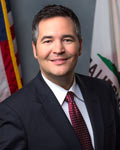
Photo of Eric Linder
R California Assembly · District 60

Asm. Eric Linder

Compare
Total votes
10,705
all sessions
Attendance
93%
514 missed
Lower than 87% of chamber peers
With party
95%
of cast votes
Lower than 81% of chamber peers
Bipartisan score
3%
crosses aisle rarely
Higher than 77% of chamber peers
Sponsored
554
bills & resolutions
Near the chamber average
Committees
0
assignments
554 bills and resolutions

Sponsored bills

Total
554
Primary
66
Co-sponsor
488
This page
554
matching current filters
Co-sponsor AB 209
Failed · California Assembly · Co-sponsor
Tax deductions: 529 college savings plans.

The Personal Income Tax Law, in modified conformity with federal income tax laws, allows various deductions in computing the income that is subject to the taxes imposed by that law. This bill, for taxable years beginning on or after January 1, 2015, would allow as a deduction under that law the lesser of (1) the amount contributed by a qualified taxpayer, as defined, to a qualified tuition program, as specified, or (2) $3,000 in the case of a qualified taxpayer who is single or is a married individual filing a separate return, and $6,000 in the case of a qualified taxpayer who is a married individual filing a joint return or an individual filing a head of household return. This bill would take effect immediately as a tax levy.

Failed Feb 1, 2016 1 co-sponsor
Co-sponsor SB 5
died · California Senate · Co-sponsor
California Global Warming Solutions Act of 2006: market-based compliance mechanisms: exemption.

The California Global Warming Solutions Act of 2006 designates the State Air Resources Board as the state agency charged with monitoring and regulating sources of emissions of greenhouse gases. The state board is required to adopt a statewide greenhouse gas emissions limit equivalent to the statewide greenhouse gas emissions level in 1990 to be achieved by 2020, and to adopt rules and regulations in an open public process to achieve the maximum, technologically feasible, and cost-effective greenhouse gas emissions reductions. The act authorizes the state board to include the use of market-based compliance mechanisms. Existing state board regulations require specified entities to comply with a market-based compliance mechanism beginning January 1, 2013, and require additional specified entities to comply with that market-based compliance mechanism beginning January 1, 2015. This bill instead would exempt categories of persons or entities that did not have a compliance obligation, as defined, under a market-based compliance mechanism beginning January 1, 2013, from being subject to that market-based compliance mechanism through December 31, 2020. This bill would declare that it is to take effect immediately as an urgency statute.

died Feb 1, 2016 1 co-sponsor
Co-sponsor AB 150
Failed · California Assembly · Co-sponsor
Theft: firearms.

(1) Existing law states that the theft of a firearm is grand theft, punishable as a felony by imprisonment in the state prison for 16 months, or 2 or 3 years. The Safe Neighborhoods and Schools Act, enacted by Proposition 47, as approved by the voters at the November 4, 2014, statewide general election, notwithstanding these provisions, instead requires the theft of property that does not exceed $950 to be considered petty theft, and makes the crime punishable as a misdemeanor, except in cases when the defendant has previously been convicted of one or more specified serious or violent felonies or an offense requiring registration as a sex offender. This bill would make the theft of a firearm grand theft in all cases, punishable by imprisonment in the state prison for 16 months, or 2 or 3 years. (2) Under existing law, every person who buys or receives any property that has been stolen, knowing the property to be stolen, is guilty of a misdemeanor or a felony, except that if the value of the property does not exceed $950, Proposition 47 makes the offense punishable as a misdemeanor if the defendant has not previously been convicted of one or more specified serious or violent felonies or an offense requiring registration as a sex offender. This bill would make buying or receiving a stolen firearm a misdemeanor or a felony. (3) The California Constitution authorizes the Legislature to amend or repeal an initiative statute by another statute that becomes effective when approved by the electors. This bill would provide that it would become effective only upon approval of the voters, and would provide for the submission of this measure to the voters for approval at the next statewide general election.

Failed Feb 1, 2016 1 co-sponsor
Primary AB 1238
Failed · California Assembly · Lead sponsor
Certified copies of marriage, birth, and death certificates: electronic application.

Under existing law, a certified copy of a birth, death, marriage, or military service record may only be supplied by the State Registrar, local registrar, or county recorder to an authorized person, as defined, who submits a written, faxed, or digitized image request accompanied by a notarized statement sworn under penalty of perjury that the applicant is an authorized person. This bill would, if the request for a certified copy of a birth, death, or marriage record is made electronically, authorize the official to accept electronic acknowledgment verifying the identity of the requestor using a remote identity proofing process aligned with federal guidelines for security and privacy, and satisfying other specified requirements, ensuring that the requester is an authorized person. The bill would require the verification to comply with specified provisions and protect the personal information of the requester and guard against identity theft.

Failed Feb 1, 2016 0 co-sponsors
Co-sponsor SCR 91
Signed into law · California Senate · Co-sponsor
Relative to India Republic Day.

This measure would proclaim January 26, 2016, as India Republic Day, and would urge all Californians to join in celebrating India Republic Day.

Signed into law Feb 1, 2016 1 co-sponsor
Co-sponsor AB 1415
Failed · California Assembly · Co-sponsor
Firearms: felons in possession of firearms.

Existing law makes it a felony for any person who has been convicted of a felony to own, purchase, receive, or have in his or her possession or under custody or control any firearm. Existing law generally prohibits a person who has been convicted of specified misdemeanors from owning, purchasing, receiving, possessing, or having under his or her custody or control a firearm within 10 years of the conviction. Existing law, the Safe Neighborhoods and Schools Act, enacted by Proposition 47, as approved by the voters at the November 4, 2014, statewide general election, reduced certain felonies to misdemeanors. Proposition 47 allows a person who is currently serving a sentence for a conviction of a felony who would have been guilty of a misdemeanor under the proposition to petition for a recall of sentence and permits the court to recall the felony sentence and resentence the petitioner to a misdemeanor, as specified. Proposition 47 also allows a court to designate a felony conviction of a person who has completed his or her sentence as a misdemeanor upon application. This bill would make it a public offense for a person who has had his or her felony conviction recalled and has been resentenced to a misdemeanor, or who has had a felony designated as a misdemeanor, pursuant to the above provisions, to, within 10 years of the recall and resentencing or designation, own, purchase, receive, or have in possession or under custody or control any firearm. The bill would make a violation of this provision punishable by imprisonment in a county jail not exceeding one year or in the state prison, by a fine not exceeding one thousand dollars ($1,000) , or by both that imprisonment and fine. By creating a new crime, this bill would impose a state-mandated local program. The California Constitution requires the state to reimburse local agencies and school districts for certain costs mandated by the state. Statutory provisions establish procedures for making that reimbursement. This bill would provide that no reimbursement is required by this act for a specified reason.


Failed Feb 1, 2016 1 co-sponsor
Co-sponsor SB 234
In committee · California Senate · Co-sponsor
Wildlife management areas: payments.

Existing law requires the Department of Fish and Wildlife, when income is derived directly from real property acquired and operated by the state as a wildlife management area, as defined, to pay annually to the county in which the property is located an amount equal to the county taxes levied upon the property at the time title to the property was transferred to the state, and any assessments levied upon the property by any irrigation, drainage, or reclamation district. This bill would appropriate $19,000,000 from the General Fund to the department to make payments to counties for unpaid amounts under these provisions. This bill would declare that it is to take effect immediately as an urgency statute.

In committee Feb 1, 2016 1 co-sponsor
Co-sponsor AB 1041
Failed · California Assembly · Co-sponsor
Personal income taxes: education savings accounts.

The Personal Income Tax Law, in modified conformity with federal income tax laws, allows various deductions in computing the income that is subject to the taxes imposed by that law. This bill would allow a deduction in computing adjusted gross income for those amounts contributed to a Coverdell education savings account, up to $750 per taxable year, as provided. This bill would take effect immediately as a tax levy.

Failed Feb 1, 2016 1 co-sponsor
Co-sponsor AB 1078
Failed · California Assembly · Co-sponsor
Teachers: evaluations.

(1) Existing law requires the State Board of Education to develop guidelines that school districts may use in the development of teacher evaluation procedures, and distribute such guidelines to every school district. This bill would require the state board to revise, update, and adopt guidelines that school districts may use in the development of teacher evaluation procedures by July 1, 2016. The bill would also require that the updated guidelines include a determination of a teacher's overall performance, as specified. (2) Existing law authorizes the governing board of a school district or a county board of education, as specified, after a public hearing on the matter, to request the state board to waive all or part of any section of the Education Code or any regulation adopted by the state board that implements a provision of the Education Code that may be waived, except for specified provisions. This bill would prohibit the state board from granting any waiver request by a governing board of a school district if the state board finds that the governing board of the school district is out of compliance with specified requirements relating to teacher evaluation. (3) Existing law states the intent of the Legislature that governing boards of school districts establish a uniform system of evaluation and assessment of the performance of all certificated personnel within each school district of the state. Existing law requires the governing board of each school district to establish standards of expected pupil achievement at each grade level in each area of study and to evaluate and assess certificated employee performance on a continuing basis as it reasonably relates to the progress of pupils toward the established standards and, if applicable, the state adopted academic content standards as measured by state adopted criterion referenced assessments, the instructional techniques and strategies used by the employee, the employee's adherence to curricular objectives, and the establishment and maintenance of a suitable learning environment, within the scope of the employee's responsibilities. Existing law authorizes school district governing boards to develop and adopt additional evaluation and assessment guidelines or criteria. This bill would encourage the governing board of a school district to use peer observation and surveys of parents and pupils as part of the evaluation and assessment guidelines and criteria. (4) Existing law requires that an evaluation and assessment of the performance of a certificated employee be made on a continuing basis, as provided. This bill would instead require an annual evaluation and assessment of the performance of a certificated employee. The bill would require the evaluation and assessment to include a determination of the teacher's performance, as specified. By requiring school districts to perform additional duties, this bill would impose a state-mandated local program. The bill would provide that, to the extent these provisions conflict with any provision of a collective bargaining agreement entered into before January 1, 2016, by a public school employer and an exclusive bargaining representative, the provisions shall not apply to the school district until the expiration or renewal of that collective bargaining agreement. (5) This bill would update cross-references and would make other nonsubstantive changes. (6) The California Constitution requires the state to reimburse local agencies and school districts for certain costs mandated by the state. Statutory provisions establish procedures for making that reimbursement. This bill would provide that, if the Commission on State Mandates determines that the bill contains costs mandated by the state, reimbursement for those costs shall be made pursuant to these statutory provisions.

Failed Feb 1, 2016 1 co-sponsor
Co-sponsor AB 23
Failed · California Assembly · Co-sponsor
California Global Warming Solutions Act of 2006: market-based compliance mechanisms: exemption.

The California Global Warming Solutions Act of 2006 designates the State Air Resources Board as the state agency charged with monitoring and regulating sources of emissions of greenhouse gases. The state board is required to adopt a statewide greenhouse gas emissions limit equivalent to the statewide greenhouse gas emissions level in 1990 to be achieved by 2020, and to adopt rules and regulations in an open public process to achieve the maximum, technologically feasible, and cost-effective greenhouse gas emissions reductions. The act authorizes the state board to include the use of market-based compliance mechanisms. Existing state board regulations require specified entities to comply with a market-based compliance mechanism beginning January 1, 2013, and require additional specified entities to comply with that market-based compliance mechanism beginning January 1, 2015. This bill would instead exempt those categories of persons or entities that did not have a compliance obligation, as defined, under a market-based compliance mechanism beginning January 1, 2013, from being subject to that market-based compliance mechanism through December 31, 2020. This bill would declare that it is to take effect immediately as an urgency statute.

Failed Feb 1, 2016 1 co-sponsor
Showing 161 to 170 of 554 bills
Previous 1 16 17 18 56 Next