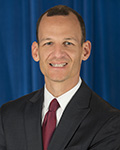
Photo of Kevin McCarty
D California Assembly · District 6

Asm. Kevin McCarty

Contact Email
Compare
Total votes
24,221
all sessions
Attendance
94%
1,034 missed
Near the chamber average
With party
99%
of cast votes
Near the chamber average
Bipartisan score
0%
crosses aisle rarely
Near the chamber average
Sponsored
1,989
bills & resolutions
Near the chamber average
Committees
0
assignments
1,989 bills and resolutions

Sponsored bills

Total
1,989
Primary
257
Co-sponsor
1,732
This page
1,989
matching current filters
Co-sponsor AJR 22
Signed into law · California Assembly · Co-sponsor
Relative to the Select Committee to Investigate the January 6th Attack on the United States Capitol.

This measure would, among other things, on the first anniversary of the attack on the United States Capitol on January 6, 2021, urge the Select Committee to Investigate the January 6th Attack on the United States Capitol to uncover the facts, circumstances, and causes relating to the attack, and honor the individuals who died or were injured as a result of the attack.

Signed into law Sep 6, 2022 1 co-sponsor
Co-sponsor ACR 208
Signed into law · California Assembly · Co-sponsor
Relative to the Senior Master Sergeant John James Paoletti Memorial Highway.

This measure would designate the portion of State Route 5 from El Horno Street, at postmile 10.001, to Crown Valley Parkway, at postmile 13.776, in the County of Orange as the Senior Master Sergeant John James Paoletti Memorial Highway. The measure would request that the Department of Transportation determine the cost of appropriate signs showing this special designation and, upon receiving donations from nonstate sources covering that cost, erect those signs.

Signed into law Sep 6, 2022 1 co-sponsor
Co-sponsor ACR 211
Signed into law · California Assembly · Co-sponsor
Relative to Corporal Luis Carlos Ruan Memorial Highway.

This measure would designate a portion of State Route 119, between E Kern Street, postmile 0.34, and Cedar Street, postmile 1.300, in the County of Kern as the Corporal Luis Carlos Ruan Memorial Highway. The measure would request the Department of Transportation to determine the cost of appropriate signs showing this special designation and, upon receiving donations from nonstate sources covering that cost, to erect those signs.

Signed into law Sep 6, 2022 1 co-sponsor
Co-sponsor AB 257
Signed into law · California Assembly · Co-sponsor
Food facilities and employment.

Existing law prescribes various protections for employees and generally charges the Labor Commissioner with the enforcement of labor laws. Existing law establishes the powers and responsibilities of the Division of Occupational Safety and Health and the Division of Labor Standards and Enforcement, which are within the Department of Industrial Relations. This bill would enact the Fast Food Accountability and Standards Recovery Act or FAST Recovery Act. The bill would establish, until January 1, 2029, the Fast Food Council (council) within the Department of Industrial Relations, to be composed of 10 members to be appointed by the Governor, the Speaker of the Assembly, and the Senate Rules Committee, and would prescribe its powers. The purpose of the council would be to establish sectorwide minimum standards on wages, working hours, and other working conditions related to the health, safety, and welfare of, and supplying the necessary cost of proper living to, fast food restaurant workers, as well as effecting interagency coordination and prompt agency responses in this regard. The bill would define the characteristics of a fast food restaurant, including that the establishment be part of a set of fast food restaurants consisting of 100 or more establishments nationally that share a common brand, or that are characterized by standardized options for decor, marketing, packaging, products, and services. This bill would require the council to promulgate minimum fast food restaurant employment standards, including standards on wages, working conditions, and training, and to issue, amend, and repeal any other rules and regulations, as necessary to carry out its duties, subject to a petition signed by 10,000 fast food restaurant employees approving the creation of the council, as specified. Under the bill, if a conflict exists between council's standards, rules, or regulations and those issued by another state agency, the standards, rules, or regulations issued by the council would apply to fast food restaurant workers and fast food restaurant franchisees and franchisors, and the conflicting rules or regulations of the other state agency would not have force or effect with respect to these parties. The bill would except from this application proposed standards within the jurisdiction of the Occupational Safety and Health Standards Board and would prescribe a process for the council to petition the board to adopt, amend, or repeal a standard. This bill would require the council to submit a report to the Legislature, as specified, for a standard, or repeal or amendment of a standard, to become effective, and would specify that a standard, repeal, or amendment shall not take effect before October 15 of the same year. The bill would also require the council to provide information as requested by the appropriate committees of the Legislature on labor to facilitate a review of the council's performance and standards, as specified. This bill would require the council to conduct a full review of the adequacy of minimum fast food restaurant health, safety, and employment standards at least once every 3 years. The bill would require the council, following that review, to issue, amend, or repeal, or make recommendations to issue, amend, or repeal, any fast food employment, health or safety standard applicable to fast food restaurants, as appropriate. The bill would require the council to hold meetings or hearings no less than every 6 months that would be open to the public, as specified, and would authorize the council to coordinate with and authorize local agencies to hold such meetings. The bill would authorize a county, or a city with a population greater than 200,000, to establish a Local Fast Food Council, and would prescribe its powers and requirements for its composition. The bill would authorize a Local Fast Food Council to provide recommendations to the council. This bill would require standards for minimum wages, maximum hours of work, and other working conditions fixed by the council to be the minimum standards for fast food restaurant employees, absent a valid collective bargaining agreement, as specified, and would require that they be enforced by the commissioner, as specified, and the Division of Labor Standards Enforcement. By expanding the application of crimes associated with those enforcement procedures, this bill would impose a state-mandated local program. The bill would require the Labor Commissioner and the commissioner's deputies to take assignments of violations of standards issued by the council upon the filing of a claim in writing by an employee or an employee's authorized representative. This bill would prohibit a fast food restaurant operator from discharging or in any manner discriminating or retaliating against any fast food restaurant employee for specified reasons and would create a cause of action and right to reinstatement for employees in this connection, as well as a presumption of unlawful discrimination and retaliation in certain circumstances. The California Constitution requires the state to reimburse local agencies and school districts for certain costs mandated by the state. Statutory provisions establish procedures for making that reimbursement. This bill would provide that no reimbursement is required by this act for a specified reason.

Signed into law Sep 5, 2022 1 co-sponsor
Co-sponsor SJR 7
Passed · California Senate · Co-sponsor
Relative to Dr. Martin Luther King, Jr. and the FBI surveillance tapes.

This measure would urge the National Archives and Records Administration to destroy the FBI surveillance tapes that were obtained immorally on Dr. Martin Luther King, Jr., and would urge the Congress of the United States to work with President Joseph R. Biden to prevent similar abuses of power from being perpetrated for immoral and defamatory reasons.

Passed Aug 31, 2022 1 co-sponsor
Co-sponsor SB 918
Failed · California Senate · Co-sponsor
Firearms.

Existing law prohibits a person from carrying a concealed firearm or carrying a loaded firearm in public. Existing law authorizes a licensing authority, as specified, if good cause exists for the issuance, and subject to certain other criteria including, among other things, the applicant is of good moral character and has completed a specified course of training, to issue a license to carry a concealed handgun or to carry a loaded and exposed handgun, as specified. Under existing law, the required course of training for an applicant is no more than 16 hours and covers firearm safety and laws regarding the permissible use of a firearm. This bill would require the licensing authority to issue or renew a license if the applicant is a qualified person for the license and the applicant is at least 21 years of age. The bill would remove the good character and good cause requirements from the issuance criteria. Under the bill, the applicant would not be a qualified person if they, among other things, are reasonably likely to be a danger to self, others, or the community at large, as specified. This bill would add the requirement that the applicant be the recorded owner, with the Department of Justice, of the pistol, revolver, or other firearm capable of being concealed upon the person. This bill would change the training requirement to be no less than 16 hours in length and would add additional subjects to the course including, among other things, the safe storage and legal transportation of firearms. The bill would require an issuing authority, prior to that issuance, renewal, or amendment to a license, if it has direct access to the designated department system to determine if the applicant is the recorded owner of the pistol, revolver, or other firearm. The bill would require an issuing authority without access to that system to confirm the ownership with the sheriff of the county in which the agency is located. By requiring local agencies to issue licenses for concealed firearms, this bill would create a state-mandated local program. The bill would require a licensing authority to provide the applicant notice if a new license or license renewal is denied or revoked. If an application is denied or a license is revoked based on a determination that the applicant is not a qualified person, the bill would permit the applicant to request a hearing to challenge the license denial or revocation, and require the licensing authority to inform the applicant of the ability to seek a hearing. If a new license or license renewal is denied or revoked for any other reason, the bill would authorize the applicant to seek a writ of mandate from a superior court within 30 days of receipt of notice of denial or revocation, and require the licensing authority to inform the applicant of the ability to seek a writ of mandate. By imposing new duties on local licensing authorities, this bill would create a state-mandated local program. Existing law requires an agency issuing a license described above to set forth specified information on the license, including, among other things, the licensee's name, occupation, and reason for desiring a license to carry the weapon. This bill would revise that information to include, among other things, the licensee's driver's license or identification number, fingerprints, and information relating to the date of expiration of the license, and would remove the requirement that the license detail the reason for desiring a license to carry the weapon. Existing law requires an applicant for a license described above to provide fingerprints, as specified. Existing law exempts an applicant from this requirement if they have previously applied to the same licensing authority and the applicant's fingerprints have previously been forwarded to the department, as specified, and instead requires that authority to note data that would provide positive identification in the files of the department, on the copy of any subsequent license submitted to the department. This bill would require the department to notify the licensing authority if the department is unable to ascertain, among other things, the final disposition of an arrest or criminal charge under state or federal law that would prohibit the person from possessing, receiving, owning, or purchasing a firearm. The bill would require the licensing authority to instead collect the applicant's fingerprint that would provide that positive identification in the files of the department, as specified. This bill would prohibit a license from being issued or renewed unless the department reports to a licensing authority that the applicant is eligible to possess, receive, own, or purchase a firearm. Existing law requires a licensing authority to charge an additional fee in an amount equal to reasonable processing costs for a new license. Existing law also prohibits a licensing authority from imposing, among other things, a requirement or condition that an applicant pay additional funds or obtain liability insurance. This bill would authorize a licensing authority to charge the additional processing cost fee for a license renewal and would permit the licensing authority to collect the first 50% of the fee upon filing of the application. The bill also removes the prohibition on licensing authority requirements for additional fees or liability insurance. Existing law requires that licenses and applications for licenses be uniform throughout the state, and to be submitted upon forms prescribed by the Attorney General. When revising the standard application form for licenses, existing law requires the Attorney General to convene a committee to review and revise the existing application form. Existing law requires the Attorney General to develop a uniform license that may be used as indicia of proof of licensure throughout the state. Existing law also requires the committee to convene to review and revise the design standard for a uniform license. This bill would authorize the Attorney General to revise the standard form for licenses and the design standard if the committee does not revise the form or issue a design standard by October 31, 2022. Under existing law, it is a crime to bring a firearm into a state or local building, and makes it a crime to bring a loaded firearm into, or upon the grounds of, any residence of the Governor, any other constitutional officer, or Member of the Legislature. Existing law exempts a licensee from that prohibition if, among other things, the licensee has a valid license to carry the firearm. This bill would remove those exemptions, except as specified. The bill would make it a crime to bring an unloaded firearm into, or upon the grounds of, any residence of the Governor, any other constitutional officer, or Member of the Legislature. The bill would also prohibit a licensee from carrying a firearm to specified locations, including, among other places, a building designated for a court proceeding and a place of worship, as defined, with specific exceptions. By expanding the scope of an existing crime, the bill would impose a state-mandated local program. Existing law prohibits a person from knowingly possessing a firearm in a sterile area of an airport, passenger vessel terminal, or public transit facility, as defined. This bill would additionally prohibit a person from knowingly possessing a firearm in any building, real property, or parking area under the control of an airport or passenger vessel terminal, as specified. By expanding the scope of an existing crime, the bill would impose a state-mandated local program. Existing law, the Gun-Free School Zone Act of 1995, makes it a crime to possess a firearm in a place that the person knows, or reasonably should know, is a school zone. Existing law defines a school zone as an area in, or on the grounds of, a public or private school providing instruction in kindergarten or grades 1 to 12, inclusive, or within a distance of 1,000 feet from the grounds of the public or private school. Existing law provides exceptions to that crime, including if a person with a valid concealed carry license who is carrying the firearm described in the license in an area that is not in, or on the grounds of, a public or private school and when a firearm is an unloaded pistol, revolver, or other firearm capable of being concealed on the person and is in a locked container or within the locked trunk of a motor vehicle. This bill would revise the exception for a person who has a valid concealed carry license to permit them to carry a specified firearm in an area that is not within any building, real property, or parking area under the control of a public or private school, or on a street or sidewalk immediately adjacent to a building, real property, or parking area under the control of that public or private school, as specified. Existing law requires a licensing authority to revoke a license to carry a firearm if the licensing authority is notified by the department or the licensing authority determines that a licensee is prohibited from possessing, receiving, owning, or purchasing a firearm under state or federal law. This bill would also require a licensing authority to revoke a license if, among other things, a licensee has provided inaccurate or incomplete information on their application for a new license or license renewal. Existing law authorizes a licensing authority to impose reasonable restrictions on the time, place, manner, and circumstances when a licensee may carry a firearm capable of being concealed. While carrying a firearm, this bill would prohibit a licensee from, among other things, consuming an alcoholic beverage or controlled substance and from falsely representing that the licensee is a peace officer. The bill would authorize the department to adopt emergency regulations to implement the concealed firearm licensing system, as specified. This bill would make conforming changes. The bill would additionally make various findings and declarations of the Legislature. The bill would state that its provisions are severable. This bill would incorporate additional changes to Section 29805 of the Penal Code proposed by AB 2239 to be operative only if this bill and AB 2239 are enacted and this bill is enacted last. The California Constitution requires the state to reimburse local agencies and school districts for certain costs mandated by the state. Statutory provisions establish procedures for making that reimbursement. This bill would provide that with regard to certain mandates no reimbursement is required by this act for a specified reason. With regard to any other mandates, this bill would provide that, if the Commission on State Mandates determines that the bill contains costs so mandated by the state, reimbursement for those costs shall be made pursuant to the statutory provisions noted above. This bill would declare that it is to take effect immediately as an urgency statute.


Failed Aug 31, 2022 1 co-sponsor
Co-sponsor AB 1395
Failed · California Assembly · Co-sponsor
The California Climate Crisis Act.

The California Global Warming Solutions Act of 2006 designates the State Air Resources Board as the state agency charged with monitoring and regulating sources of emissions of greenhouse gases. The state board is required to approve a statewide greenhouse gas emissions limit equivalent to the statewide greenhouse gas emissions level in 1990 to be achieved by 2020 and to ensure that statewide greenhouse gas emissions are reduced to at least 40% below the 1990 level by 2030. The act requires the state board to prepare and approve a scoping plan for achieving the maximum technologically feasible and cost-effective reductions in greenhouse gas emissions and to update the scoping plan at least once every 5 years. This bill, the California Climate Crisis Act, would declare the policy of the state both to achieve net zero greenhouse gas emissions as soon as possible, but no later than 2045, and achieve and maintain net negative greenhouse gas emissions thereafter, and to ensure that by 2045, statewide anthropogenic greenhouse gas emissions are reduced to at least 90% below the 1990 levels. The bill would require the state board to work with relevant state agencies to ensure that updates to the scoping plan identify and recommend measures to achieve these policy goals and to identify a variety of policies and strategies that support carbon dioxide removal solutions, carbon capture and storage technologies, and nature-based climate solutions in California, as specified. The bill would require the state board to work with relevant agencies to establish criteria for the use of carbon dioxide removal technologies and carbon capture and storage technologies for purposes of achieving these policy goals. The bill would require the state board to identify interim 5-year greenhouse gas emission reduction goals that begin on January 1, 2025, and submit an annual report, as specified. The bill would impose other requirements on state agencies, as specified.

Failed Aug 31, 2022 1 co-sponsor
Co-sponsor AB 1227
Passed · California Assembly · Co-sponsor
Firearms and ammunition: excise tax.

Existing law establishes the California Violence Intervention and Prevention (CalVIP) Grant Program, administered by the Board of State and Community Corrections, to award competitive grants for the purpose of violence intervention and prevention. Existing law imposes various taxes, including taxes on the privilege of engaging in certain activities. The Fee Collection Procedures Law, the violation of which is a crime, provides procedures for the collection of certain fees and surcharges. This bill, the Gun Violence Prevention, Healing, and Recovery Act, would, commencing July 1, 2023, impose an excise tax in the amount of 10% of the gross receipts from the retail sale in this state of a handgun and 11% of the gross receipts from the retail sale in this state of a long gun, rifle, firearm precursor part, and ammunition, as specified. The tax would be collected by the state pursuant to the Fee Collection Procedures Law. The bill would require that the revenues collected be deposited in the Gun Violence Prevention, Healing, and Recovery Fund, which the bill would establish in the State Treasury. The bill would require that 12 of the moneys received in the fund be used to fund gun violence prevention programs, gun violence prevention education, and gun violence prevention research, upon appropriation by the Legislature, and would continuously appropriate the other 12 of the moneys received in the fund to the Board of State and Community Corrections for the CalVIP Grant Program, thereby making an appropriation. The bill would require the Director of Finance to transfer, as a loan, $2,400,000 from the General Fund to the California Department of Tax and Fee Administration to implement these provisions, as specified. This bill would include a change in state statute that would result in a taxpayer paying a higher tax within the meaning of Section 3 of Article XIII A of the California Constitution, and thus would require for passage the approval of 23 of the membership of each house of the Legislature. Because this bill would expand the scope of the Fee Collection Procedures Law, the violation of which is a crime, this bill would impose a state-mandated local program. The California Constitution requires the state to reimburse local agencies and school districts for certain costs mandated by the state. Statutory provisions establish procedures for making that reimbursement. This bill would provide that no reimbursement is required by this act for a specified reason. This bill would declare that it is to take effect immediately as an urgency statute.
Passed Aug 31, 2022 1 co-sponsor
Co-sponsor AB 1577
Passed · California Assembly · Co-sponsor
Collective bargaining: Legislature.

Existing law, the Ralph C. Dills Act (Dills Act) , governs collective bargaining between the state and recognized state public employee organizations. Existing law excludes certain employees from coverage under the Dills Act, including, among others, managerial employees, supervisory employees, and confidential employees, as defined. Existing law creates the Public Employment Relations Board and authorizes it, among other things, to determine appropriate state employee bargaining units, as specified. This bill would enact the Legislature Employer-Employee Relations Act, to provide employees of the Legislature the right to form, join, and participate in the activities of employee organizations of their own choosing for the purpose of representation on all matters of employer-employee relations. The bill would prescribe rights, duties, and prohibitions in this context that parallel those in the Dills Act. The bill would prohibit the Public Employment Relations Board from including employees of the Legislature in a bargaining unit that includes employees other than those of the Legislature. The bill would make it a misdemeanor for any person to willfully resist, prevent, impede, or interfere with any member of the board, or any of its agents, in the performance of duties pursuant to its provisions. By expanding the definition of a crime, this bill would impose a state-mandated local program. The bill would provide that the provisions of the Legislature Employer-Employee Relations Act are severable. The bill would become operative on July 1, 2024. The California Constitution requires the state to reimburse local agencies and school districts for certain costs mandated by the state. Statutory provisions establish procedures for making that reimbursement. This bill would provide that no reimbursement is required by this act for a specified reason.

Passed Aug 31, 2022 1 co-sponsor
Primary AB 1014
Failed · California Assembly · Lead sponsor
Cannabis: retailers: delivery: vehicles.

The Control, Regulate and Tax Adult Use of Marijuana Act (AUMA) , an initiative statute approved as Proposition 64 at the November 8, 2016, statewide general election, authorizes a person who obtains a state license under AUMA to engage in commercial adult-use cannabis activity pursuant to that license and applicable local ordinances. The Medicinal and Adult-Use Cannabis Regulation and Safety Act (MAUCRSA) , among other things, consolidates the licensure and regulation of commercial medicinal and adult-use cannabis activities. MAUCRSA establishes the Department of Cannabis Control for the administration and enforcement of its provisions. MAUCRSA generally defines delivery to mean the commercial transfer of cannabis or cannabis products to a customer, requires the delivery of cannabis or cannabis products to be made only by a licensed retailer, microbusiness, or nonprofit, and establishes requirements for the delivery of cannabis and cannabis products, including that an employee of the licensee carry a copy of the licensee's current license and a government-issued identification with a photo of the employee, such as a driver's license. MAUCRSA requires the department to establish minimum security and transportation safety requirements for the delivery of cannabis and cannabis products. Under existing administrative law, among other requirements, a licensed retailer's delivery employee that is carrying cannabis goods for delivery is only allowed to travel in an enclosed motor vehicle. Under existing administrative law, among other requirements, a licensed retailer's delivery employee is prohibited from carrying cannabis goods in the delivery vehicle with a value in excess of $5,000 at any time and the value of cannabis goods carried in the delivery vehicle for which a delivery order was not received and processed by the licensed retailer prior to the delivery employee departing from the licensed premises may not exceed $3,000. This bill would require, on or before January 1, 2023, the regulations established by the bureau regarding the minimum security and transportation safety requirements to include regulations that would allow for an increase in the value of cannabis goods to be carried during delivery of those cannabis goods to customers by employees of a licensed retailer to $10,000, as specified. The bill would require a licensed retailer to provide their delivery employee certain hardware, tools, and supplies, access to healthcare benefits, and either a vehicle that meets certain requirements or reimbursement for certain costs for the use of the employee's vehicle, as specified. The bill would also require a licensed retailer that delivers cannabis goods to maintain an automobile insurance policy to cover third-party liability of deliveries of cannabis goods by an employee who uses their own vehicle for the deliveries, as specified. The Control, Regulate and Tax Adult Use of Marijuana Act authorizes the Legislature to amend the act to further the purposes and intent of the act with a 23 vote of the membership of both houses of the Legislature. This bill would declare that its provisions further specified purposes and intent of the act.

Failed Aug 30, 2022 0 co-sponsors
Showing 501 to 510 of 1,989 bills
Previous 1 … 50 51 52 … 199 Next