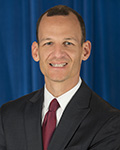
Photo of Kevin McCarty
D California House · District 6

Rep. Kevin McCarty

Contact Email
Compare
Total votes
24,221
all sessions
Attendance
94%
1,034 missed
Near the chamber average
With party
99%
of cast votes
Near the chamber average
Bipartisan score
0%
crosses aisle rarely
Near the chamber average
Sponsored
1,989
bills & resolutions
Near the chamber average
Committees
0
assignments
1,989 bills and resolutions

Sponsored bills

Total
1,989
Primary
257
Co-sponsor
1,732
This page
1,989
matching current filters
Co-sponsor ACR 214
Signed into law · California House · Co-sponsor
Relative to India's Independence Day.

Maddy summaryThis bill recognizes August 15, 2024, as India's Independence Day and encourages all Californians to participate in celebrations honoring the occasion. It directly affects the residents of California, particularly the state's large Indian American community, by formally acknowledging the historical significance of the date when India gained independence from British rule. The measure does not create new laws or change government operations; instead, it serves as a symbolic gesture to highlight the cultural contributions of Indian Americans and the shared values of democracy and nonviolence between the two nations.

Signed into law Aug 19, 2024 1 co-sponsor
Co-sponsor ACR 209
Signed into law · California House · Co-sponsor
Relative to the 2024 International Day of Yoga.

Maddy summaryThis bill officially recognizes June 21, 2024, as the 2024 International Day of Yoga within the state of California. It does not create new laws or change existing regulations but serves as a formal acknowledgment of the global event. The measure is intended to highlight the history and benefits of yoga as a wellness practice.

Signed into law Aug 19, 2024 1 co-sponsor
Primary AB 1725
Passed · California House · Lead sponsor
Law enforcement settlements and judgments: reporting.

Existing law requires each law enforcement agency to monthly furnish specified information to the Department of Justice regarding the use of force by a peace officer. This bill would require municipalities, as defined, to annually post on their internet websites specified information relating to settlements and judgments of $50,000 or more resulting from allegations of improper police conduct, including, among other information, amounts paid, broken down by individual settlement and judgment, information on bonds used to finance use of force settlement and judgment payments, and settlements or judgments paid by insurance. The bill would also require municipalities to annually post additional information pertaining to settlements and judgments, as specified, irrespective of the amount paid. By increasing requirements for local governments, this bill would impose a state-mandated local program. The bill would make legislative findings and declarations. The California Constitution requires the state to reimburse local agencies and school districts for certain costs mandated by the state. Statutory provisions establish procedures for making that reimbursement. This bill would provide that, if the Commission on State Mandates determines that the bill contains costs mandated by the state, reimbursement for those costs shall be made pursuant to the statutory provisions noted above.

Passed Aug 15, 2024 0 co-sponsors
Primary AB 2882
Passed · California House · Lead sponsor
California Community Corrections Performance Incentives.

Existing law authorizes each county to establish a Community Corrections Performance Incentives Fund to receive moneys for the implementation of a community corrections program to provide supervision and rehabilitative services for adult felony offenders subject to local supervision. Existing law requires the program to be developed and implemented by probation and advised by a local Community Corrections Partnership. Existing law requires the partnership to be comprised of specified members, including, among others, a representative from a community-based organization with experience in successfully providing rehabilitative services to persons who have been convicted of a criminal offense. This bill would add a representative of a community-based organization with experience in successfully providing behavioral health treatment services to persons who have been convicted of a criminal offense, and a representative of a Medi-Cal managed care plan that provides the Enhanced Care Management benefit, to the membership of the partnership. Existing law requires each county local Community Corrections Partnership to recommend a local plan to the county board of supervisors, and requires the board to accept or reject the plan. Existing law requires the plan to be voted on by an executive committee of each county's partnership consisting of, among others, one department representative from the head of the county department of social services, the head of the county department of mental health, or the head of the county alcohol and substance abuse programs. This bill would instead require the committee to consist of all 3 of the departments mentioned above and would require the department head to have the number of votes equivalent to the number of departments they represent. The bill would require the plan to, among other things, include quantifiable goals for improving the community corrections system, as specified. The bill would require the local partnership to submit the accepted plan annually to the Board of State and Community Corrections.

Passed Aug 15, 2024 0 co-sponsors
Co-sponsor AB 8
Passed · California House · Co-sponsor
Ticket sellers.

Existing law provides comprehensive regulation of ticket sellers and makes violations of those provisions a misdemeanor. Existing law imposes various refund requirements on a ticket seller, including a requirement to issue a refund upon request to a ticket purchaser for canceled, postponed, or rescheduled events. Existing law also imposes various disclosure requirements on a ticket seller, including a requirement to disclose to a purchaser the location of the seat represented by the ticket, as specified. This bill would revise and recast those provisions by expanding the definition of a ticket seller to include a primary contractor or platform, as defined, and would instead apply the refund requirement relating to the postponement or rescheduling of an event only to primary contractors. The bill would impose various disclosure requirements on ticket sellers relating to ticket price, including that the ticket seller would be prohibited from advertising, displaying, or offering a price for a ticket that does not include all fees or charges that must be paid in order to purchase the ticket other than taxes or fees imposed by a government on the transaction. The bill would prohibit the resale of tickets that were initially offered at no charge and that were knowingly obtained using software or services that circumvent controls or measures that ensure an equitable ticket buying process for event attendees, and would require a ticket seller to provide printed tickets for a cellular telephone-free event, as defined, at the same price that a mobile or electronic ticket is sold. By expanding the scope of existing provisions regulating ticket sellers and imposing new requirements on ticket sellers and primary contractors, the violation of which would be a crime, this bill would impose a state-mandated local program. The California Constitution requires the state to reimburse local agencies and school districts for certain costs mandated by the state. Statutory provisions establish procedures for making that reimbursement. This bill would provide that no reimbursement is required by this act for a specified reason.

Passed Aug 15, 2024 1 co-sponsor
Co-sponsor AB 4
Passed · California House · Co-sponsor
Covered California: expansion.

Existing federal law, the Patient Protection and Affordable Care Act (PPACA) , requires each state to establish an American Health Benefit Exchange to facilitate the purchase of qualified health benefit plans by qualified individuals and qualified small employers. Existing state law creates the California Health Benefit Exchange, also known as Covered California, to facilitate the enrollment of qualified individuals and qualified small employers in qualified health plans as required under PPACA. Existing law requires the Exchange to apply for a federal waiver to allow persons otherwise not able to obtain coverage through the Exchange because of their immigration status to obtain coverage from the Exchange. This bill would delete that requirement and would instead require the Exchange, no sooner than January 1, 2026, and upon appropriation by the Legislature for this purpose, to administer a program to allow persons otherwise not able to obtain coverage by reason of immigration status to enroll in health insurance coverage in a manner as substantially similar to other Californians as feasible, consistent with federal guidance and given existing federal law and rules. The bill would require the Exchange to undertake outreach, marketing, and other efforts to ensure enrollment, which would begin on October 1, 2027. The bill would also require the Exchange to adopt an annual program design for each coverage year to implement the program, provide appropriate opportunities for stakeholders, including the Legislature, and the public to consult on the design of the program, and report to the Department of Finance and the Legislature on progress toward implementation, as specified. The bill would establish the Covered California for All Fund in the General Fund, to be administered by the Exchange, into which user fees, appropriations, and other funds would be deposited to be used upon appropriation to pay for the administration of the program.

Passed Aug 15, 2024 1 co-sponsor
Primary AB 2076
Passed · California House · Lead sponsor
California Student Housing Revolving Loan Fund Act of 2022: state fund loan.

Under existing law, the California Student Housing Revolving Loan Fund Act of 2022 (loan act) , the California School Finance Authority or the California Educational Facilities Authority, as applicable, provide zero-interest loans to qualifying applicants of the University of California, the California State University, and the California Community Colleges for the purpose of constructing affordable student housing and affordable faculty and staff housing, as provided. Existing law establishes the California Student Housing Revolving Loan Fund as a continuously appropriated fund in the State Treasury. Existing law requires the Pooled Money Investment Board to determine whether moneys on deposit in the State Treasury, exclusive of the General Fund and other specified funds, is not necessary for immediate use and, if so, to determine the amount which is then designated as surplus moneys. Existing law creates the Surplus Money Investment Fund and requires the Controller to transfer surplus moneys to it, provided that moneys from a special fund are not to be transferred if that will interfere with carrying out the purposes that the special fund supports. Existing law requires that moneys in the Surplus Money Investment Fund be invested by the Treasurer as part of the Pooled Money Investment Account. Under existing law, moneys in the Surplus Money Investment Fund are continuously appropriated. This bill would require, upon appropriation by the Legislature, as described, the Controller to transfer $200,000,000 in the 2024–25 fiscal year to the California Student Housing Revolving Loan Fund from the Surplus Money Investment Fund and other funds in the Pooled Money Investment Account that accrue interest to the General Fund as a cash loan, for purposes of funding the program supported by the California Student Housing Revolving Loan Fund. The bill would require the loan principal and interest to be fully repaid on or before June 30, 2035, as described. The bill would require that loans made to applicants under the loan act from moneys made available pursuant to the cash loan be repaid at a 3% interest rate.

Passed Aug 15, 2024 0 co-sponsors
Co-sponsor AB 2064
Passed · California House · Co-sponsor
Community Violence Interdiction Grant Program.

Existing law establishes the California Violence Intervention and Prevention Grant Program, administered by the Board of State and Community Corrections, to award competitive grants for the purpose of violence intervention and prevention. Existing law establishes the Youth Reinvestment Grant Program within the Board of State and Community Corrections to grant funds, upon appropriation, to local jurisdictions and Indian tribes for the purpose of implementing trauma-informed diversion programs for minors, as specified. Existing law requires the governing board of a school district to give diligent care to the health and physical development of pupils and authorizes the governing board of a school district to employ properly certified persons for the work. Existing law requires a school of a school district or county office of education and a charter school to notify pupils and parents or guardians of pupils no less than twice during the school year on how to initiate access to available pupil mental health services on campus or in the community, or both, as provided. Existing law requires the State Department of Public Health, in cooperation with the State Department of Education, to establish a Public School Health Center Support Program, upon appropriation by the Legislature, to assist school health centers, which are defined as centers or programs, located at or near local educational agencies, that provide age-appropriate health care services at the program site or through referrals, as specified. This bill would create the Community Violence Interdiction Grant Program to be administered by the California Health and Human Services Agency to provide funding to local community programs for community-driven solutions to decrease violence in neighborhoods and schools. The bill would specify the types of programs the grant funds may be used for, including, but not limited to, programs that create and enhance recreation- and health-based interventions for youth during peak times of violence and the creation and operation of school-based health centers. The bill would require the agency to develop an application process and criteria for funding and would require the agency to administer the grant program, as specified. The bill would require, beginning July 31, 2025, and annually thereafter, the Director of Finance and the Legislative Analyst's Office to calculate the savings to the state from the closure of state prisons, as specified, and would require the Director of Finance to certify the results of the calculation to the Controller no later than August 1 of each fiscal year. The bill would create the Community Violence Interdiction Grant Fund and would require moneys in the fund to be made available, only upon appropriation by the Legislature, to the agency for the purposes of the Community Violence Interdiction Grant Program. The bill would require that the Controller, before August 15, 2025, and annually thereafter, upon appropriation by the Legislature, transfer from the General Fund to the Community Violence Interdiction Grant Fund the total amount of savings from the closure of state prisons so calculated.


Passed Aug 15, 2024 1 co-sponsor
Showing 41 to 50 of 1,989 bills
Previous 1 4 5 6 199 Next