

Existing law regulates home protection companies, which issue contracts for the repair or replacement of a component, system, or appliance of a home. Existing law prohibits a person from issuing or offering a home protection contract unless the person holds a home protection company license issued by the Department of Insurance, as specified. This bill would, notwithstanding the above-described provisions, prohibit a person or entity from selling or offering any form of a home protection contract unless the person is licensed as an insurance agent or broker, falls under a specified exemption, or has been issued a license under the provisions described below. The bill would provide for the licensure of an applicant and require specified information be submitted to the Insurance Commissioner along with a written application, including an application fee, as specified, and a certificate by a home protection company or insurer stating that it is satisfied that the named applicant is trustworthy and competent to act as an agent on its behalf. The bill would authorize an endorsee, as defined, to act on behalf of, or under the supervision of, a licensee, as defined, in matters relating to selling or offering home protection contracts, if specified conditions are met. The bill would require the licensee to provide specified training to an endorsee prior to allowing the endorsee to sell or offer home protection contracts. The bill would also require a licensee to provide the training materials with the initial application for a license, and whenever the materials are changed, for review and approval by the department. The bill would prohibit the licensee or endorsee from selling or offering a home protection contract under specified circumstances, including through telephone solicitation, as defined. The bill would prohibit the licensee from specified actions, including selling a contract without providing the prospective customer with specified information. The bill would also authorize the commissioner to take specified disciplinary actions for a violation of these provisions after notice and hearing, including suspending or revoking the license of the licensee. The bill would authorize the commissioner to send an application for renewal to the licensee, through mail or an electronic delivery method, not less than 60 days before a license period, as defined, expires. The bill would place the responsibility for renewal on the licensee, whether or not they receive an application from the commissioner, and would require the licensee to pay a renewal fee. The bill would require the commissioner to impose a penalty fee equal to 12 of the renewal fee for a renewal filed after the license period expires, unless specified circumstances occur.
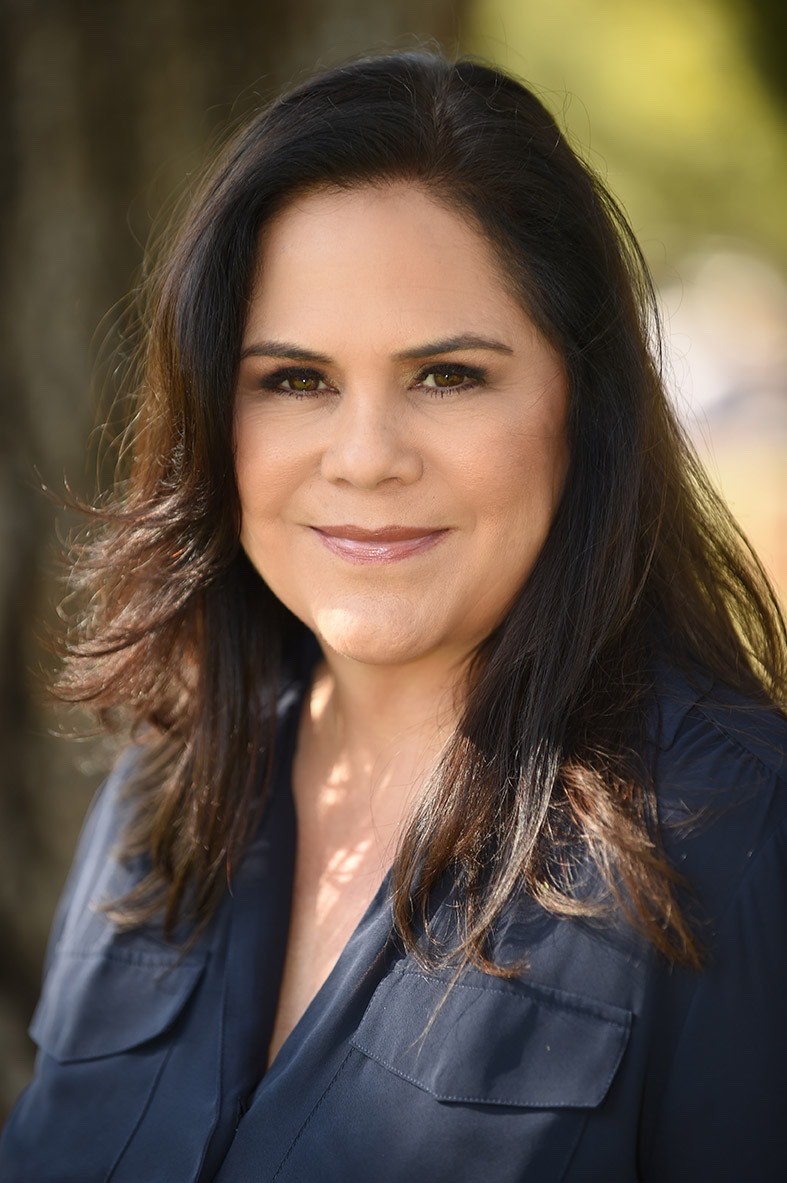
Asm. Lisa Calderon
Sponsored bills
Maddy summaryThis bill is a House Resolution that formally recognizes May 27, 2024, as Memorial Day in California. It serves as a commemorative measure to honor the men and women who have died while serving in the U.S. Armed Forces. The resolution does not alter laws or create new programs but instead expresses the state's gratitude for the sacrifices made by military personnel.
Existing law, the Medical Practice Act, establishes the Medical Board of California and the Osteopathic Medical Board of California to license and regulate the practice of medicine, and establishes examination, training, and other requirements for licensure as a physician and surgeon. A violation of the act is a misdemeanor. This bill, through November 30, 2024, would authorize a physician licensed to practice medicine in Arizona who meets certain requirements to practice medicine in California for the purpose of providing abortions and abortion-related care to patients who are Arizona residents traveling from Arizona, upon application for registration with the Medical Board of California or the Osteopathic Medical Board of California, as applicable. The bill would prohibit the physician from providing care or consultation for other purposes or to other patients, except under specified circumstances. The bill would require an Arizona physician, before practicing in California, to submit specified information to the Medical Board of California or the Osteopathic Medical Board of California, as applicable, including, among other information, written verification from the Arizona Medical Board or the Arizona Board of Osteopathic Examiners in Medicine and Surgery, or documentation printed from an online licensing system, that the physician's Arizona license to practice medicine is in good standing and confers on the physician the authority to practice abortions and abortion-related care. The bill would require the applicant to provide an affidavit attesting that, among other things, the applicant meets all of the requirements for registration, as specified, and would make it a misdemeanor for a person to provide false information. The bill would limit the information the California boards are required to disclose about a registrant. The bill would deem a physician registered pursuant to the bill's provisions a licensee of the applicable board, would authorize the applicable board to take enforcement against a person registered pursuant to the bill's provisions, and would prohibit the applicable boards from collecting any fees for registration. By creating a new crime, the bill would impose a state-mandated local program. The bill would repeal the bill's provisions on January 1, 2025. The California Constitution requires the state to reimburse local agencies and school districts for certain costs mandated by the state. Statutory provisions establish procedures for making that reimbursement. This bill would provide that no reimbursement is required by this act for a specified reason. This bill would declare that it is to take effect immediately as an urgency statute. Existing constitutional provisions require that a statute that limits the right of access to the meetings of public bodies or the writings of public officials and agencies be adopted with findings demonstrating the interest protected by the limitation and the need for protecting that interest. This bill would make legislative findings to that effect.
The California Drought, Water, Parks, Climate, Coastal Protection, and Outdoor Access For All Act of 2018, approved by the voters as Proposition 68 at the June 5, 2018, statewide primary election, authorizes the issuance of bonds in the amount of $4,100,000,000 pursuant to the State General Obligation Bond Law to finance a drought, water, parks, climate, coastal protection, and outdoor access for all program. Article XVI of the California Constitution requires measures authorizing general obligation bonds to specify the single object or work to be funded by the bonds and further requires a bond act to be approved by a 23 vote of each house of the Legislature and a majority of the voters. This bill would enact the Safe Drinking Water, Wildfire Prevention, Drought Preparation, Flood Protection, Extreme Heat Mitigation, Clean Energy, and Workforce Development Bond Act of 2024, which, if approved by the voters, would authorize the issuance of bonds in the amount of $15,995,000,000 pursuant to the State General Obligation Bond Law to finance projects for safe drinking water, wildfire prevention, drought preparation, flood protection, extreme heat mitigation, clean energy, and workforce development programs. This bill would provide for the submission of these provisions to the voters at the March 5, 2024, statewide primary election.
The California FAIR Plan Association is a joint reinsurance association in which all insurers licensed to write basic property insurance participate to administer a program for the equitable apportionment of basic property insurance for persons who are unable to obtain that coverage through normal channels. Existing law requires the association to develop and implement clearinghouse programs for residential and commercial policies to help reduce the number of existing FAIR Plan policies. This bill would require the association, until December 31, 2027, to quarterly provide specified information about policies and clearinghouse program progress to the Insurance Commissioner, the Assembly Committee on Insurance, and the Senate Committee on Insurance, and to post the information on the association's public internet website. The bill would also require the broker of record of an insurance policy that has been placed in the FAIR Plan to determine, prior to the renewal of the policy, whether the policy can be moved to a voluntary market insurance company.
Maddy summaryThis bill designates May 17, 2024, as Bike to School Day in California to encourage students to ride bicycles or electric bikes to their schools. The resolution highlights the environmental, health, and recreational benefits of cycling while acknowledging the state's existing bike-friendly infrastructure and recent cycling events. It serves as a commemorative measure rather than a law that changes regulations or funding, and it directs the Assembly's Chief Clerk to distribute copies of the text for public awareness.
Maddy summaryThis bill establishes April 27 as Harvey Milk Day to honor the first openly gay man elected to public office in a major U.S. city. The resolution recognizes Milk's legacy as a civil rights leader who fought against discrimination and advocated for LGBTQ+ visibility and unity among minority communities. It recounts key events in his life, including his assassination in 1978 and the subsequent legal proceedings against his killer. The measure serves as a commemorative acknowledgment of Milk's impact on California and national history rather than creating new laws or policies.
Existing law requires the Department of Motor Vehicles to establish the California Legacy License Plate Program, and to create and issue a series of specialized license plates, consisting of one or more of 3 specified designs that replicate license plates from the state's past. Existing law requires the department to collect and hold paid applications for the plates, as specified, and prohibits the department from issuing a specialized license plate until it has received not less than 7,500 paid applications for any one of the particular plates on or before January 1, 2015. This bill would extend the deadline for receipt of the required number of paid applications to January 1, 2026, for plate designs that did not receive the required number of applications by January 1, 2015. This bill would also add an additional plate design to the program, as specified.
The California Urban Forestry Act of 1978 has a purpose of, among other things, promoting the use of urban forest resources for purposes of increasing integrated projects with multiple benefits in urban communities. The act requires the Department of Forestry and Fire Protection to implement a program in urban forestry to encourage better tree management and planting in urban areas to increase integrated, multiple-benefit projects by assisting urban areas with innovative solutions to problems, as provided. The act authorizes the Director of Forestry and Fire Protection to make grants to provide assistance of 25% to 90% of costs for projects, as provided. This bill would require funds appropriated or allocated to the department for the bill's purposes to be administered to support school greening, as defined, by providing grants to eligible local educational agencies, as defined, nonprofit organizations, cities, counties, and districts, including special districts, through a competitive grant process that the bill would require the department to develop, including guidelines and selection criteria, as specified, on or before July 1, 2025. The bill would require the department, before developing the grant process, to hold at least 2 public hearings to gather public input on the grant process development. The bill would, upon appropriation in the annual Budget Act, require funding for these purposes to be transferred to the School Greening and Resiliency Fund, which the bill would establish in the State Treasury.
Maddy summaryThis bill designates October 2024 as Menopause Awareness Month in California to highlight the health and societal impacts of menopause on women. It acknowledges that millions of women face symptoms that can affect their daily lives and work, noting that women of color are at higher risk for complications like premature menopause and heart disease. The resolution encourages the state to provide better health information and services to support women's well-being before, during, and after this transition. While the text outlines these goals, the bill itself is a formal recognition rather than a law that creates new funding or mandates specific programs.