

Existing law prohibits the production, development, duplication, distribution, or possession, as specified, of matter, in specified formats, that depicts a person under 18 years of age engaging in or simulating sexual conduct, as defined. Existing law separately prohibits this conduct where it is done for consideration or where such matter is shared with a minor. Existing law provides an enhanced punishment when these offenses are committed using government property. This bill would expand the scope of certain of these provisions to include matter that is digitally altered or generated by the use of artificial intelligence, as such matter is defined. By expanding the scope of an existing crime, this bill would impose a state-mandated local program. The California Constitution requires the state to reimburse local agencies and school districts for certain costs mandated by the state. Statutory provisions establish procedures for making that reimbursement. This bill would provide that no reimbursement is required by this act for a specified reason. This bill would become operative only if SB 1381 of the 2023–24 Regular Session is enacted and takes effect on or before January 1, 2025.
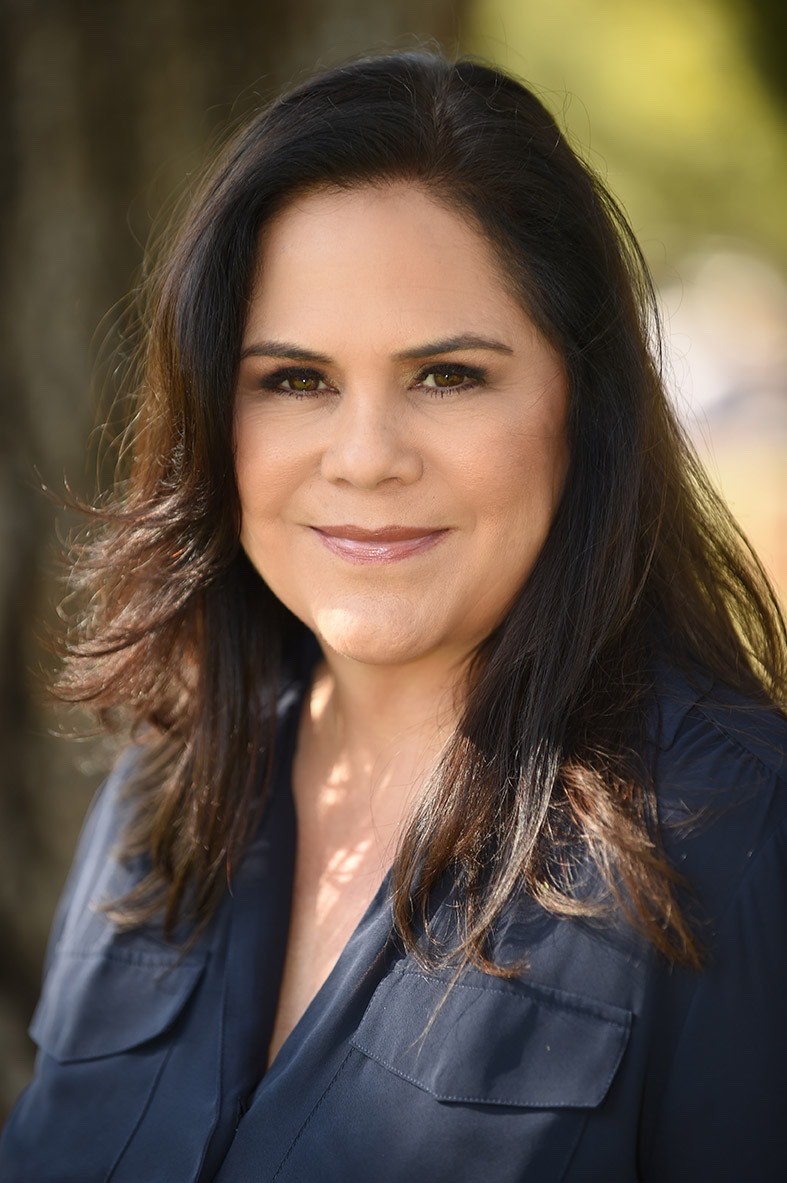
Asm. Lisa Calderon
Sponsored bills
Existing law requires the Governor to appoint every officer whose mode of appointment is not prescribed by law. Existing law also prescribes the manner of the Governor's appointment of those officers. This bill would require the office of the Governor, commencing January 1, 2026, to maintain on its internet website a list of every state board and commission that includes, for each state board or commission, the membership list, stated purpose, duties, meeting frequency, internet website, and vacancies in the membership. The bill would require the office of the Governor, on or before January 1, 2027, and annually thereafter, to create and publish on its internet website a report containing aggregate demographic information of appointments made by the office during the prior calendar year, as specified.
Existing law establishes the California Community Colleges, under the administration of the Board of Governors of the California Community Colleges, the California State University, under the administration of the Trustees of the California State University, the University of California, under the administration of the Regents of the University of California, independent institutions of higher education, and private postsecondary educational institutions as the segments of postsecondary education in the state. Existing law, the Cal Grant Program, establishes the Cal Grant A Entitlement Awards, the Cal Grant B Entitlement Awards, the California Community College Expanded Entitlement Awards, the California Community College Transfer Entitlement Awards, the Competitive Cal Grant A and B Awards, the Cal Grant C Awards, and the Cal Grant T Awards under the administration of the Student Aid Commission. The Cal Grant Reform Act revises and recasts the provisions establishing and governing the existing Cal Grant Program into a new Cal Grant Program. Existing law specifies that the act becomes operative only if General Fund moneys over the multiyear forecasts beginning in the 2024–25 fiscal year are available to support ongoing augmentations and actions, and if funding is provided in the annual Budget Act to implement the act. The California Ban on Scholarship Displacement Act of 2021 prohibits an institution of higher education from reducing the institutional gift aid offer of a student who is eligible to receive a federal Pell Grant award or financial assistance under the California Dream Act for an academic year as a result of private scholarship awards designated for the student unless the student's gift aid exceeds the student's annual cost of attendance, as specified, and prohibits the institution of higher education from considering receipt or anticipated receipt of private scholarships when considering a student who is eligible to receive a federal Pell Grant award or financial assistance under the California Dream Act for qualification for institutional gift aid. This bill, commencing July 1, 2025, would expressly extend those protections to students who are eligible for a Cal Grant award.
Existing law provides for the licensure and regulation of health facilities and clinics by the State Department of Public Health. Existing law, the Medical Practice Act, establishes the Medical Board of California for the licensing, regulation, and discipline of physicians and surgeons. Existing law, the Osteopathic Act, enacted by an initiative measure, establishes the Osteopathic Medical Board of California for the licensing and regulation of osteopathic physicians and surgeons. This bill would require a health facility, clinic, physician's office, or office of a group practice that uses generative artificial intelligence to generate written or verbal patient communications pertaining to patient clinical information, as defined, to ensure that those communications include both (1) a disclaimer that indicates to the patient that a communication was generated by generative artificial intelligence, as specified, and (2) clear instructions describing how a patient may contact a human health care provider, employee, or other appropriate person. The bill would exempt from this requirement a communication read and reviewed by a human licensed or certified health care provider. Under the bill, a violation of these provisions by a physician would be subject to the jurisdiction of the Medical Board of California or Osteopathic Medical Board of California, as appropriate.
Existing law provides for various memorials and monuments on the grounds of the State Capitol. Existing law requires the Department of General Services to maintain state buildings and grounds. Existing law, the Apology Act for the 1930s Mexican Repatriation Program, makes findings and declarations regarding the unconstitutional removal and coerced emigration of United States citizens and legal residents of Mexican descent, between the years 1929 and 1944, to Mexico from the United States during the 1930s "Mexican Repatriation" Program. Existing law expresses the apology of the State of California to those individuals who were illegally deported and coerced into emigrating to Mexico and requires that a plaque to commemorate those individuals be installed and maintained by the Department of Parks and Recreation in an appropriate public place in the City or County of Los Angeles. This bill would authorize a nonprofit organization representing Mexican Americans or Mexican immigrants to enter into negotiations to plan, construct, and maintain a memorial to Mexican Americans and Mexican immigrants who were forcibly deported from the United States during the Great Depression, as provided. The bill would require the memorial to be located at an appropriate public place in the City or County of Los Angeles. The bill would require the nonprofit organization to enter into negotiations with the Department of General Services and the state agency with jurisdiction over the state property where the memorial is proposed, where applicable, if the nonprofit organization proposes to locate the memorial on state property. The bill would require the nonprofit organization to submit a plan for the memorial to the department and the applicable state agency for review and approval. The bill would require these provisions to be funded exclusively through private sources. This bill would, if the nonprofit organization proposes a site owned by the City of Los Angeles or the County of Los Angeles for location of the memorial, require the nonprofit organization to follow any procedures that the City of Los Angeles or the County of Los Angeles require to consider approving the proposed memorial. This bill would make legislative findings and declarations as to the necessity of a special statute for the City of Los Angeles and the County of Los Angeles.
The federal Reception and Placement Program (RPP) under the United States Department of State is established to serve refugees during their first 3 months after arrival in the United States, through contracts with local resettlement agencies to provide various services using federal funds. Existing state law requires the State Department of Social Services, after setting aside the necessary state administrative funds, to allocate federal funds appropriated for refugee social services programs to each eligible county or service provider, as defined, based on the number of refugees receiving aid, or who reside, in the eligible county. If an eligible county or service provider that receives funds declines all or part of those funds, or returns unexpended funds, existing law authorizes the department to exercise its discretion to reallocate the declined or returned funds among eligible counties and service providers. Existing law conditions the applicability of the requirements under these provisions on the availability of federal funds. This bill would make those requirements also applicable if state funds are available subject to an appropriation. Under the bill, if a refugee recipient of refugee social services under RPP completes 90 days of those services and exhausts the federal funds allocated for that recipient, the recipient would be eligible for a 90-day extension of those services using state funds within the first 12 months of arrival in the United States. The bill would require that services covered pursuant to these provisions include (1) English language and employment training and (2) case management services, as specified. The bill would authorize a qualified nonprofit organization, an eligible county, or any office or affiliate of the agencies authorized under RPP to provide these services. The bill would also make conforming changes to related provisions.
Existing law establishes within the state government various commissions, including, but not limited to, the Commission on the State of Hate, the Commission on the Status of Women and Girls, and the California Commission on Disability Access. This bill would establish the LGBTQ+ Commission within the Governor's Office of Land Use and Climate Innovation. The bill would provide for the appointment of 9 members, appointed by the Governor, the Speaker of the Assembly, and the Senate Committee on Rules. The bill would require members of the commission to serve at the pleasure of the appointing power, to be appointed for terms of four years, except as specified, and to elect one of their number to serve as chairperson of the commission. The bill would authorize the commission to appoint officers from its membership and form advisory committees, as specified, in order to carry out and fulfill its duties, and require the commission to determine the powers and duties of appointed officers and advisory committee chairpersons. The bill would establish the goals of the commission, which would include, among other things, acting in an advisory capacity to the Legislature and the Governor on policy matters affecting the state's LGBTQ+ community and its members. The bill would require the commission to have the powers and authority necessary to carry out its duties, including conducting fundraising activities that may require a payment or purchase to attend. The bill would, commencing April 1, 2026, require the commission to convene quarterly meetings to identify the statewide needs of the LGBTQ+ community and to assist in implementing supportive policies and initiatives to address the needs of the LGBTQ+ community. The bill would require the commission to submit a report summarizing certain information and making specified policy recommendations to the Legislature and the Governor by January 1, 2028, and annually thereafter. The bill would establish the LGBTQ+ Commission Fund as a fund in the State Treasury to carry out the bill's provisions in support of the commission, upon appropriation by the Legislature in the annual Budget Act. The bill would require all moneys collected or received by the commission from gifts, bequests, or donation to, subject to the approval of the Department of Finance, be deposited in the treasury to the credit of the fund, as specified. The bill would authorize the commission to accept gifts and grants from any source, as specified, to help perform its functions, and to seek out funding and in-kind contributions from specified sources, including foundations, in order to carry out the work of the commission. Existing law, the Bagley-Keene Open Meeting Act, generally requires, with specified exceptions for authorized closed sessions, that the meetings of state bodies be open and public and that all persons be permitted to attend. This bill would specify that the act does not apply to, among other things, any fundraising event held or organized by the commission, provided that a majority of members of the commission do not hear, discuss, or deliberate upon any item that is within the subject matter jurisdiction of the commission. The bill would repeal its provisions on January 1, 2035.
Existing law establishes a workers' compensation system, administered by the Administrative Director of the Division of Workers' Compensation, to compensate an employee for injuries sustained in the course of the employee's employment. Existing law governs temporary and permanent disability indemnity payments. Existing law, until January 1, 2025, allows an employer to commence a program under which disability indemnity payments are deposited in a prepaid card account for employees. This bill would extend the authorization to deposit indemnity payments in a prepaid card account until January 1, 2027.
Existing law, the California Community Care Facilities Act, provides for the licensing and regulation of community care facilities, including short-term residential therapeutic programs, by the State Department of Social Services. The act defines a short-term residential therapeutic program as a residential facility licensed by the department and operated by any public agency or private organization that provides an integrated program of specialized and intensive care and supervision, services and supports, treatment, and short-term, 24-hour care and supervision to children that is trauma-informed. Existing law requires specified facilities, including community care facilities, to conduct a clinical and quality review for each episode of the use of seclusion or behavioral restraints, as defined. Existing law requires the facility to conduct a debriefing regarding the incident with the person, and other specified individuals upon the person's request, to discuss how to avoid a similar incident in the future. Under existing law, the person's participation in the debriefing is voluntary. This bill, The Accountability in Children's Treatment Act, would require, in the case of an incident involving the use of seclusion or behavioral restraints in a short-term residential therapeutic program, the facility to notify any foster child who has been subject to seclusion or behavioral restraints of their personal rights by no later than the day following the incident and to provide, within 7 days, a description of the incident, in both oral and written forms, to the person subject to the seclusion or behavioral restraints and, as applicable, to the person's parent, foster parent, guardian, Indian custodian, or other authorized representative, and attorney, if any, and for Indian children, the tribal representative. The bill would require that the description contain certain information, including the actions taken during the incident and its duration, the rationale for the actions, and the personnel approving and implementing the actions. The bill would require the facility to provide a copy of the written description to the department, also within 7 days. The bill would require the department to review all reported incidents involving the use of seclusion or behavioral restraints and to investigate any incidents that indicate a potential health and safety concern or licensing violation. As part of the assessment to determine if an investigation is required, the bill would require the department to determine whether the use of seclusion or behavioral restraints potentially violated any licensing laws and regulations or violated the licensee's approved emergency intervention plan. If the department determines that an incident should be investigated, the bill would require the department to provide the Office of the State Foster Care Ombudsperson with a copy of the incident report and require the ombudsperson to exercise their discretion in determining whether to investigate the incident, as specified. Existing law requires the Secretary of California Health and Human Services or their designee to take steps to establish a system of mandatory, consistent, timely, and publicly accessible data collection regarding the use of seclusion and behavioral restraints in specified facilities, including community care facilities, that utilize seclusion and behavioral restraints. Existing law requires that data collected include, among other information, the number of incidents, the duration of time spent per incident, and the number of serious injuries or deaths occurring while the person is in seclusion or subject to behavioral restraints. Existing law requires the secretary to develop a mechanism for making this information, as it becomes available, publicly available on the internet. Existing law requires the State Department of Social Services and other specified departments to annually provide information to the Legislature about the progress made in implementing the above-described provisions on data collection, clinical and quality review, and debriefing. This bill would require the State Department of Social Services, by January 1, 2026, to display, on its internet website, data that is specific to short-term residential therapeutic programs. The bill would require the dashboard to display the above-described data on seclusion or behavioral restraints as applicable to those programs, the above-described written descriptions of the incidents, and the numbers and types of licensing and administrative actions taken for the improper use of seclusion or behavioral restraints by the short-term residential therapeutic program or an associated individual for the improper use of seclusion or behavioral restraints. The bill would require the department to update the information biannually. Under the bill, this data would exclude any personally identifiable information, as specified, and the provisions of the bill would be implemented to the extent not in conflict with any applicable federal or state privacy laws.
Existing law, the California Child Day Care Facilities Act, provides for the licensure and regulation of child daycare facilities by the State Department of Social Services. For purposes of the act, a child daycare facility includes a daycare center and a family daycare home, defined as a facility that regularly provides care, protection, and supervision for 14 or fewer children, in the provider's own home, for periods of less than 24 hours per day. Under existing law, a violation of the act is a crime. Existing law, the Swimming Pool Safety Act, among other requirements, requires a pool or spa to be equipped with at least 2 of 7 specified drowning prevention safety features when a building permit is issued for (1) the construction of a new swimming pool or spa or (2) the remodeling of an existing pool or spa at a private single-family home, except as provided. Existing law requires the 7 safety features to include, among others, an enclosure isolating the swimming pool from the home, a removable mesh fencing around the swimming pool with a self-closing and self-latching gate, a safety pool cover, and an alarm that sounds upon an accidental or unauthorized entrance into the water. Existing law exempts certain facilities regulated by the State Department of Social Services from the requirements of the Swimming Pool Safety Act. This bill would repeal this exemption, making certain facilities regulated by the department subject to the Swimming Pool Safety Act, except as provided. The bill would require a licensed family daycare home operated at a private single-family dwelling with an in-ground swimming pool to have specified drowning safety features, including an enclosure and a cover or alarm, that meet specified standards. The bill would require a licensed daycare center with an in-ground swimming pool to have either a mesh fence, enclosure, or, if the pool is indoors, a self-closing door, as specified, and a 2nd, redundant feature that prevents children in the daycare center from entering the pool area unattended. The bill would also require safety equipment meeting certain specifications to be visible from the swimming pool and readily available for immediate use. The bill would require the licensees to perform a daily inspection of the safety features and safety equipment and maintain a log to be provided to the department upon request. The bill would require the department to by January 1, 2027, adopt regulations regarding bodies of water at daycare facilities regulated by the department and would require the department to prescribe drowning safety standards governing all swimming pools and bodies of water located at facilities regulated by the department. The bill would authorize the department to implement the changes by written directives until January 1, 2027. Because a willful or repeated violation of these provisions by a child daycare facility would be a crime, the bill would impose a state-mandated local program. Existing law requires a local building code official to, before the issuance of a final approval for the completion of permitted construction or remodeling work, inspect the drowning safety prevention features for compliance with the Swimming Pool Safety Act. By imposing additional duties on local officials relating to previously exempted pool or spa facilities, the bill would impose a state-mandated local program. This bill would incorporate additional changes to Section 115922 of the Health and Safety Code proposed by SB 552 to be operative only if this bill and SB 552 are enacted and this bill is enacted last. The California Constitution requires the state to reimburse local agencies and school districts for certain costs mandated by the state. Statutory provisions establish procedures for making that reimbursement. This bill would provide that with regard to certain mandates no reimbursement is required by this act for a specified reason. With regard to any other mandates, this bill would provide that, if the Commission on State Mandates determines that the bill contains costs so mandated by the state, reimbursement for those costs shall be made pursuant to the statutory provisions noted above.