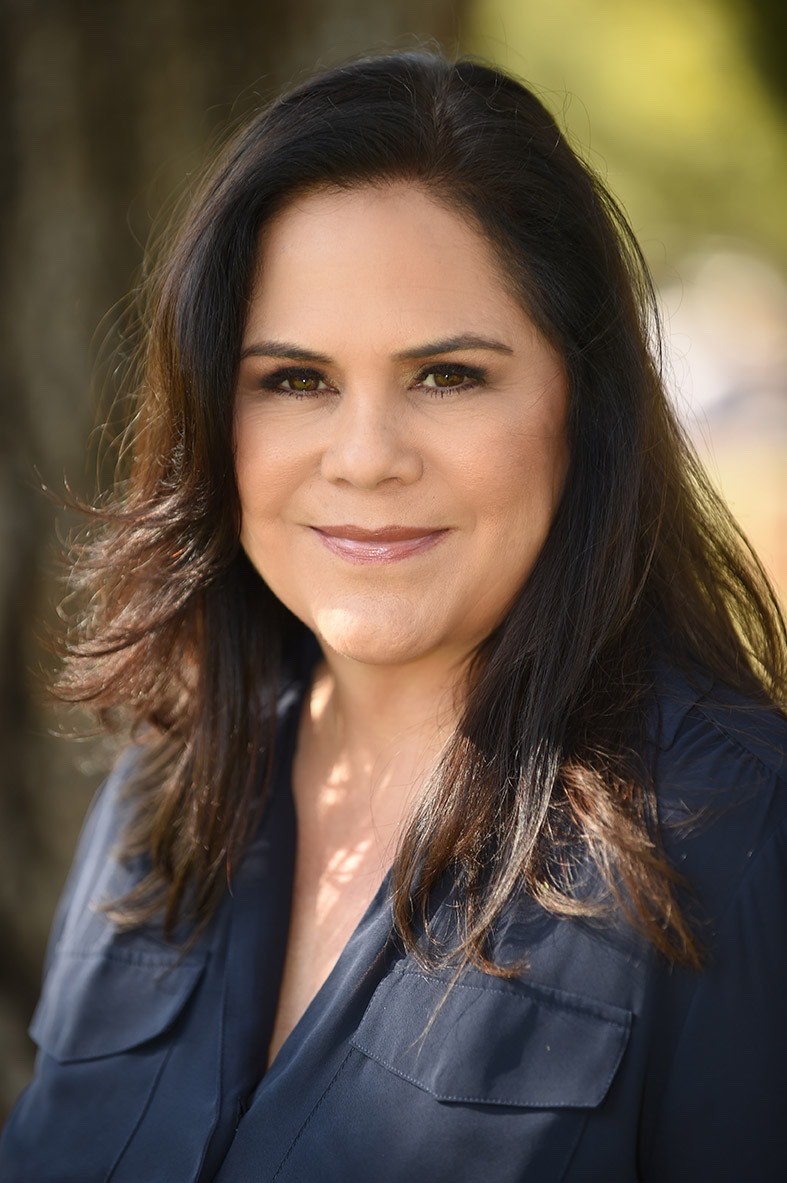
Photo of Lisa Calderon
D California Assembly · District 56 On the 2026 ballot

Asm. Lisa Calderon

Compare
Total votes
19,590
all sessions
Attendance
91%
1,085 missed
Lower than 99% of chamber peers
With party
99%
of cast votes
Near the chamber average
Bipartisan score
0%
crosses aisle rarely
Near the chamber average
Sponsored
1,250
bills & resolutions
Near the chamber average
Committees
9
assignments
1,250 bills and resolutions

Sponsored bills

Total
1,250
Primary
115
Co-sponsor
1,135
This page
1,250
matching current filters
Primary AB 1077
died · California Assembly · Lead sponsor
Inventions by employees.

Existing law provides that an invention developed on an employee's own time belongs to the employee and not the employer. An employer is required to give notice, as specified, to an employee if the employment contract contains a requirement that inventions by an employee be assigned to the employer. This bill would make nonsubstantive changes to these notice provisions.

died Feb 1, 2022 0 co-sponsors
Primary AB 1168
died · California Assembly · Lead sponsor
Vital records: local registrar.

Existing law requires the local registrar to take specified action with respect to birth, death, and marriage certificates. Under existing law, the local registrar is required to affix the registrar's signature to each certificate in attest to the date of acceptance for registration in the local registrar's office. This bill would make technical, nonsubstantive changes to these provisions.

died Feb 1, 2022 0 co-sponsors
Primary AB 848
Failed · California Assembly · Lead sponsor
Medi-Cal: monthly maintenance amount: personal and incidental needs.

Existing law provides for the Medi-Cal program, which is administered by the State Department of Health Care Services, under which qualified low-income individuals receive health care services. The Medi-Cal program is, in part, governed and funded by federal Medicaid provisions. Qualified individuals under the Medi-Cal program include medically needy persons and medically needy family persons who meet the required eligibility criteria, including applicable income requirements. Existing law requires the department to establish income levels for maintenance need at the lowest levels that reasonably permit a medically needy person to meet their basic needs for food, clothing, and shelter, and for which federal financial participation will still be provided under applicable federal law. In calculating the income of a medically needy person in a medical institution or nursing facility, or a person receiving institutional or noninstitutional services from a Program of All-Inclusive Care for the Elderly organization, the required monthly maintenance amount includes an amount providing for personal and incidental needs in the amount of not less than $35 per month while a patient. Existing law authorizes the department to increase, by regulation, this amount as necessitated by increasing costs of personal and incidental needs. This bill would increase the monthly maintenance amount for personal and incidental needs from $35 to $80, and would require the department to annually adjust that amount by the same percentage as the Consumer Price Index.

Failed Feb 1, 2022 0 co-sponsors
Co-sponsor AB 1470
Failed · California Assembly · Co-sponsor
Ending Military Suicide Task Force.

Existing law, the California Suicide Prevention Act of 2000, allows the State Department of Health Care Services, contingent upon appropriation, to establish and implement a suicide prevention, education, and gatekeeper training program to reduce the severity, duration, and incidence of suicidal behaviors. Existing law authorizes the State Department of Public Health to establish the Office of Suicide Prevention to, among other things, convene experts and stakeholders, including, but not limited to, stakeholders representing populations with high rates of suicide, to encourage collaboration and coordination of resources for suicide prevention. This bill would require the department to establish an Ending Military Suicide Task Force to systematically reduce military suicides and to develop a plan to eliminate all military suicides in the state, as specified. Commencing June 1, 2023, the bill would require the task force to submit a specified report to the Governor and the Legislature on the state of veteran suicide prevention, as specified, including, among other things, an analysis of the plans, activities, strategies, and programs undertaken pursuant to the task force's recommendations and their effects on reducing military suicides in the state.

Failed Feb 1, 2022 1 co-sponsor
Co-sponsor AB 1336
Failed · California Assembly · Co-sponsor
Hate crimes: task force.

Existing law defines "hate crime" as a criminal act committed, in whole or in part, because of actual or perceived characteristics of the victim, including, among other things, race, religion, disability, and sexual orientation. Existing law provides punishments for hate crimes that range from misdemeanors with specified penalties to felonies with additional terms of one to 3 years in state prison, depending on the underlying criminal act and other circumstances. This bill would require the Board of State and Community Corrections to establish a hate crimes task force. The bill would authorize local law enforcement agencies to participate in the task force through regional task forces, as specified. The bill would require the board to, upon appropriation by the Legislature, administer grants to law enforcement agencies that participate in the regional hate crime task forces. The bill would require funds allocated to the regional task forces to be expended with the goal of reducing hate crimes, identifying suspects engaging in hate crimes, identifying interregional movement of offenders, coordinating enforcement efforts, and promoting law enforcement training and best practices to reduce the incidence of hate crimes. The bill would require the regional task forces to report specified information to the board, and would require the board to compile that information and report it to the Legislature, as specified.

Failed Feb 1, 2022 1 co-sponsor
Co-sponsor SB 268
Signed into law · California Senate · Co-sponsor
Parks and recreation: Lower Los Angeles River Recreation and Park District: Lower San Gabriel River Recreation and Park District: establishment: board of directors.

(1) Existing law authorizes the establishment of the Lower Los Angeles River Recreation and Park District by petition or resolution submitted to the Los Angeles County Local Agency Formation Commission before January 1, 2021. Existing law authorizes 10 specified city councils to each appoint one member, and the Los Angeles County Board of Supervisors to appoint 2 members, to serve at the pleasure of the appointing entity on the initial board of directors of the district. Existing law authorizes the city councils of the Cities of Commerce, Downey, Montebello, and Pico Rivera to jointly appoint one member to serve a 2-year term on the initial board of directors of the district. This bill would authorize the city councils of the Cities of Commerce, Downey, Montebello, and Pico Rivera to each appoint one member to serve at the pleasure of the appointing city council on the initial board of directors of the district, rather than to jointly appoint one member to serve a 2-year term. The bill would authorize the Los Angeles County Board of Supervisors to appoint 3 members, rather than 2 members, to serve on the initial board of directors of the district. (2) Existing law authorizes the establishment of the Lower San Gabriel River Recreation and Park District by petition or resolution submitted to the Los Angeles County Local Agency Formation Commission before January 1, 2020. Existing law authorizes specified city councils, including the city council of the City of Montebello, and the Los Angeles County Board of Supervisors to appoint members to serve on the initial board of directors of the district. Under existing law, a violation of any rule, regulation, or ordinance adopted by the board of directors of a recreation and park district is a crime. This bill would extend the deadline to submit the petition or resolution establishing the district from January 1, 2020, to January 1, 2024. The bill would remove the authorization for the city council of the City of Montebello to appoint a member to the district's initial board of directors and would authorize the Los Angeles County Board of Supervisors to appoint one additional public member to the initial board of directors. The bill would also make various nonsubstantive changes. Because a violation of a rule, regulation, or ordinance adopted by the board of directors of the district would be a crime, this bill would impose a state-mandated local program by extending the deadline by which the district may be established. (3) This bill would make legislative findings and declarations as to the necessity of a special statute for the Lower Los Angeles River Recreation and Park District and the Lower San Gabriel River Recreation and Park District. (4) The California Constitution requires the state to reimburse local agencies and school districts for certain costs mandated by the state. Statutory provisions establish procedures for making that reimbursement. This bill would provide that no reimbursement is required by this act for a specified reason.

Signed into law Oct 9, 2021 1 co-sponsor
Co-sponsor AB 438
Signed into law · California Assembly · Co-sponsor
School employees: classified employees: layoff notice and hearing.

Under existing law, classified employees of school districts and community college districts subject to layoff as a result of the expiration of a specially funded program at the end of a school year are required to be given written notice on or before April 29 informing them of certain rights. Existing law also requires that notice be given not less than 60 days before the effective layoff date if the termination date of a specially funded program is other than June 30, or if classified employees are subject to layoff as a result of a bona fide reduction or elimination of a service performed by a department. This bill instead would revise and recast provisions relating to the layoff of classified employees of school districts and community college districts to require certain notices and opportunities for a hearing when a permanent classified employee's services will not be required for the ensuing year due to lack of work or lack of funds. The bill would, for the purposes of specified notice and hearing rights, define "permanent classified employee" to include both an employee who was permanent at the time the notice or right to a hearing was required and an employee who became permanent after the date of the required notice. The bill would express the intent of the Legislature in enacting the bill to provide permanent classified school employees and those who become permanent classified school employees with the same rights to notice and hearing with respect to layoffs as are provided to certificated employees of school districts, including teachers and administrators, and academic employees of community college districts. If classified positions must be eliminated as a result of the expiration of a specially funded program, the bill would require written notice of the layoff date and certain rights be given to the classified employees not less than 60 days before the effective layoff date. If, after January 1, 2021, the Legislature provides certificated or academic employees with any additional rights to notice or hearing as to layoffs, the bill would require the respective permanent classified employees, as described, to be afforded the same rights by the school district or community college district, as applicable. To the extent school districts and community college districts are required to perform additional duties, the bill would impose a state-mandated local program. The California Constitution requires the state to reimburse local agencies and school districts for certain costs mandated by the state. Statutory provisions establish procedures for making that reimbursement. This bill would provide that, if the Commission on State Mandates determines that the bill contains costs mandated by the state, reimbursement for those costs shall be made pursuant to the statutory provisions noted above.


Signed into law Oct 8, 2021 1 co-sponsor
Co-sponsor AB 101
Signed into law · California Assembly · Co-sponsor
Pupil instruction: high school graduation requirements: ethnic studies.

(1) Existing law requires a pupil to complete designated coursework while in grades 9 to 12, inclusive, in order to receive a diploma of graduation from high school. These graduation requirements include, among others, the completion of 3 years of courses in English and 3 years of courses in social studies, including one-year courses in United States history and geography and world history, culture, and geography, a one-semester course in American government and civics, and a one-semester course in economics. Existing law requires the Instructional Quality Commission to develop, and the State Board of Education to adopt, modify, or revise, a model curriculum in ethnic studies. Existing law also encourages each school district and charter school that maintains any of grades 9 to 12, inclusive, and that does not otherwise offer a standards-based ethnic studies curriculum to offer, beginning in the school year following the adoption of the model curriculum, a course of study in ethnic studies based on the model curriculum. This bill would add the completion of a one-semester course in ethnic studies, meeting specified requirements, to the graduation requirements commencing with pupils graduating in the 2029–30 school year, including for pupils enrolled in a charter school. The bill would expressly authorize local educational agencies, including charter schools, to require a full-year course in ethnic studies at their discretion. The bill would require local educational agencies, including charter schools, to offer an ethnic studies course commencing with the 2025–26 school year, as specified. The bill would authorize, subject to the course offerings of a local educational agency, including a charter school, a pupil to satisfy the ethnic studies course requirement by completing either (A) a course based on the model curriculum in ethnic studies developed by the commission, (B) an existing ethnic studies course, (C) an ethnic studies course taught as part of a course that has been approved as meeting the A–G requirements of the University of California and the California State University, or (D) a locally developed ethnic studies course approved by the governing board of the school district or the governing body of the charter school. The bill would prohibit a course that does not use ethnic studies content as the primary content through which the subject is taught from being used to satisfy the ethnic studies course requirement. The bill would require a pupil who completes a course described above to also accrue credit for coursework in the subject that the course is offered, including, if applicable, credit towards satisfying a course required for a diploma of graduation from high school. These provisions would become operative only upon an appropriation of funds by the Legislature for these purposes in the annual Budget Act or another statute. Because the bill would add new duties to local educational agencies, it would constitute a state-mandated local program. (2) The California Constitution requires the state to reimburse local agencies and school districts for certain costs mandated by the state. Statutory provisions establish procedures for making that reimbursement. This bill would provide that, if the Commission on State Mandates determines that the bill contains costs mandated by the state, reimbursement for those costs shall be made pursuant to the statutory provisions noted above.
Signed into law Oct 8, 2021 1 co-sponsor
Primary AB 1250
Signed into law · California Assembly · Lead sponsor
Water and sewer system corporations: consolidation of service.

The Public Utilities Act prohibits, with certain exemptions, any public utility from selling, leasing, assigning, mortgaging, or otherwise disposing of or encumbering specified property necessary or useful in the performance of the public utility's duties to the public without first, for qualified transactions valued above $5,000,000, securing an order from the Public Utilities Commission authorizing it to do so or, for qualified transactions valued at $5,000,000 or less, filing an advice letter and obtaining approval from the commission. Existing law, the California Safe Drinking Water Act, provides for the operation of public water systems, which include small community water systems, and imposes on the State Water Resources Control Board related regulatory responsibilities and duties. Existing law authorizes the state board to order consolidation of public water systems where a public water system or state small water system serving a disadvantaged community consistently fails to provide an adequate supply of safe drinking water, as provided. This bill, the Consolidation for Safe Drinking Water Act of 2021, would authorize a water or sewer system corporation to file an application and obtain approval from the commission through an order authorizing the water or sewer system corporation to consolidate with a small community water system or state small water system identified as failing or at risk of failing by the state board. The bill would require the commission to approve or deny the application within 12 months, except as provided. The bill would establish the Consolidation For Safe Drinking Water Fund, with all moneys available, upon appropriation, to the commission in order to process the applications and cover any associated regulatory costs. The bill would require a water or sewer system corporation to pay a fee of $10,000 when filing an application pursuant to the above provision and would require the fee to be deposited into the fund. For a consolidation valued at $5,000,000 or less, the bill would authorize a water or sewer system corporation to instead file an advice letter and obtain approval from the commission through a resolution authorizing the water or sewer system corporation to consolidate with a small community water system or state small water system identified as failing or at risk of failing by the state board. The bill would authorize the executive director of the commission or the director of the division of the commission having regulatory jurisdiction over the water or sewer system corporation to approve an uncontested advice letter, and would require the commission to approve or deny an advice letter within 180 days, except as provided.

Signed into law Oct 8, 2021 0 co-sponsors
Showing 1,051 to 1,060 of 1,250 bills