

(1) Existing law provides for the regulation of various professions and vocations by boards established under the jurisdiction of the Department of Consumer Affairs in the Business, Consumer Services, and Housing Agency. Existing law, the California Uniform Controlled Substances Act, classifies controlled substances into 5 schedules, and places the greatest restrictions and penalties on the use of those substances placed in Schedule I. Existing law classifies dimethyltryptamine, mescaline, 3,4-methylenedioxymethamphetamine (MDMA) , ibogaine, psilocybin, and psilocyn as Schedule I substances, and prohibits various actions related to those substances, including their sale, possession, transportation, manufacture, or cultivation. (2) This bill would enact the Regulated Psychedelic Facilitators Act, which would establish the Board of Regulated Psychedelic Facilitators in the Department of Consumer Affairs to license and regulate psychedelic facilitators, as defined. The bill would require the board to be appointed, as specified, by April 1, 2025. The bill would require the board to establish educational, training, and other qualifications and requirements for obtaining a license as a regulated psychedelic facilitator and would establish conditions of licensure. The bill would require the board to establish fees for the reasonable regulatory costs to the board to administer the act. The bill would require the board to begin accepting license applications by April 1, 2026. The bill would make a license subject to renewal every 2 years. The bill would create the Regulated Psychedelic Facilitators Fund in the State Treasury, would require all funds received pursuant to the act to be credited to the fund, and would make moneys in the fund available to the board for the act's purposes upon appropriation by the Legislature. The bill would require the board, consistent with recommendations made by the Regulated Psychedelic Substances Advisory Committee, which would be created by the bill, to adopt regulations, on or before January 1, 2026, governing the safe provision of regulated psychedelic facilitation, including regulations governing the scope of practice for regulated psychedelic facilitators and recordkeeping requirements, provided the recordkeeping does not result in the disclosure of personally identifiable information of participants. The bill would require the board to determine which schools and programs meet the requirements of the act and to adopt regulations governing the requirements and process for approving schools and programs related to the provision of psychedelic facilitation training. The bill would authorize the board to charge a reasonable fee for the inspection or approval of schools or programs. The bill would make a violation of the act a misdemeanor and subject a licenseholder's license to suspension or revocation. The bill would make a violation of specified acts subject to discipline or denial of a license by the board in accordance with specified procedures. By creating a new crime, the bill would impose a state-mandated local program. The bill would make specified practices unfair business practices, including a person without a license holding themselves out as a regulated psychedelic facilitator. The bill would authorize a local government to reasonably regulate the time, place, and manner of regulated psychedelic facilitation within its boundaries. (3) This bill would enact the Regulated Psychedelic-Assisted Therapy Act to establish a comprehensive system to control and regulate the production, distribution, transportation, storage, processing, manufacturing, testing, quality control, and sale of regulated psychedelic substances for use in conjunction with psychedelic facilitation, as defined, the provision of psychedelic facilitation, the approval of locations where regulated psychedelic facilitation may take place, and the collection and publication of data on the implementation and outcomes of the act. The bill would define "regulated psychedelic substances" to include dimethyltryptamine; mescaline; 3,4-methylenedioxymethamphetamine (MDMA) ; psilocybin; psilocyn; and spores or mycelium capable of producing mushrooms that contain psilocybin or psilocyn. The bill would establish the Division of Regulated Psychedelic-Assisted Therapy, to be under the supervision and control of a director appointed by the Governor, in the Business, Consumer Services, and Housing Agency to administer and enforce the act. The bill would require the division to take specified actions to carry out its duties under the act, including conducting investigations and employing peace officers. The bill would grant to specified personnel the authority of peace officers while engaged in investigating the laws administered by the division or commencing criminal prosecution arising from investigations, as specified. The bill would require the division, no later than April 1, 2025, to convene a Regulated Psychedelic Substances Expert Oversight Committee, to be appointed by the Governor, to advise the division and the Board of Regulated Psychedelic Facilitators on the development of standards and regulations that include best practices and guidelines that protect public health and safety. The bill would require the oversight committee, commencing on January 1, 2026, to publish an annual public report that includes, among other things, the oversight committee's recommendations to the division and the board and whether those recommendations were implemented. The bill would require the division to adopt regulations, consistent with the recommendations of the oversight committee, for the administration and enforcement of laws regulating regulated psychedelic substances and services, including regulations that establish categories of licensure and registration. The bill would require the division, no later than April 1, 2026, to begin to accept and process applications for licensure. The bill would authorize the division to collect fees in connection with activities it regulates. The bill would create the Regulated Psychedelic-Assisted Therapy Fund within the State Treasury, and would allocate the funds, upon appropriation by the Legislature, to the division for the purposes of implementing, administering, and enforcing the act. The bill would also create the Psychedelic Substances Public Education and Harm Reduction Fund, to be available to the Office of Community Partnerships and Strategic Communications, upon appropriation by the Legislature, to award grants for public education and harm reduction relating to psychedelic substances. The bill would authorize the division to accept moneys from private sources to supplement state funds, which may be appropriated by the Legislature to the fund. The bill would make a violation of the act a misdemeanor. By creating a new crime, the bill would impose a state-mandated local program. The bill would require the division to work with state and local enforcement agencies to implement, administer, and enforce the division's rules and regulations. (4) Existing law provides that a physician and surgeon, psychotherapist, or alcohol and drug abuse counselor who engages in specified sexual conduct with a patient or client or certain former patients or clients is guilty of sexual exploitation and prescribes specified criminal penalties for acts of sexual exploitation. This bill would make those provisions applicable to registered psychedelic facilitators. By expanding the scope of a crime, the bill would impose a state-mandated local program. (5) This bill would declare that it is the public policy of the people of the State of California that contracts related to the operation of licenses under the Regulated Psychedelic Facilitators Act and the Regulated Psychedelic-Assisted Therapy Act shall be enforceable. (6) This bill would make conforming changes to the California Uniform Controlled Substances Act. (7) This bill would state that its provisions are severable. (8) This bill would include findings that changes proposed by this bill address a matter of statewide concern rather than a municipal affair and, therefore, apply to all cities, including charter cities. (9) Existing constitutional provisions require that a statute that limits the right of access to the meetings of public bodies or the writings of public officials and agencies be adopted with findings demonstrating the interest protected by the limitation and the need for protecting that interest. This bill would make legislative findings to that effect. (10) The California Constitution requires the state to reimburse local agencies and school districts for certain costs mandated by the state. Statutory provisions establish procedures for making that reimbursement. This bill would provide that no reimbursement is required by this act for a specified reason.
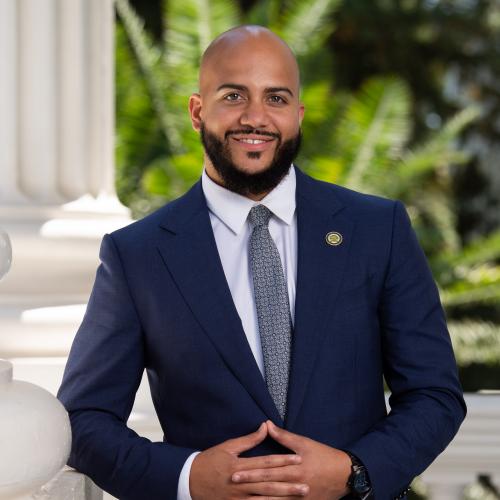
Asm. Isaac Bryan
Sponsored bills
Existing law establishes various programs for the enforcement of environmental protection. Existing law defines environmental justice, for certain purposes, as the fair treatment of people of all races, cultures, and incomes with respect to the development, adoption, implementation, and enforcement of environmental laws, regulations, and policies. Existing law makes legislative findings and declarations that it is in the public interest to provide the people of the state through the Attorney General with adequate remedy to protect the natural resources of the state from pollution, impairment, or destruction. Existing law authorizes the Attorney General to intervene in any judicial or administrative proceeding in which facts are alleged concerning pollution or adverse environmental effects that could affect the public generally. This bill would continue in existence, within the Department of Justice, the Bureau of Environmental Justice for the purpose of protecting people and communities that endure a disproportionate share of environmental pollution and public health hazards. The bill would require the bureau to ensure fair treatment of people of all races, cultures, and incomes with respect to the development, adoption, implementation, and enforcement of environmental laws, regulations, and policies, pursuant to the existing authority of the Attorney General, as specified. The bill would require the Attorney General to ensure the bureau is staffed with a minimum of 12 attorneys and an appropriate number of support staff.
Existing law establishes the Geologic Energy Management Division in the Department of Conservation, under the direction of the State Oil and Gas Supervisor, who is required to supervise the drilling, operation, maintenance, and abandonment of oil and gas wells, as provided. Existing law requires the operator of any idle well to either (1) no later than May 1 of each year, for each idle well that was an idle well at any time in the last calendar year, file with the supervisor an annual fee according to a specified schedule of fees based on the length of time a well has been idle, or (2) file a plan with the supervisor to provide for the management and elimination of all long-term idle wells. Existing law also establishes the Hazardous and Idle-Deserted Well Abatement Fund in the State Treasury for the deposit of those idle well fees, and continuously appropriates moneys in the fund to the department for expenditure to mitigate a hazardous or potentially hazardous condition, by well plugging and abandonment, decommissioning the production facilities, or both, at a well of an operator, as provided. Existing law establishes requirements that apply when a public entity is required by statute or regulation to obtain an enforceable commitment that a bidder, contractor, or other entity will use a skilled and trained workforce to complete a contract or project, as provided. This bill would require the department to make available at least 25% of the funds to be expended each year from the Hazardous and Idle-Deserted Well Abatement Fund to a county in which there are at least 100 orphaned or deserted oil and gas wells and that attests to the department that it can plug and abandon those wells more quickly than the department can, as provided. The bill would also require the department, upon becoming aware of liquid or gas leaking from an orphaned or deserted oil and gas well, to immediately make available at least 10% of the funds to be expended each year from the fund to the county in which the well is located, if the county attests to the department that it can plug and abandon the well more quickly than the department can, as provided. The bill would require the department to distribute funds amongst eligible counties based on the number of wells that would be plugged and abandoned by the county and the cost estimate to plug and abandon the wells. The bill would require the expenditure of all money from the fund to comply with those skilled and trained workforce requirements, as provided.
Existing law regulates terms and conditions for the hiring of real property and provides certain protections for tenants, including by prescribing statewide limits on the application of local rent control with regard to certain properties and by prohibiting an owner of residential real property from terminating a tenancy without just cause, as provided. Existing law makes it unlawful for the owner of any housing accommodation to discriminate against or harass any person based on certain personal characteristics. Existing law provides that there is in state government, in the Business, Consumer Services, and Housing Agency, the Civil Rights Department under the direction of an executive officer known as the Director of Civil Rights, who is appointed by the Governor. Among other responsibilities, the department is required to issue publications that in its judgment will tend to promote goodwill and minimize or eliminate discrimination in housing, as specified. This bill would, upon appropriation by the Legislature, establish the Office of Tenants' Rights and Protections in the Business, Consumer Services, and Housing Agency, administered by a director appointed by the Governor, and would require that office to create and maintain an up-to-date, digestible, and language-inclusive list of statewide tenants' rights and protections.
The California Constitution vests the judicial power of the state in the Supreme Court, courts of appeal, and superior courts, and establishes the Judicial Council to, among other things, adopt rules of court and perform functions prescribed by statute. This bill would require each county to develop a court reminder program that allows a superior court, county defense agency or contractor, pretrial services provider, or a community-based organization to send a text message to notify defendants of scheduled court appearances, as specified. The bill would require the arresting law enforcement agency to request a cellular telephone number of a person accused of a criminal offense upon citation or booking for the purpose of receiving court notifications and to transmit that number to the relevant agency managing the court reminder program in their jurisdiction. The bill would require the arresting law enforcement agency to dispose of the cellular telephone number after transmission to the relevant agency if there is no other legally mandated requirement to retain it. The bill would prohibit law enforcement agencies and the courts from using contact information collected solely through this program for any purpose other than for court date reminders. By imposing a new duty on local law enforcement agencies, the bill would impose a state-mandated local program. The California Constitution requires the state to reimburse local agencies and school districts for certain costs mandated by the state. Statutory provisions establish procedures for making that reimbursement. This bill would provide that, if the Commission on State Mandates determines that the bill contains costs mandated by the state, reimbursement for those costs shall be made pursuant to the statutory provisions noted above.
Existing law establishes the Adoption Assistance Program (AAP) for the purpose of benefiting children residing in foster homes by providing the stability and security of permanent homes. Under existing law, a child is eligible for AAP benefits if they meet, among other requirements, an age requirement wherein the child is (1) under 18 years of age, (2) under 21 years of age with a mental or physical handicap, or (3) under 21 years of age, has attained 16 years of age before the adoption assistance agreement became effective, and one or more of specified conditions are met. This bill would expand that 3rd category of the age requirement for AAP benefits by removing the requirement that the child has attained 16 years of age before the adoption assistance agreement became effective, and by increasing the eligible age to under 26 years of age. The bill would also require a county to include an application for extension of benefits when notifying adoptive parents of a child under 21 years of age of the expiration of benefits due to age. By expanding eligibility of a county-administered program, thereby imposing duties on counties, this bill would impose a state-mandated local program. The California Constitution requires the state to reimburse local agencies and school districts for certain costs mandated by the state. Statutory provisions establish procedures for making that reimbursement. This bill would provide that no reimbursement is required by this act for a specified reason.
Existing law creates the Governor's Office of Business and Economic Development (GO-Biz) and requires GO-Biz to serve the Governor as the lead entity for economic strategy and the marketing of California on issues relating to business development, private sector investment, and economic growth. This bill would establish the Antidisplacement Commercial Property Acquisition Program, to be administered by GO-Biz to provide low-interest loans to eligible community-based acquisition partners to acquire commercial property in communities that are vulnerable to gentrification and displacement. The bill would specify the goals of the program, including ensuring local businesses remain in high-risk communities vulnerable to gentrification and displacement. The bill would establish the Antidisplacement Commercial Property Acquisition Revolving Loan Fund, and would authorize GO-Biz, upon appropriation by the Legislature to the fund for purposes of the program, to provide low-interest loans for purposes of the program. The bill would require GO-Biz to adopt regulations to administer the program, including qualifications that prioritize the preservation of Black-, indigenous-, people of color-, and women-owned businesses and the acquisition of commercial property in culturally significant commercial corridors. The bill would require GO-Biz to report to the Legislature on the progress of the program by January 1, 2030, or 5 years after the disbursement of the first loan by GO-Biz, whichever is later. The bill would make the program contingent upon appropriation by the Legislature in the annual Budget Act or another statute for its purposes.
Maddy summaryThis bill designates October 2024 as Menopause Awareness Month in California to highlight the health and societal impacts of menopause on women. It acknowledges that millions of women face symptoms that can affect their daily lives and work, noting that women of color are at higher risk for complications like premature menopause and heart disease. The resolution encourages the state to provide better health information and services to support women's well-being before, during, and after this transition. While the text outlines these goals, the bill itself is a formal recognition rather than a law that creates new funding or mandates specific programs.
Existing federal law, the federal Patient Protection and Affordable Care Act (PPACA) , requires each state to establish an American Health Benefit Exchange to facilitate the purchase of qualified health benefit plans by qualified individuals and qualified small employers. PPACA defines a "qualified health plan" as a plan that, among other requirements, provides an essential health benefits package. Existing state law creates the California Health Benefit Exchange, also known as Covered California, to facilitate the enrollment of qualified individuals and qualified small employers in qualified health plans as required under PPACA. Existing law, the Knox-Keene Health Care Service Plan Act of 1975 (Knox-Keene) , provides for the licensure and regulation of health care service plans by the Department of Managed Health Care. Existing law provides for the regulation of health insurers by the Department of Insurance. Existing law provides for the Medi-Cal program, which is administered by the State Department of Health Care Services, under which qualified low-income individuals receive health care services. The Medi-Cal program is, in part, governed and funded by federal Medicaid program provisions. This bill, the California Guaranteed Health Care for All Act, would create the California Guaranteed Health Care for All program, or CalCare, to provide comprehensive universal single-payer health care coverage and a health care cost control system for the benefit of all residents of the state. Under the bill, CalCare would be a health care service plan subject to Knox-Keene. The bill, among other things, would provide that CalCare cover a wide range of medical benefits and other services and would incorporate the health care benefits and standards of other existing federal and state provisions, including the federal Children's Health Insurance Program, Medi-Cal, ancillary health care or social services covered by regional centers for persons with developmental disabilities, Knox-Keene, and the federal Medicare Program. The bill would make specified persons eligible to enroll as CalCare members during the implementation period, and would provide for automatic enrollment. The bill would require the board to seek all necessary waivers, approvals, and agreements to allow various existing federal health care payments to be paid to CalCare, which would then assume responsibility for all benefits and services previously paid for with those funds. This bill would create the CalCare Board to govern CalCare, made up of 9 voting members with demonstrated and acknowledged expertise in health care, and appointed as provided, plus the Secretary of California Health and Human Services or their designee as a nonvoting, ex officio member. The bill would provide the board with all the powers and duties necessary to establish CalCare, including determining when individuals may start enrolling into CalCare, employing necessary staff, negotiating pricing for covered pharmaceuticals and medical supplies, establishing a prescription drug formulary, and negotiating and entering into necessary contracts. The bill would require the board, on or before July 1 of an unspecified year, to conduct and deliver a fiscal analysis to determine whether or not CalCare may be implemented and if revenue is more likely than not to pay for program costs, as specified. The bill would establish an Advisory Commission on Long-Term Services and Supports to advise the board on matters of policy related to long-term services and supports. The bill would require the board to convene a CalCare Public Advisory Committee to advise the board on all matters of policy for CalCare, an Advisory Committee on Public Employees' Retirement System Health Benefits to provide recommendations related to public employee retiree health benefits, and a CalCare Health Workforce Working Group to provide the board with input on issues related to health care workforce education, recruitment, and retention. The bill would establish an Office of Health Equity within CalCare and under the direction of the Director of the Department of Health Care Access and Information to ensure health equity under the program and other health programs of the California Health and Human Services Agency and to support the board through specified actions. This bill would provide for the participation of health care providers in CalCare, including the requirements of a participation agreement between a health care provider and the board, provide for payment for health care items and services, and specify program participation standards. The bill would prohibit a participating provider from discriminating against a person by, among other things, reducing or denying a person's benefits under CalCare because of a specified characteristic, status, or condition of the person. This bill would prohibit a participating provider from billing or entering into a private contract with an individual eligible for CalCare benefits regarding a covered benefit, but would authorize contracting for a health care item or service that is not a covered benefit if specified criteria are met. The bill would authorize health care providers to collectively negotiate fee-for-service rates of payment for health care items and services using a third-party representative, as provided. The bill would require the board to annually determine an institutional provider's global budget, to be used to cover operating expenses related to covered health care items and services for that fiscal year, and would authorize payments under the global budget. This bill would state the intent of the Legislature to enact legislation that would develop a revenue plan, taking into consideration anticipated federal revenue available for CalCare. The bill would create the CalCare Trust Fund in the State Treasury, as a continuously appropriated fund, consisting of any federal and state moneys received for the purposes of the act. The bill would specify uses for moneys in the CalCare budget, including special projects for which not-for-profit or governmental entities may apply. Because the bill would create a continuously appropriated fund, it would make an appropriation. This bill would prohibit specified provisions of this act from becoming operative until the Secretary of California Health and Human Services gives written notice to the Secretary of the Senate and the Chief Clerk of the Assembly that the CalCare Trust Fund has the revenues to fund the costs of implementing the act. The California Health and Human Services Agency would be required to publish a copy of the notice on its internet website. Existing constitutional provisions require that a statute that limits the right of access to the meetings of public bodies or the writings of public officials and agencies be adopted with findings demonstrating the interest protected by the limitation and the need for protecting that interest. This bill would make legislative findings to that effect.
Under existing law, human trafficking is a crime and law enforcement officers who are assigned field and investigative duties are required to complete minimum training pertaining to the handling of human trafficking complaints. Existing law generally provides support services for individuals who are survivors of human trafficking, including public social services and address confidentiality, as specified. Existing law authorizes the Department of Motor Vehicles to issue an identification card to an applicant who provides specified information to the department and pays a specified fee. Existing law provides assisted processes for persons being released from a federal or state prison or a state hospital to obtain an identification card. Existing law additionally waives the fee for senior citizens and indigent persons. This bill would require the department to develop an assisted and expedited process for survivors of human trafficking to obtain a new or replacement identification card. The bill would require the department to develop an application form that can be filled out by specified persons on behalf of the applicant. The bill would require the department to waive the fee for an applicant applying pursuant to this process. The bill would also require the California Victim Compensation Board to post specified information, including information about obtaining an identification card using this process, on its internet website.