This measure would recognize August 15, 2022, as India's Independence Day and urge all Californians to join in celebrating India's independence.
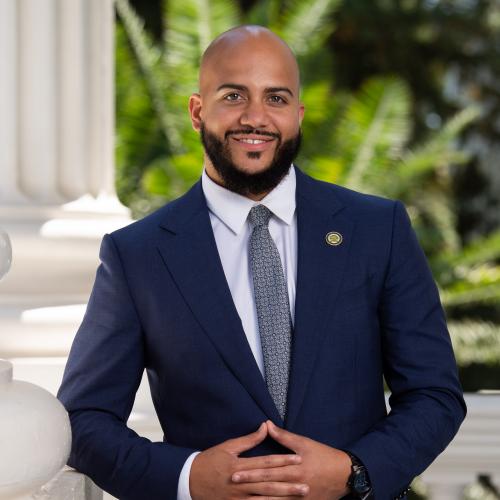
Asm. Isaac Bryan
Sponsored bills
This measure would declare August 2022 as Valley Fever Awareness Month.
This measure would declare the month of September 2022 as California Emergency Preparedness Month.
Existing law establishes the California Community Colleges, under the administration of the Board of Governors of the California Community Colleges, as one of the 3 segments of public postsecondary education in this state. Existing law establishes community college districts throughout the state, and authorizes them to provide instruction to students at community college campuses. One of these districts is the Los Angeles Community College District. This bill would establish the California Center for Climate Change Education, as part of the Los Angeles Community College District, to be located at West Los Angeles College, to promote climate change education at the California Community Colleges and establish opportunities for students to engage in hands-on internships and other learning opportunities. The bill would appropriate $5,000,000 from the General Fund for the development and initial operations of the center. To the extent the bill would impose additional obligations on the Los Angeles Community College District, the bill would impose a state-mandated local program. This bill would make legislative findings and declarations as to the necessity of a special statute for the Los Angeles Community College District. The California Constitution requires the state to reimburse local agencies and school districts for certain costs mandated by the state. Statutory provisions establish procedures for making that reimbursement. This bill would provide that, if the Commission on State Mandates determines that the bill contains costs mandated by the state, reimbursement for those costs shall be made pursuant to the statutory provisions noted above.
Existing law establishes the Strategic Growth Council consisting of specified state agency members and members of the public. Existing law requires the council, among other things, to recommend policies and investment strategies and priorities to the Governor, the Legislature, and to appropriate state agencies to encourage the development of sustainable communities, such as those communities that promote equity, strengthen the economy, protect the environment, and promote public health and safety. The federal Infrastructure Investment and Jobs Act (IIJA) provides additional federal funds to rebuild the nation's infrastructures. Executive orders issued by President Biden established the federal Justice40 Initiative with the goal that 40% of the overall federal benefits flow to disadvantaged communities and stating that the implementation of the IIJA should prioritize investing public dollars equitably, including through the Justice40 Initiative. This bill would require a minimum of 40% of funds received by the state under the IIJA and certain other federal funds to be allocated to projects that provide direct benefits to disadvantaged communities and disadvantaged unincorporated communities and, except as specified, a minimum of an additional 10% be allocated for projects that provide direct benefits to low-income households and low-income communities, as provided. The bill would require state agencies administering those federal funds to perform specified tasks related to the expenditure of those federal funds. This bill would establish the Justice40 Advisory Committee in the council, as provided, to perform various actions related to the expenditure of those federal funds. The bill would require the committee, by December 31, 2024, to submit a report to the Legislature, and to the council at a public meeting of the council, that identifies certain recommendations it has developed, including recommending projects under any covered program for federal funding. The bill would require the council, by December 31, 2027, to submit a report to the Legislature on the expenditure of federal funds and an evaluation of the state agencies' success in meeting the requirements of the bill. The bill would provide that those provisions would be repealed by their own terms on a specified date.
The California Global Warming Solutions Act of 2006 designates the State Air Resources Board as the state agency charged with monitoring and regulating sources of emissions of greenhouse gases. The state board is required to approve a statewide greenhouse gas emissions limit equivalent to the statewide greenhouse gas emissions level in 1990 to be achieved by 2020 and to ensure that statewide greenhouse gas emissions are reduced to at least 40% below the 1990 level by 2030. The act requires the state board to prepare and approve a scoping plan for achieving the maximum technologically feasible and cost-effective reductions in greenhouse gas emissions and to update the scoping plan at least once every 5 years. The act requires the scoping plan to identify and make recommendations on direct emissions reduction measures, alternative compliance mechanisms, market-based compliance mechanisms, and potential monetary and nonmonetary incentives for sources and categories of sources that the state board finds are necessary or desirable to facilitate the achievement of the maximum feasible and cost-effective reductions of greenhouse gas emissions, as provided. This bill would require, on or before March 1, 2023, and on or before March 1 of each year thereafter, each state agency, board, or department to post on its internet website a report regarding its compliance with and efforts to implement any goal or recommendation related to that state agency, board, or department, as defined, that is identified by the state board in the scoping plan, including any scoping plan updates. The bill would require a state agency, board, or department to include specified information in its report, including, but not limited to, identification of all scoping plan goals or recommendations that the state agency, board, or department is charged with or responsible, in whole or in part, for implementing, a description of the state agency's, board's, or department's, efforts to implement each scoping plan goal or recommendation, and whether the state agency, board, or department has fully implemented each scoping plan goal or recommendation. The bill would require, for each scoping plan goal or recommendation that is not fully implemented, a state agency, board, or department to describe in detail why the scoping plan goal or recommendation has not been fully implemented and the steps necessary for the state agency, board, or department to fully implement the goal or recommendation.

Existing law establishes the Department of Forestry and Fire Protection in the Natural Resources Agency to provide fire protection and prevention services, as specified. This bill would require the department to maintain a standard minimum level of staffing for each of its engines, as specified, without the regular practice of forcing overtime on its personnel. The bill would require the department to increase its existing firefighter fuel crews, as specified. The bill would require the department, on or before January 1, 2024, to provide to the Legislature a long-term staffing plan to meet the new era of wildfire firefighting.