

Relative to Maternal Health Awareness Day.
This measure would proclaim January 23, 2022, as Maternal Health Awareness Day.
Signed into law Feb 22, 2022
1 co-sponsor
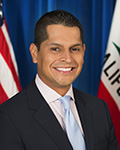
This measure would proclaim January 23, 2022, as Maternal Health Awareness Day.
(1) Under existing law, a person sentenced to imprisonment in a state prison or in a county jail for a felony offense, as specified, may during that period of confinement be deprived of only those rights as is reasonably related to legitimate penological interests. Existing law enumerates certain civil rights of these prisoners, including the right to purchase, receive, and read newspapers, periodicals, and books accepted for distribution by the United States Post Office. This bill would include the right to personal visits as a civil right, as specified. The bill would provide that these civil rights may not be infringed upon, except as necessary and only if narrowly tailored to further the legitimate security interests of the government, and would provide that any governmental action related to these civil rights may be reviewed in court for legal error under a substantial evidence standard of review. (2) Existing law authorizes the Secretary of the Department of Corrections and Rehabilitation to prescribe and amend rules and regulations for the administration of prisons, and requires regulations, which are adopted by the Department of Corrections and Rehabilitation, that may impact the visitation of inmates to recognize and consider the value of inmate visitation as a means of increasing safety in prisons, maintaining family and community connections, and preparing inmates for successful release and rehabilitation. Existing regulations establish the framework for establishing a visiting process in prisons that is conducted in as accommodating a manner as possible, subject to the need to maintain order, the safety of persons, the security of institutions and facilities, and required prison activities and operations. Existing law requires the department to contract with a private nonprofit agency or agencies to establish and operate a visitor center outside of each state adult prison in California that has a population of more than 300 inmates, and prescribes the minimum level of services to be available to prison visitors, including emergency clothing and information on visiting regulations and processes. Existing law requires the department to cooperate with the Department of Transportation in the development of public transportation services to prisons, requires these departments to evaluate the addition of stations or stops on existing bus or rail routes, or the addition of new services, that improve transportation access for visitors to prisons, and requires the department to publicize the availability of transportation services provided by the Department of Transportation. This bill would additionally require those regulations pertaining to inmate visits to recognize and consider the right to personal visits as a civil right. The bill would prohibit the Department of Corrections and Rehabilitation from denying in-person contact visits, as specified, including as a disciplinary sanction against the incarcerated person. The bill would require the department to inform an applicant of the specific reason for any denial of a visit.
Existing law, the Alatorre-Zenovich-Dunlap-Berman Agricultural Labor Relations Act of 1975, grants agricultural employees the right to form and join labor organizations and engage in collective bargaining with respect to wages, terms of employment, and other employment conditions, and authorizes employees to elect exclusive bargaining representatives for these purposes. Existing law requires the Agricultural Labor Relations Board to certify the results of an election conducted by secret ballot of employees in a collective bargaining unit to designate a collective bargaining representative, unless the board determines there are sufficient grounds to refuse to do so. Existing law further provides that if the board refuses to certify an election because of employer misconduct that would render slight the chances of a new election reflecting the free and fair choice of employees, the labor organization shall be certified as the bargaining representative for the bargaining unit. This bill would refer to the secret ballot election as a polling place election. This bill would also permit agricultural employees, as an alternative election procedure, to select their labor representatives through a representation ballot card election by submitting a petition to the board supported by representation ballot cards signed by a majority of employees in the bargaining unit. This bill would require the board to conduct an immediate investigation regarding the validity of the petition and the supporting representation ballot cards and, within 5 days after receiving a petition, to make an administrative decision as to whether the petition meets certain requirements and as to whether the labor organization submitted the requisite number of cards. The bill would require the board to certify the labor organization as the exclusive bargaining representative if the board determines that the labor organization has submitted the required number of representation ballot cards and the cards meet specified criteria. Existing law authorizes a person aggrieved by the final order of the board granting or denying in whole or in part the relief sought for an unfair labor practice, to obtain a review of the order in a specified court of appeal by filing in the court a written petition requesting that the order of the board be modified or set aside. This bill would require an employer who appeals or petitions for a writ of review of any order of the board involving make-whole, backpay, or other monetary awards to employees, to post an appeal bond in the amount of the entire economic value of the order, as specified, and would provide for the bond to be forfeited under specified conditions. This bill would state that its provisions are severable.
Existing law provides for the Medi-Cal program, administered by the State Department of Health Care Services and under which qualified low-income individuals receive health care services. The Medi-Cal program is, in part, governed and funded by federal Medicaid program provisions. Existing law requires the department to provide presumptive Medi-Cal eligibility to pregnant women and children. Existing law authorizes a qualified hospital to make presumptive eligibility determinations if it complies with specified requirements. Existing law authorizes the department, on a regional pilot project basis, to issue an identification card to a person who is eligible for Medi-Cal program benefits, but does not possess a valid California driver's license or identification card issued by the Department of Motor Vehicles. Existing law requires the department, in consultation with the board governing the California Health Benefit Exchange, to develop a single paper, electronic, and telephone application for insurance affordability programs, including Medi-Cal. This bill would require the department to implement a program of presumptive eligibility for persons experiencing homelessness, under which a person would receive full-scope Medi-Cal benefits without a share of cost. The bill would require the department to authorize an enrolled Medi-Cal provider to issue a temporary Medi-Cal benefits identification card to a person experiencing homelessness, and would prohibit the department from requiring a person experiencing homelessness to present a valid California driver's license or identification card issued by the Department of Motor Vehicles to receive Medi-Cal services if the provider verifies the person's eligibility. This bill would authorize an enrolled Medi-Cal provider to make a presumptive eligibility determination for a person experiencing homelessness. The bill would require the department to reimburse an enrolled Medi-Cal provider who bills the Medi-Cal program for Medi-Cal services provided off the premises to a person experiencing homelessness, as specified. The bill would require a Medi-Cal managed care plan to allow a beneficiary to seek those services and to reimburse a provider for providing those services, but would authorize a Medi-Cal managed care plan to establish reasonable requirements governing network participation. The bill would require a Medi-Cal managed care plan to reimburse a participating Medi-Cal provider providing covered services, without requiring the provider to obtain prior approval, as specified. The bill would authorize an enrolled Medi-Cal provider to refer a Medi-Cal beneficiary who is experiencing homelessness for specialist care and diagnostics. The bill would require the department to seek any necessary federal approvals to implement the above provisions, and would condition their implementation on receipt of those federal approvals and the availability of federal financial participation. The bill would require the insurance affordability program's application to include information collection means for the applicant to indicate if they are experiencing homelessness at the time of application. If Medi-Cal covered health care services covered by a Medi-Cal managed care plan are not provided within the first 60 calendar days of enrollment to a Medi-Cal beneficiary who has indicated that they are a person experiencing homelessness at the time of application, the bill would require the department to deduct the capitation payments made by the department to the plan from subsequent payments due to the plan for the time period from when the person was initially enrolled into a plan until the first receipt of plan-covered services. If a person experiencing homelessness who is assigned a primary care provider (PCP) receives services by another provider off the premises of the assigned PCP, the bill would require the department or the Medi-Cal managed care plan to notify the assigned PCP that their patient was seen by another provider.
Existing law requires the driver of any vehicle, including a person riding a bicycle, when approaching a stop sign at the entrance of an intersection, to stop before entering the intersection. A violation of this requirement is an infraction. This bill would, until January 1, 2028, require a person riding a bicycle, when approaching a stop sign at the entrance of an intersection, to yield the right-of-way to any vehicles that have either stopped at or entered the intersection, or that are approaching on the intersecting highway close enough to constitute an immediate hazard, and to pedestrians, as specified, and continue to yield the right-of-way to those vehicles and pedestrians until reasonably safe to proceed. The bill would require other vehicles to yield the right-of-way to a bicycle that, having yielded as prescribed, has entered the intersection. The bill would state that these provisions do not affect the liability of a driver of a motor vehicle as a result of the driver's negligent or wrongful act or omission in the operation of a motor vehicle. The bill would also require the Commissioner of the California Highway Patrol to submit a report to the Legislature, as specified, regarding the effects of this bill. By changing the elements of an existing crime, this bill would impose a state-mandated local program. The California Constitution requires the state to reimburse local agencies and school districts for certain costs mandated by the state. Statutory provisions establish procedures for making that reimbursement. This bill would provide that no reimbursement is required by this act for a specified reason.
(1) Existing law requires the State Department of Public Health to license, inspect, and regulate intermediate care facilities (ICF) and skilled nursing facilities (SNF) . Existing law generally requires an ICF or SNF to comply with certain procedures and disclosures when transferring ownership or management of the facility, as specified. Existing law imposes criminal penalties on a person who violates the requirements imposed on these facilities. This bill, until July 1, 2022, would prohibit an ICF or SNF, as defined, from terminating or making significant quality-of-care changes to its skilled nursing or supportive care services, or from transferring a resident to another ICF or SNF, during any declared state of emergency relating to the coronavirus disease 2019 (COVID-19) , except if the owner files a bankruptcy petition. Besides the exception of a bankruptcy petition, the bill would authorize a resident transfer during the state of emergency only if the transfer is deemed medically necessary by a public health authority, as specified, or the impacted resident or their representative provides written consent, as specified. The bill would also prohibit, during the same type of state of emergency or until July 1, 2022, any changes in all conditions for the sale of assets imposed by the Attorney General, except if the owner of an ICF or SNF files a bankruptcy petition. During the same type of state of emergency or until July 1, 2022, if a resident of an ICF or SNF, or an individual temporarily transferred to an ICF or SNF, has tested positive for COVID-19 within the previous 14 calendar days, the bill would require the ICF or SNF to notify all residents and their representatives about the existence of a new case of COVID-19, as specified, subject to state and federal privacy laws. The bill, for 6 months after termination of the same type of state of emergency or until January 1, 2023, would require the owner of an ICF or SNF to issue a 90-day advance notice of any proposed sale or termination of the licensed operation of the facility to each resident and their representatives before the sale or termination goes into effect. By expanding the requirements and prohibitions imposed on a licensee of an ICF or SNF, and thereby expanding the scope of a crime, this bill would impose a state-mandated local program. (2) The California Constitution requires the state to reimburse local agencies and school districts for certain costs mandated by the state. Statutory provisions establish procedures for making that reimbursement. This bill would provide that no reimbursement is required by this act for a specified reason. (3) This bill would declare that it is to take effect immediately as an urgency statute.
Existing law prescribes certain rights and limitations for landlords and tenants subject to eviction and certain procedures for civil actions involving evictions. Existing law, the State Bar Act, provides for the licensure and regulation of attorneys by the State Bar of California, a public corporation, governed by a board of trustees. Existing law requires an attorney to maintain short-term deposits of client funds in an Interest on Lawyers' Trust Account (IOLTA) and requires the interest and dividends earned on the account to be paid to the State Bar for the funding of certain programs that provide civil legal services without charge to indigent persons. Existing law requires the board of trustees to adopt regulations and procedures necessary to implement provisions, referred to as the Legal Services Trust Fund Program, that govern the funding of those programs. Existing administrative law establishes a Legal Services Trust Fund Commission to administer revenue from IOLTA and other funds remitted to the trust fund program. This bill would establish the Homelessness Prevention Fund to be administered by the commission. The bill would require the commission, subject to appropriation to the State Bar by the Legislature, to distribute moneys in the fund in the form of grants, awarded on a competitive basis, to fund prescribed legal services, education, and outreach for tenants relating to eviction or displacement. The bill would require the commission to develop guidelines for the grant process in accordance with specified requirements. The bill would establish eligibility requirements for grant applicants, including that the applicant agrees to provide all of the services funded by the grant without charge to recipients. The bill would require a grantee to report semiannually to the commission on certain activities and services funded by the grant and would prohibit a grantee from using more than 15% of the allocation received from the fund for administrative costs in the first year it receives a grant and 10% in every year thereafter. The bill would limit the State Bar expenditure of funds for administration to the actual costs of administration of these provisions, up to 5% of the funds provided.