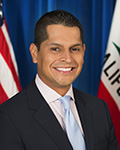
Photo of Miguel Santiago
D California Assembly · District 54 · Former member

Asm. Miguel Santiago

Contact Email
Compare
Total votes
24,138
all sessions
Attendance
98%
333 missed
Higher than 98% of chamber peers
With party
99%
of cast votes
Higher than 90% of chamber peers
Bipartisan score
0%
crosses aisle rarely
Lower than 93% of chamber peers
Sponsored
1,963
bills & resolutions
Higher than 76% of chamber peers
Committees
0
assignments
1,963 bills and resolutions

Sponsored bills

Total
1,963
Primary
251
Co-sponsor
1,712
This page
1,963
matching current filters
Co-sponsor AB 2542
Signed into law · California Assembly · Co-sponsor
Criminal procedure: discrimination.

Existing law generally prescribes the procedure for the prosecution of persons arrested for committing a crime, including pleadings, bail, pretrial proceedings, trial, judgment, sentencing, and appeals. Existing law allows a person who is unlawfully imprisoned or restrained of their liberty to prosecute a writ of habeas corpus to inquire into the cause of their imprisonment or restraint. Existing law allows a writ of habeas corpus to be prosecuted for, among other things, relief based on the use of false evidence that is substantially material or probative to the issue of guilt or punishment that was introduced at trial. This bill would prohibit the state from seeking a criminal conviction or sentence on the basis of race, ethnicity, or national origin, as specified. The bill would allow a writ of habeas corpus to be prosecuted on the basis of that prohibition, and would require the defendant to appear at the evidentiary hearing by video unless their presence in court is needed. The bill would permit a defendant to file a motion requesting disclosure of all evidence relevant to a potential violation of that prohibition that is in the possession or control of the prosecutor and would require a court, upon a showing of good cause, to order those records to be released. The bill would authorize a court that finds a violation of that prohibition to impose a remedy specified in the bill. The bill would apply its provisions to adjudications and dispositions in the juvenile delinquency system. The bill would apply its provisions only prospectively to cases in which judgment has not been entered prior to January 1, 2021. Existing law creates an explicit right for a person no longer imprisoned or restrained to file a motion to vacate a conviction or sentence based on a prejudicial error damaging to the moving party's ability to meaningfully understand, defend against, or knowingly accept the actual or potential adverse immigration consequences of a plea of guilty or nolo contendere, or based on newly discovered evidence of actual innocence, as specified. This bill would additionally allow for a person no longer imprisoned or restrained to file a motion to vacate a conviction or sentence based on a conviction or sentence that was sought, obtained, or imposed on the basis of race, ethnicity, or national origin in violation of the bill's provisions. This bill would state that its provisions are severable.

Signed into law Sep 30, 2020 1 co-sponsor
Co-sponsor AB 1775
Signed into law · California Assembly · Co-sponsor
False reports and harassment.

(1) Existing law makes certain publications and communications, including certain communications in a legislative proceeding, judicial proceeding, any other official proceeding authorized by law, or in the initiation or course of any other proceeding authorized by law and reviewable pursuant to a writ of mandate, privileged, and therefore protected from civil action, subject to certain exceptions. These exceptions include any communication made in a judicial proceeding knowingly concealing the existence of an insurance policy or policies. This bill would additionally create an exception to the privilege provisions for any communication between a person and a law enforcement agency in which the person knowingly or recklessly makes a false report that another person has committed, or is in the act of committing, a criminal act or is engaged in an activity requiring law enforcement intervention. (2) Existing law, the Ralph Civil Rights Act of 1976, provides that all persons within the jurisdiction of this state have the right to be free from any violence, or intimidation by threat of violence, committed against their persons or property because of political affiliation, or on account of position in a labor dispute, or sex, race, color, religion, ancestry, national origin, disability, medical condition, genetic information, marital status, sexual orientation, citizenship, primary language, or immigration status, or because another person perceives them to have one or more of those characteristics. Existing law provides civil remedies for violations of those provisions. This bill would provide that intimidation by threat of violence includes knowingly or recklessly making or threatening to make a false claim or report to a peace officer or law enforcement agency alleging that another person has engaged in unlawful activity or in an activity that requires law enforcement intervention. (3) Existing law makes it an infraction for a person to knowingly allow the use of or use the 911 emergency system for any reason other than because of an emergency. A violation of this prohibition is punishable by a warning for a first violation and specified, graduated fines for subsequent violations, including a fine of up to $250 for a 4th or subsequent violation. This bill would increase the penalty for a violation of that provision if a person knowingly allows the use of or uses the 911 emergency system for the purpose of harassing another. The bill would make a first violation of that prohibition an infraction punishable by a $250 fine or a misdemeanor punishable by up to 6 months in a county jail, a fine of up to $1,000, or both that imprisonment and fine. The bill would make a 2nd or subsequent violation a misdemeanor punishable by up to 6 months in a county jail, a fine of up to $1,000, or both that imprisonment and fine. The bill would also provide that if a person knowingly allows the use of or uses the 911 emergency system for the purpose of harassing a person and that act is a hate crime or other, specified crime committed against another person on the basis of the other person's actual or perceived characteristics, including race, religion, gender, or sexual orientation, the crime would be a misdemeanor punishable by up to one year in a county jail, a fine of not less than $500 nor more than $2,000, or both that imprisonment and fine. By increasing the penalty for certain crimes to make them punishable by imprisonment in a county jail, this bill would impose a state-mandated local program. (4) The California Constitution requires the state to reimburse local agencies and school districts for certain costs mandated by the state. Statutory provisions establish procedures for making that reimbursement. This bill would provide that no reimbursement is required by this act for a specified reason.


Signed into law Sep 30, 2020 1 co-sponsor
Co-sponsor AB 1196
Signed into law · California Assembly · Co-sponsor
Peace officers: use of force.

Existing law authorizes a peace officer to make an arrest pursuant to a warrant or based upon probable cause, as specified. Under existing law, an arrest is made by the actual restraint of the person or by submission to the custody of the arresting officer. Existing law authorizes a peace officer to use reasonable force to effect the arrest, to prevent escape, or to overcome resistance. Existing law requires law enforcement agencies to maintain a policy on the use of force, as specified. Existing law requires the Commission on Peace Officer Standards and Training to implement courses of instruction for the regular and periodic training of law enforcement officers in the use of force. This bill would prohibit a law enforcement agency from authorizing the use of a carotid restraint or a choke hold, as defined. By requiring local agencies to amend use of force policies, this bill would impose a state-mandated local program. The California Constitution requires the state to reimburse local agencies and school districts for certain costs mandated by the state. Statutory provisions establish procedures for making that reimbursement. This bill would provide that, if the Commission on State Mandates determines that the bill contains costs mandated by the state, reimbursement for those costs shall be made pursuant to the statutory provisions noted above.

Signed into law Sep 30, 2020 1 co-sponsor
Co-sponsor AB 1506
Signed into law · California Assembly · Co-sponsor
Police use of force.

Existing law requires law enforcement agencies to maintain a policy on the use of force, as specified. Existing law requires the Commission on Peace Officer Standards and Training to implement courses of instruction for the regular and periodic training of law enforcement officers in the use of force. Existing law requires law enforcement agencies to report to the Department of Justice, as specified, any incident in which a peace officer is involved in a shooting or use of force that results in death or serious bodily injury. This bill would create a division within the Department of Justice to, upon the request of a law enforcement agency, review the use-of-force policy of the agency and make recommendations, as specified. This bill would require a state prosecutor to investigate incidents of an officer-involved shooting resulting in the death of an unarmed civilian, as defined. The bill would make the Attorney General the state prosecutor unless otherwise specified or named. The bill would authorize the state prosecutor to prepare a written report, and would require the state prosecutor to post any reports made on a public internet website. The bill would require, commencing July 1, 2023, the Attorney General to operate a Police Practices Division within the department to review, upon the request of a local law enforcement agency, the use of deadly force policies of that law enforcement agency and make recommendations, as specified. The bill would require the department to implement these provisions subject to an appropriation for this purpose.

Signed into law Sep 30, 2020 1 co-sponsor
Co-sponsor AB 1993
Vetoed · California Assembly · Co-sponsor
Unemployment and disability insurance: benefits: in-home supportive services and waiver personal care services.

Existing law provides for the payment of unemployment compensation benefits and extended benefits to eligible individuals who meet specified requirements. Existing law provides definitions for "employment" for purposes of these provisions. Existing federal and state law excludes services performed by a child in the employ of a parent, a parent in the employ of their child, or a person in the employ of their spouse, from the definition of "employment" for purposes of unemployment taxes and unemployment insurance benefit eligibility, as specified. Under existing law, unemployment benefits are generally paid from the Unemployment Compensation Disability Fund, which is continuously appropriated for these purposes. This bill would provide that the definition of "employment" for the purposes of unemployment insurance coverage includes services performed by an individual in the employ of their parent, child, or spouse if that individual is providing services through the In-Home Supportive Services program or the Waiver Personal Care Services program. This bill would, notwithstanding existing law, provide that no money is continuously appropriated for purposes of the provisions of this bill and would make the operation of the bill's provisions contingent upon appropriation by the Legislature. Existing law permits an employing unit for which services are performed that do not constitute employment because they are services performed by a minor child in the employ of parent, or services performed by an individual in the employ of their child or spouse, to elect that the services constitute employment for purposes of disability compensation laws and provides that, upon written approval from the Director of Employment Development, those services are deemed to constitute employment. This bill would require that an individual whose services are deemed to constitute employment pursuant to the above-described provisions be treated as an individual whose services ordinarily constitute employment for purposes of computing disability benefit rights and contributions, if that individual is providing services through the In-Home Supportive Services program or the Waiver Personal Care Services program. Under existing law, disability benefits are generally paid from the Unemployment Compensation Disability Fund, which is continuously appropriated for these purposes. This bill would, notwithstanding existing law, provide that no money is continuously appropriated for purposes of the provisions of this bill and would make the operation of the bill's provisions contingent upon appropriation by the Legislature. The California Constitution requires the state to reimburse local agencies and school districts for certain costs mandated by the state. Statutory provisions establish procedures for making that reimbursement. This bill would provide that, if the Commission on State Mandates determines that the bill contains costs mandated by the state, reimbursement for those costs shall be made pursuant to the statutory provisions noted above. This bill would declare that it is to take effect immediately as an urgency statute.

Vetoed Sep 30, 2020 1 co-sponsor
Co-sponsor AB 3121
Signed into law · California Assembly · Co-sponsor
Task Force to Study and Develop Reparation Proposals for African Americans.

Existing law requests the Regents of the University of California to assemble a colloquium of scholars to draft a research proposal to analyze the economic benefits of slavery that accrued to owners and the businesses, including insurance companies and their subsidiaries, that received those benefits, and to make recommendations to the Legislature regarding those findings. Existing law requires the Insurance Commissioner to request and obtain information from insurers licensed and doing business in this state regarding any records of slaveholder insurance policies issued by any predecessor corporation during the slavery era. Existing law requires insurers to research and report to the commissioner on insurance policies that provided coverage for injury to, or death of, enslaved people. This bill would establish the Task Force to Study and Develop Reparation Proposals for African Americans, with a Special Consideration for African Americans Who are Descendants of Persons Enslaved in the United States, consisting of 9 members, appointed as provided. The bill would require the Task Force to, among other things, identify, compile, and synthesize the relevant corpus of evidentiary documentation of the institution of slavery that existed within the United States and the colonies. The bill would require the Task Force to recommend, among other things, the form of compensation that should be awarded, the instrumentalities through which it should be awarded, and who should be eligible for this compensation. The bill would require the Task Force to submit a written report of its findings and recommendations to the Legislature. The bill would authorize reimbursement of the members' expenses only to the extent an appropriation therefor is made in the Budget Act. The bill would state that any state level reparations authorized under these provisions are not to be considered a replacement for any reparations enacted at the federal level. The bill would repeal these provisions on July 1, 2023.

Signed into law Sep 30, 2020 1 co-sponsor
Co-sponsor AB 2617
Signed into law · California Assembly · Co-sponsor
Firearms: gun violence restraining orders.

Existing law allows a court to issue an order restraining an individual from possessing a firearm for the duration of the order. Existing law allows the court to issue a temporary emergency gun violence restraining order on an ex parte basis if the possession of a firearm by the subject of the petition poses an immediate and present danger. Existing law requires a law enforcement officer who requests a temporary emergency gun violence restraining order to take certain steps, including filing a copy of the order with the court as soon as practicable after issuance. This bill would instead require the law enforcement officer to file a copy of the order with the court as soon as practicable, but not later than 3 court days, after issuance. Under existing law, a person who owns or possesses a firearm or ammunition with the knowledge that they are prohibited from doing so by a gun violence restraining order is guilty of a misdemeanor and shall be prohibited from having custody or control of, owning, purchasing, possessing, or receiving, or attempting to purchase or receive, a firearm or ammunition for a 5-year period, commencing upon the expiration of the existing gun violence restraining order. This bill would specify that this offense also applies to persons who are subject to certain gun violence restraining orders, as described, issued by an out-of-state jurisdiction. This bill would state that its provisions are severable. By expanding the application of an existing crime, this bill would impose a state-mandated local program. The California Constitution requires the state to reimburse local agencies and school districts for certain costs mandated by the state. Statutory provisions establish procedures for making that reimbursement. This bill would provide that no reimbursement is required by this act for a specified reason.
Signed into law Sep 29, 2020 1 co-sponsor
Showing 1,041 to 1,050 of 1,963 bills