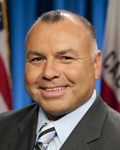
Photo of Freddie Rodriguez
D California Assembly · District 53 · Former member

Asm. Freddie Rodriguez

Contact Email
Compare
Total votes
23,465
all sessions
Attendance
95%
988 missed
Near the chamber average
With party
99%
of cast votes
Near the chamber average
Bipartisan score
0%
crosses aisle rarely
Near the chamber average
Sponsored
2,071
bills & resolutions
Near the chamber average
Committees
0
assignments
2,071 bills and resolutions

Sponsored bills

Total
2,071
Primary
239
Co-sponsor
1,832
This page
2,071
matching current filters
Co-sponsor ACR 206
Passed · California Assembly · Co-sponsor
Relative to India's Independence Day.

This measure would recognize August 15, 2022, as India's Independence Day and urge all Californians to join in celebrating India's independence.

Passed Aug 16, 2022 1 co-sponsor
Co-sponsor AB 1900
Passed · California Assembly · Co-sponsor
Medi-Cal: income level for maintenance.

Existing law establishes the Medi-Cal program, which is administered by the State Department of Health Care Services and under which qualified low-income individuals receive health care services. The Medi-Cal program is, in part, governed and funded by federal Medicaid program provisions. Existing law, to the extent federal financial participation is available, requires the department to exercise its option under federal law to implement a program for individuals who are 65 years of age or older or are disabled, without a share of cost, if they meet certain financial eligibility criteria, including not exceeding 138% of the federal poverty level in their countable income or as specified. Under existing law, certain medically needy persons with higher incomes qualify for Medi-Cal with a share of cost, if they meet specified criteria. Under existing law, the share of cost for those persons is generally the total after deducting an amount for maintenance from the person's monthly income. Existing law requires the department to establish income levels for maintenance at the lowest levels that reasonably permit a medically needy person to meet their basic needs for food, clothing, and shelter, and for which federal financial participation will still be provided under applicable federal law. Under existing law, for a single individual, the amount of the income level for maintenance per month is based on a calculation of 80% of the highest amount that would ordinarily be paid to a family of 2 persons, without any income or resources, under specified cash assistance provisions, multiplied by the federal financial participation rate, adjusted as specified. To the extent that any necessary federal authorization is obtained, and effective no sooner than January 1, 2024, this bill would increase the above-described income level for maintenance per month to be equal to the income limit for Medi-Cal without a share of cost for individuals who are 65 years of age or older or are disabled, generally totaling 138% of the federal poverty level. The bill would require the department to seek any necessary federal authorization for maintaining that income level for maintenance and would make conforming changes to related provisions. The bill would authorize the department to implement those provisions by various means, including all-county letters, and would require the department to implement those changes by regulatory action within 2 years of the operation of the above-described increase.


Passed Aug 11, 2022 1 co-sponsor
Co-sponsor AB 2360
Passed · California Assembly · Co-sponsor
Emergency response advisory working group.

Existing law establishes the Office of Health Equity in the State Department of Public Health for the purposes of aligning state resources, decisionmaking, and programs to accomplish certain goals related to, among others, health equity and protecting vulnerable communities. Existing law requires the office to perform certain functions in connection to multicultural health. Existing law also requires the department to biennially prepare and submit a report to the Legislature on the status of these activities. This bill would, subject to an appropriation of funds, require the Office of Health Equity to convene an advisory working group, consisting of specified stakeholders, to develop tools and protocols for the future allocation of funds to reduce racial disparities in recovery, response, and repair efforts following state and local emergencies. Additionally, the bill would require the advisory working group to submit a report with its findings and recommendations to the Legislature on or before January 1, 2025, and make that report available to the public by posting it on the State Department of Public Health's internet website. The bill would require the advisory working group in preparing the report to evaluate the unmet needs among various communities during the COVID-19 pandemic and with respect to up to five other recent emergency funding allocations stratified by local health jurisdiction, county, and Senate and Assembly legislative district. These provisions would be repealed on January 1, 2029. The bill would also make related findings and declarations.

Passed Aug 11, 2022 1 co-sponsor
Primary AB 2614
Passed · California Assembly · Lead sponsor
Workers' compensation: labor contractors.

Existing law establishes a workers' compensation system, administered by the Administrative Director of the Division of Workers' Compensation, to compensate an employee for injuries sustained in the course of employment. Existing law requires every employer except the state to secure payment of compensation to injured employees, as specified. Existing law establishes within the Department of Industrial Relations the Commission on Health and Safety and Workers' Compensation to examine the workers' compensation system and authorizes the commission to conduct or contract for studies. This bill would require the commission to report to the Legislature, on or before January 1, 2024, any widespread issues or instances of client employers or labor contractors, as defined, being used to shift workers'compensation responsibility away from those employers who control jobsite risk to employees, among other things.

Passed Aug 11, 2022 0 co-sponsors
Primary AB 1505
Passed · California Assembly · Lead sponsor
Community colleges: full-time faculty obligation.

Existing law establishes the California Community Colleges under the administration of the Board of Governors of the California Community Colleges as one of the segments of public postsecondary education in the state. Existing regulations require a community college district to increase its base number of full-time faculty over the prior year in proportion to the amount of growth in funded credit full-time equivalent students. These regulations, in years in which the board of governors determines that the annual Budget Act does not contain adequate funding to warrant full implementation of this full-time faculty obligation, authorize a community college district to instead choose to maintain, at a minimum, the full-time faculty percentage attained by the community college district in the prior fall term. This bill would require the board of governors to adopt regulations that require the fall of 2023 full-time faculty obligation for each community college district to be set to the actual full-time faculty number reported for the fall of 2022 and annually adjusted pursuant to these regulations.

Passed Aug 11, 2022 0 co-sponsors
Primary AB 2477
Passed · California Assembly · Lead sponsor
Emergency alert and warning service providers: minimum operating standards.

Existing law, the California Emergency Services Act, establishes the Office of Emergency Services (OES) in the office of the Governor and makes the OES responsible for the state's emergency and disaster response services, as specified. Existing law, on or before July 1, 2022, requires the OES, in consultation with specified entities, to develop voluntary guidelines for alerting and warning the public of an emergency, and requires the OES to provide each city, county, and city and county with a copy of the guidelines. Existing law authorizes the OES to impose conditions upon application for voluntary grant funding that it administers requiring operation of alert and warning activities consistent with the guidelines. Existing law also requires the OES, within 6 months of making the statewide guidelines available and at least annually thereafter and through its California Specialized Training Institute, to develop an alert and warning training, as specified. This bill, on or before July 1, 2024, would require the OES, by regulation, to adopt minimum operating standards for private sector companies that provide alert and warning services to local entities.

Passed Aug 11, 2022 0 co-sponsors
Showing 561 to 570 of 2,071 bills
Previous 1 … 56 57 58 … 208 Next