

Existing law establishes the Department of Industrial Relations in the Labor and Workforce Development Agency to foster, promote, and develop the welfare of the wage earners of California, to improve their working conditions, and to advance their opportunities for profitable employment. Existing law establishes within the department the Division of Labor Standards Enforcement, which is vested with the general duty of enforcing labor laws, including those relating to wage claims and employer retaliation. This bill would require every employer subject to its provisions to keep accurate records of specific information regarding employees for 3 years. The bill would require the division to enforce its provisions and would authorize the Labor Commissioner, who is the chief of the division, to adopt any regulations necessary to carry out the provisions of the bill. The bill would require every employer, effective July 1, 2018, to register annually with the Labor Commissioner in accordance with prescribed procedures. The bill would prohibit an employer from conducting any business without registration as required by the bill and would authorize the commissioner to revoke a registration under certain circumstances. The bill would set application and renewal fees for registration. The bill would require an employer to include specific information in the registration application. The bill would prohibit the division from granting registration under specific circumstances. The bill would require the commissioner to maintain on the department's Internet Web site a public database of registered property service employers. The bill would require the division, by January 1, 2019, to establish a biennial in-person sexual violence and harassment prevention training requirement for employees and employers with the assistance of a prescribed advisory committee to be convened by the director. The bill would require employers, as of July 1, 2018, and until the division establishes that training requirement, to provide employees with a pamphlet of the Department of Fair Employment and Housing on sexual harassment. The bill would establish civil fines for specific violations of its provisions and vest in the commission the exclusive authority to enforce the civil fine provisions. The bill would require the deposit of registration fees and civil fines in the Labor Enforcement and Compliance Fund and would direct that the moneys in the fund from those fees and fines be used only for the reasonable costs of administering the registration of janitorial contractors and the costs and obligations associated with the administration and enforcement of the bill by the division.
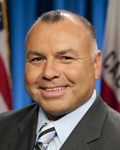
Sponsored bills
The California Global Warming Solutions Act of 2006 designates the State Air Resources Board as the state agency charged with monitoring and regulating sources of emissions of greenhouse gases. The act authorizes the state board to include the use of market-based compliance mechanisms. Existing law requires all moneys, except for fines and penalties, collected by the state board as part of a market-based compliance mechanism to be deposited in the Greenhouse Gas Reduction Fund and to be available upon appropriation. Existing law establishes the Strategic Growth Council, which consists of the heads of various state agencies and certain other members, and requires the council to identify and review activities and funding programs that may be coordinated to improve air and water quality, improve natural resource protection, increase the availability of affordable housing, improve transportation, meet the goals of the California Global Warming Solutions Act of 2006, encourage sustainable land use planning, and revitalize urban and community centers in a sustainable manner. This bill would create the Transformative Climate Communities Program, to be administered by the council. The bill would require the council to award competitive grants to specified eligible entities for the development and implementation of neighborhood-level transformative climate community plans that include greenhouse gas emissions reduction projects that provide local economic, environmental, and health benefits to disadvantaged communities, as defined. The bill would require the council to develop guidelines and selection criteria for the implementation of the program. The bill would require the California Environmental Protection Agency to provide assistance in performing outreach to disadvantaged communities and assessing the environmental justice benefits of project awards.
Existing sales and use tax laws impose a tax on retailers measured by the gross receipts from the sale of tangible personal property sold at retail in this state, or on the storage, use, or other consumption in this state of tangible personal property purchased from a retailer for storage, use, or other consumption in this state. Those laws provide various exemptions from those taxes. This bill, on and after January 1, 2017, and before January 1, 2022, would exempt from those taxes the gross receipts from the sale in this state of, and the storage, use, or other consumption in this state of, tampons, sanitary napkins, menstrual sponges, and menstrual cups. The Bradley-Burns Uniform Local Sales and Use Tax Law authorizes counties and cities to impose local sales and use taxes in conformity with the Sales and Use Tax Law, and existing law authorizes districts, as specified, to impose transactions and use taxes in accordance with the Transactions and Use Tax Law, which conforms to the Sales and Use Tax Law. Amendments to state sales and use taxes are incorporated into these laws. Section 2230 of the Revenue and Taxation Code provides that the state will reimburse counties and cities for revenue losses caused by the enactment of sales and use tax exemptions. This bill would provide that, notwithstanding Section 2230 of the Revenue and Taxation Code, no appropriation is made and the state shall not reimburse any local agencies for sales and use tax revenues lost by them pursuant to this bill. This bill would take effect immediately as a tax levy.
Existing sales and use tax laws impose a tax on retailers measured by the gross receipts from the sale of tangible personal property sold at retail in this state, or on the storage, use, or other consumption in this state of tangible personal property purchased from a retailer for storage, use, or other consumption in this state. That law provides various exemptions from those taxes. This bill, until January 1, 2022, would exempt from those taxes the gross receipts from the sale in this state of, and the storage, use, or other consumption in this state of, diapers for infants and toddlers, designated size 3 or under. The Bradley-Burns Uniform Local Sales and Use Tax Law authorizes counties and cities to impose local sales and use taxes in conformity with the Sales and Use Tax Law, and existing law authorizes districts, as specified, to impose transactions and use taxes in accordance with the Transactions and Use Tax Law, which conforms to the Sales and Use Tax Law. Amendments to state sales and use taxes are incorporated into these laws. Section 2230 of the Revenue and Taxation Code provides that the state will reimburse counties and cities for revenue losses caused by the enactment of sales and use tax exemptions. This bill would provide that, notwithstanding Section 2230 of the Revenue and Taxation Code, no appropriation is made and the state shall not reimburse any local agencies for sales and use tax revenues lost by them pursuant to this bill. This bill would take effect immediately as a tax levy, but its operative date would depend on its effective date.
This measure would urge the federal government to ensure that immigrant children are afforded due process under the law in removal proceedings by providing government-funded attorneys, trained in immigration law, to all indigent children seeking an immigration remedy. The measure would urge the federal government to first hear cases involving children that have legal counsel and to immediately halt cases brought against unrepresented immigrant children until lawyers are made available to represent them.
This measure would designate the interchange at Interstate 10 and Interstate 710 in the County of Los Angeles as the Los Angeles County Deputy Sheriff Thomas H. Pohlman Memorial Interchange. The measure would request that the Department of Transportation determine the cost of appropriate signs showing this special designation and, upon receiving donations from nonstate sources covering that cost, erect those signs.
This measure would recognize the week of October 16, 2016, to October 22, 2016, inclusive, as Digital Citizenship Week.
This measure would proclaim September 28, 2016, as Parent Advocacy Day.
This measure would proclaim October 23 to October 29, 2016, inclusive, as Red Ribbon Week, and would encourage all Californians to help build drug-free communities and participate in drug prevention activities.
This measure would proclaim the month of September 2016 as Childhood Cancer Awareness Month, and state the commitment of the Legislature to support efforts to find cures for, and achieve prevention of, childhood cancer.