

Passed Feb 10, 2020
0 co-sponsors
Total votes
22,342
all sessions
Attendance
97%
347 missed
Lower than 84% of chamber peers
With party
99%
of cast votes
Near the chamber average
Bipartisan score
0%
crosses aisle rarely
Near the chamber average
Sponsored
1,612
bills & resolutions
Near the chamber average
Committees
0
assignments
1,612 bills and resolutions
Sponsored bills
Total
1,612
Primary
171
Co-sponsor
1,441
This page
1,612
matching current filters
Medical assistants.
Existing law, the Medical Practice Act, provides for the licensure and regulation of the practice of medicine by the Medical Board of California. The act authorizes a medical assistant to administer medication only by intradermal, subcutaneous, or intramuscular injections and to perform skin tests and additional technical supportive services upon the specific authorization and supervision of a licensed physician and surgeon, a licensed podiatrist, a physician assistant, a nurse practitioner, or a certified nurse-midwife. Existing law defines the term "technical supportive services" to mean simple routine medical tasks and procedures that may be safely performed by a medical assistant who has limited training and who functions under the supervision of a licensed physician and surgeon, a licensed podiatrist, a physician assistant, a nurse practitioner, or a certified nurse-midwife. This bill would define "technical supportive services" to also include drawing up a local anesthetic provided specified conditions are met.
Failed Feb 3, 2020
0 co-sponsors
Community colleges: full-time faculty.
Existing law establishes the California Community Colleges, under the administration of the Board of Governors of the California Community Colleges, as one of the segments of public postsecondary education in this state. Existing law establishes community college districts throughout the state, and authorizes them to operate campuses and provide instruction to students. Existing law requires a community college district that has less than 75% of its hours of credit instruction taught by full-time instructors to apply a portion of specified state funding to increase the percentage of its hours of credit instruction taught by full-time instructors, as provided. Existing law requires the board of governors to adopt regulations that establish minimum standards regarding the percentage of hours of credit instruction taught by full-time instructors. This bill would instead require the board of governors to adopt regulations that establish minimum standards regarding the percentage of hours of credit and noncredit instruction taught by full-time instructors.
Failed Feb 3, 2020
0 co-sponsors
Medical procedures: treatment or intervention: sex characteristics of a minor.
Under existing law, the Medical Practice Act, it is unprofessional conduct for a physician and surgeon to fail to comply with prescribed informed consent requirements relating to various medical procedures, including sterilization procedures, the removal of sperm or ova from a patient under specified circumstances, and the treatment of breast cancer. Any violation of the law relating to enforcement of the Medical Practice Act is a misdemeanor, as specified. This bill would prohibit a treatment or intervention on the sex characteristics of a person born with variations in their physical sex characteristics who is under 6 years of age unless the treatment or intervention is medically necessary. The bill, on or before December 1, 2021, would require the Medical Board of California, in consultation with specified persons and entities, to adopt regulations to determine which treatments and interventions on the sex characteristics of a person born with variations in their physical sex characteristics who is under 6 years of age are medically necessary, as specified. Any violation of these provisions would be subject to disciplinary action by the board, but not criminal prosecution.
died Feb 3, 2020
1 co-sponsor
Education finance: local control funding formula: youths experiencing homelessness.
Existing law establishes a public school financing system that requires state funding for county superintendents of schools, school districts, and charter schools to be calculated pursuant to a local control funding formula, as specified. Existing law requires funding pursuant to a local control funding formula to include, in addition to a base grant, supplemental and concentration grant add-ons that are based on the percentage of pupils who are unduplicated pupils, as defined to include English learners, pupils eligible for free or reduced-price meals, and foster youth, as specified. Existing law requires county superintendents of schools, school districts, and charter schools to annually report their enrollment of unduplicated pupils to the Superintendent of Public Instruction, as specified. Existing law requires pupils who are classified in more than one of these groups to be counted only once for these purposes. This bill would add pupils experiencing homelessness, as defined, to the categories of unduplicated pupils. The bill would require that pupils experiencing homelessness who are also classified as foster youth be counted twice for purposes of the local control funding formula. By imposing additional duties on county superintendents of schools, school districts, and charter schools related to unduplicated pupils, the bill would impose a state-mandated local program. The California Constitution requires the state to reimburse local agencies and school districts for certain costs mandated by the state. Statutory provisions establish procedures for making that reimbursement. This bill would provide that, if the Commission on State Mandates determines that the bill contains costs mandated by the state, reimbursement for those costs shall be made pursuant to the statutory provisions noted above.
Failed Feb 3, 2020
0 co-sponsors
Animals: blood, blood components, and biologics.
Existing law, the Veterinary Medicine Practice Act, provides for the licensure and regulation of veterinary medicine by the Veterinary Medical Board in the Department of Consumer Affairs. Existing law authorizes the Veterinary Medical Board to deny, revoke, or suspend a license or registration or assess a fine for a violation of specified acts, including the employment of anyone but a veterinarian licensed in this state to demonstrate the use of biologics in the treatment of animals. A violation of the act is a crime. Existing law prohibits a person from engaging in the production of animal blood and blood component products, as defined, for retail sale and distribution except in a commercial blood bank for animals licensed by the Secretary of Food and Agriculture and requires the secretary to license commercial blood banks for animals that meet specified requirements. Existing law exempts licensed private veterinarians who collect blood or blood products solely for use in their own practice from these provisions regulating and licensing commercial blood banks for animals and biologics. Existing law defines animal, for the purposes of these provisions, as any domesticated fowl or nonhuman mammal and any wild fowl, bird, or mammal that is reduced to captivity. A violation of these provisions is a crime. This bill, not withstanding any law, commencing January 1, 2022, would prohibit a person from engaging in the production of canine blood and blood component products or biologics for retail sale and distribution unless that person is licensed as a canine blood bank by the Secretary of Food and Agriculture, among other specified requirements, including the requirement that the operations are performed under the direct supervision of a licensed veterinarian or board-certified specialist. The bill would prohibit a canine blood bank from paying a person for canine blood or blood component products and would require a canine blood bank to keep specified records. By expanding the scope of existing crimes, this bill would impose a state-mandated local program. The California Constitution requires the state to reimburse local agencies and school districts for certain costs mandated by the state. Statutory provisions establish procedures for making that reimbursement. This bill would provide that no reimbursement is required by this act for a specified reason.
Failed Feb 3, 2020
1 co-sponsor
Indoor-Grown Cannabis Commission.
Under existing law, the Legislature finds and declares that the agricultural and seafood industries are vitally important elements of the state's economy. Existing law provides for various commissions and councils to promote the marketing and production of agricultural or seafood commodities. This bill would create the Indoor-Grown Cannabis Commission in state government with a prescribed membership, and would specify the powers, duties, and responsibilities of the commission's board of directors. The bill would authorize the commission to, among other things, conduct research for specified purposes, assess and address the impact of local and state regulations on the cannabis and indoor-grown cannabis industries, and collect and disseminate market price information to prevent unfair trade practices. The bill would authorize the commission to levy assessments on all indoor cultivators, as defined, in amounts within unspecified ranges based on the weight or value of indoor cannabis marketed, and would continuously appropriate these funds to the commission for the purposes of implementing these provisions. The bill would provide that these provisions, except as necessary to conduct an election, would not become operative until indoor cultivators vote in favor of these provisions by referendum, as prescribed. The bill would also provide for the suspension of the operation of these provisions and for concluding the operations of the commission under certain circumstances. The bill would make it unlawful for a person to render or furnish false reports, secrete, destroy, or alter records, fail to furnish a report, or fail or refuse to furnish to the commission information concerning the names and addresses of persons to whom indoor-grown cannabis was delivered or from whom indoor-grown cannabis was received, except as provided. The bill would authorize the commission to bring certain civil actions to enforce these provisions. Existing constitutional provisions require that a statute that limits the right of access to the meetings of public bodies or the writings of public officials and agencies be adopted with findings demonstrating the interest protected by the limitation and the need for protecting that interest. This bill would make legislative findings to that effect.
Failed Feb 3, 2020
0 co-sponsors
Childcare: local planning councils.
Existing law states the intent of the Legislature that local childcare and development planning councils provide a forum for the identification of local priorities for childcare and the development of policies to meet the needs identified within those priorities. Existing law requires the county board of supervisors and the county superintendent of schools to select members for the local planning council for that county. Existing law requires local planning councils, upon approval by the county board of supervisors and the county superintendent of schools, to submit to the State Department of Education the local priorities it has identified that reflect all childcare needs in the county, as provided. This bill would require local planning councils to provide information to cities and counties regarding facility needs for early childhood education, including, but not limited to, childcare and preschool, in their jurisdictions. By imposing new duties on local planning councils, the bill would impose a state-mandated local program. The California Constitution requires the state to reimburse local agencies and school districts for certain costs mandated by the state. Statutory provisions establish procedures for making that reimbursement. This bill would provide that, if the Commission on State Mandates determines that the bill contains costs mandated by the state, reimbursement for those costs shall be made pursuant to the statutory provisions noted above.
Failed Feb 3, 2020
1 co-sponsor
Public postsecondary education: exemption from payment of nonresident tuition.
(1) Existing law exempts a student, other than a nonimmigrant alien, as defined, from paying nonresident tuition at the California State University and the California Community Colleges if the student has a total of 3 or more years of full-time attendance in specified California schools, or attainment of equivalent credits earned while in those schools, or the student completes 3 or more years of full-time high school coursework in California and a total of 3 or more years of attendance in California elementary schools and California secondary schools. Existing law also requires, for students transferring from campuses of the California Community Colleges, that the student graduate from a California high school or attain the equivalent, attain an associate degree from a campus of the California Community Colleges, or fulfill minimum transfer requirements established for the University of California or the California State University. This bill would reduce to 2 years the duration of full-time attendance or attainment of equivalent credits that would be required for the exemption from nonresident tuition at the institutions referenced above. The bill would request the Regents of the University of California to enact exemptions from requirements to pay nonresident tuition for its students that are equivalent to those that would be applicable to students of the California Community Colleges and the California State University pursuant to this bill. Because the bill would impose new duties on community college districts with respect to determining eligibility for exemptions from paying nonresident tuition, the bill would constitute a state-mandated local program. (2) The California Constitution requires the state to reimburse local agencies and school districts for certain costs mandated by the state. Statutory provisions establish procedures for making that reimbursement. This bill would provide that, if the Commission on State Mandates determines that the bill contains costs mandated by the state, reimbursement for those costs shall be made pursuant to the statutory provisions noted above.
Failed Feb 3, 2020
1 co-sponsor
Tenancy termination: just cause.
Existing law specifies that a hiring of residential real property, for a term not specified by the parties, is deemed to be renewed at the end of the term implied by law unless one of the parties gives written notice to the other of that party's intention to terminate. Existing law requires an owner of a residential dwelling to give notice at least 60 days prior to the proposed date of termination, or at least 30 days prior to the proposed date of termination if any tenant or resident has resided in the dwelling for less than one year, as specified. Existing law requires any notice given by an owner to be given in a prescribed manner, to contain certain information, and to be formatted, as specified. This bill would, with certain exceptions, prohibit a lessor of residential property from terminating the lease without just cause, as defined, stated in the written notice to terminate. This bill would require, for curable violations, that the lessor give a notice of violation and an opportunity to cure the violation prior to issuing the notice of termination. This bill would require, for no-fault just cause terminations, as specified, that the lessor assist certain lessees to relocate, regardless of the lessee's income, by providing a direct payment to the lessee, per a specified formula. This bill would require a lessor of residential property to provide notice to a lessee of the lessee's rights under these provisions at the beginning of the tenancy by providing an addendum to the lease to be signed by the lessee when the lease agreement is signed. This bill would not prevent local rules or ordinances that provide a higher level of tenant protection, as specified. This bill would repeal these provisions as of January 1, 2030.
died Feb 3, 2020
1 co-sponsor
Ask Maddy
·
AI policy assistant
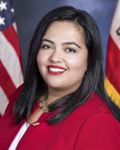
Ask Maddy about Wendy Carrillo
Scope: california
Hi! I can help you understand Wendy Carrillo's legislative record. What would you like to know?
Try one of these
i
Maddy answers using official bill text and legislative records. Always verify before sharing.
Sources cited inline