

Passed Feb 8, 2024
1 co-sponsor
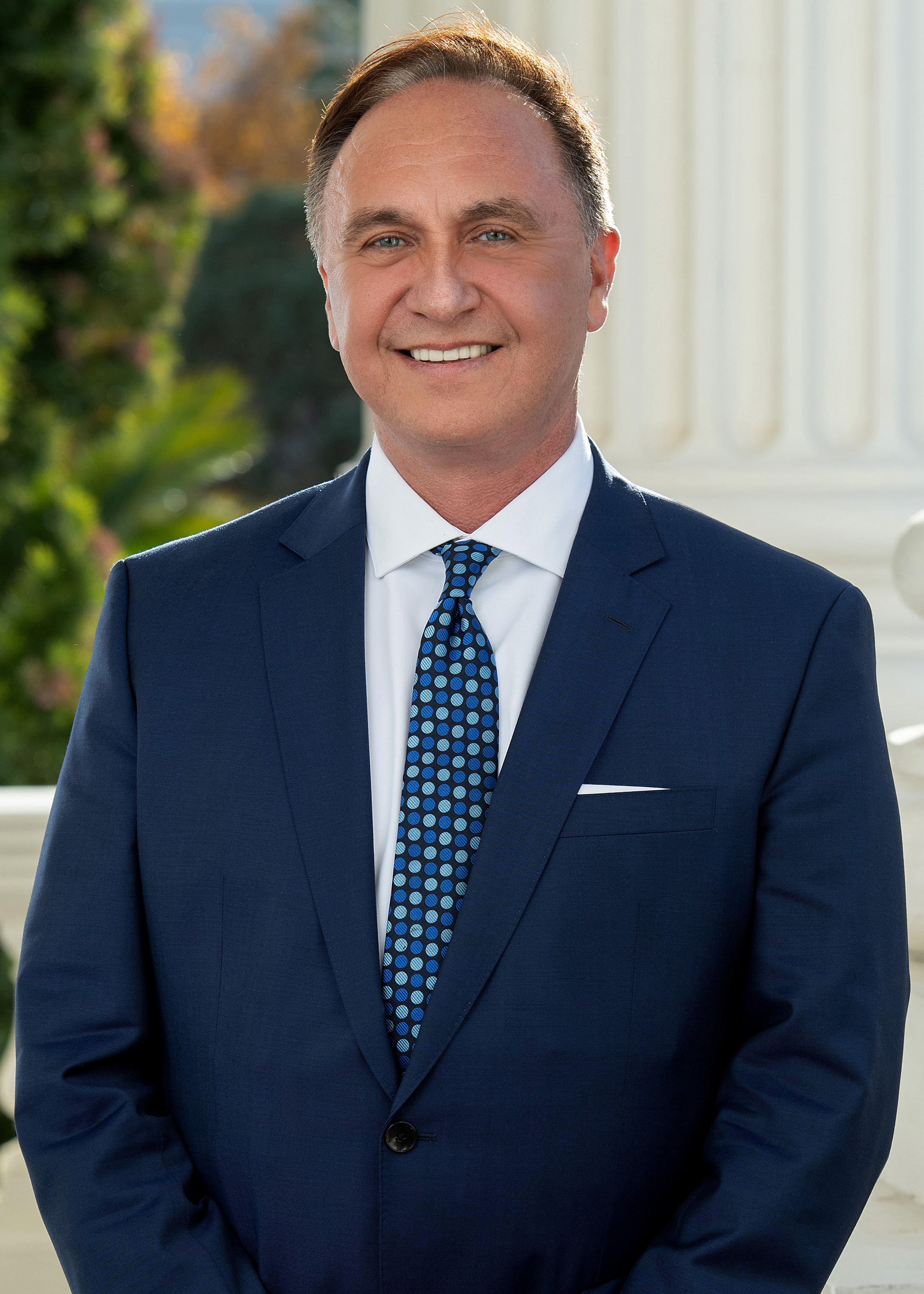
Asm. Rick Zbur
Total votes
10,609
all sessions
Attendance
95%
391 missed
Near the chamber average
With party
99%
of cast votes
Near the chamber average
Bipartisan score
0%
crosses aisle rarely
Near the chamber average
Sponsored
927
bills & resolutions
Near the chamber average
Committees
13
assignments
927 bills and resolutions
Sponsored bills
Total
927
Primary
70
Co-sponsor
857
This page
927
matching current filters
Solar energy systems.
Existing law vests the Public Utilities Commission with regulatory authority over public utilities, including electrical corporations. Decisions of the commission adopted the California Solar Initiative. Existing law requires the commission to ensure that not less than 10% of the funds for the California Solar Initiative are used for the installation of solar energy systems on low-income residential housing. This bill would require the commission, on or before January 1, 2025, and as part of a new or existing proceeding, to evaluate program or tariff improvements to multifamily installations of hybrid resources, specifically the inclusion of energy storage paired with solar energy systems, and to consider possible adjustments to existing or successor tariffs to facilitate the installation of energy storage technologies with new or existing solar energy systems, as specified. Under existing law, a violation of any order, decision, rule, direction, demand, or requirement of the commission is a crime. Because a violation of a commission action implementing this bill's requirements would be a crime, the bill would impose a state-mandated local program. The California Constitution requires the state to reimburse local agencies and school districts for certain costs mandated by the state. Statutory provisions establish procedures for making that reimbursement. This bill would provide that no reimbursement is required by this act for a specified reason.
Failed Feb 1, 2024
0 co-sponsors
Housing: the California Housing Security Act.
Existing law establishes various programs, including, among others, the Emergency Housing and Assistance Program and the homeless youth emergency service pilot projects to provide assistance to homeless persons. This bill would, upon appropriation of the Legislature, establish the California Housing Security Program to provide a housing subsidy to eligible persons, as specified, to reduce housing insecurity and help Californians meet their basic housing needs. To create the program, the bill would require the Department of Housing and Community Development to establish a 2-year pilot program in up to 4 counties, as specified. The bill would require the department to issue guidelines to establish the program that include, among other things, the amount of the subsidy that shall be the amount necessary to cover the portion of a person's rent to prevent homelessness, but shall not exceed $2,000 per month. Under the bill, the subsidy would not be considered income for purposes of determining eligibility or benefits for any other public assistance program, nor would participation in other benefits exclude a person from eligibility for the subsidy. Under the bill, an undocumented person, as specified, who otherwise qualifies for the subsidy would be eligible for the subsidy. The bill would require the department to submit a report on the program to the Legislature, as described.
Failed Feb 1, 2024
0 co-sponsors
Taxation.
Existing law provides for the imposition, calculation, and administration of various taxes, including, among others, the sales and use tax, the personal income tax, and the corporation income tax. This bill would state the intent of the Legislature to enact legislation relating to taxation.
died Feb 1, 2024
0 co-sponsors
Strategic Anti-Violence Funding Efforts Act.
(1) Existing law establishes the Youth Reinvestment Grant Program within the Board of State and Community Corrections to grant funds, upon appropriation, to local jurisdictions and Indian tribes for the purpose of implementing trauma-informed diversion programs for minors, as specified. This bill would repeal these provisions. The bill would reestablish the Youth Reinvestment Grant Program, to be administered by the Office of Youth and Community Restoration, for the purpose of implementing a mixed-delivery system of trauma-informed health and development diversion programs for youth, as specified. The bill would create the Youth Reinvestment Fund to be used, upon appropriation by the Legislature, by the office for the purposes of the program. The bill would require applicants for the program to be nongovernmental agencies or tribal governments, as specified. The bill would provide that an applicant under this program be awarded no less than $50,000, and no more than $2,000,000, and would specify the requirements of diversion programs to qualify for funding under these provisions. (2) Existing law establishes, until January 1, 2025, the California Violence Intervention and Prevention Grant Program, administered by the Board of State and Community Corrections, to award competitive grants for the purpose of violence intervention and prevention. This bill would establish, upon appropriation by the Legislature, the Department of Justice Violence Reduction Grant Program to be administered by the department for the purpose of supporting evidence-based, focus-deterrence collaborative programs that conduct outreach to targeted gangs and offer supportive services to preemptively reduce and eliminate violence and gang involvement. The bill would require the department to award grants on a competitive basis, with preference given to cities and local jurisdictions that are disproportionately impacted by violence and gang involvement. The bill would require the department to form a grant selection advisory committee, as specified. The bill would require grantees to report to the department, in a form and at intervals prescribed by the department, regarding the progress in achieving the grant objectives, and would require the department to report to the Legislature on the impact of violence prevention initiatives supported by the grant program. (3) Existing law requires the governing board of a school district to give diligent care to the health and physical development of pupils and authorizes the governing board of a school district to employ properly certified persons for the work. Existing law requires a school of a school district or county office of education and a charter school to notify pupils and parents or guardians of pupils no less than twice during the school year on how to initiate access to available pupil mental health services on campus or in the community, or both, as provided. This bill would also establish, upon appropriation by the Legislature, within the California Health and Human Services Agency a program to evaluate applications and award grants, in 5-year cycles, to schools to implement the Trauma Intervention Program to implement evidence-based interventions for pupils impacted by trauma. The bill would give the priority to the Counties of Alameda, Fresno, Merced, Tulare, Kern, and Los Angeles, as specified. The bill would require the agency to open eligibility for grants every 5 years, with priority to the top 6 counties that have the highest rate of violent crime and homicide, as reported by the Department of Justice's annual crime data report. The bill would also require grants to be awarded to a research organization to conduct a study on the effects of the treatment, including any effect on subsequent criminality. This bill would make legislative findings and declarations as to the necessity of a special statute for the Counties of Alameda, Fresno, Merced, Tulare, Kern, and Los Angeles. (4) Existing law requires the State Department of Public Health, in cooperation with the State Department of Education, to establish a Public School Health Center Support Program, upon appropriation by the Legislature, to assist school health centers, which are defined as centers or programs, located at or near local educational agencies, that provide age-appropriate health care services at the program site or through referrals, as specified. This bill would rename the program as the School-Based Health Center Support Program and would redefine a school-based health center to mean a student-focused health center or clinic that is located at or near a school or schools, is organized through school, community, and health provider relationships, and provides age-appropriate, clinical health care services onsite by qualified health professionals. The bill would authorize a school-based health center to provide primary medical care, behavioral health services, or dental care services onsite or through mobile health or telehealth. The bill would authorize the State Department of Public Health to contract with other entities for the purpose of providing assistance in specified areas to school-based health centers that receive grant moneys. Existing law requires the department, subject to an appropriation, to establish a grant program within the Public School Health Center Support Program to provide technical assistance and funding for the expansion, renovation, and retrofitting of existing school health centers and the development of new school health centers. Existing law requires a health center receiving grant funds to meet or have a plan to meet specified requirements relating to the provision of certain services. This bill would make changes to certain service requirements relating to, among other things, primary medical care, substance use disorder services, population health, and integrated and individualized support. Existing law requires, subject to an appropriation, that planning grants under the program be available in amounts between $25,000 and $50,000 for a 6- to 12-month period for specified uses. This bill would instead require that planning grants be available in amounts between $50,000 and $100,000, inclusive, for up to a 24-month period. Existing law requires, subject to an appropriation, that facilities and startup grants be available in amounts between $20,000 and $250,000 per year for a 3-year period for the purpose of establishing a school health center, with the potential addition of $100,000 in the first year for facilities construction, purchase, or renovation. This bill would instead require that facilities and startup grants be available in amounts between $300,000 and $850,000, inclusive, for a 3-year period. The bill would make certain changes to preference-related criteria. Existing law requires, subject to an appropriation, that sustainability grants be available in amounts between $25,000 and $125,000 per year for a 3-year period for the purpose of operating a school health center, or enhancing programming at a fully operational school health center, and sets forth certain criteria for those grants. This bill would delete those provisions and would instead require that expansion grants be available in amounts between $150,000 and $300,000, inclusive, for up to a 3-year period for the purpose of renovating and improving an existing school-based health center or enhancing and expanding programming at a fully operational school-based health center, as specified. The bill would require that sustainability grants be available in amounts between $150,000 and $300,000, inclusive, per year for the purpose of operating a school health center. The bill would set forth certain eligibility-related criteria for these grants. This bill would require the department, subject to an appropriation, to administer grants pursuant to this program beginning on or before January 1, 2025. Existing law requires the program, in collaboration with the State Department of Education, to act as a liaison for school-based health centers. This bill would delete that provision. Existing law requires the State Department of Education to establish an Office of School-Based Health Programs for the purpose of assisting local educational agencies regarding the current health-related programs under the purview of the department, as specified. This bill would require the office to work with the State Department of Public Health in supporting the School-Based Health Center Support Program. (5) Existing law requires the Director of Parks and Recreation to establish the Outdoor Equity Grants Program to increase the ability of underserved and at-risk populations to participate in outdoor environmental educational experiences at state parks and other public lands where outdoor environmental education programs take place. This bill would create a grant program, subject to an appropriation, under the Department of Parks and Recreation to award grants to tribal and local governments and community-based organizations for the purpose of supporting existing and creating new parks and recreation opportunities and supporting existing and creating new summer programs for youth in order to create and enhance recreation- and health-based interventions for youth during peak times of violence. The bill would require the department to develop criteria, procedures, and accountability measures to implement the grant program and to administer the grant program to ensure priority is given to underserved populations, as specified. The bill would require the department to give priority for funding to outdoor recreation- and health-based intervention programs during peak times of violence that primarily provide outreach to and serve youth who are impacted by violence and gang involvement in their communities. The bill would also require the department to annually report to the appropriate policy, budget, and fiscal committee of the Legislature regarding the effectiveness of the programs awarded funding in achieving the overall objectives of the grant program. (6) Existing law establishes the California Gang, Crime, and Violence Prevention Partnership Program for the purposes of reducing gang, criminal activity, and youth violence in specified communities. Existing law requires the Department of Justice to disburse all available funds to community-based organizations and nonprofit agencies that meet specified program requirements. This bill would repeal those provisions.
Vetoed Feb 1, 2024
1 co-sponsor
Vehicular air pollution: Clean Transportation Program: vehicle registration and identification plate service fees: smog abatement fee: extension.
Existing law, until January 1, 2024, increases the smog abatement fee on certain vehicles by a specified amount and requires the revenues generated by the increase to be deposited in the Air Quality Improvement Fund and the Alternative and Renewable Fuel and Vehicle Technology Fund. Existing law, until January 1, 2024, increases vehicle registration fees and certain service fees for identification plates by specified amounts. Existing law requires the revenue generated by the increase in those fees to be deposited in the Alternative and Renewable Fuel and Vehicle Technology Fund and either the Air Quality Improvement Fund or the Enhanced Fleet Modernization Subaccount, as provided. This bill would extend the increases in those charges to July 1, 2035. Existing law, until January 1, 2024, prohibits the State Air Resources Board from enforcing any element of its clean fuels outlet regulations or other regulation that requires or has the effect of requiring suppliers, as defined, to construct, operate, or provide funding for the construction or operation of publicly available hydrogen-fueling stations. Existing law, until January 1, 2024, requires the state board to aggregate and make available certain information regarding projected leases and sales of, and the registration of, hydrogen-fueled vehicles, to evaluate, based on that information, the need for additional publicly available hydrogen-fueling stations for the actual and projected number of hydrogen-fueled vehicles, the geographic areas where fuel will be needed, and station coverage, and to report the finding of the evaluation to the State Energy Resources Conservation and Development Commission. Existing law, until January 1, 2024, requires the commission to annually allocate $20,000,000 to fund the number of publicly available hydrogen-fueling stations identified by the state board, not to exceed 20% of the moneys appropriated by the Legislature from the Alternative and Renewable Fuel and Vehicle Technology Fund, until at least 100 publicly available hydrogen-fueling stations are operating in the state. This bill would extend the above-described provisions to July 1, 2035, and would repeal them as of January 1, 2036. The bill would lower the annual allocation described above to $10,000,000, require the commission to make that allocation only until July 1, 2030, and impose other specified requirements. The bill would also delete the requirements that the hydrogen-fueling stations be publicly available and that there be at least 100 hydrogen-fueling stations operating in the state. Existing law creates the Enhanced Fleet Modernization Program to provide compensation for the retirement and replacement of passenger vehicles and light-duty and medium-duty trucks that are high polluters. Existing law requires the Bureau of Automotive Repair to administer the program and the state board to adopt the guidelines for the program. Existing law requires the guidelines to ensure vehicle replacement or a mobility option be an option for all motor vehicle owners and may be in addition to compensation for vehicles retired. Existing law creates the Enhanced Fleet Modernization Subaccount in the High Polluter Repair or Removal Account and makes available, upon appropriation, all moneys in the account to establish, implement, and administer the program. This bill would require the guidelines to ensure each replacement vehicle in the program be either a plug-in hybrid or zero-emission vehicle unless the state board makes a specified determination regarding either the availability of vehicles or the availability of charging and refueling capabilities in consultation with the commission, as specified. Existing law establishes the Clean Transportation Program that is administered by the commission to provide financial assistance to develop and deploy innovative technologies that transform California's fuel and vehicle types to help attain the state's climate change policies with an emphasis on the development and deployment of technology and alternative and renewable fuels in the marketplace. Existing law authorizes the commission to make a single source or sole source award for applied research. This bill would revise and recast the Clean Transportation Program to, among other things, change the emphasis of the program to the development and deployment of zero-emission technology and fuels in the marketplace where feasible and near-zero-emission technology and fuels elsewhere. The bill would additionally authorize the commission to make a single source or sole source award to public or nonpublic entities that manage a United States Department of Energy national laboratory. The bill would require the commission, on and after January 1, 2025, to expend at least 50% of the moneys appropriated to the program on programs and projects that directly benefit or serve residents of disadvantaged and low-income communities and low-income Californians. The bill would also require the State Energy Resources Conservation and Development Commission, by January 1, 2028, in consultation with the State Air Resources Board and the Department of Motor Vehicles, to propose to the Legislature alternative funding methodologies or fee structures for funding zero-emission vehicle infrastructure for light-, medium-, and heavy-duty vehicles. The bill would require the proposal to include an assessment of the economic equity of the alternatives. This bill would declare that it is to take effect immediately as an urgency statute.
died Feb 1, 2024
1 co-sponsor
Vital records: diacritical marks.
Existing law prescribes the duties of the State Registrar of Vital Statistics (State Registrar) and local registrars of births and deaths with respect to the registration of certificates of live birth, fetal death, or death, and marriage licenses. Existing law requires the State Registrar to prescribe and furnish all record forms for use in carrying out the provisions governing vital records and prohibits the use of any record form or format other than those prescribed by the State Registrar. Existing law requires every live birth, fetal death, death, and marriage that occurs in the state to be registered with the local registrar. Existing law requires certificates of live birth, fetal death, or death, and a marriage license to include specified information, such as the full name of the child on a certificate of live birth and the full names of the parties to be married on a marriage license. Existing law also requires the county clerk to issue a confidential marriage license, as specified, on a form prescribed by the State Registrar. This bill would require the State Registrar to require the use of a diacritical mark on an English letter to be properly recorded, when applicable, on a certificate of live birth, fetal death, death, marriage license and certificate, or confidential marriage license and certificate, and would require the use of a diacritical mark to be deemed an acceptable entry by the State Registrar. The bill would provide that the absence of a diacritical mark on a certificate of live birth, fetal death, or death, or a marriage license does not render the document invalid nor affect any constructive notice imparted by proper recordation of the document. The bill would authorize, if a name is not accurately recorded because of the absence of a diacritical mark on an English letter in any certificate of live birth, fetal death, death, or marriage already registered, the person asserting the omission, or the person's conservator, or if a minor, the person's parent or guardian, to submit a written request to the State Registrar for the issuance of a new certificate of birth, fetal death, death, or marriage stating the changes necessary to make the name correct. The bill would require the State Registrar to review the request and, if the request is accompanied with the payment of a specified fee, to issue a new certificate of live birth, fetal death, death, or marriage with the accurate name identified in the request. The bill would also authorize, if a name is not accurately recorded because of the absence of a diacritical mark on an English letter on any confidential license and certificate of marriage already registered, the party asserting the omission to make an affidavit, under oath, stating the changes necessary to make the record correct and file it with the county clerk. The bill would require the county clerk to review the amendment for acceptance for filing, and if accepted, file the amendment and note the fact of the amendment, with its date, on the otherwise unaltered original confidential license and certificate of marriage. By requiring the affidavit to be under oath, the bill would expand the crime of perjury, thereby imposing a state-mandated local program. By increasing duties on county clerks, the bill would impose a state-mandated local program. The California Constitution requires the state to reimburse local agencies and school districts for certain costs mandated by the state. Statutory provisions establish procedures for making that reimbursement. This bill would provide that with regard to certain mandates no reimbursement is required by this act for a specified reason. With regard to any other mandates, this bill would provide that, if the Commission on State Mandates determines that the bill contains costs so mandated by the state, reimbursement for those costs shall be made pursuant to the statutory provisions noted above.
Failed Feb 1, 2024
1 co-sponsor
Health care coverage: naloxone hydrochloride.
Existing law sets forth various programs relating to opioid overdose prevention and treatment, including, among others, standing orders for the distribution of an opioid antagonist, a naloxone grant program, and a grant program to reduce fentanyl overdoses and use throughout the state. Existing law establishes the Medi-Cal program, which is administered by the State Department of Health Care Services and under which qualified low-income individuals receive health care services. The Medi-Cal program is, in part, governed and funded by federal Medicaid program provisions. Under existing law, the pharmacist service of furnishing naloxone hydrochloride is a covered Medi-Cal benefit. The Medi-Cal program also covers certain medications to treat opioid use disorders as part of narcotic treatment program services, or as part of medication-assisted treatment services within the Drug Medi-Cal Treatment Program, as specified. Existing law, the Knox-Keene Health Care Service Plan Act of 1975, provides for the licensure and regulation of health care service plans by the Department of Managed Health Care and makes a willful violation of the act a crime. Existing law provides for the regulation of health insurers by the Department of Insurance. This bill would make legislative findings relating to the United States Food and Drug Administration (FDA) approving a certain naloxone hydrochloride nasal spray for nonprescription use. Under the bill, prescription or nonprescription naloxone hydrochloride or another drug approved by the FDA for the complete or partial reversal of an opioid overdose would be a covered benefit under the Medi-Cal program. The bill would require a health care service plan contract or health insurance policy that provides coverage for prescription drugs and that is issued, amended, delivered, or renewed on or after January 1, 2025, to cover prescription and nonprescription naloxone hydrochloride and all other drugs or products approved by the FDA for the complete or partial reversal of an opioid overdose. The bill would prohibit a health care service plan contract or health insurance policy that provides coverage for prescription drugs from imposing any cost-sharing requirements for that coverage exceeding $10 per package of medication, as specified, would require point-of-sale coverage for over-the-counter, FDA-approved naloxone hydrochloride or another FDA-approved drug or product for the complete or partial reversal of an opioid overdose at in-network pharmacies, and would prohibit a high deductible health plan from imposing cost sharing, as specified. The bill would repeal these provisions on January 1, 2030. Because a willful violation of these provisions by a health care service plan would be a crime, the bill would impose a state-mandated local program. The California Constitution requires the state to reimburse local agencies and school districts for certain costs mandated by the state. Statutory provisions establish procedures for making that reimbursement. This bill would provide that no reimbursement is required by this act for a specified reason.
Vetoed Jan 30, 2024
1 co-sponsor
Health care coverage: cost sharing.
Existing law, the Knox-Keene Health Care Service Plan Act of 1975, provides for the licensure and regulation of health care service plans by the Department of Managed Health Care, and makes a willful violation of the act a crime. Existing law provides for the regulation of health insurers by the Department of Insurance. Existing law requires a group or individual nongrandfathered health care service plan contract or health insurance policy to provide coverage for, and prohibits a contract or policy from imposing cost-sharing requirements for, specified preventive care services and screenings. This bill would prohibit a group or individual health care service plan contract or health insurance policy issued, amended, or renewed on or after January 1, 2024, from imposing a cost-sharing requirement for office visits for the above-described preventive care services and screenings and for items or services that are integral to their provision. The bill would prohibit large group contracts and policies issued, amended, or renewed on or after January 1, 2024, and an individual or small group health care service plan contract or health insurance policy issued, amended, or renewed on or after January 1, 2025, from imposing a cost-sharing requirement, utilization review, or other specified limits on a recommended sexually transmitted infections screening, and from imposing a cost-sharing requirement for any items and services integral to a sexually transmitted infections screening, as specified. The bill would require a plan or insurer to directly reimburse a nonparticipating provider or facility of sexually transmitted infections screening that meets specified criteria for screening tests and integral items and services rendered, as specified, and would prohibit a nonparticipating provider from billing or collecting a cost-sharing amount for a sexually transmitted infections screening from an enrollee or insured. Because a violation of the bill's requirements by a health care service plan would be a crime, the bill would impose a state-mandated local program. The California Constitution requires the state to reimburse local agencies and school districts for certain costs mandated by the state. Statutory provisions establish procedures for making that reimbursement. This bill would provide that no reimbursement is required by this act for a specified reason.
Vetoed Jan 29, 2024
0 co-sponsors
Redistricting: large charter cities.
Existing law requires the city council for a charter city that elects its city council using district-based elections to adopt new city council district boundaries following each federal decennial census. Existing law requires the city council to adopt the new boundaries using specified criteria, and by a specified deadline, unless the charter city has adopted different redistricting criteria or a different deadline by ordinance or in its city charter. This bill would require a charter city with a population of at least 2,500,000 people to establish an independent redistricting commission to adjust the district boundaries for the city council if the city's charter does not establish an independent redistricting commission that meets specified criteria. The bill would require the commission to adjust the boundaries of the city council districts in accordance with specified criteria and deadlines. By increasing the duties on local officials, the bill would impose a state-mandated local program. This bill would make legislative findings and declarations as to the necessity of a special statute for charter cities with a population of at least 2,500,000 people. The California Constitution requires the state to reimburse local agencies and school districts for certain costs mandated by the state. Statutory provisions establish procedures for making that reimbursement. This bill would provide that, if the Commission on State Mandates determines that the bill contains costs mandated by the state, reimbursement for those costs shall be made pursuant to the statutory provisions noted above.
Vetoed Jan 25, 2024
1 co-sponsor
Ask Maddy
·
AI policy assistant
Ask Maddy about Rick Zbur
Scope: california
Hi! I can help you understand Rick Zbur's legislative record. What would you like to know?
Try one of these
i
Maddy answers using official bill text and legislative records. Always verify before sharing.
Sources cited inline