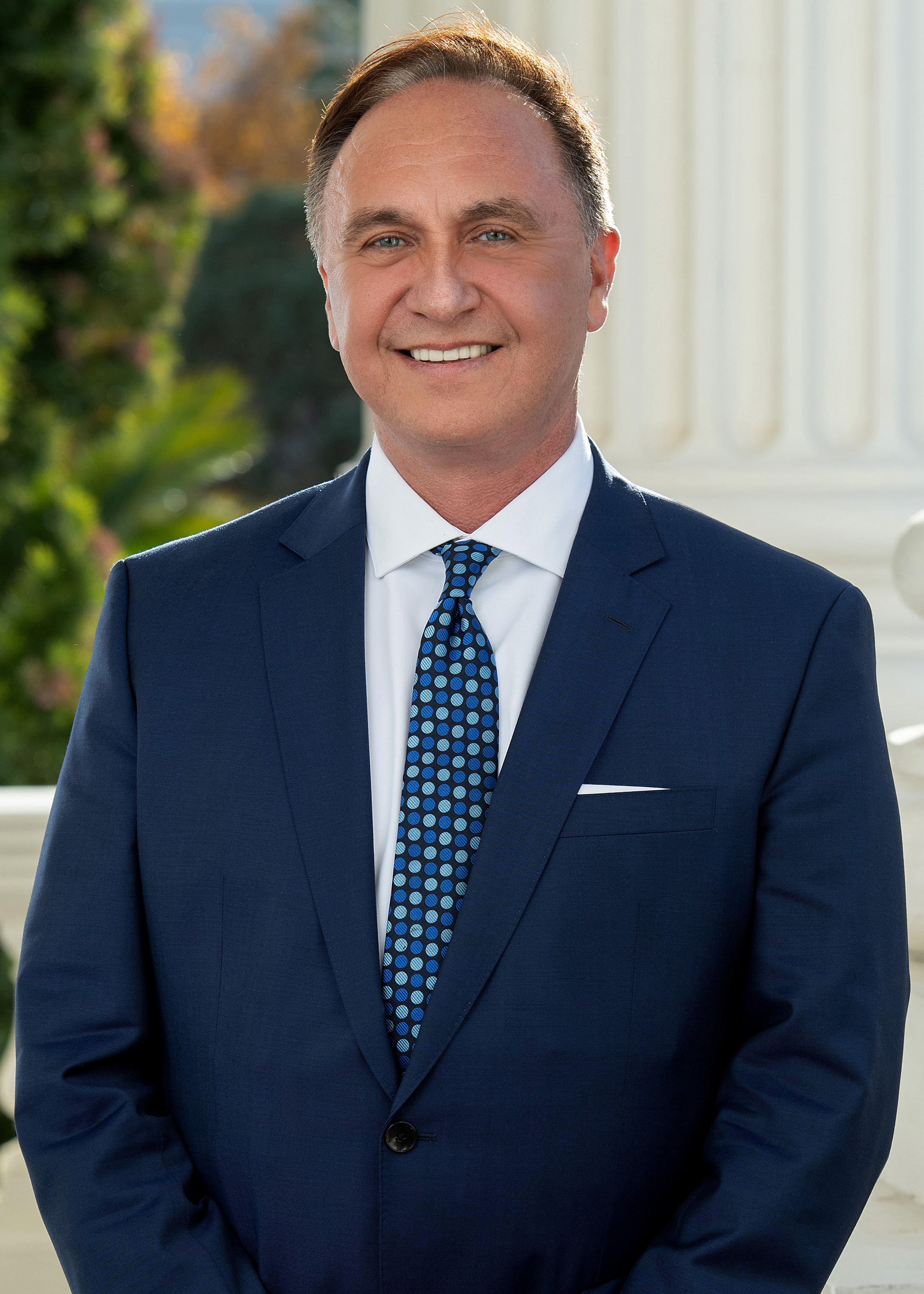
Photo of Rick Zbur
D California Assembly · District 51 On the 2026 ballot

Asm. Rick Zbur

Compare
Total votes
10,609
all sessions
Attendance
95%
391 missed
Higher than 79% of chamber peers
With party
99%
of cast votes
Near the chamber average
Bipartisan score
0%
crosses aisle rarely
Near the chamber average
Sponsored
927
bills & resolutions
Higher than 95% of chamber peers
Committees
13
assignments
927 bills and resolutions

Sponsored bills

Total
927
Primary
70
Co-sponsor
857
This page
927
matching current filters
Co-sponsor HR 103
Passed · California Assembly · Co-sponsor
Relative to National Maritime Day.

Maddy summaryThis bill is a House Resolution that formally recognizes National Maritime Day on May 22, 2024, and expresses the California Assembly's support for the state's maritime industry. The resolution highlights the economic importance of California's ports and the domestic shipping sector, noting that it supports over 51,000 jobs and contributes billions to the state economy. It also acknowledges the critical role of maritime workers in transporting goods and developing renewable energy, while citing recent maritime incidents to underscore the value of professional crews and well-maintained vessels. Ultimately, the bill serves as a commemorative statement rather than creating new laws or changing existing policies.

Passed May 30, 2024 1 co-sponsor
Co-sponsor HR 102
Passed · California Assembly · Co-sponsor
Relative to Memorial Day.

Maddy summaryThis bill is a House Resolution that formally recognizes May 27, 2024, as Memorial Day in California. It serves as a commemorative measure to honor the men and women who have died while serving in the U.S. Armed Forces. The resolution does not alter laws or create new programs but instead expresses the state's gratitude for the sacrifices made by military personnel.

Passed May 23, 2024 1 co-sponsor
Co-sponsor SB 233
Signed into law · California Senate · Co-sponsor
Practice of medicine: Arizona physicians: abortions and abortion-related care for Arizona patients.

Existing law, the Medical Practice Act, establishes the Medical Board of California and the Osteopathic Medical Board of California to license and regulate the practice of medicine, and establishes examination, training, and other requirements for licensure as a physician and surgeon. A violation of the act is a misdemeanor. This bill, through November 30, 2024, would authorize a physician licensed to practice medicine in Arizona who meets certain requirements to practice medicine in California for the purpose of providing abortions and abortion-related care to patients who are Arizona residents traveling from Arizona, upon application for registration with the Medical Board of California or the Osteopathic Medical Board of California, as applicable. The bill would prohibit the physician from providing care or consultation for other purposes or to other patients, except under specified circumstances. The bill would require an Arizona physician, before practicing in California, to submit specified information to the Medical Board of California or the Osteopathic Medical Board of California, as applicable, including, among other information, written verification from the Arizona Medical Board or the Arizona Board of Osteopathic Examiners in Medicine and Surgery, or documentation printed from an online licensing system, that the physician's Arizona license to practice medicine is in good standing and confers on the physician the authority to practice abortions and abortion-related care. The bill would require the applicant to provide an affidavit attesting that, among other things, the applicant meets all of the requirements for registration, as specified, and would make it a misdemeanor for a person to provide false information. The bill would limit the information the California boards are required to disclose about a registrant. The bill would deem a physician registered pursuant to the bill's provisions a licensee of the applicable board, would authorize the applicable board to take enforcement against a person registered pursuant to the bill's provisions, and would prohibit the applicable boards from collecting any fees for registration. By creating a new crime, the bill would impose a state-mandated local program. The bill would repeal the bill's provisions on January 1, 2025. The California Constitution requires the state to reimburse local agencies and school districts for certain costs mandated by the state. Statutory provisions establish procedures for making that reimbursement. This bill would provide that no reimbursement is required by this act for a specified reason. This bill would declare that it is to take effect immediately as an urgency statute. Existing constitutional provisions require that a statute that limits the right of access to the meetings of public bodies or the writings of public officials and agencies be adopted with findings demonstrating the interest protected by the limitation and the need for protecting that interest. This bill would make legislative findings to that effect.

Signed into law May 23, 2024 1 co-sponsor
Co-sponsor HR 100
Passed · California Assembly · Co-sponsor
Relative to Bike to School Day.

Maddy summaryThis bill designates May 17, 2024, as Bike to School Day in California to encourage students to ride bicycles or electric bikes to their schools. The resolution highlights the environmental, health, and recreational benefits of cycling while acknowledging the state's existing bike-friendly infrastructure and recent cycling events. It serves as a commemorative measure rather than a law that changes regulations or funding, and it directs the Assembly's Chief Clerk to distribute copies of the text for public awareness.

Passed May 20, 2024 1 co-sponsor
Primary HR 97
Passed · California Assembly · Lead sponsor
Relative to Harvey Milk Day.

Maddy summaryThis bill establishes April 27 as Harvey Milk Day to honor the first openly gay man elected to public office in a major U.S. city. The resolution recognizes Milk's legacy as a civil rights leader who fought against discrimination and advocated for LGBTQ+ visibility and unity among minority communities. It recounts key events in his life, including his assassination in 1978 and the subsequent legal proceedings against his killer. The measure serves as a commemorative acknowledgment of Milk's impact on California and national history rather than creating new laws or policies.

Passed May 20, 2024 0 co-sponsors
Co-sponsor SB 1285
In committee · California Senate · Co-sponsor
Driver's licenses: disability identifier.

Existing law requires that each application for an original or a renewal of a driver's license contain certain information, including the applicant's true full name, age, and gender. Existing law also requires the application for a driver's license or identification card to contain certain specified elements, including, among other things, whether the applicant has served in the Armed Forces of the United States and a space for an applicant to enroll in the Donate Life California Organ and Tissue Donor Registry. This bill would require the application forms for a driver's license or identification card to contain a space for a person to voluntarily disclose that the applicant has a disability, as defined by the federal American with Disabilities Act (ADA) , and that the disability interferes with the person's ability to effectively communicate with a peace officer. The bill would require the disclosed disability to be certified by a licensed health professional, as specified, on appropriate forms to be developed by the Department of Motor Vehicles. The bill would require the department to develop an appropriate disability identifier symbol to be placed on a driver's license or identification card that is discreet and represents all types of disabilities, as specified. The bill would provide that a person may choose to no longer have a disability identifier symbol placed on the person's driver's license or identification card and would prohibit the department from retaining any information related to the person's disability. The bill would require the department to issue a new driver's license or identification card without a disability identifier symbol upon request. The bill would require the department to work with the Department of the California Highway Patrol and other relevant stakeholders to develop peace officer training on the meaning of the voluntary disability identifier symbol. The bill would require the department, on or before January 1, 2028, to provide a report to the Legislature and relevant policy committees detailing the disability identifier symbol program and the percentage of persons issued a driver's license or identification card who requested a disability identifier symbol. This bill would make the above provisions operative on January 1, 2027.

In committee May 16, 2024 1 co-sponsor
Primary AB 2650
In committee · California Assembly · Lead sponsor
Licensed adult residential facilities and residential care facilities for the elderly: data collection.

The California Community Care Facilities Act provides for the licensure and regulation of community care facilities by the State Department of Social Services, including various adult residential facilities, as described. The act includes legislative findings and declarations that there is an urgent need to establish a coordinated and comprehensive statewide service of quality community care for persons with a mental illness, persons with developmental and physical disabilities, and children and adults who require care or services. A person who violates the California Community Care Facilities Act is guilty of a misdemeanor. Existing law, the California Residential Care Facilities for the Elderly Act, provides for the licensure and regulation of residential care facilities for the elderly, as defined, by the department and expresses the intent of the Legislature to require that those facilities be licensed as a separate category within the existing licensing structure of the department. Existing law requires the department to collect information and send a report to each county's department of mental health or behavioral health, beginning May 1, 2021, and annually thereafter, of all licensed adult residential facilities and residential care facilities for the elderly, as described, that accept a specified federal rate and accept residents with a serious mental disorder, as defined, and the number of licensed beds at each facility. This bill would require the department, beginning May 1, 2026, and annually thereafter until January 1, 2029, to collect information and send a report to each county's department of mental health or behavioral health of all licensed adult residential facilities and residential care facilities for the elderly, as described, that accept the above-described specified federal rate and accept residents with a serious mental disorder, as defined, and the number of licensed beds at each facility. The bill would also require the department to collect additional information, including the total number of residents occupying beds at licensed adult residential facilities and residential care facilities for the elderly who are a public benefits recipient, as defined, or a person diagnosed with a serious mental illness, as defined, who is currently receiving regional center funding or who has a previous history of homelessness, incarceration, or institutionalization. The bill would require the department to post the report on its internet website. Because a violation of the California Community Care Facilities Act is crime, the bill would create new crimes, thereby imposing a state-mandated local program. The California Constitution requires the state to reimburse local agencies and school districts for certain costs mandated by the state. Statutory provisions establish procedures for making that reimbursement. This bill would provide that no reimbursement is required by this act for a specified reason.


In committee May 16, 2024 0 co-sponsors
Co-sponsor AB 3136
In committee · California Assembly · Co-sponsor
Attorney General: Bureau of Environmental Justice.

Existing law establishes various programs for the enforcement of environmental protection. Existing law defines environmental justice, for certain purposes, as the fair treatment of people of all races, cultures, and incomes with respect to the development, adoption, implementation, and enforcement of environmental laws, regulations, and policies. Existing law makes legislative findings and declarations that it is in the public interest to provide the people of the state through the Attorney General with adequate remedy to protect the natural resources of the state from pollution, impairment, or destruction. Existing law authorizes the Attorney General to intervene in any judicial or administrative proceeding in which facts are alleged concerning pollution or adverse environmental effects that could affect the public generally. This bill would continue in existence, within the Department of Justice, the Bureau of Environmental Justice for the purpose of protecting people and communities that endure a disproportionate share of environmental pollution and public health hazards. The bill would require the bureau to ensure fair treatment of people of all races, cultures, and incomes with respect to the development, adoption, implementation, and enforcement of environmental laws, regulations, and policies, pursuant to the existing authority of the Attorney General, as specified. The bill would require the Attorney General to ensure the bureau is staffed with a minimum of 12 attorneys and an appropriate number of support staff.

In committee May 16, 2024 1 co-sponsor
Co-sponsor AB 2007
In committee · California Assembly · Co-sponsor
Homeless youth: transitional housing.

Existing law establishes homeless youth emergency service pilot projects in the City of Los Angeles and the City and County of San Francisco providing services to homeless minors, including food and access to an overnight shelter and counseling to address immediate emotional crises or problems. Existing law also requires similar programs to be established in the Counties of San Diego and Santa Clara, and all of these programs to be operated by an agency in accordance with a grant award agreement with the Office of Emergency Services. Existing law requires the Governor to create the California Interagency Council on Homelessness and specifies the duties of the council. Existing law requires agencies and departments administering state programs to collaborate with the council to adopt guidelines and regulations to incorporate core components of Housing First, which include, among other things, a tenant screening process that accepts applicants regardless of sobriety, not rejecting applicants based on poor credit or financial history, and prohibiting participation in services or program compliance from being a requirement for permanent housing. This bill, until January 1, 2029, and upon appropriation by the Legislature for these purposes, would require the Department of Housing and Community Development to establish the Unicorn Homes Transitional Housing for Homeless LGBTQ+ Youth Program, to be administered by local community-based organizations that provide a majority of its services to the LGBTQ+ community. The bill would require the department to fund community-based organizations in up to 5 selected counties that provide transitional housing for LGBTQ+ youth, 18 to 24 years of age, inclusive, experiencing homelessness due to family rejection, with the ultimate goal of reunification with the youth's original family. The bill would require the community-based organization to place eligible youth with volunteer host families who meet specified criteria, pursuant to the results of a background check, and who are able to provide crisis intervention with a trauma-informed approach, as defined, to their care. The bill would also require the program to comply with the existing core components of Housing First. The bill would require each community-based organization to prepare and submit an annual report to the department, with the first report due on or before December 1, 2026, and a final report due on or before June 30, 2028, which would be required to include specified information, including the number of times the organization was contacted by youths, how many of those contacts became participants in the program, and how many of those initial contacts became repeat contacts. The bill would also require the department to compile the annual reports into a final report, to be submitted to the Legislature on or before December 31, 2028.

In committee May 16, 2024 1 co-sponsor
Co-sponsor AB 1845
In committee · California Assembly · Co-sponsor
Crimes: Grant program for identifying, apprehending, and prosecuting resale of stolen property.

Existing law, as amended by the Safe Neighborhoods and Schools Act, enacted as an initiative statute by Proposition 47, as approved by voters at the November 4, 2014, statewide general election, makes it a crime to buy, receive, conceal, sell, or withhold any property that has been stolen or that has been obtained in any manner constituting theft or extortion, knowing that the property has been so obtained. Under existing law, this offense is punishable as either a misdemeanor or a felony, unless the value of the property does not exceed $950, in which case an offense is punishable as a misdemeanor. Existing law establishes the Board of State and Community Corrections to provide statewide leadership, coordination, and technical assistance to promote effective state and local efforts and partnerships in California's adult and juvenile criminal justice system, as specified. Under existing law, the board administers several grant programs, including a mentally ill offender crime reduction grant program, a medication-assisted treatment grant program, and a violence intervention and prevention grant program. This bill would, until January 1, 2030, create the Identifying, Apprehending, and Prosecuting Resale of Stolen Property Grant Program to be administered by the board. The bill would require the board to award grants, on a competitive basis, to county district attorneys' offices and law enforcement agencies, acting jointly to investigate and prosecute receiving stolen goods crimes and criminal profiteering. The bill would require the board to prepare and submit a report to the Legislature, as specified, regarding the impact of the grant program. The bill's provisions would be operative only to the extent that funding is provided, by express reference, in the annual Budget Act or another statute.

In committee May 16, 2024 1 co-sponsor
Showing 591 to 600 of 927 bills
Previous 1 … 59 60 61 … 93 Next