

Existing law requires a person who is incarcerated in state prison or confined in a local detention facility, or a state or local juvenile facility, and who menstruates or experiences uterine or vaginal bleeding to, upon request, have access to, be allowed to use, and continue to use materials necessary for personal hygiene with regard to their menstrual cycle and reproductive system, including, but not limited to, sanitary pads and tampons. This bill would require the person to have ready access to these menstrual products without having to request them. By imposing additional duties on local detention facilities, this bill would impose a state-mandated local program. The California Constitution requires the state to reimburse local agencies and school districts for certain costs mandated by the state. Statutory provisions establish procedures for making that reimbursement. This bill would provide that, if the Commission on State Mandates determines that the bill contains costs mandated by the state, reimbursement for those costs shall be made pursuant to the statutory provisions noted above.
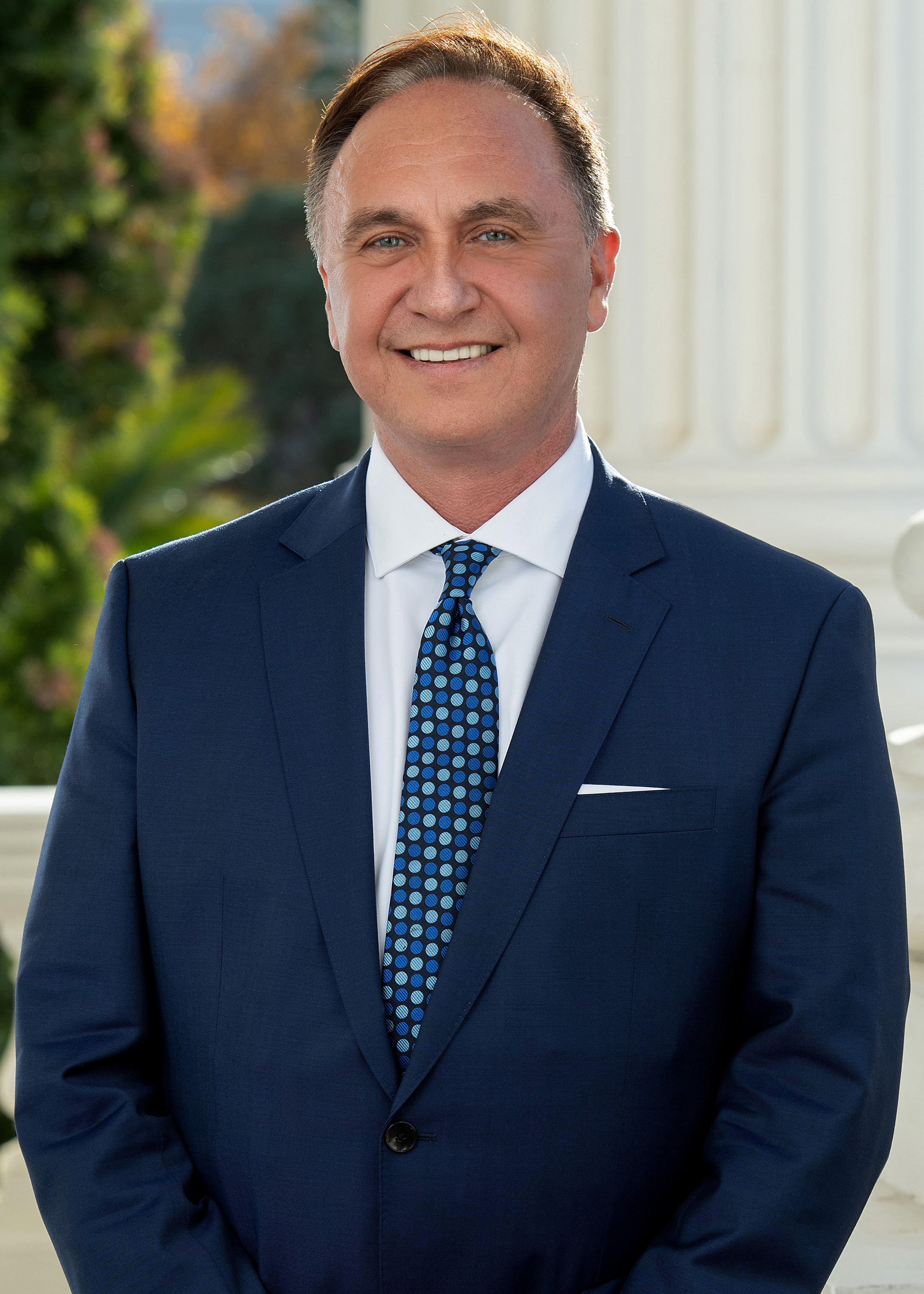
Asm. Rick Zbur
Sponsored bills
Existing law requires the State Department of Education to incorporate age-appropriate materials relating to, among other things, genocide and the Holocaust into publications that provide examples of curriculum resources for teacher use, consistent with the subject frameworks on history and social science. Under existing law, the Legislature encourages the incorporation of survivor, rescuer, liberator, and witness oral testimony into the teaching of genocide and the Holocaust. This bill would establish the California Teachers Collaborative for Holocaust and Genocide Education, to be responsible for establishing a statewide teacher professional development program on genocide, including the Holocaust, for school district, county office of education, and charter school teachers. The bill would require the collaborative to consist of leading genocide and Holocaust education organizations and institutions, genocide survivors, educators, and community leaders. The bill would provide that the collaborative's mission is to ensure that genocide, including Holocaust, education is taught consistent with, among other things, the content standards, curriculum frameworks, and instructional materials adopted by the State Board of Education, in ways that are interdisciplinary and age-appropriate to pupils of different grade levels. The bill would prescribe the duties of the collaborative, including, among others, developing and providing curriculum resources on genocide and Holocaust education. The bill would authorize other duties of the collaborative, subject to available funding, including, among others, providing, as determined by the department, annual verbal or written reports to the department and the Legislature on the collaborative's achievement of its mission. The bill would make the implementation of these provisions contingent upon an appropriation.
The Donahoe Higher Education Act sets forth, among other things, the missions and functions of California's public and independent segments of higher education and their respective institutions of higher education. A provision of the act applies to the University of California only to the extent that the Regents of the University of California, by appropriate resolution, act to make the provision applicable. A portion of the Donahoe Higher Education Act, known as the Equity in Higher Education Act, provides, among other things, that all students have the right to participate fully in the educational process, free from discrimination and harassment, and that California's postsecondary educational institutions have an affirmative obligation to combat racism, sexism, and other forms of bias, and a responsibility to provide equal educational opportunity. For purposes of the Equity in Higher Education Act, existing law defines "nationality" to include citizenship, country of origin, and national origin and defines "religion" to include all aspects of religious belief, observance, and practice, as provided. This bill would instead provide that California's postsecondary educational institutions have an affirmative obligation to combat discrimination on the basis of disability, gender, gender identity, gender expression, nationality or national identity, race or ethnicity, religion, sexual orientation, and other specified characteristics, and a responsibility to provide equal educational opportunity. For purposes of the Equity in Higher Education Act, the bill would instead define "nationality" or "national identity" to include a person's actual or perceived shared ancestry or ethnic characteristics, citizenship, or residency in a country with a dominant religion or distinct religious identity, as provided. For purposes of the Equity in Higher Education Act, the bill would define "discrimination on the basis of religion" to include, but not be limited to, anti-Semitism and Islamophobia. The bill would also state that it is the intent of the Legislature that each postsecondary educational institution undertake supportive measures to help students who have encountered discriminatory incidents, regardless of the location of the discriminatory incident, if the student feels the incident impairs their access to equal educational opportunities. This bill would require the California Community Colleges, the California State University, and independent institutions of higher education and private postsecondary educational institutions that receive state financial assistance, and would request the University of California, to include training to address discrimination against the 5 most targeted groups in the state, as provided, as part of any general antidiscrimination training or diversity, equity, and inclusion training that is offered by the institution, except as specified. By imposing new requirements on community college districts, the bill would impose a state-mandated local program. The California Constitution requires the state to reimburse local agencies and school districts for certain costs mandated by the state. Statutory provisions establish procedures for making that reimbursement. This bill would provide that, if the Commission on State Mandates determines that the bill contains costs mandated by the state, reimbursement for those costs shall be made pursuant to the statutory provisions noted above.
The federal Reception and Placement Program (RPP) under the United States Department of State is established to serve refugees during their first 3 months after arrival in the United States, through contracts with local resettlement agencies to provide various services using federal funds. Existing state law requires the State Department of Social Services, after setting aside the necessary state administrative funds, to allocate federal funds appropriated for refugee social services programs to each eligible county or service provider, as defined, based on the number of refugees receiving aid, or who reside, in the eligible county. If an eligible county or service provider that receives funds declines all or part of those funds, or returns unexpended funds, existing law authorizes the department to exercise its discretion to reallocate the declined or returned funds among eligible counties and service providers. Existing law conditions the applicability of the requirements under these provisions on the availability of federal funds. This bill would make those requirements also applicable if state funds are available subject to an appropriation. Under the bill, if a refugee recipient of refugee social services under RPP completes 90 days of those services and exhausts the federal funds allocated for that recipient, the recipient would be eligible for a 90-day extension of those services using state funds within the first 12 months of arrival in the United States. The bill would require that services covered pursuant to these provisions include (1) English language and employment training and (2) case management services, as specified. The bill would authorize a qualified nonprofit organization, an eligible county, or any office or affiliate of the agencies authorized under RPP to provide these services. The bill would also make conforming changes to related provisions.
Existing law regulates the use of pesticides and authorizes the Director of Pesticide Regulation to adopt regulations to govern the possession, sale, or use of specified pesticides, as prescribed. Existing law requires the director to endeavor to eliminate from use in the state any pesticide that, among other things, endangers the agricultural or nonagriculutral environment. Existing law requires the director to develop an orderly program for the continuous evaluation of all pesticides actually registered. Existing law authorizes the director, after a hearing, to cancel the registration of any pesticide that, among other things, is detrimental to vegetation, except weeds, to domestic animals, or to the public health and safety when properly used. This bill would require the Department of Pesticide Regulation, on or before January 1, 2029, to complete a reevaluation of paraquat dichloride, as provided, and make the determination to retain, cancel, or suspend its registration or to place new appropriate restrictions on the use of pesticide products containing the active ingredient paraquat dichloride.
Existing law, the Knox-Keene Health Care Service Plan Act of 1975, provides for the licensure and regulation of health care service plans by the Department of Managed Health Care, and makes a willful violation of the act a crime. Existing law provides for the regulation of health insurers by the Department of Insurance. Existing law requires a group or individual nongrandfathered health care service plan contract or health insurance policy to provide coverage for, and prohibits a contract or policy from imposing cost-sharing requirements for, specified preventive care services and screenings. This bill would prohibit a group or individual nongrandfathered health care service plan contract or health insurance policy issued, amended, or renewed on or after January 1, 2025, from imposing a cost-sharing requirement for items or services that are integral to the provision of the above-described preventive care services and screenings. The bill would require those contracts and policies to cover items and services for those preventive care services and screenings, including home test kits for sexually transmitted diseases and specified cancer screenings. Because a willful violation of these provisions by a health care service plan would be a crime, the bill would impose a state-mandated local program. The bill would authorize the Insurance Commissioner to impose a civil penalty of not more than $5,000 against an insurer for each violation of these provisions, or not more than $10,000 per violation if the violation was willful. The California Constitution requires the state to reimburse local agencies and school districts for certain costs mandated by the state. Statutory provisions establish procedures for making that reimbursement. This bill would provide that no reimbursement is required by this act for a specified reason.
Existing law establishes the California Health and Human Services Agency, which includes the State Department of Public Health, among other state departments charged with the administration of health, social, and other human services. Under existing law, the State Department of Public Health has authority over various programs promoting public health, including genetic disease testing. This bill, upon appropriation by the Legislature, would establish within the agency, until January 1, 2029, the Jacqueline Marie Zbur Rare Disease Advisory Council appointed by the State Public Health Officer, as specified. The council would generally act as the advisory body on rare diseases to the Legislature and state and private entities that provide services to, or that are charged with the care of, persons with rare diseases. The council specifically would be required, among other duties, to publish on its web page publicly accessible resources on research, diagnosis, treatment, and education relating to rare diseases in California to foster recognition and access to treatment. The bill would require the council to report on its web page on the activities of the advisory council and its findings and recommendations on issues, as specified. The bill would make legislative findings and declarations in support of its provisions.
Existing law vests the Department of Transportation with full possession and control of the state highway system, including associated property. Existing law authorizes the department to offer leases to the City of Los Angeles on a right of first refusal basis for any airspace under a freeway or certain real property acquired for highway purposes located in the city for purposes of an emergency shelter or feeding program for a lease amount, for up to 10 parcels, of $1 per month, and a payment of an administrative fee not to exceed $500 per year, as specified. This bill would expand the purposes for which these leases may be issued to include an emergency shelter or feeding program, a secure vehicle lot program, or any combination of those purposes. The bill would define "secure vehicle lot program" to mean the use of the leased property to store a vehicle belonging to a person receiving services from the lessee or other governmental agency for the purpose of relieving homelessness. The bill would specify conditions for a vehicle stored in a secure vehicle lot program. The bill would also increase the number of parcels that may be leased for $1 per month to 25 parcels.
Existing law requires the Medical Board of California, the Osteopathic Medical Board of California, the Board of Registered Nursing, and the Physician Assistant Board to expedite the licensure process for an applicant who demonstrates that they intend to provide abortions within the scope of practice of their license, and specifies the manner in which the applicant is required to demonstrate their intent. This bill would also require those boards to expedite the licensure process for an applicant who demonstrates that they intend to provide gender-affirming health care and gender-affirming mental health care, as defined, within the scope of practice of their license, and would specify the manner in which the applicant would be required to demonstrate their intent. The bill would repeal its provisions on January 1, 2029.
Under existing law, the Department of Justice is responsible for carrying out several functions related to the sale, delivery, and transfer of firearms, including maintaining a centralized list of all persons licensed to sell firearms and inspecting firearms. The California Constitution establishes the Attorney General as the chief law officer of the state and makes it the duty of the Attorney General to see that the laws of the state are uniformly and adequately enforced. This bill would establish, within the Department of Justice, the Office of Gun Violence Prevention. The bill would require the office to advise the Attorney General on, among other things, gun violence prevention-related matters and the effectiveness of certain gun violence prevention laws and programs. The bill would require the office to consult with specified stakeholders and, on or before July 1, 2026, issue a public report on achieving sustained gun violence reduction, including addressing new legislation and improvements to statutory implementation. The bill would require the office to make its report publicly available and transmit copies to the public safety committees of both houses of the Legislature and the Governor's office, within 60 days of the report's completion.