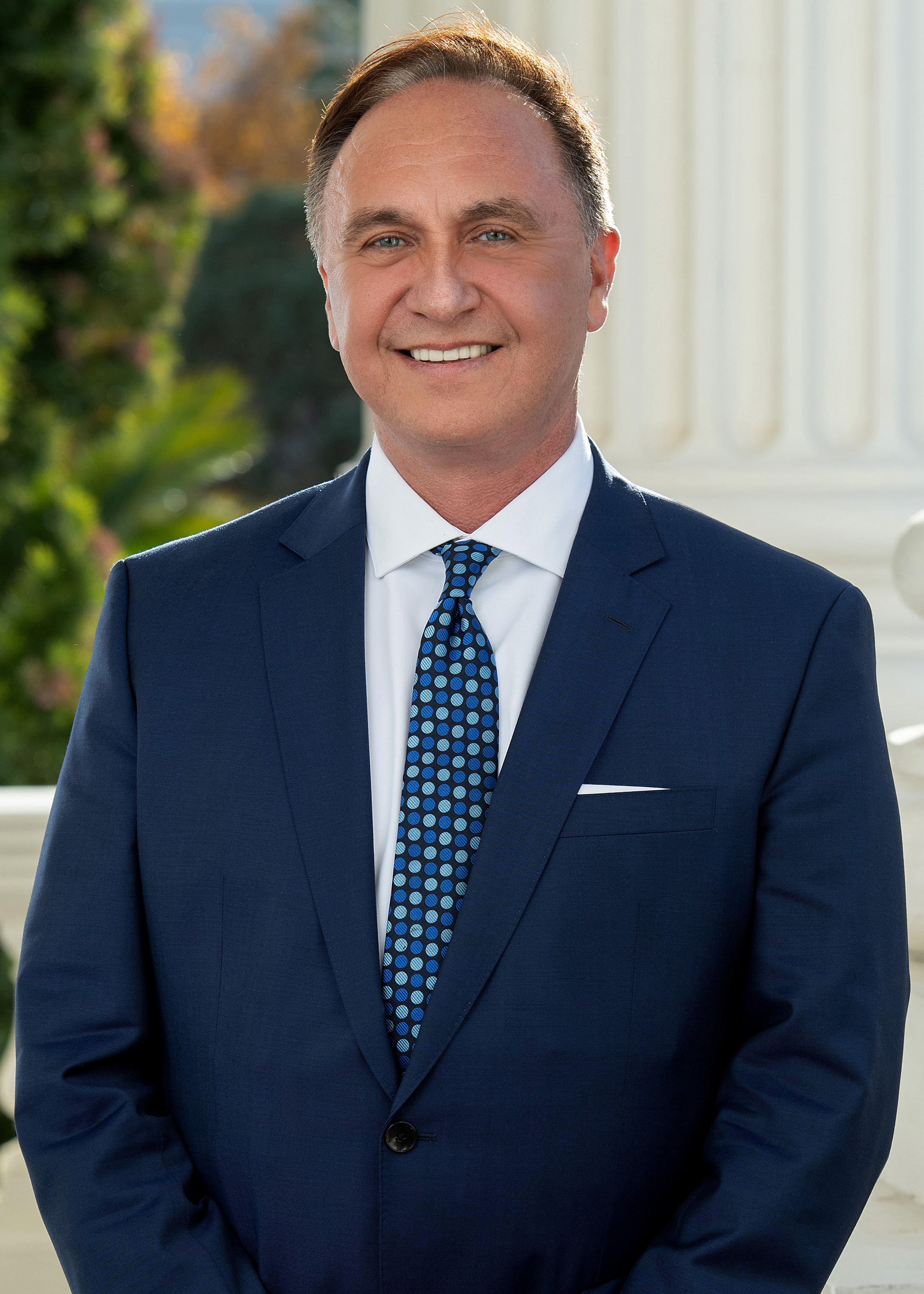
Photo of Rick Zbur
D California Assembly · District 51 On the 2026 ballot

Asm. Rick Zbur

Compare
Total votes
10,609
all sessions
Attendance
95%
391 missed
Near the chamber average
With party
99%
of cast votes
Near the chamber average
Bipartisan score
0%
crosses aisle rarely
Near the chamber average
Sponsored
927
bills & resolutions
Near the chamber average
Committees
13
assignments
927 bills and resolutions

Sponsored bills

Total
927
Primary
70
Co-sponsor
857
This page
927
matching current filters
Co-sponsor SCR 123
Signed into law · California Senate · Co-sponsor
California Peace Officers' Memorial Day.

Maddy summaryThis bill designates Monday, May 4, 2026, as California Peace Officers' Memorial Day to honor law enforcement officers. It does not create new laws or change existing policies but serves as a formal proclamation to recognize the date. The measure affects the state by establishing an official day of remembrance for peace officers.

Signed into law May 21, 2026 1 co-sponsor
Co-sponsor ACR 141
Signed into law · California Assembly · Co-sponsor
Relative to Vesak Day.

This measure would recognize the significance of Vesak Day to people of Buddhist faith and extend sincere best wishes to the state's Buddhist community in celebrating Vesak Day.

Signed into law May 18, 2026 1 co-sponsor
Primary HR 111
Passed · California Assembly · Lead sponsor
Relative to International Day Against Homophobia, Biphobia, Interphobia, and Transphobia.

Maddy summaryThis House Resolution recognizes May 17, 2026, as the International Day Against Homophobia, Biphobia, Interphobia, and Transphobia within the California Legislature. The measure formally acknowledges the ongoing discrimination faced by LGBTQ+ individuals globally and reaffirms the state's commitment to equality and civil rights. By adopting this resolution, the Assembly encourages all Californians to support inclusive practices and stand against hate toward the LGBTQ+ community.

Passed May 18, 2026 0 co-sponsors
Co-sponsor AB 1790
In committee · California Assembly · Co-sponsor
Corporations Tax Law: water's-edge election: global intangible low-taxed income.

The Corporation Tax Law imposes on every corporation doing business in the state, as defined, a tax according to or measured by net income and, in the case of a corporation with income derived from or attributable to sources both within and without this state, apportions the income between this state and other states and foreign countries in accordance with a single sales formula based on the sales within and without this state, except that in the case of an apportioning trade or business that derives more than 50% of its gross business receipts from conducting one or more qualified business activities, as defined, business income is apportioned in accordance with a specified 3-factor formula. Existing federal law, for purposes of determining a taxpayer's gross income for federal income tax purposes, requires that a person who is a United States shareholder of any controlled foreign corporation, as defined, to include in their gross income the net CFC tested income, as provided. The Corporation Tax Law, for taxable years beginning on or after January 1, 2003, for purposes of determining income derived from or attributable to sources within this state, allows corporations to make a statutory election as to whether their income is determined on a "water's-edge" basis or on a worldwide unitary basis. Under existing law, the election to report income on a water's-edge basis remains in effect until terminated, and provides conditions for the termination of the election. This bill, for taxable years beginning on or after January 1, 2026, would require a taxpayer that files on a water's-edge basis to account for net CFC tested income within the water's-edge group, as provided. The bill would require a taxpayer that files on a water's-edge basis to include all income and apportionment factors of any corporation, other than a bank, whose sales factor, instead of the average of 3 factors, in the United States is at least 20%. The bill would also terminate all water's-edge elections for the first taxable year beginning on or after January 1, 2028, and would not allow a taxpayer to make a water's-edge election, or file on a water's-edge basis, for taxable years beginning on or after January 1, 2028. The bill would authorize any taxpayer that has made a water's-edge election to terminate that election without the consent of the Franchise Tax Board for taxable years beginning on or after January 1, 2026, and before January 1, 2028. This bill would include a change in state statute that would result in a taxpayer paying a higher tax within the meaning of Section 3 of Article XIIIA of the California Constitution, and thus would require for passage the approval of 23 of the membership of each house of the Legislature. This bill would take effect immediately as a tax levy.


In committee May 14, 2026 1 co-sponsor
Co-sponsor SB 1343
In committee · California Senate · Co-sponsor
Income tax credit: sales and use tax paid: natural disasters.

Existing state sales and use tax laws impose a tax on retailers measured by the gross receipts from the sale of tangible personal property sold at retail in this state of, or on the storage, use, or other consumption in this state of, tangible personal property purchased from a retailer for storage, use, or other consumption in this state. The California Emergency Services Act authorizes the Governor to proclaim a state of emergency in an area affected, or likely to be affected, thereby if certain criteria are met, including there are conditions of disaster or of extreme peril to the safety of persons and property within the state caused by conditions such as air pollution, fire, flood, storm, epidemic, riot, drought, cyberterrorism, sudden and severe energy shortage, electromagnetic pulse attack, or plant or animal infestation or disease. The Personal Income Tax Law and the Corporation Tax Law allow various credits against the taxes imposed by those laws. This bill would allow, for taxable years beginning on or after January 1, 2027, and before January 1, 2032, a credit against those taxes to a qualified taxpayer, as defined, in an amount equal to qualified tax payments made during the taxable year, subject to certain limitations. The bill would define "qualified tax payment" to mean an unreimbursed sales or use tax payment paid or incurred by the qualified taxpayer in the taxable year for certain tangible personal property purchased proximate to the date upon which a natural disaster destroyed a qualified taxpayer's principal residence, major appliances, or residential furniture to replace those items, as specified. Existing law requires any bill authorizing a new tax expenditure to contain, among other things, specific goals that the tax expenditure will achieve, detailed performance indicators, and data collection requirements. This bill also would include additional information required for any bill authorizing a new tax expenditure. This bill would take effect immediately as a tax levy.
In committee May 14, 2026 1 co-sponsor
Co-sponsor HR 95
Passed · California Assembly · Co-sponsor
Relative to National Public Works Week.

Maddy summaryThis bill designates the week of May 17 to May 24, 2026, as National Public Works Week throughout California to honor the contributions of public works professionals. It directly affects engineers, managers, and employees in government and the private sector who maintain essential infrastructure like transportation systems, water supplies, and public buildings. The resolution requests that the Governor issue a proclamation encouraging the public to observe the week with educational programs and activities that highlight the importance of these workers.

Passed May 14, 2026 1 co-sponsor
Co-sponsor AB 2027
In committee · California Assembly · Co-sponsor
Worker data: prohibitions: artificial intelligence.

Existing law establishes the Division of Labor Standards Enforcement within the Department of Industrial Relations. Existing law authorizes the division, which is headed by the Labor Commissioner, to enforce the Labor Code and all labor laws of the state, the enforcement of which is not specifically vested in any other officer, board, or commission. This bill would prohibit an employer from using a worker's personal information, as defined, to train an artificial intelligence system to replicate, automate, or replace a worker's job, and would prohibit an employer from selling, disclosing, or otherwise providing access to a worker's personal information to a third party for the purpose of training an artificial intelligence system to replicate, automate, or replace a worker's job. The bill would prohibit a vendor providing services to an employer under a contract from providing access to the personal information of an employer's worker to a third party or using the personal information of an employer's worker to train artificial intelligence, as specified. The bill would require a contract between an employer and vendor to include a requirement that the vendor implement and maintain reasonable security procedures to protect the worker's personal information from, among other things, unauthorized or illegal access. The bill would define terms for these provisions, including "employer" and "personal information." The bill would require the Labor Commissioner and authorize a public prosecutor to enforce these provisions. The bill would authorize a worker, or their exclusive representative, who suffered a violation of these provisions to bring a civil action for damages, injunctive relief, punitive damages, and attorney's fees and costs. The bill would establish a statutory penalty for a violation of these provisions of up to $500 for each violation. The bill would include findings that changes proposed by this bill address a matter of statewide concern rather than a municipal affair and, therefore, apply to all cities, including charter cities.

In committee May 14, 2026 1 co-sponsor
Co-sponsor AB 1648
In committee · California Assembly · Co-sponsor
Public health: California Epilepsy Program

Existing law requires the State Department of Public Health to conduct a program of epidemiological assessments of the incidence of Parkinson's disease and establish a system for the collection of information determining the incidence of Parkinson's disease. Existing law encourages the department to convene a task force comprised of researchers with expertise in Parkinson's disease, advocates for patients with Parkinson's disease, and other individuals with relevant expertise to provide support and advice for the implementation and funding of the program. Existing law requires the director to establish a statewide system for the collection of information determining the incidence of Parkinson's disease. This bill would require the department to establish the California Epilepsy Program for the purposes of epidemiological assessments of the incidence and prevalence of epilepsy and seizures. The bill would require the department to convene an advisory panel comprised of specified individuals to provide support and advice for the implementation of the program. The bill would authorize the department to seek private or public funding and to spend those funds for the purposes of the program, and would authorize the department to contract with various entities for the purposes of collecting and collating data. The bill would require the department to analyze available data, to prepare and publish reports on its internet website as necessary, and to publish on its internet website a listing of agencies that offer services to individuals affected by epilepsy, as specified.

In committee May 14, 2026 1 co-sponsor
Co-sponsor ACR 176
Passed · California Assembly · Co-sponsor
Relative to Second Chance Month.

Maddy summaryThis bill designates April 2026 as Second Chance Month in California to raise awareness about opportunities for individuals reentering society after incarceration. The measure is a ceremonial proclamation that does not alter laws, allocate funding, or change government operations. Its primary purpose is to encourage public recognition of the challenges faced by formerly incarcerated people and to highlight available support resources during that specific month.

Passed May 13, 2026 1 co-sponsor
Co-sponsor ACR 171
Signed into law · California Assembly · Co-sponsor
Relative to California Home Visiting Week.

This measure would proclaim the week of April 20, 2026, to April 24, 2026, inclusive, as California Home Visiting Week, and would encourage all Californians to recognize and celebrate the contributions of home visiting programs and professionals and the families they serve.

Signed into law May 12, 2026 1 co-sponsor
Showing 191 to 200 of 927 bills
Previous 1 … 19 20 21 … 93 Next