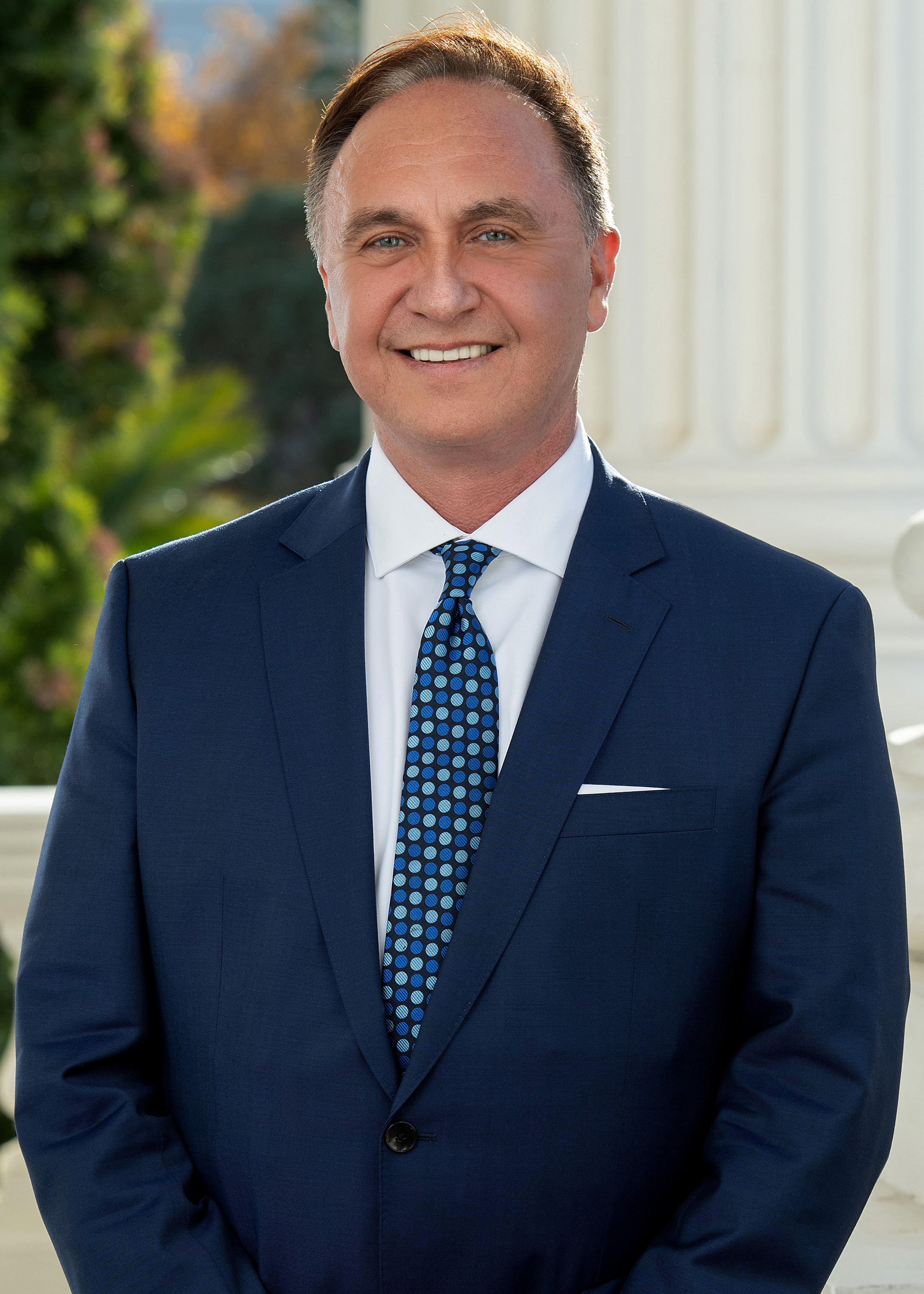
This measure would designate a specified overcrossing on State Route 15 in the County of San Diego as the United States Navy Sailor Noah Tobin Memorial Overcrossing. The measure would request the Department of Transportation to determine the cost of appropriate signs showing this special designation and, upon receiving donations from nonstate sources covering that cost, to erect those signs.
Asm. Rick Zbur
Sponsored bills
Maddy summaryThis House Resolution recognizes the 250th anniversary of the Declaration of Independence in 2026 and encourages communities across California to participate in related celebrations and educational events. The measure honors the contributions of all individuals who have helped build the nation, with specific attention to those whose stories have historically been overlooked. It calls for reflection on both the achievements and shortcomings of American democracy while reaffirming a commitment to creating a more inclusive union. The resolution does not create new laws or funding but serves as a formal statement of the legislature's values and intent.
This measure would proclaim the month of October 2026 as Italian American Heritage Month, and, among other things, encourage all citizens, schools, public institutions, and community organizations in California to observe Italian American Heritage Month with appropriate ceremonies, activities, and educational programs, as specified.
This measure would declare the month of June 2026 to be Portuguese Heritage Month and would recognize June 10, 2026, as the Day of Portugal and May 25, 2026, as the Day of the Azores.
Maddy summaryThis bill designates the week of May 4 to May 10, 2026, as California Wildflower Week to celebrate the state's diverse native flora and its ecological importance. The resolution encourages all Californians to appreciate the beauty of wildflowers, which support pollinators and healthy ecosystems, and highlights the recent opening of Dos Rios State Park as a model for conservation. By formally recognizing this period, the Assembly aims to foster public engagement with outdoor recreation and environmental preservation without imposing new regulations or costs.
Maddy summaryThis bill establishes July 19 through July 25, 2026, as Probation Services Week to honor the work of California's probation professionals. It directly affects probation officers and the public by formally recognizing their role in balancing accountability with rehabilitation within the justice system. The resolution highlights the extensive training and diverse background of these workers while celebrating their efforts to connect individuals with essential services like mental health care and education. Ultimately, the measure serves as a commemorative acknowledgment of the probation system's contribution to community safety and successful reentry rather than enacting new operational rules.
Maddy summaryThis House Resolution officially designates the week of July 17 to July 26, 2026, as California Craft Beer Week to celebrate the state's brewing heritage. The bill highlights the industry's significant economic impact, noting that it supports nearly 1,000 breweries and approximately 46,700 jobs across the state. By proclaiming this specific time frame, the resolution aims to recognize the contributions of craft brewers to California's economy and community life.
Under existing law, there are programs providing assistance for, among other things, emergency housing, multifamily housing, farmworker housing, home ownership for very low and low-income households, and downpayment assistance for first-time home buyers. Existing law also authorizes the issuance of bonds in specified amounts pursuant to the State General Obligation Bond Law and requires that proceeds from the sale of these bonds be used to finance various existing housing programs, capital outlay related to infill development, brownfield cleanup that promotes infill development, and housing-related parks. Existing law, the Veterans and Affordable Housing Bond Act of 2018, authorized, the issuance of bonds in the amount of $4,000,000,000 to finance various existing housing programs, as well as infill infrastructure financing and affordable housing matching grant programs, as well as financing for a specified program for farm, home, and mobilehome purchase assistance for veterans, pursuant to the State General Obligation Bond Law. This bill would enact the Veterans and Affordable Housing Bond Act of 2026, which, if adopted, would authorize the issuance of bonds in the amount of $11,250,000,000, pursuant to the State General Obligation Bond Law. Of the proceeds from the sale of these bonds, $10,000,000,000 would be used to finance programs to fund affordable rental housing and home ownership programs, including, among others, the Multifamily Housing Program, the CalHome Program, and the Joe Serna, Jr. Farmworker Housing Grant Program, and $1,250,000,000 would be used to provide additional funding for the above-described program for farm, home, and mobilehome purchase assistance for veterans, as provided. This bill would provide for submission of the bond act to the voters at the November 3, 2026, statewide general election, in accordance with specified law. This bill would declare that it is to take effect immediately as an urgency statute.
Maddy summarySCR 112 designates January 2026 as National Human Trafficking Awareness Month within the state. This symbolic resolution, adopted unanimously by the Senate on January 29, 2026, does not create new laws or alter existing policies. It formally recognizes the month for public awareness purposes but has no direct effect on individuals, programs, or legal obligations. The measure serves solely to acknowledge and promote awareness of human trafficking issues during that time period.
Existing law, until January 1, 2027, establishes a scheme for the certification of interior designers by the California Council for Interior Design Certification, a nonprofit organization, by obtaining a stamp from the council that identifies them as a certified interior designer, and makes it an unfair business practice for any person to represent or hold themselves out as a certified interior designer without a valid certification. Existing law also authorizes the council to issue a commercial designation to a person who satisfies specified requirements. Under the existing scheme, a certification under those provisions expires in 2 years unless renewed in a specified manner. Existing law, the Architects Practice Act, establishes the California Architects Board, consisting of 10 members, in the Department of Consumer Affairs to license and regulate the practice of architecture. This bill would authorize the council to issue a professional designation to a certified interior designer or qualified applicant only until ____, 2027, and would instead provide for the licensure and regulation of the practice of licensed professional interior design, as defined, by the board. The bill would add a member to the board who is a professional interior designer, and would specify that the professional interior designer member's term begins and expires on unspecified dates. This bill would require the board to determine eligibility requirements, including examination and education requirements necessary for licensure, as provided. The bill would authorize the board to determine whether additional education or training is required for professional interior designers to identify when architectural or engineering services are required and, if so, would require the board to develop and prescribe sufficient education or training. The bill would impose an unspecified civil penalty for engaging in certain acts, including the practice of licensed professional interior design, without a license. This bill would exempt professional engineers, architects, land surveyors, and licensed contractors from the bill's provisions governing professional interior design. The bill would require any stamp used by a licensed professional interior designer to be of a design authorized by the board and would prescribe the information contained in the stamp. The bill would establish requirements for professional interior instruments of service, as defined, and would prohibit a public entity from accepting professional interior instruments of service submissions from an individual who is not a licensed professional interior designer. By imposing requirements on local agencies, the bill would impose a state-mandated local program. This bill would prescribe acts that are subject to discipline by the board and the manner of discipline, and would specify conditions of renewal and expiration of a license. The bill would require the board to fix certain fees relating to licensure at specified and unspecified amounts, to be deposited into the California Professional Interior Designer Fund, established by the bill, to be made available to the board upon appropriation by the Legislature to be used to defray the expenses of the board in carrying out and enforcing the provisions of the bill. The bill would require the board to implement its provisions by July 1, 2028. The bill would make other related and conforming changes to the Architects Practice Act and the provisions governing interior designers. Existing law allows a design professional, as defined, to claim a lien on certain works of improvement, as specified. This bill would include licensed interior designers in the definition of "design professional" for purposes of the above-referenced lien provisions. The California Constitution requires the state to reimburse local agencies and school districts for certain costs mandated by the state. Statutory provisions establish procedures for making that reimbursement. This bill would provide that no reimbursement is required by this act for a specified reason.