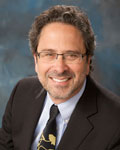
Photo of Richard Bloom
D California Assembly · District 50 · Former member

Asm. Richard Bloom

Compare
Total votes
25,648
all sessions
Attendance
97%
563 missed
Near the chamber average
With party
99%
of cast votes
Near the chamber average
Bipartisan score
0%
crosses aisle rarely
Near the chamber average
Sponsored
1,825
bills & resolutions
Near the chamber average
Committees
0
assignments
1,825 bills and resolutions

Sponsored bills

Total
1,825
Primary
241
Co-sponsor
1,584
This page
1,825
matching current filters
Co-sponsor SJR 3
Signed into law · California Senate · Co-sponsor
Relative to Social Security.

This measure would request the Congress of the United States to enact, and the President to sign, legislation that would repeal the Government Pension Offset and the Windfall Elimination Provision from the Social Security Act.

Signed into law Aug 19, 2019 1 co-sponsor
Co-sponsor ACR 94
Signed into law · California Assembly · Co-sponsor
Inflammatory Breast Cancer Awareness Day of 2019.

This measure would declare October 3, 2019, as Inflammatory Breast Cancer Awareness Day of 2019, and encourage all Californians to learn about this rare and aggressive type of breast cancer and support all people who are impacted by a diagnosis of inflammatory breast cancer.

Signed into law Aug 16, 2019 1 co-sponsor
Co-sponsor AJR 5
Signed into law · California Assembly · Co-sponsor
Relative to firearm safety.

This measure would urge the federal government to use California as an example for firearm safety and for stronger firearm laws to protect all citizens. The measure would also urge the federal government to pass legislation that would provide universal firearm safety regulation throughout the nation.

Signed into law Aug 16, 2019 1 co-sponsor
Co-sponsor AB 1106
Signed into law · California Assembly · Co-sponsor
Los Angeles County: notice of recordation.

Existing law authorizes the Los Angeles County Recorder, following the adoption of an authorizing resolution by the Los Angeles County Board of Supervisors, to mail a notice of recordation to the party or parties executing a deed, quitclaim deed, or deed of trust within 30 days of the recording of one of those documents, and, until January 1, 2020, also authorizes the recorder to provide notice by mail to a party or parties subject to a notice of default or notice of sale of a property, within a prescribed period following recordation. This bill would extend, until January 1, 2030, the provisions authorizing the recorder to provide notice by mail to a party or parties subject to a notice of default or notice of sale of a property. Existing law requires the County of Los Angeles, following the adoption of the authorizing resolution, to submit a report to the Senate Committee on Judiciary and the Assembly Committee on Local Government on or before January 1, 2019, that provides specified information including, among other things, the number of filed notices of default and notices of sale for which a fee was collected and the amount of fees collected. This bill would require the County of Los Angeles, following the adoption of the authorizing resolution, to submit a report to the Senate Committee on Judiciary and the Assembly Committee on Local Government on or before January 1, 2029, providing the same information. The bill would require the report to provide all relevant information covering the period of time between December 1, 2013, and November 1, 2028. Existing law also authorizes, until January 1, 2020, the Los Angeles County Recorder to collect a fee from party filing a notice of default or notice of sale. Existing law authorizes the Los Angeles County Recorder to collect a fee from a party filing a deed, quitclaim deed, or deed of trust. Existing law authorizes the recorder to use a portion of the collected fees to pay the actual cost of providing information, counseling, and assistance to a person who receives the notice. Existing law authorizes administrative costs incurred by the recorder to be included as a portion of the actual costs that comprise the fee, as specified. Existing law prohibits this fee from exceeding $7. This bill would extend, until January 1, 2030, the authority of the County of Los Angeles to collect a fee, including administrative costs, from party filing a notice of default or notice of sale. The bill would, on and after January 1, 2030, remove the authority for the fee to include administrative costs and the cost of providing information and counseling, as described above. This bill would make legislative findings and declarations as to the necessity of a special statute for the County of Los Angeles.

Signed into law Jul 31, 2019 1 co-sponsor
Primary AB 806
Signed into law · California Assembly · Lead sponsor
Postsecondary education: homeless and former homeless youth.

(1) Existing law requires the California State University and each community college district, and requests the University of California, with respect to each campus in their respective jurisdictions that administers a priority enrollment system, to grant priority for registration for enrollment to homeless youth, as defined. Existing law repeals this requirement on January 1, 2020. This bill would add former homeless youth to the students to be granted, or requested to be granted, priority enrollment. This bill would extend the operation of this provision indefinitely. By extending the operation of requirements relating to student eligibility for priority registration at community college districts, the bill would impose a state-mandated local program. (2) Existing law requires qualifying institutions, other than the University of California, which it requests, to designate a staff member who is employed within the financial aid office, or another appropriate office or department, of the institution to serve as a Homeless and Foster Student Liaison and to inform current and prospective students of the institution about student financial aid and other assistance available to homeless youth and current and former foster youth, as specified. This bill would add former homeless youth to the students with whom a Homeless and Foster Student Liaison works. To the extent that this provision would impose new duties on community college districts, it would constitute a state-mandated local program. (3) Existing law establishes the Student Aid Commission and assigns to it numerous duties with respect to student financial aid programs, including the Community College Student Financial Aid Outreach Program and the Student Opportunity and Access Program. Both of these programs serve youth from low-income households. This bill would add former homeless youth, as defined, to those served by these programs. (4) Existing law requires the governing board of each community college district to charge an enrollment fee of $46 per unit per semester, but requires the waiver of this fee for students meeting specified requirements. This bill would add persons who are, at the time of enrollment, former homeless youth, as defined, to those eligible for this fee waiver. To the extent that this provision would impose new duties on community college districts, it would constitute a state-mandated local program. The California Constitution requires the state to reimburse local agencies and school districts for certain costs mandated by the state. Statutory provisions establish procedures for making that reimbursement. This bill would provide that, if the Commission on State Mandates determines that the bill contains costs mandated by the state, reimbursement for those costs shall be made pursuant to the statutory provisions noted above.

Signed into law Jul 31, 2019 0 co-sponsors
Co-sponsor SB 652
Signed into law · California Senate · Co-sponsor
Entry doors: display of religious items: prohibitions.

(1) Existing law regulates the terms and conditions of residential tenancies, and prohibits a landlord from interfering with a tenant's quiet enjoyment of the premises. Existing law prohibits a landlord from prohibiting a tenant from posting or displaying political signs relating to an election or legislative vote, the initiative, referendum, or recall process, or issues before a public body for a vote, except under certain circumstances. This bill would, with certain exceptions, prohibit a property owner, as defined, from enforcing or adopting a restriction that prohibits the display of religious items on an entry door or entry door frame of a dwelling. (2) Existing law, the Davis-Stirling Common Interest Development Act, prohibits the governing documents of a common interest development from prohibiting the posting or displaying of noncommercial signs, posters, flags, or banners on or in an owner's separate interest, except as specified. This bill would prohibit the governing documents of a common interest development from prohibiting the display of religious items, as defined, on the entry door or entry door frame of a common interest development member's separate interest. The bill would provide an exception to this prohibition for maintenance, repair, or replacement of an entry door or door frame, as specified.

Signed into law Jul 30, 2019 1 co-sponsor
Co-sponsor SB 200
Signed into law · California Senate · Co-sponsor
Drinking water.

(1) Existing law, the California Safe Drinking Water Act, requires the State Water Resources Control Board to administer provisions relating to the regulation of drinking water to protect public health. Existing law declares it to be the established policy of the state that every human being has the right to safe, clean, affordable, and accessible water adequate for human consumption, cooking, and sanitary purposes. This bill would establish the Safe and Affordable Drinking Water Fund in the State Treasury to help water systems provide an adequate and affordable supply of safe drinking water in both the near and long terms. The bill would authorize the state board to provide for the deposit into the fund of certain moneys and would continuously appropriate the moneys in the fund to the state board for grants, loans, contracts, or services to assist eligible recipients. The bill would require the state board, in consultation with the Department of Finance, to adopt a fund expenditure plan with specified contents and would require, on and after July 1, 2020, expenditures of the fund to be consistent with the plan. The bill would require, by January 1, 2021, the state board, in consultation with local health officers and other relevant stakeholders, to make publicly available, as specified, a map of aquifers that are used or likely to be used as a source of drinking water that are at high risk of containing contaminants that exceed safe drinking water standards. For purposes of the map, the bill would require local health officers and other relevant local agencies to provide all results of, and data associated with, water quality testing performed by certified laboratories to the state board, as specified. By imposing additional duties on local health officers and local agencies, the bill would impose a state-mandated local program. The act provides for the operation of public water systems and authorizes the state board to contract with, or provide a grant to, an administrator to provide administrative, technical, operational, or managerial services, or any combination of those services, to a designated water system to assist with the provision of an adequate supply of affordable, safe drinking water. The act defines an administrator as a person whom the state board has determined is competent to perform the administrative, technical, operational, or managerial services required, as specified, and authorizes a privately owned public utility to serve as an administrator. This bill would, among other things, authorize an administrator to additionally provide legal services pursuant to those provisions and to act, where the administrator is authorized to act on behalf of a designated public water system, on behalf of a voluntary participant, as defined. The bill would recast the authorization for a local agency or a privately owned public utility to serve as an administrator for these purposes. The act prohibits a person from operating a public water system unless the person first submits an application to the state board and receives a permit to operate the system, as specified. The act authorizes the state board, if the state board determines that it is feasible for the service area of the public water system addressed by the application to be served by one or more currently permitted public water systems, to deny the permit of a proposed new public water system if it determines that it is reasonably foreseeable that the proposed new public water system will be unable to provide affordable, safe drinking water in the reasonably foreseeable future, as prescribed. This bill would eliminate the requirement that the state board determine that it is reasonably foreseeable that the proposed new public water system will be unable to provide affordable, safe drinking water in the reasonably foreseeable future in order to deny the permit of a proposed new public water system. The act defines a disadvantaged community for its purposes as an area, as specified, in which the median household income is less than 80% of the statewide average. This bill would revise that definition to apply to specified areas with a median household income of less than 80% of the statewide annual median household income level. The act requires a public water system to submit a technical report to the state board as a part of the permit application or when otherwise required by the state board, as specified. This bill would require a public water system to submit the report in the form and format and at intervals specified by the state board. (2) Existing law requires a laboratory that performs analyses for regulatory purposes of drinking water, wastewater, hazardous waste, and contaminated soils or sediments to obtain certification or accreditation, as specified. Existing law requires, when a person or entity submits material to the laboratory for testing, the laboratory to report the results of all detected contaminants and pollutants to that person or entity. This bill would require a laboratory accredited by the State Water Resources Control Board to also report the results of each drinking water analysis to the state board in the form or format and at intervals specified by the state board. (3) The California Global Warming Solutions Act of 2006 designates the State Air Resources Board as the state agency charged with monitoring and regulating sources of emissions of greenhouse gases. The act authorizes the state board to include the use of market-based compliance mechanisms. Existing law requires all moneys, except for fines and penalties, collected by the state board as part of a market-based compliance mechanism to be deposited in the Greenhouse Gas Reduction Fund and to be available upon appropriation. Existing law continuously appropriates 35% of the annual proceeds of the fund for transit, affordable housing, and sustainable communities programs and 25% of the annual proceeds of the fund for certain components of a specified high-speed rail project. This bill, beginning in the 2020–21 fiscal year, would require 5% of the annual proceeds of the Greenhouse Gas Reduction Fund, up to the sum of $130,000,000, to be deposited into the Safe and Affordable Drinking Water Fund for the purposes of the Safe and Affordable Drinking Water Fund, subject to specified restrictions. The bill would require the Director of Finance, beginning in the 2023–24 fiscal year and until June 30, 2030, to calculate the sum to be transferred by the Controller from the General Fund to the Safe and Affordable Drinking Water Fund if the annual transfer from the annual proceeds of the Greenhouse Gas Reduction Fund is less than $130,000,000 to equal a total transfer into the Safe and Affordable Drinking Water Fund of $130,000,000, as specified. (4) The Budget Act of 2019 appropriates $100,000,000 from the Greenhouse Gas Reduction Fund and $30,000,000 from the General Fund to the State Water Resources Control Board for support or local assistance to fund grants, loans, contracts, or services to help water systems provide safe and affordable drinking water. This bill would require these moneys to be available for the purposes of the Safe and Affordable Drinking Water Fund, subject to specified restrictions. (5) This bill would provide that its provisions are severable. (6) The California Constitution requires the state to reimburse local agencies and school districts for certain costs mandated by the state. Statutory provisions establish procedures for making that reimbursement. This bill would provide that, if the Commission on State Mandates determines that the bill contains costs mandated by the state, reimbursement for those costs shall be made pursuant to the statutory provisions noted above. (7) This bill would declare that it is to take effect immediately as an urgency statute.


Signed into law Jul 24, 2019 1 co-sponsor
Showing 671 to 680 of 1,825 bills
Previous 1 … 67 68 69 … 183 Next