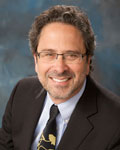
Photo of Richard Bloom
D California Assembly · District 50 · Former member

Asm. Richard Bloom

Compare
Total votes
25,648
all sessions
Attendance
97%
563 missed
Near the chamber average
With party
99%
of cast votes
Near the chamber average
Bipartisan score
0%
crosses aisle rarely
Near the chamber average
Sponsored
1,825
bills & resolutions
Near the chamber average
Committees
0
assignments
1,825 bills and resolutions

Sponsored bills

Total
1,825
Primary
241
Co-sponsor
1,584
This page
1,825
matching current filters
Primary AB 2357
In committee · California Assembly · Lead sponsor
Local publicly owned electric utilities: utility poles and support structures.

Existing law requires a local publicly owned electric utility to make appropriate space and capacity on, and in, its utility poles and support structures available for use by cable television corporations, video service providers, and telephone corporations. This bill would make nonsubstantive changes to this requirement.

In committee Feb 19, 2020 0 co-sponsors
Co-sponsor AB 2002
In committee · California Assembly · Co-sponsor
California Deforestation-Free Procurement Act: public works projects: wood and wood products.

Existing law governs the bidding and awarding of public contracts by various state agencies. Existing law imposes requirements on contractors awarded various public contracts, including, among others, certifying that no equipment, materials, supplies, apparel, garments, or accessories provided under specified contracts are produced by sweatshop labor, forced labor, convict labor, indentured labor under penal sanction, abusive forms of child labor, or exploitation of children in sweatshop labor. This bill would establish the California Deforestation-Free Procurement Act. The bill would require a contractor, as defined, and specified subcontractors, for any contract entered into, extended, or renewed on or after January 1, 2023, contracting with a state agency for the procurement of products comprised wholly or in part of forest-risk commodities to certify that the commodities were not grown, derived, harvested, reared, or produced on land where tropical deforestation occurred on or after January 1, 2021. The bill would exempt a credit card purchase of goods of $2,500 or less, not to exceed a total of $7,500 of goods per contractor per year, from these certification requirements. The bill would require specified contractors to have a No Deforestation, No Peat, No Exploitation policy, as specified, and would require the contractors to make the policy and corresponding data publicly available. The bill would require, on or before July 1, 2022, the Department of General Services to issue an informational notice or memorandum on a Deforestation-Free Code of Conduct to be used by contractors that includes, among other things, a list of forest-risk commodities subject to these provisions. This bill would impose sanctions on contractors who knew or should have known that a product furnished to the state was comprised wholly or in part of a forest-risk commodity in violation of these provisions. The bill would specify that any person who certifies as true any material matter that the person knows to be false is guilty of a misdemeanor. By creating a new crime, this bill would impose a state-mandated local program. The State Contract Act governs the bidding and award of public works contracts by specific state agencies and requires an awarding department, before entering into any contract for a project, to prepare full, complete, and accurate plans, specifications, and estimates of cost. The act prohibits, except in specified circumstances, a state agency responsible for letting public works contracts from drafting bid specifications in a manner that limits the bidding to any one concern or product, except under certain circumstances. This bill would prohibit a state agency from including in bid specifications for public works projects any wood or wood products whose importation and use are prohibited under the federal Lacey Act. The California Constitution requires the state to reimburse local agencies and school districts for certain costs mandated by the state. Statutory provisions establish procedures for making that reimbursement. This bill would provide that no reimbursement is required by this act for a specified reason.


In committee Feb 14, 2020 1 co-sponsor
Co-sponsor ACR 110
Passed · California Assembly · Co-sponsor
Relative to reproductive care and abortion services.

This measure, among other things, would declare that California is a Reproductive Freedom State for All and provide that the Legislature is committed to guaranteeing the constitutionally protected right to an abortion and supporting efforts to increase access to the best available reproductive and pregnancy-related care for women and pregnant individuals.

Passed Feb 12, 2020 1 co-sponsor
Primary AB 1412
Failed · California Assembly · Lead sponsor
Juveniles: special immigrant juvenile status.

Existing federal law, the Immigration and Nationality Act, establishes a procedure for classification of certain aliens as special immigrants who have been declared dependent on a juvenile court, and authorizes those aliens to apply for an adjustment of status to that of a lawful permanent resident within the United States. Under federal regulations, an alien is eligible for special immigrant juvenile status if they are under 21 years of age. Existing state law provides that the superior court, including, but not limited to, the juvenile, probate, and family court divisions of the superior court, have jurisdiction to make judicial determinations regarding the custody and care of juveniles within the meaning of those provisions of the federal Immigration and Nationality Act. Existing law also requires the court, upon request, to make the necessary findings regarding special immigrant juvenile status if there is evidence to support those findings, as specified. This bill would establish a procedure to be used by the family court division of the superior court in making those determinations and findings when a petition to do so is filed independently of any other action or filed as part of a family law proceeding. The bill would, among other things, authorize a hearing, trial, and records pertaining to these petitions to be confidential, provided that there is no filing fee for any papers related to these petitions, and require hearings on these petitions to have priority over all other matters. The bill would make the denial of a petition filed under these provisions subject to appellate review as an emergency application for a writ of mandate. The bill would also authorize the probate division of the superior court to use these procedures when a petition to make the judicial determinations and factual findings is filed in a probate proceeding. The bill would require the Judicial Council, by July 1, 2020, to promulgate forms and instructions for filing a petition pursuant to these provisions and modify existing forms, instructions, or rules of court to conform with these provisions. Existing constitutional provisions require that a statute that limits the right of access to the meetings of public bodies or the writings of public officials and agencies be adopted with findings demonstrating the interest protected by the limitation and the need for protecting that interest. This bill would make legislative findings to that effect.

Failed Feb 3, 2020 0 co-sponsors
Primary AB 1176
Failed · California Assembly · Lead sponsor
State funds: investments.

Existing law specifies the types of securities that are eligible for investment of surplus state funds. This bill would include as a type of security that is eligible for the investment of surplus state funds the bonds, notes, debentures, or other similar obligations of a foreign government of a country that the International Monetary Fund lists as industrialized and for which the full faith and credit of that country has been pledged for the payment of principal and interest, if specified requirements are met.

Failed Feb 3, 2020 0 co-sponsors
Primary AB 366
Failed · California Assembly · Lead sponsor
Animals: blood, blood components, and biologics.

Existing law, the Veterinary Medicine Practice Act, provides for the licensure and regulation of veterinary medicine by the Veterinary Medical Board in the Department of Consumer Affairs. Existing law authorizes the Veterinary Medical Board to deny, revoke, or suspend a license or registration or assess a fine for a violation of specified acts, including the employment of anyone but a veterinarian licensed in this state to demonstrate the use of biologics in the treatment of animals. A violation of the act is a crime. Existing law prohibits a person from engaging in the production of animal blood and blood component products, as defined, for retail sale and distribution except in a commercial blood bank for animals licensed by the Secretary of Food and Agriculture and requires the secretary to license commercial blood banks for animals that meet specified requirements. Existing law exempts licensed private veterinarians who collect blood or blood products solely for use in their own practice from these provisions regulating and licensing commercial blood banks for animals and biologics. Existing law defines animal, for the purposes of these provisions, as any domesticated fowl or nonhuman mammal and any wild fowl, bird, or mammal that is reduced to captivity. A violation of these provisions is a crime. This bill, not withstanding any law, commencing January 1, 2022, would prohibit a person from engaging in the production of canine blood and blood component products or biologics for retail sale and distribution unless that person is licensed as a canine blood bank by the Secretary of Food and Agriculture, among other specified requirements, including the requirement that the operations are performed under the direct supervision of a licensed veterinarian or board-certified specialist. The bill would prohibit a canine blood bank from paying a person for canine blood or blood component products and would require a canine blood bank to keep specified records. By expanding the scope of existing crimes, this bill would impose a state-mandated local program. The California Constitution requires the state to reimburse local agencies and school districts for certain costs mandated by the state. Statutory provisions establish procedures for making that reimbursement. This bill would provide that no reimbursement is required by this act for a specified reason.
Failed Feb 3, 2020 0 co-sponsors
Showing 581 to 590 of 1,825 bills
Previous 1 … 58 59 60 … 183 Next