Maddy summaryACR 103 designates the week of July 14-18, 2025, as "California Western Monarch Protection Week." The bill is purely ceremonial, recognizing efforts to protect monarch butterflies in California. It does not create new laws, funding, or obligations. The measure serves to raise public awareness about monarch conservation during that specific week.
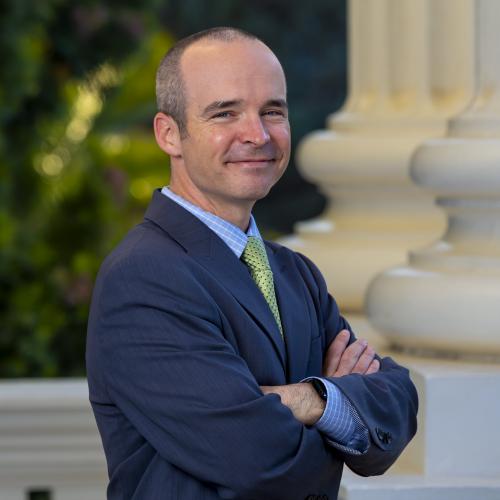
Asm. Joe Patterson
Sponsored bills
Maddy summaryHR 67 designates November 9 as "All California Day" to celebrate California's shared history and cultural ties with Baja California and Baja California Sur. The resolution encourages community events and cultural celebrations across the state to honor this interconnected heritage, including contributions from Indigenous peoples and Mexican heritage communities. As a ceremonial resolution (not a binding law), it has no direct regulatory or financial impact on any specific group or policy. The measure was adopted by the California Assembly on September 4, 2025.
Maddy summaryThis House Resolution (HR 58) declares October 2025 as "California Promotoras Month" to formally recognize the work of promotoras - community health workers who serve as cultural brokers and connect underserved communities (particularly Latino populations) to essential services like health, housing, and disaster response. It acknowledges their role in improving community resilience and access to resources, while highlighting the need for better support, training, and equitable compensation for this workforce. The resolution is symbolic and does not create new laws, funding, or programs; it solely aims to raise awareness and honor promotoras' contributions through a designated month of recognition.
Maddy summaryThis is a symbolic resolution, not a substantive bill. It designates September 7-13, 2025, as "Direct Support Professional Recognition Week" in California. The resolution acknowledges direct support professionals who assist Californians with intellectual and developmental disabilities (IDD) through the state's Lanterman Act system, which serves over 450,000 residents. It formally recognizes their role in enabling community inclusion and independence but does not create new policies, funding, or legal obligations.
Maddy summaryThis symbolic resolution recognizes September 20, 2025, as National Fried Rice Day in California, highlighting the dish's cultural significance to Asian American communities and its connection to California's rice-growing economy (noting the state's status as the second-largest rice producer). It has no legal effect or policy changes - it serves solely to celebrate culinary traditions and community diversity. The resolution was adopted by the California Assembly with no opposing votes.
Existing law requires elections officials, beginning no later than the Thursday following an election, to post updated election results on their internet website at least once per week until publication of the certified statement of results or until the only ballots left to count are vote by mail ballots for which a voter has the opportunity either to verify or provide their signature. This bill would increase that posting requirement to at least twice per week. By increasing the duties of local elections officials, this bill would impose a state-mandated local program. The California Constitution requires the state to reimburse local agencies and school districts for certain costs mandated by the state. Statutory provisions establish procedures for making that reimbursement. This bill would provide that, if the Commission on State Mandates determines that the bill contains costs mandated by the state, reimbursement for those costs shall be made pursuant to the statutory provisions noted above.
Maddy summaryThis House Resolution designates a month as Filipino American History Month in California. It recognizes the historical contributions of Filipino Americans to the state, including early settlement (dating to 1587), agricultural labor, community building (such as "Little Manila" in Stockton), and military service during World War II. As a symbolic resolution, it does not create new laws, policies, or direct effects on any specific group.
Existing law provides for the licensure and regulation of adult alcohol or other drug recovery or treatment facilities by the State Department of Public Health and prohibits the operation of one of those facilities without a current valid license. Existing law requires the department, if a facility is alleged to be in violation of that prohibition, to conduct a site visit to investigate the allegation. Existing law requires, if the department's employee or agent finds evidence that the facility is providing services without a license, the employee or agent to take specified actions, including, among others, submitting the findings of the investigation to the department and issuing a written notice to the facility that includes the date by which the facility is required to cease providing services. Existing law establishes the Medi-Cal program, which is administered by the State Department of Health Care Services and under which qualified low-income individuals receive health care services, through fee-for-service or managed care delivery systems. The Medi-Cal program is, in part, governed and funded by federal Medicaid program provisions. Existing law establishes the Drug Medi-Cal Treatment Program (Drug Medi-Cal) and authorizes the department to enter into a Drug Medi-Cal contract with each county for the provision of alcohol and drug use services within the county service area. This bill would require the department, if it determines it has jurisdiction over the allegation, to initiate that investigation within 10 days of receiving the allegation and, except as specified, complete the investigation within 60 days of initiating the investigation. The bill would require the department, if it receives a complaint that does not fall under its jurisdiction, to notify the complainant that it does not investigate that type of complaint. The bill would require the employee or agent to provide the notice described above within 10 days of the employee or agency submitting their findings to the department and to conduct a followup site visit to determine whether the facility has ceased providing services as required. The bill would authorize, in counties that elect to administer the Drug Medi-Cal organized delivery system and that provide optional recovery housing services, the county behavioral health agency to request approval from the department to conduct a site visit of a recovery residence that is alleged to be operating without a license. The bill would permit the department to approve that request in certain circumstances, including that the department has sufficient evidence to substantiate the allegation. Existing law requires licensed adult alcohol or other drug recovery or treatment facilities and certified alcohol or other drug programs to disclose to the department whether any of its agents, partners, directors, officers, or owners has a specified interest in a recovery residence and requires the department to take action against an unlicensed facility that is disclosed as a recovery residence. This bill would require the department, if it takes action against a recovery residence pursuant to that provision, to conduct a site visit of a certified program or licensed facility that has disclosed the specified interest in the recovery residence. The bill would also require, no later than July 15, 2026, and by July 15 each year thereafter, that all programs certified or facilities licensed by the department submit to the department a report of all money transfers between the program or facility and a recovery residence during the previous fiscal year, in order to detect patient brokering, illicit kickbacks, or unethical inducements that harm patients. The bill would require the department to analyze that data and develop guidelines for permissible and impermissible transfers.

Existing law establishes a motor vehicle inspection and maintenance (smog check) program that is administered by the Department of Consumer Affairs. The smog check program requires inspection of motor vehicles upon initial registration, biennially upon renewal of registration, upon transfer of ownership, and in certain other circumstances. Existing law exempts specified vehicles from being inspected biennially upon renewal of registration, including, among others, all motor vehicles manufactured prior to the 1976 model year. Existing law also exempts from specified portions of the smog test, both biennially and at transfer, a collector motor vehicle that is insured as a collector motor vehicle, is at least 35 model years old, complies with the exhaust emissions standards for that motor vehicle's class and model year as prescribed by the department, and that passes a functional inspection of the fuel cap and a visual inspection for liquid fuel leaks. This bill would, commencing on January 1, 2027, additionally fully exempt from the smog check requirements, both biennially and at transfer, a motor vehicle that was manufactured prior to the 1981 model year, has been assigned a special identification plate indicating that it is a historical vehicle, and is insured as a collector motor vehicle, as specified. The bill, beginning January 1, 2028, would expand this exemption by one model year, every year, for 5 years. The bill would be known, and may be cited as, Leno's Law.
Existing law, the Knox-Keene Health Care Service Plan Act of 1975, provides for the licensure and regulation of health care service plans by the Department of Managed Health Care. Existing law provides for the regulation of health insurers by the Department of Insurance. Existing law generally requires a health care service plan contract or a health insurance policy issued, amended, or renewed on or after January 1, 2022, to provide coverage without cost sharing for a colorectal cancer screening test assigned either a grade of A or a grade of B by the United States Preventive Services Task Force and for a required colonoscopy for a positive result on a test with those grades. This bill would additionally require that coverage if the screening test is approved by the United States Food and Drug Administration and either meets requirements for coverage established by the federal Centers for Medicare and Medicaid Services, as specified, or is included in the most recently published guidelines from the American Cancer Society.